

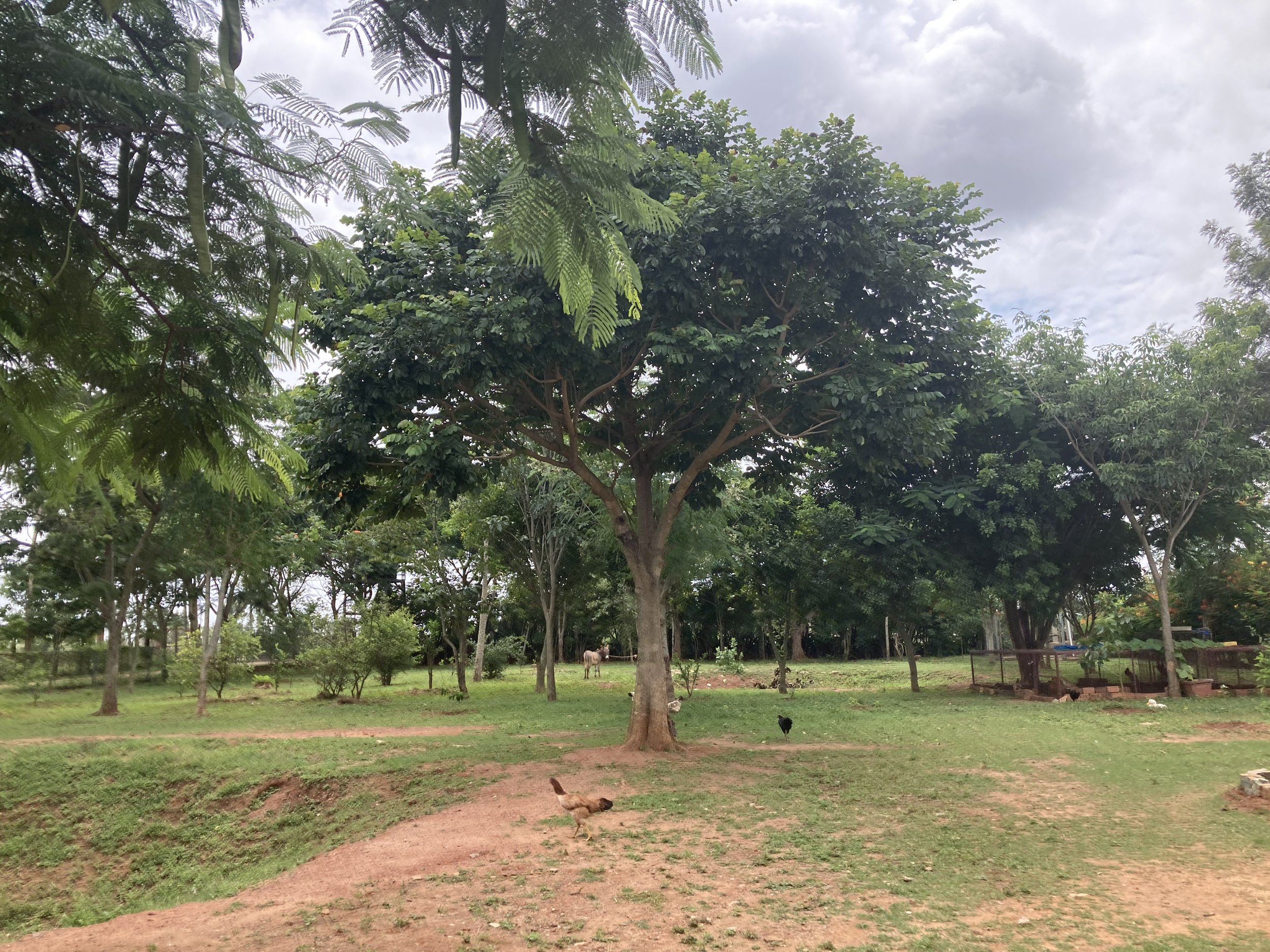
Perma Farm
Project size: 3 acres
Bangalore North, Karnataka
Jan 2015 to Dec 2018
Key design features: Forest Garden, Vegetable Production, Animal Systems
Project team: Kiri Meili (Project lead); Jananee Mohan
Elevation: 961 metres above sea level
Annual rainfall: 900 mm / 35 inches
Climate: Tropical Wet & Dry / Tropical Savanna
Bioregion: Tropical Dry Decidious
Soil type: Red Sandy Loam
Masterplan
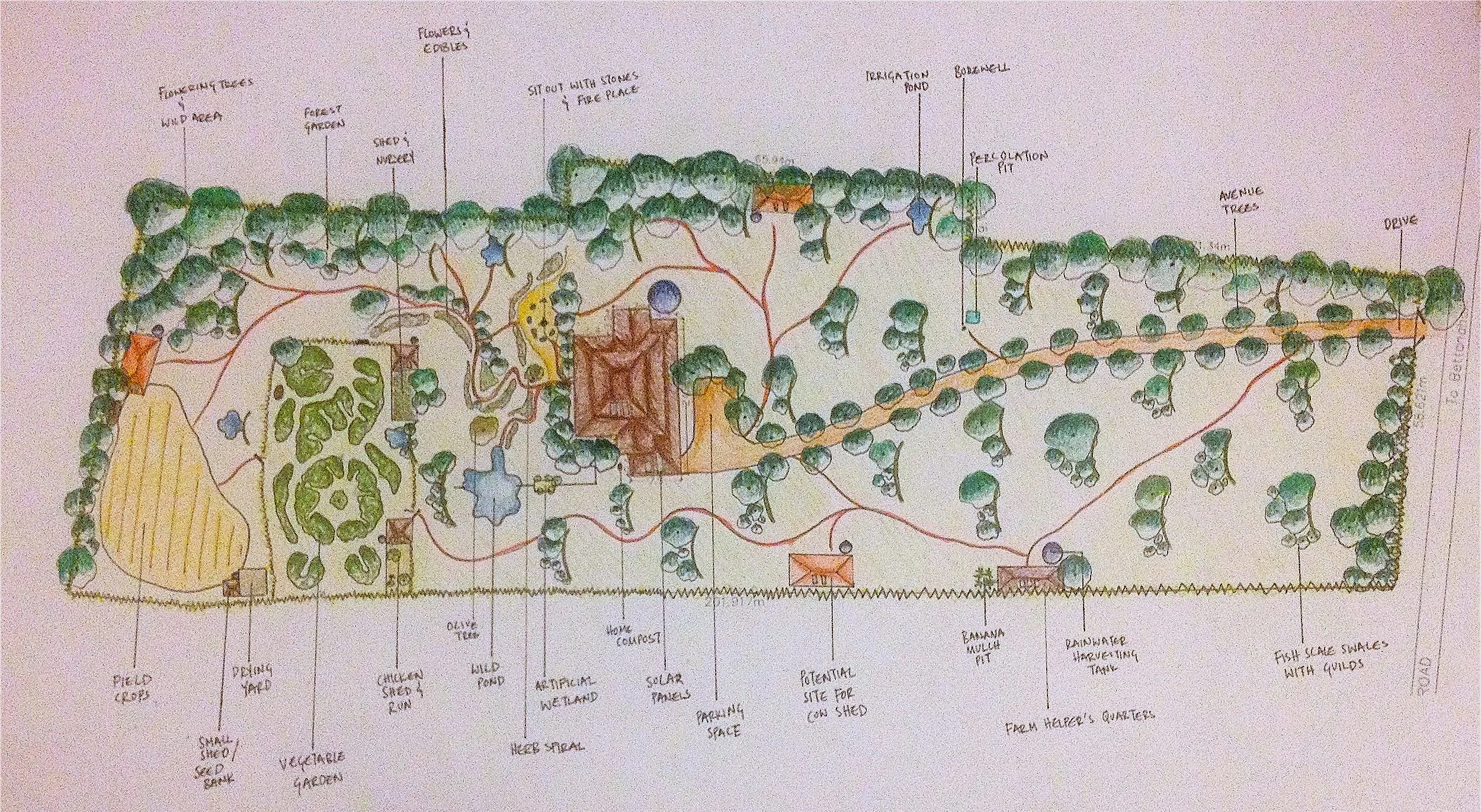
One of our first projects, done in close collaboration with the client. The aim with this 3-acre project was to create a model permaculture farm.
The project began with earthworks and living fencing, before creating the fruit orchard, planning and planting tree guilds, vegetable production and experimentation with natural ponds.
The vision was that it would be a living laboratory, exploring a range of water and soil conservation techniques, planting strategies and animal rearing techniques.
In its initial years, Perma Farm received kitchen waste from near by villages - composting it on site. Now this operation has been shifted to a state of the art recycling centre they set up near by.
Since our involvement, the clients has taken things forward - creating ponds, a nursery, grey water systems, linking animal systems to fertigation and more. It’s always amazing to witness the many lives and chapters a project goes through, and to see, with every visit, new transformations and joyful surprises.
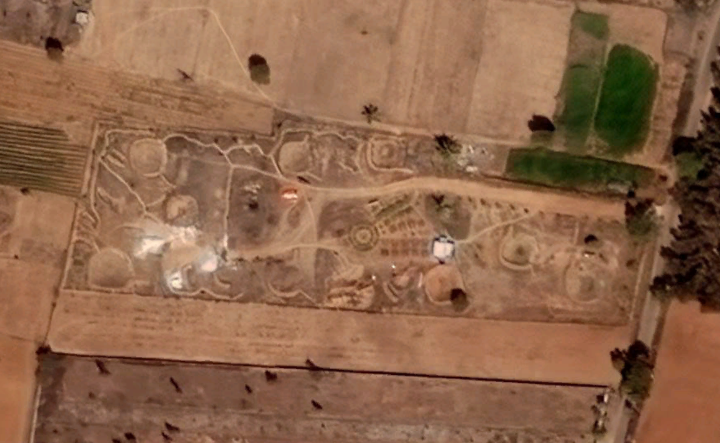
2017
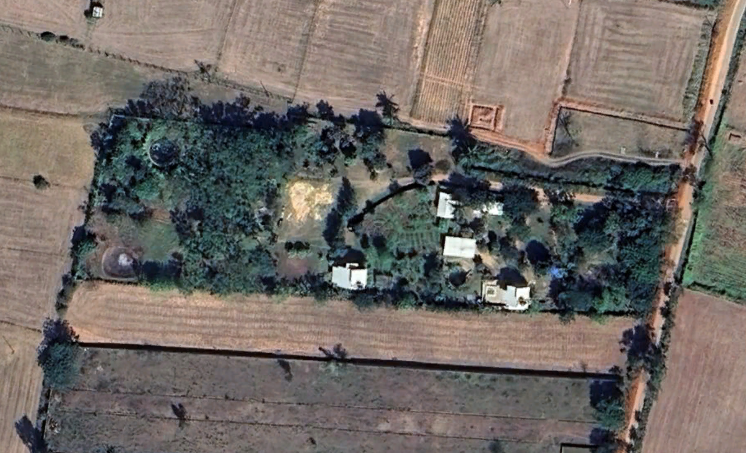
2023
Design Details

Revised Masterplan (2020)
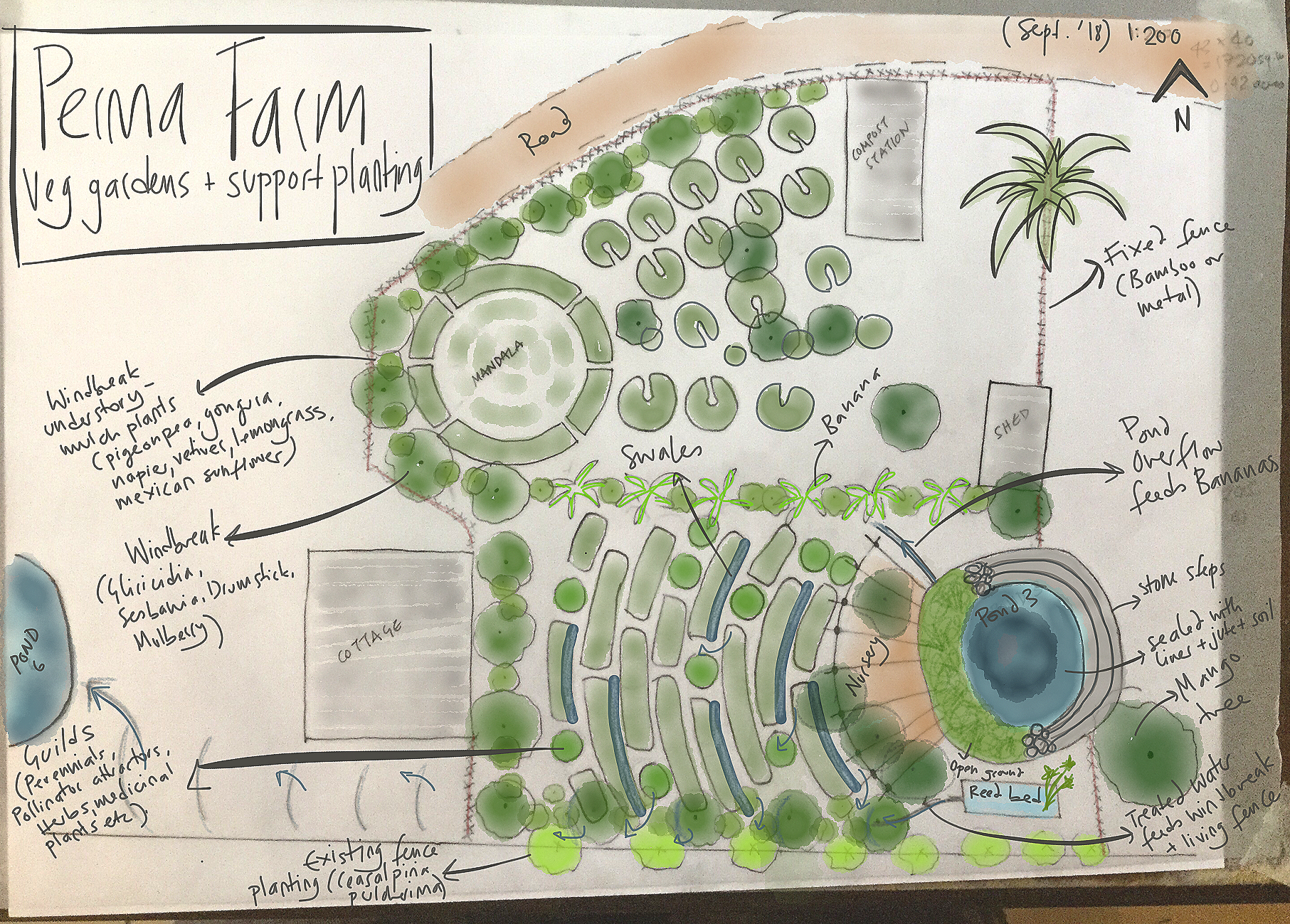
Veggie garden & support planting
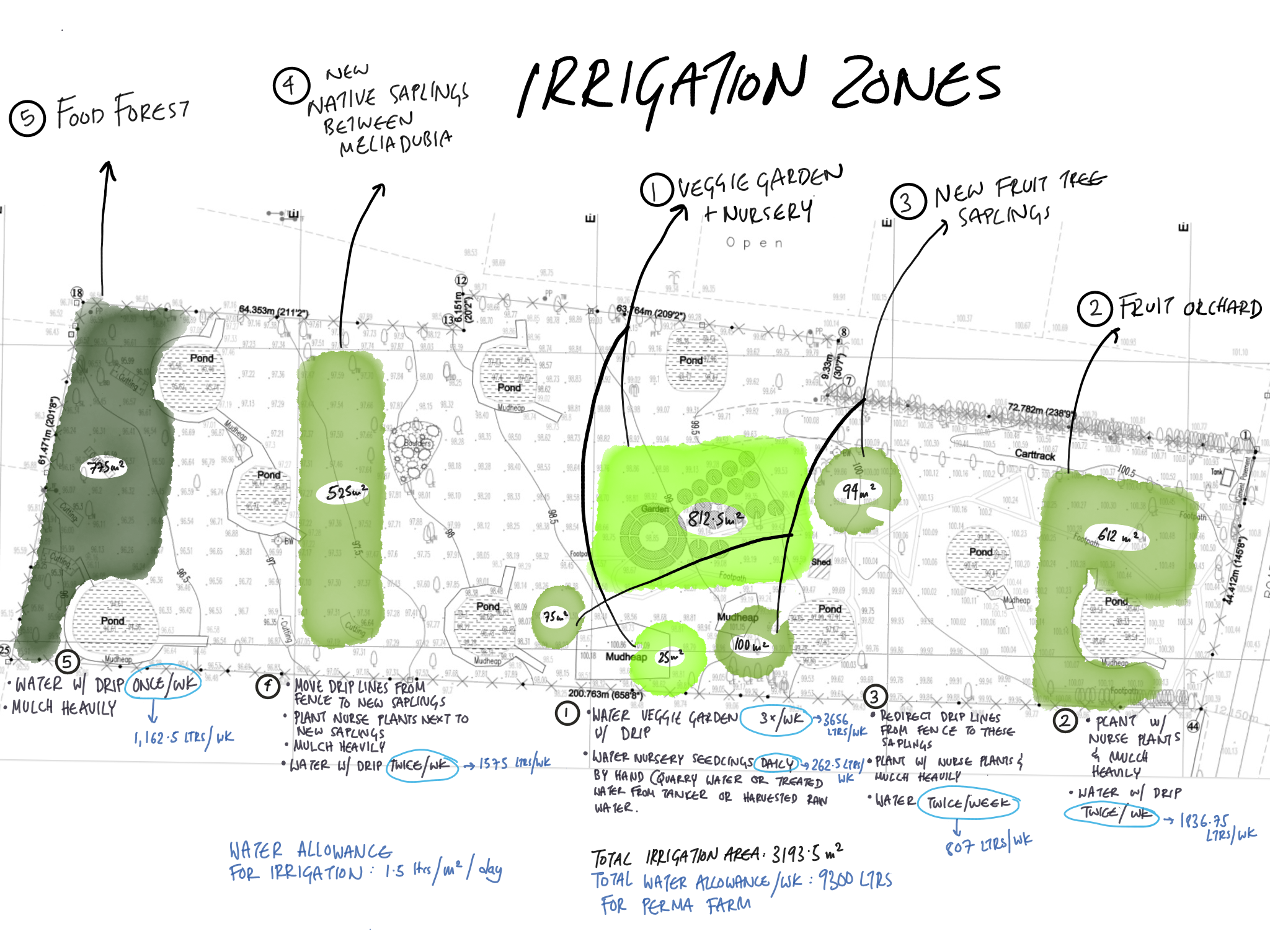
Irrigation Planning
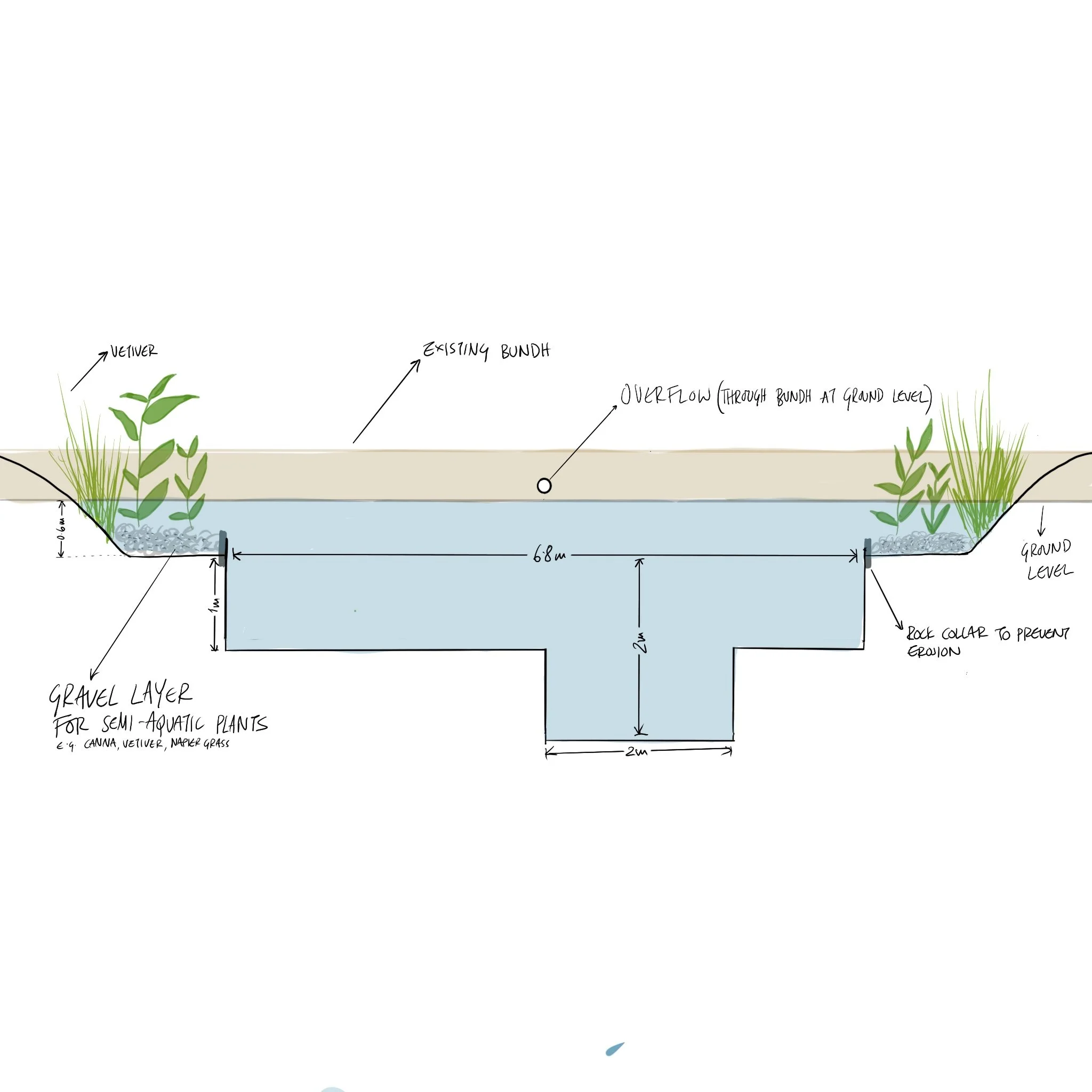
Design detail graphic 3 (eg. sketches)
Site photos
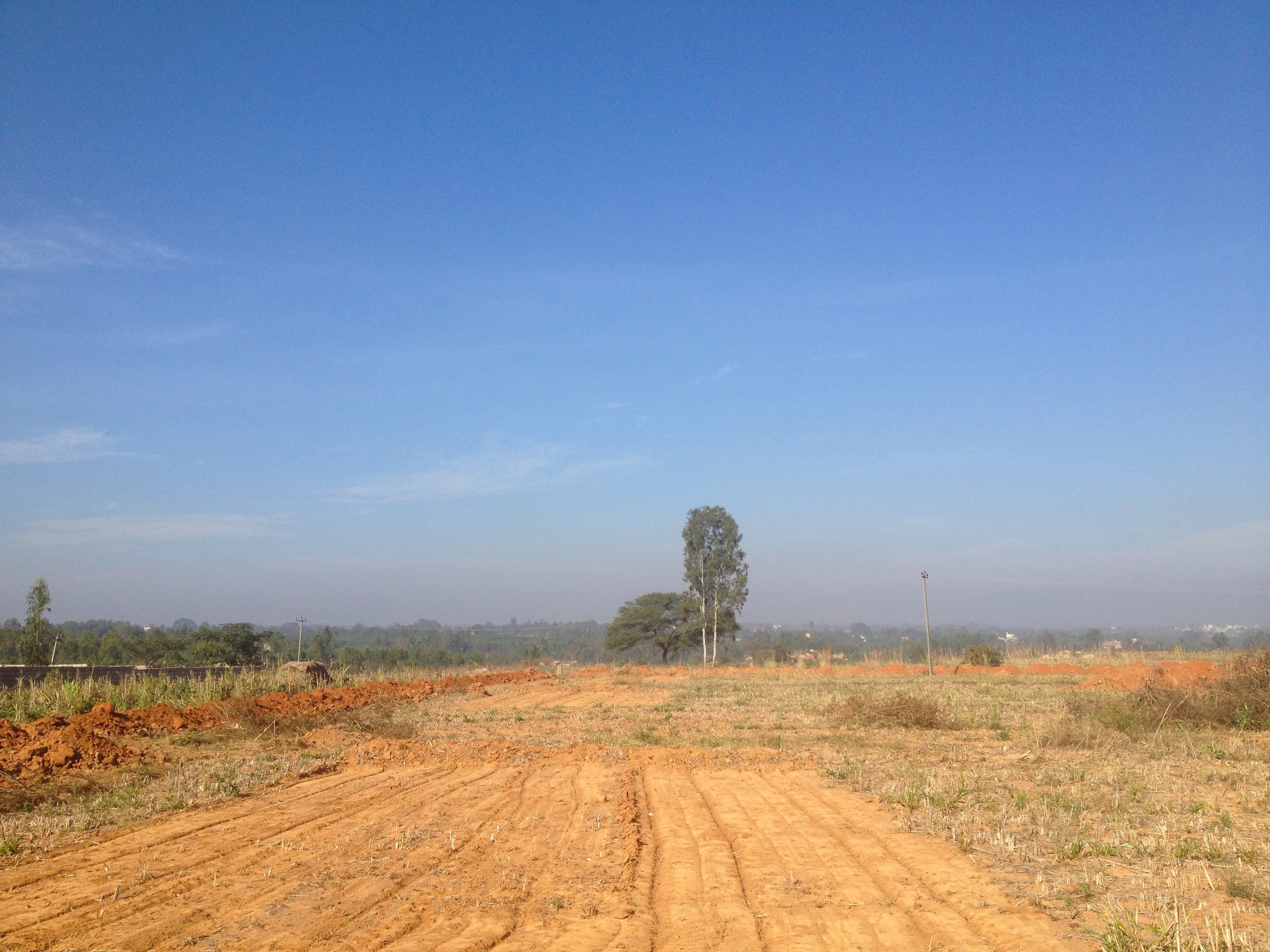
The site in 2014 before work started; it had been a Ragi field with chicken sheds
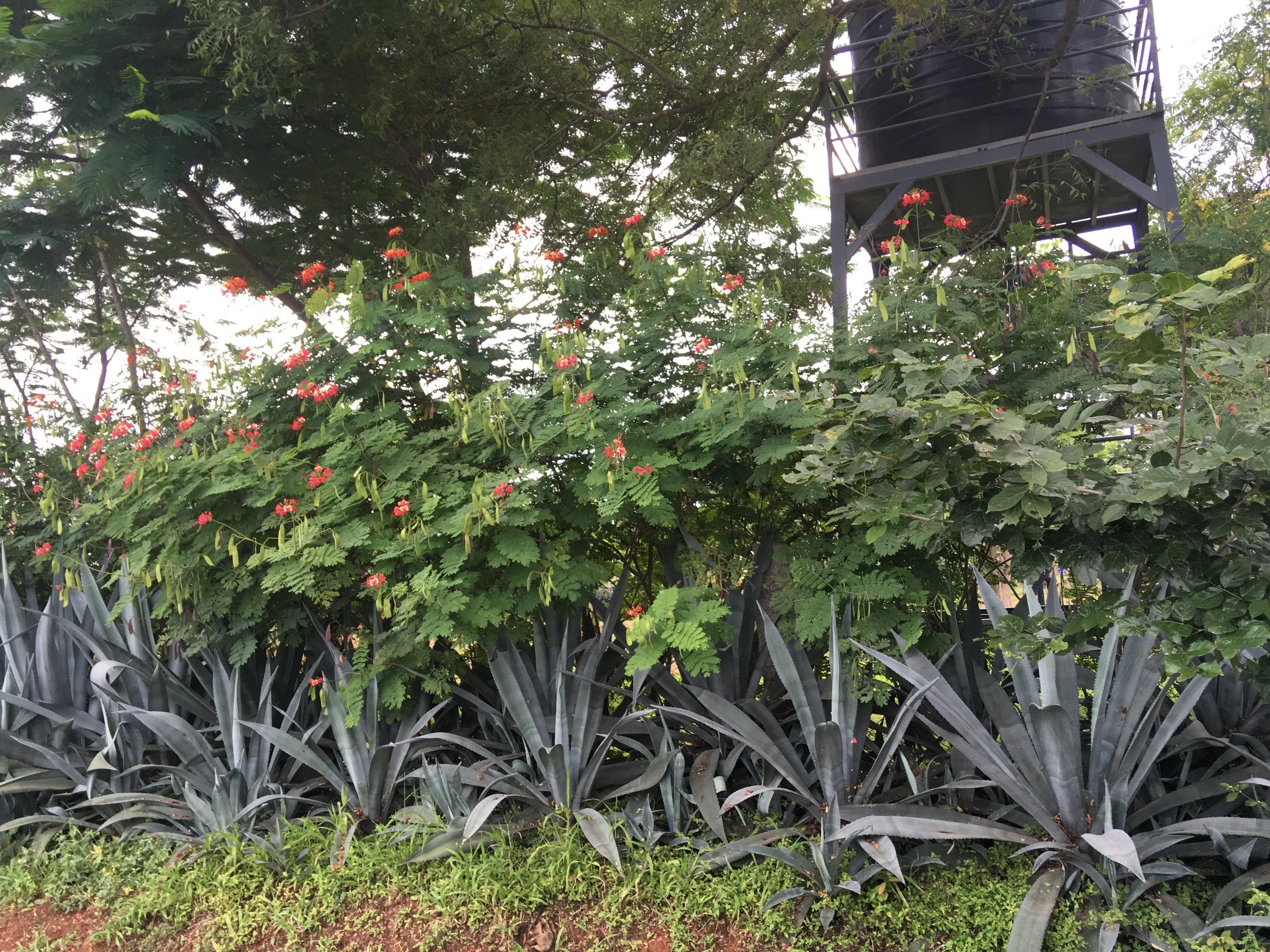
Living fence at 4 years old - with Agave & Ceasalpinia pulcherrima (sown directly)
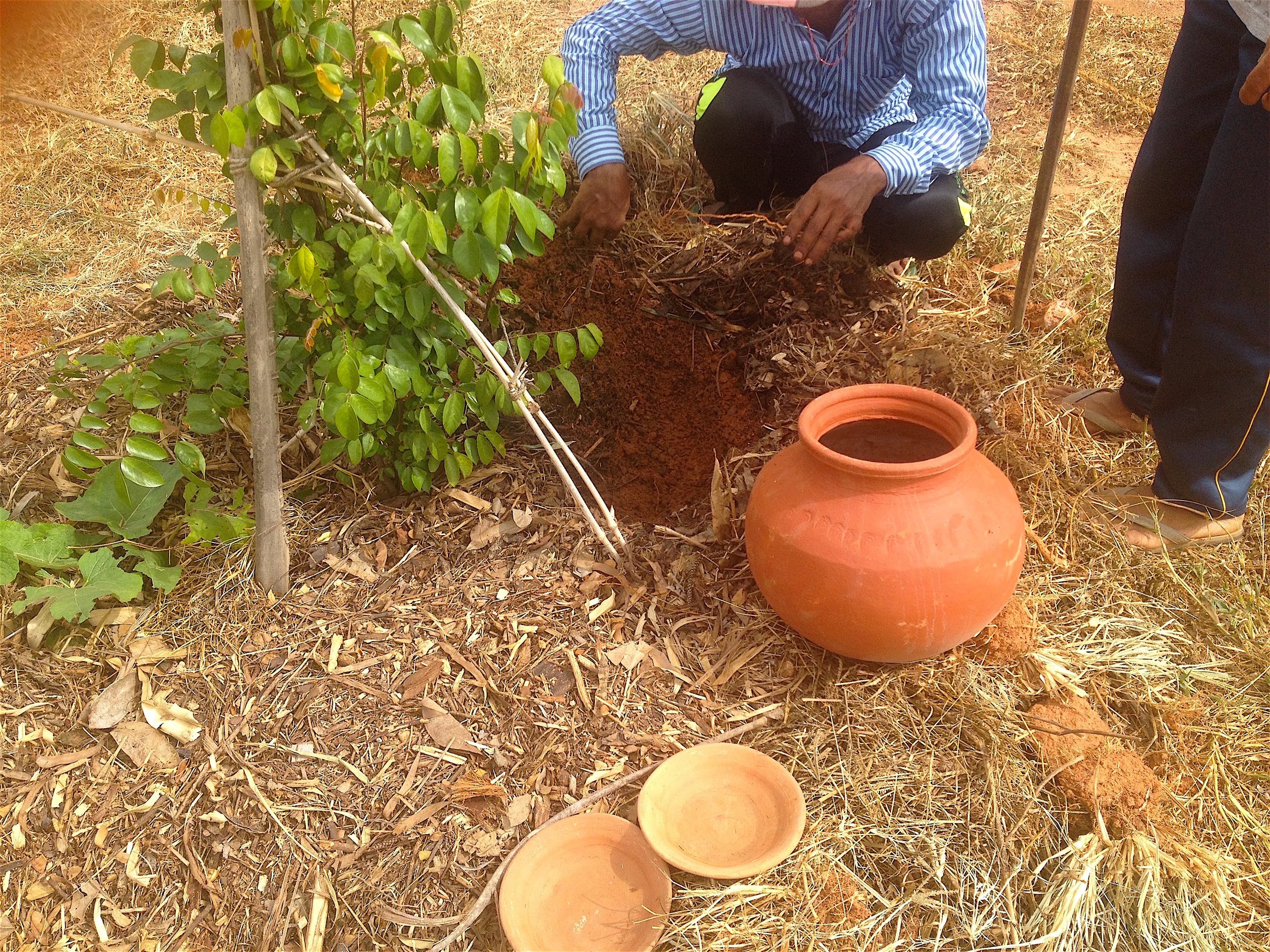
Clay pot irrigation around guilds

Mandala garden and raised veggie beds - before fencing and windbreak planting

Raised beds allow for rich and loosely textured soil to be developed within a few weeks. At first veggie beds were raised high with bricks, due to water evaporation eventually the height of the beds were lowered.

Lowered veggie beds, with Drumstick trees for light shade, with drip irrigation.

The established veggie garden with a mix of annual and perennial edibles
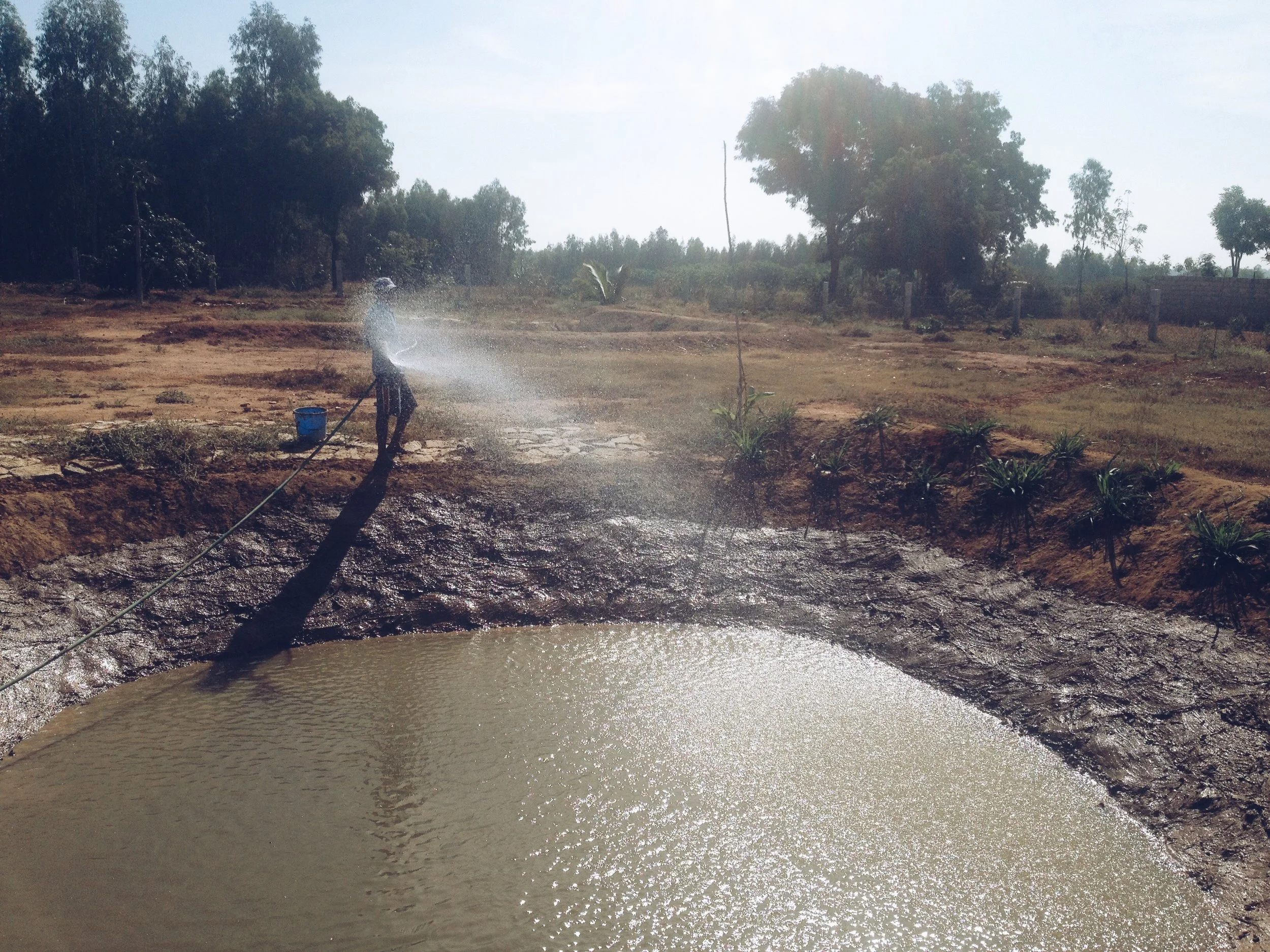
Sealing experiments in year one, this with clay and cow dung. In the end, the perennial ponds were sealed with cement (see design above and later images)
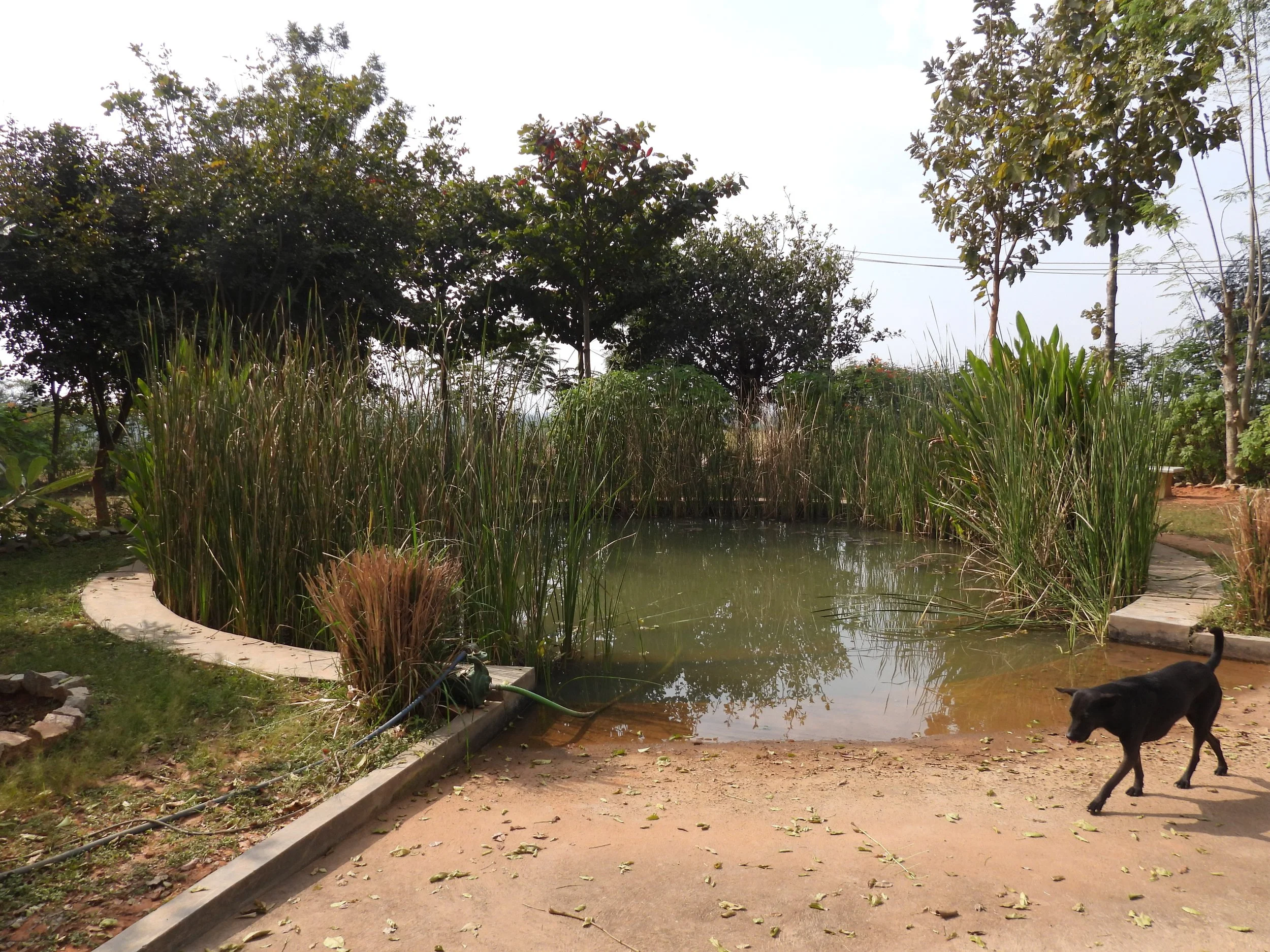
Cement pond allowing for storm water collection (designed by Ananas, adapted and implemented by the client)
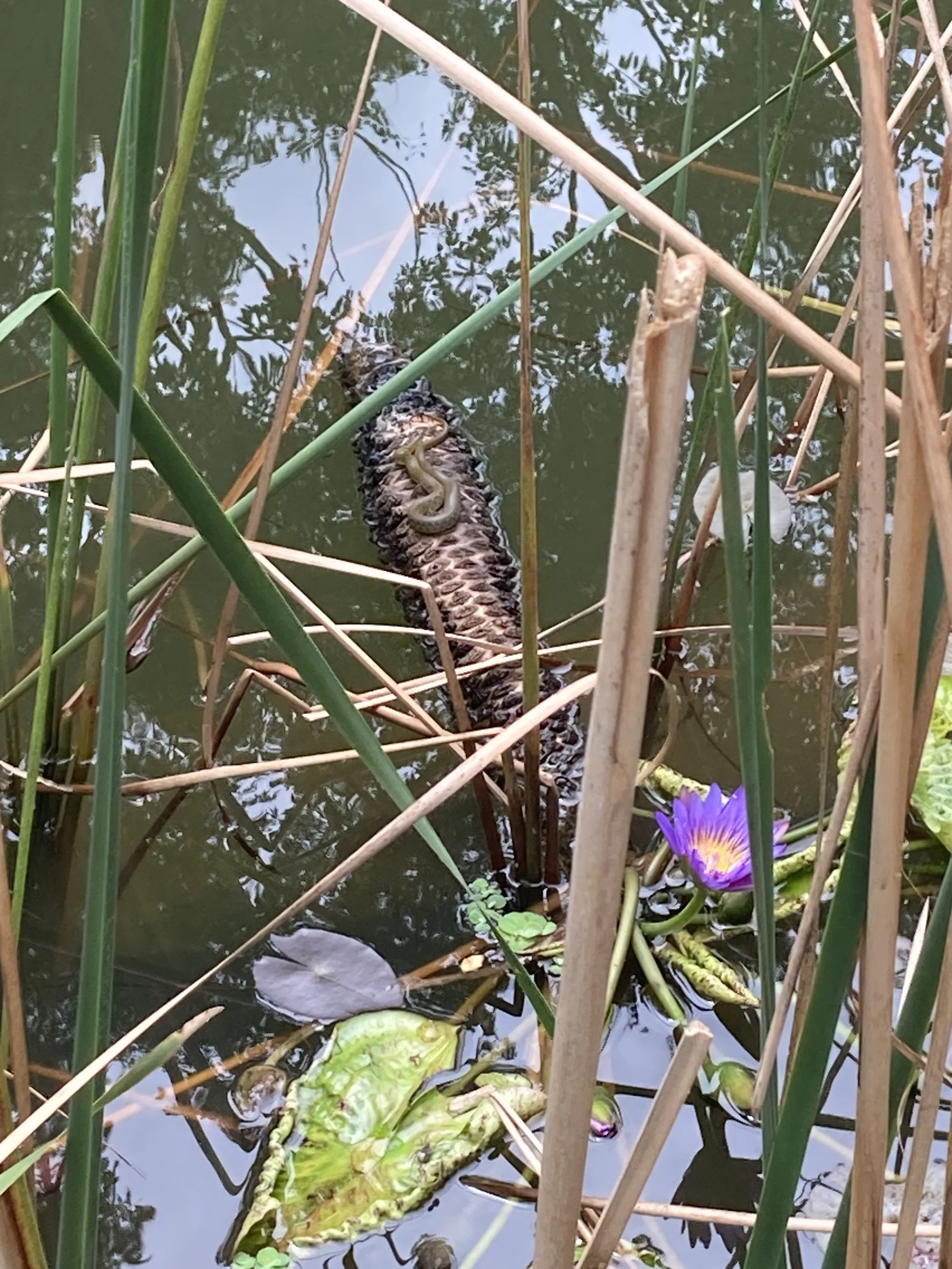
A Chequered Keelback resting in the wetland of the pond

Sweet potato growing under a Cluster Fig (Ficus auriculata) in 2021
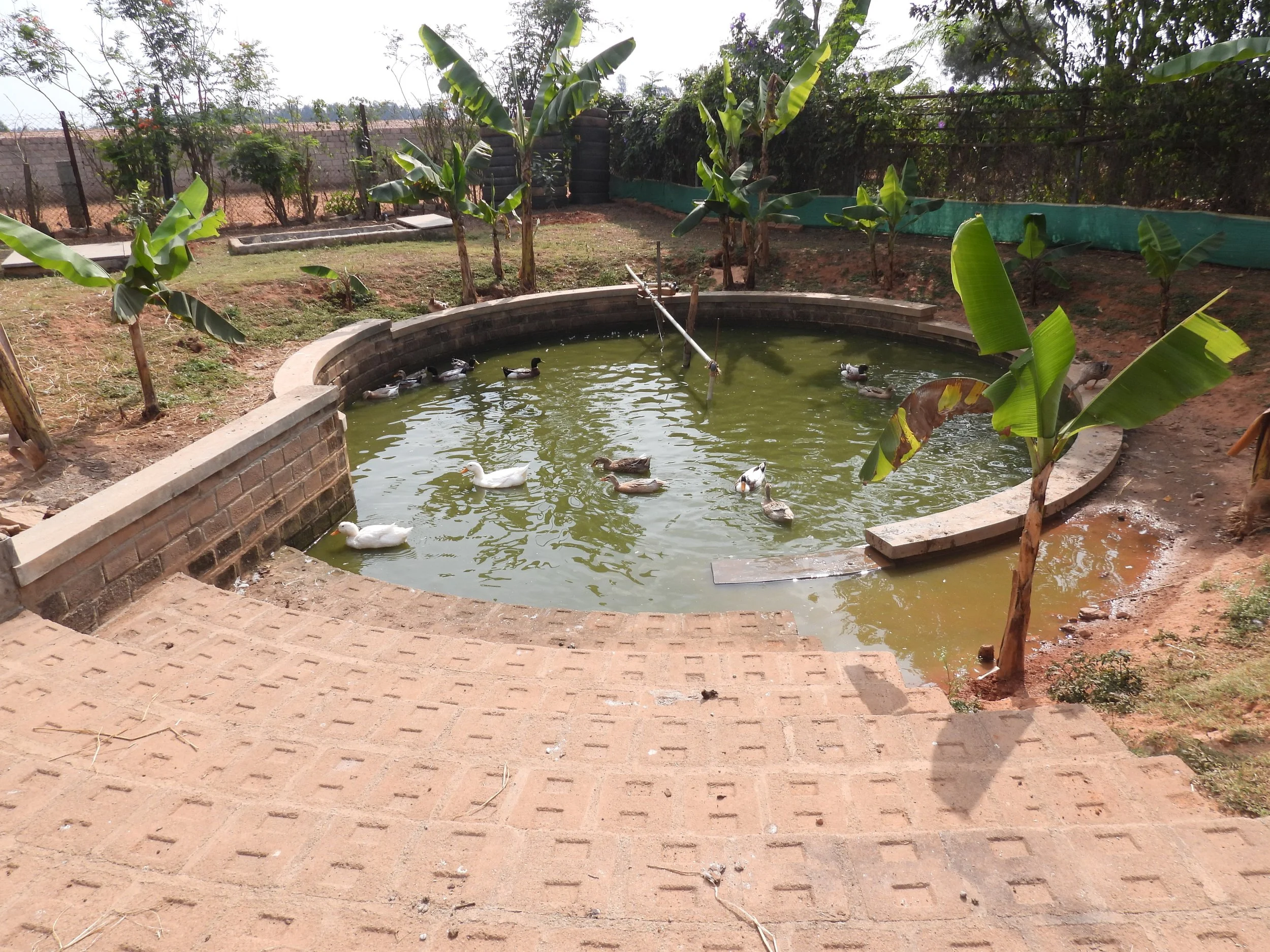
A pond that captures storm water and runoff from animal sheds, linked to a fertigation system (designed and executed by the client)

The farm has been home to a wide range of animals including pigs, goats, donkeys, ducks, chickens and dozens of friendly dogs

Clay pot irrigation under a Start Fruit (Averrhoa carambola) tree

The soil from the ponds (of which there 9 at one stage) was ideal of making stablised mud bricks; which were used to build a cottage and staff quarters.