


Aladamane Thota
Project size: 1.65 acres
Near BM Kaval Agara Forest, Siddanapalya, Bangalore, Karnataka
August 2023 to January 2024
Key design features: Pond design, homestead, food forest, syntropic, peripheral trench, living fence
Project team: Sanjana Radhakrishnan (Design lead); Joshua Danesh, Nikhil Rodrigues
Elevation: 814 metres above sea level
Annual rainfall: 1070mm / 42.1 inches
Climate: Tropical savanna
Bioregion: Tropical Dry Deciduous scrub forest / moist mixed riparian forest
Soil type: Sandy loam
Design phase
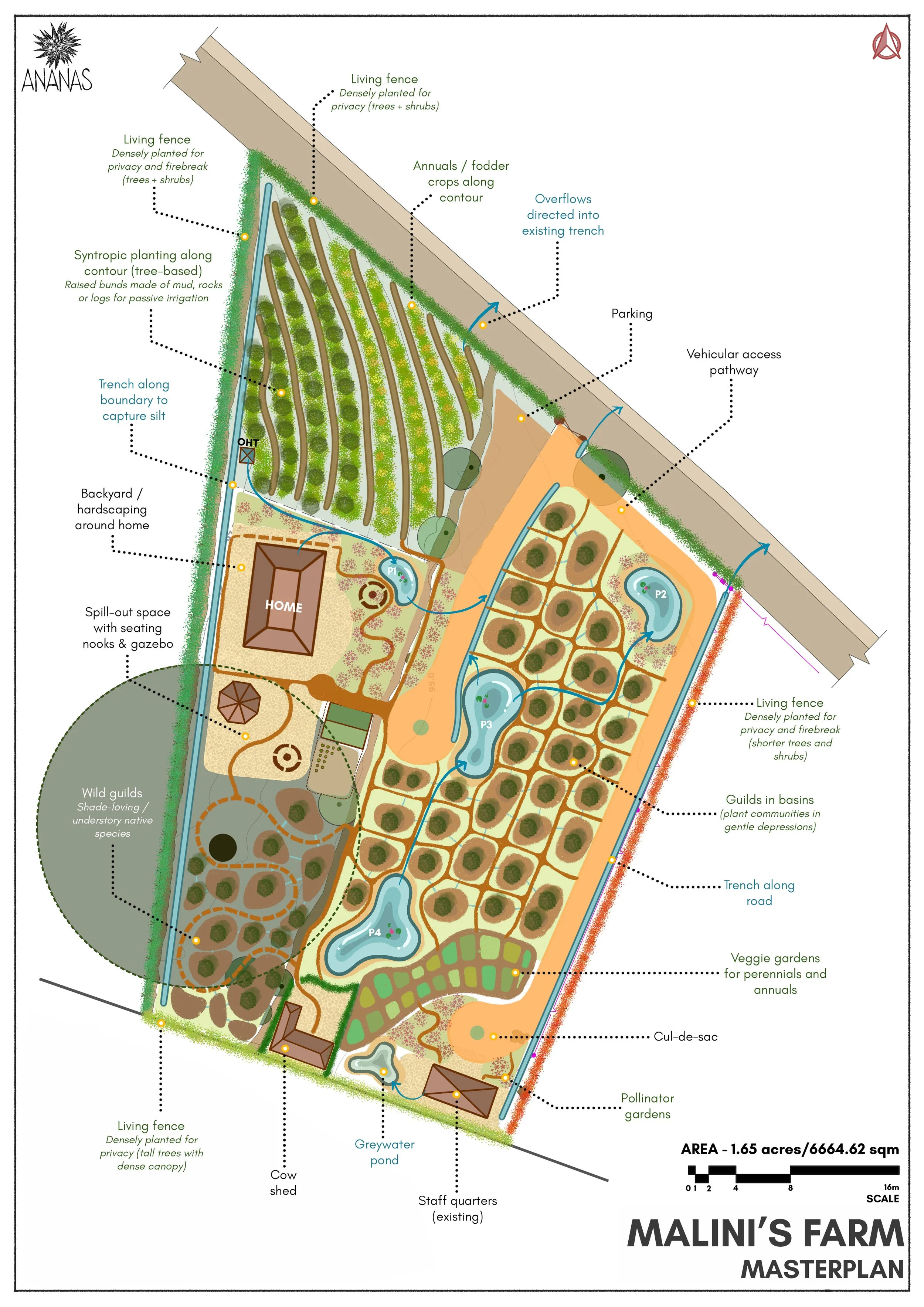
Set on 1.65 acres at the edge of a forest, Aladamane Thota (“farm with a banyan tree home”) was envisioned as a weekend retreat where the clients could reconnect with the land and grow their own food. The project aimed to increase ecological diversity while gradually developing a dense, productive forest garden and managing rainwater.
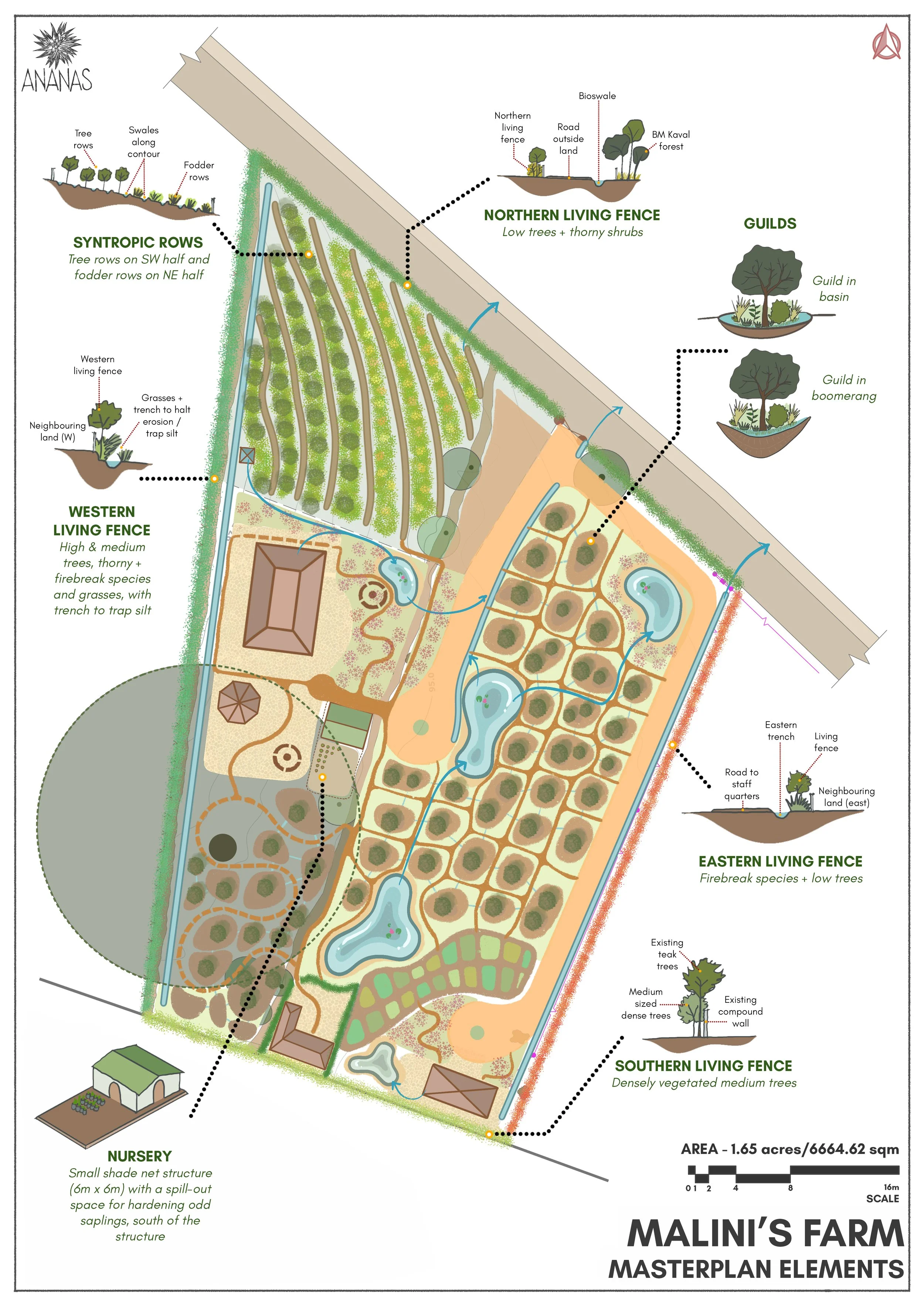
Our design approach focused on creating a resilient landscape that integrates habitation with regenerative land management. The masterplan we developed brings together a syntropic agroforestry system, layered food forest, an interconnected pond network, dedicated vegetable growing areas, a semi-wild zone, and carefully planned access pathways and roads.
The design process was supported by a detailed environmental study and a comprehensive design document. This included site analysis, species selection tailored to the local ecology, earthworks strategies, recommendations for built spaces, a step-by-step implementation plan, and an extensive plantlist suited to the client’s needs and the site’s long-term ecological goals.
Design Details

Site photos
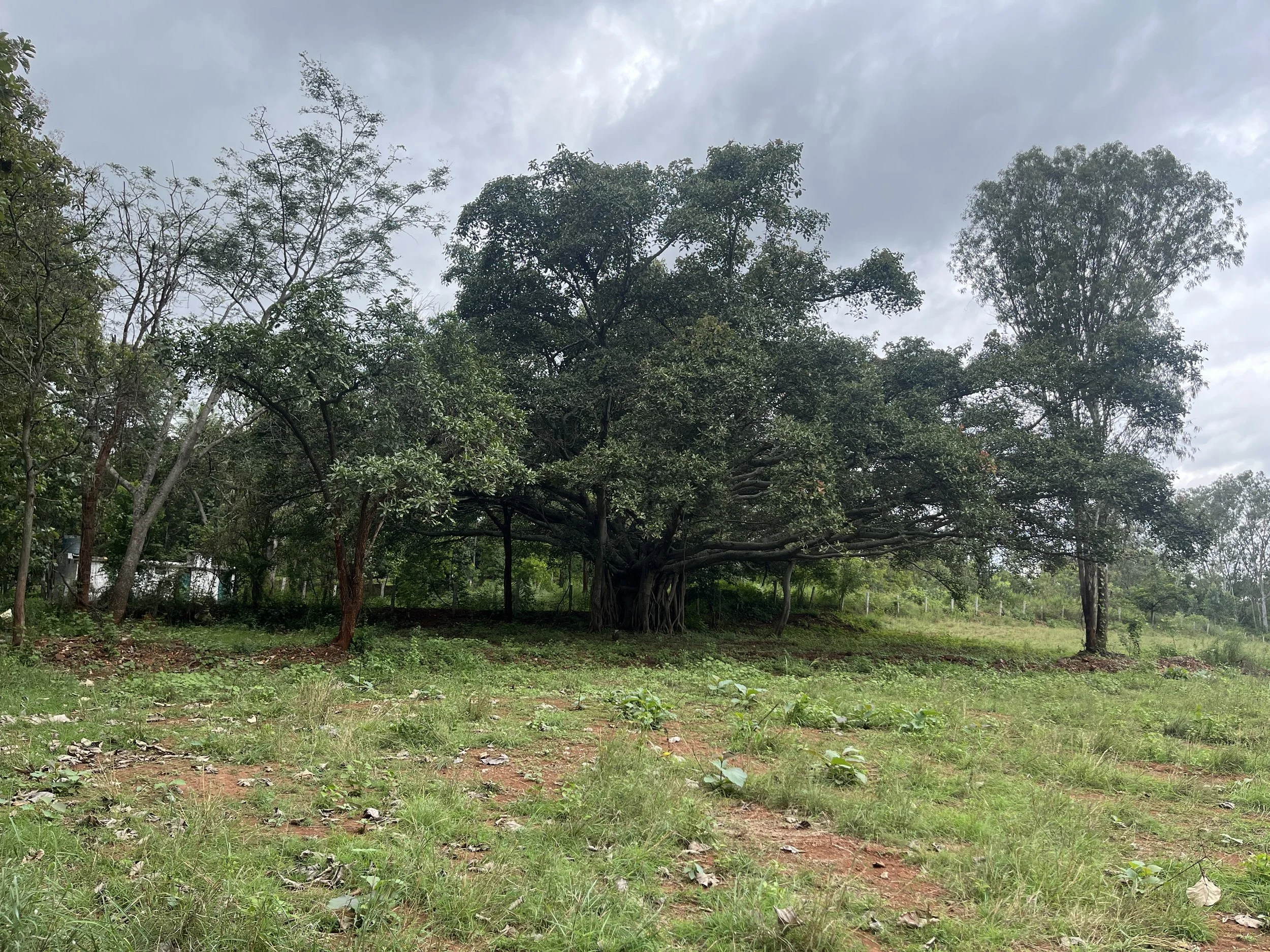
View of site and banyan
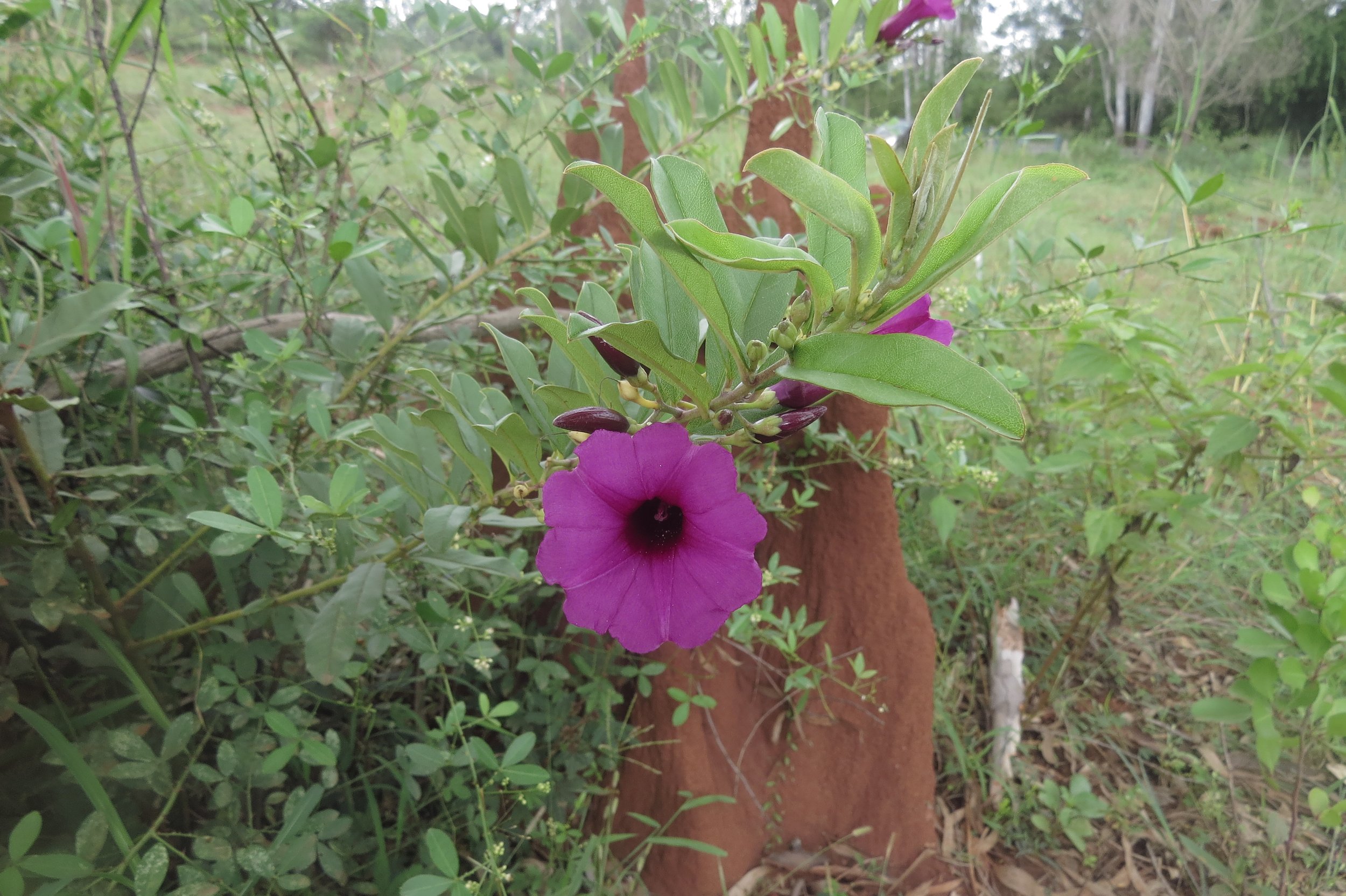
Argyreia cuneata
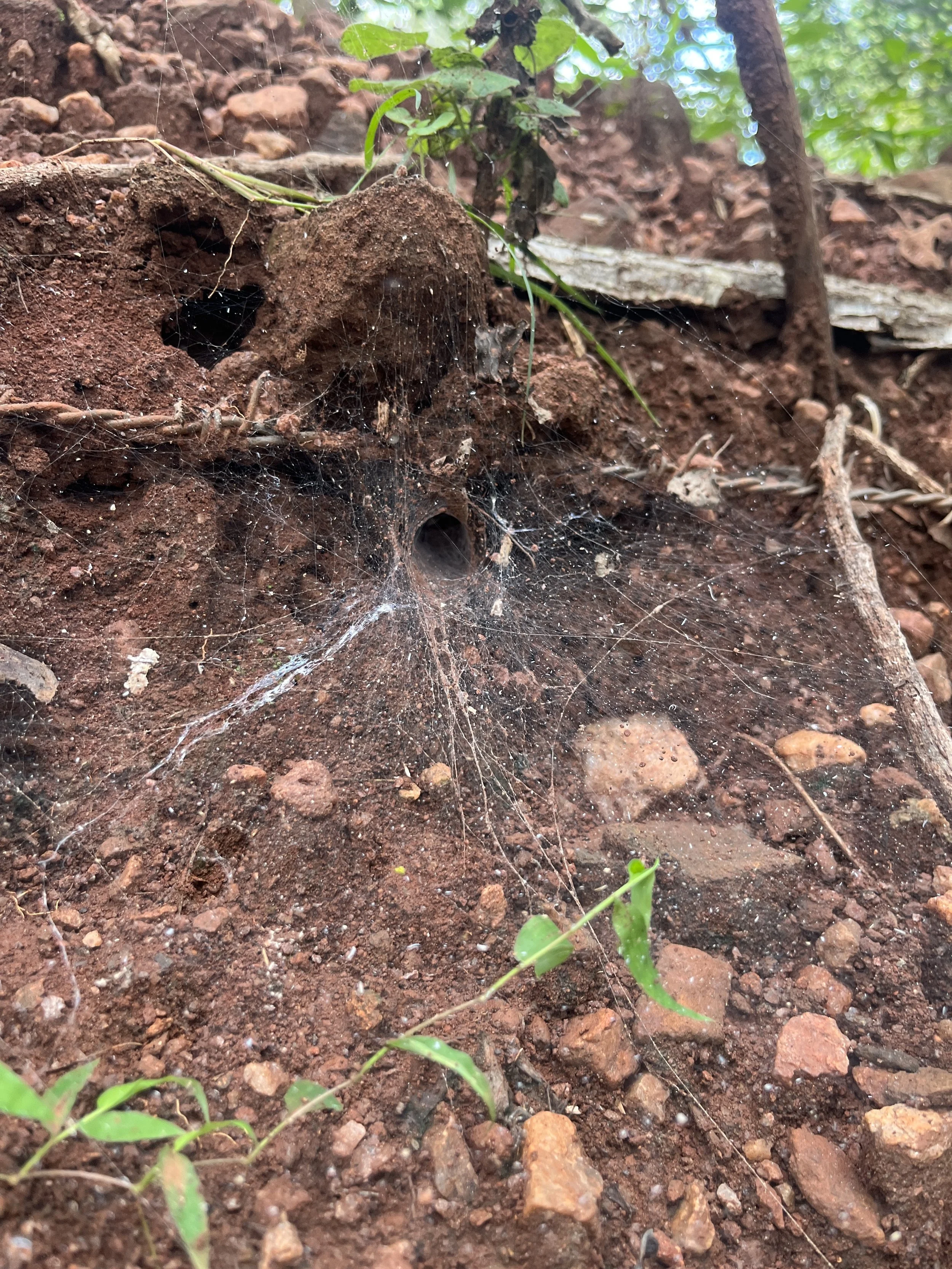
Funnel web spider
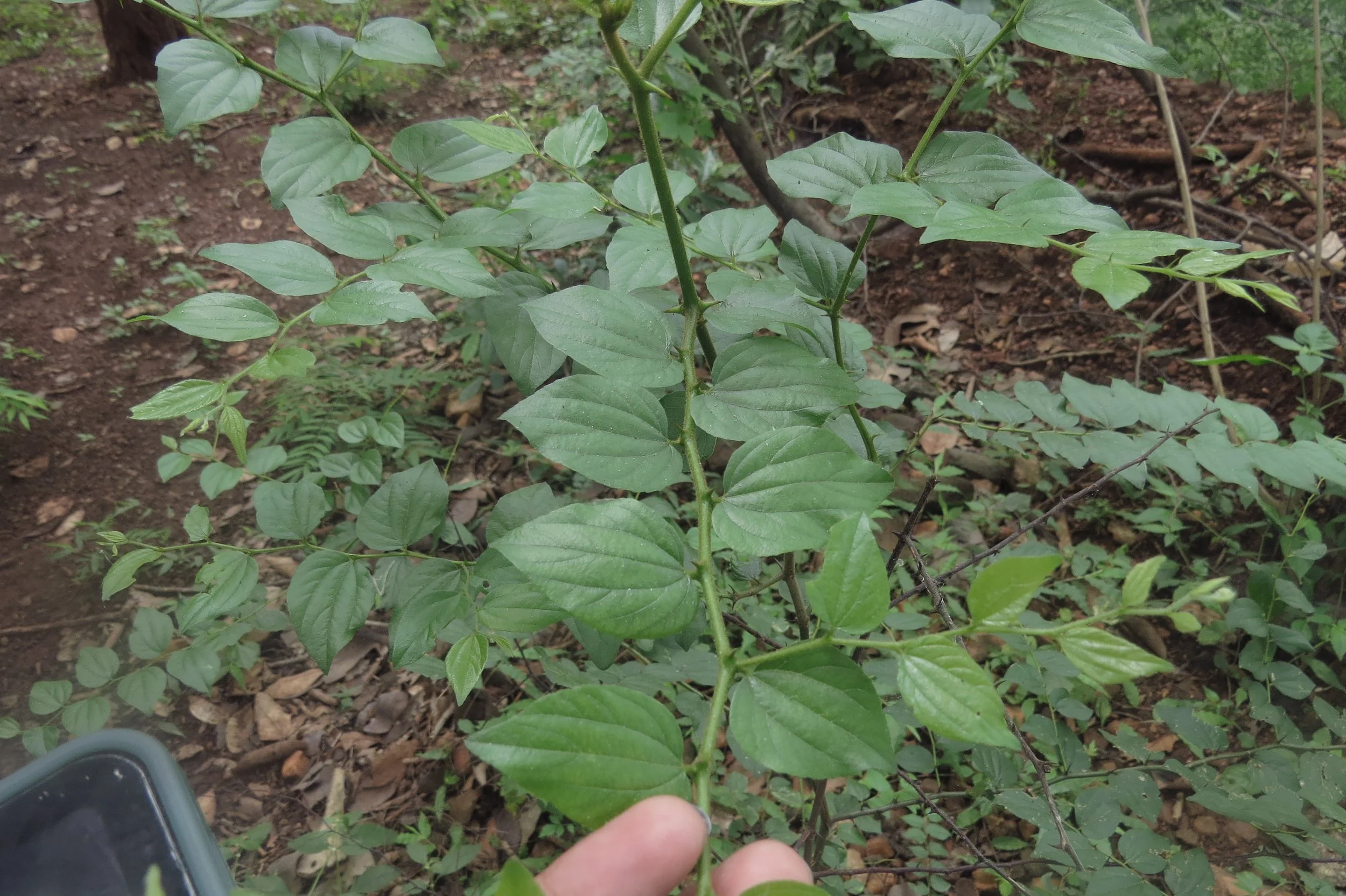
Ziziphus sp.
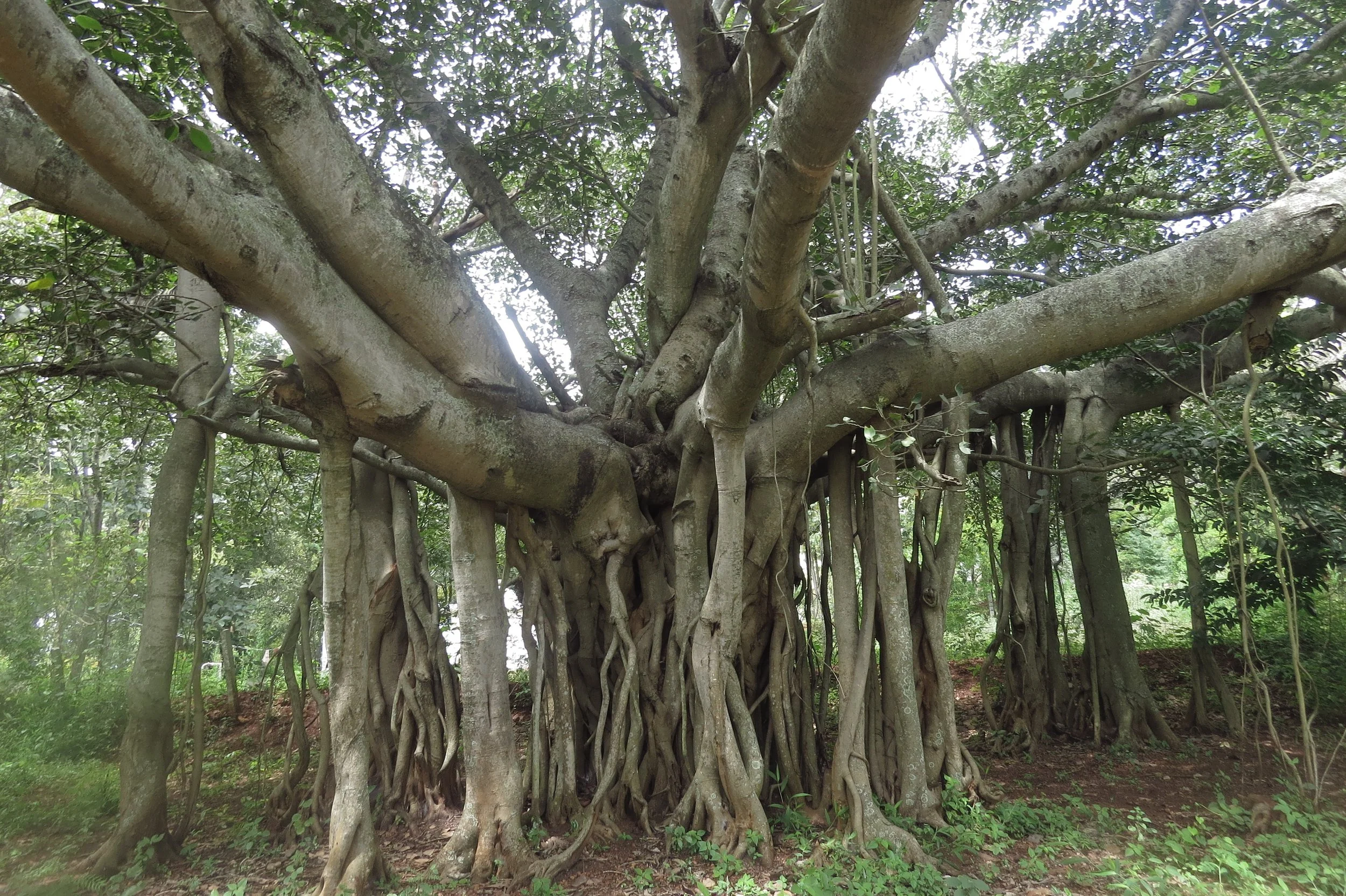
Banyan tree on site
Implementation guidance
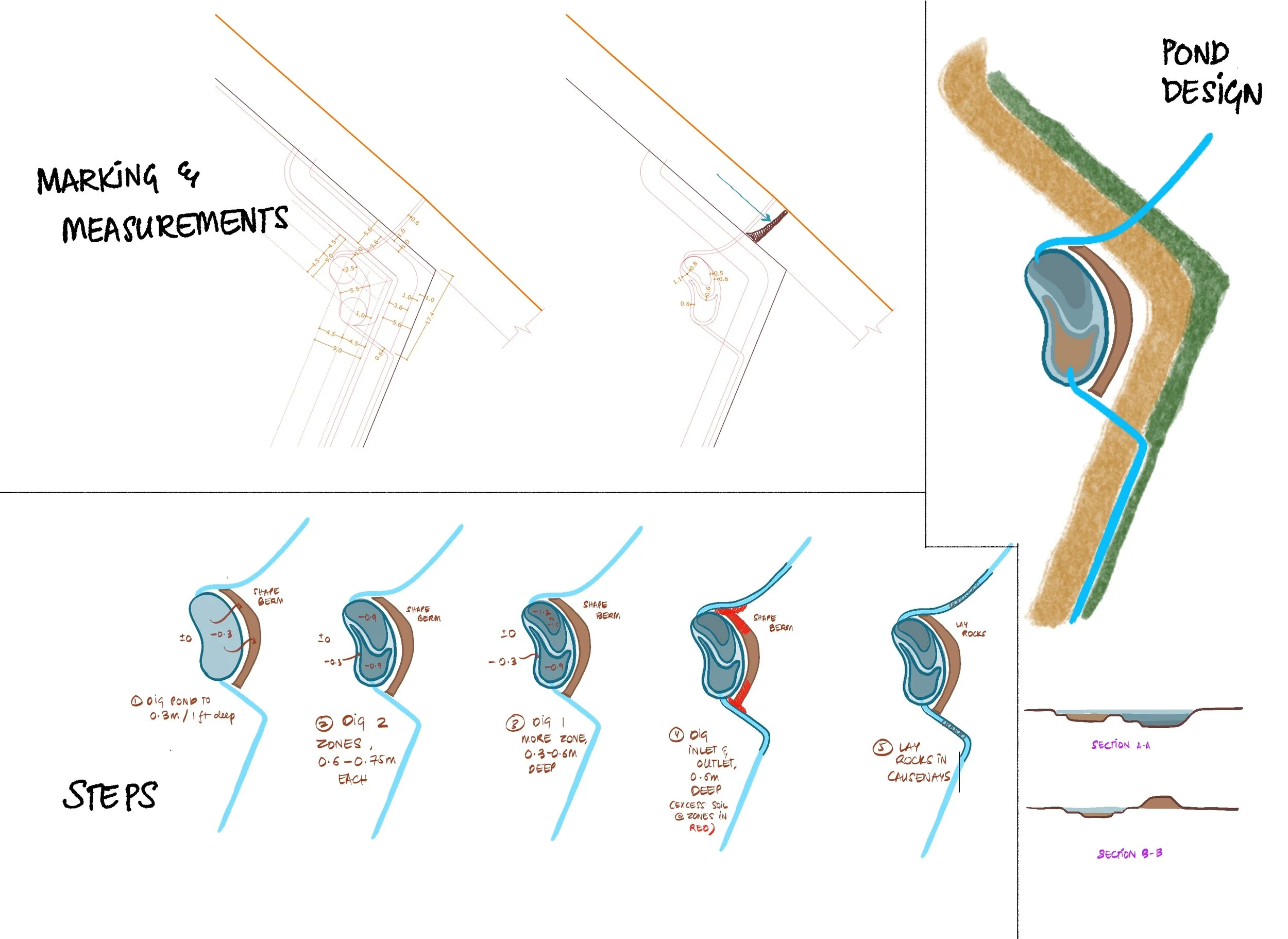
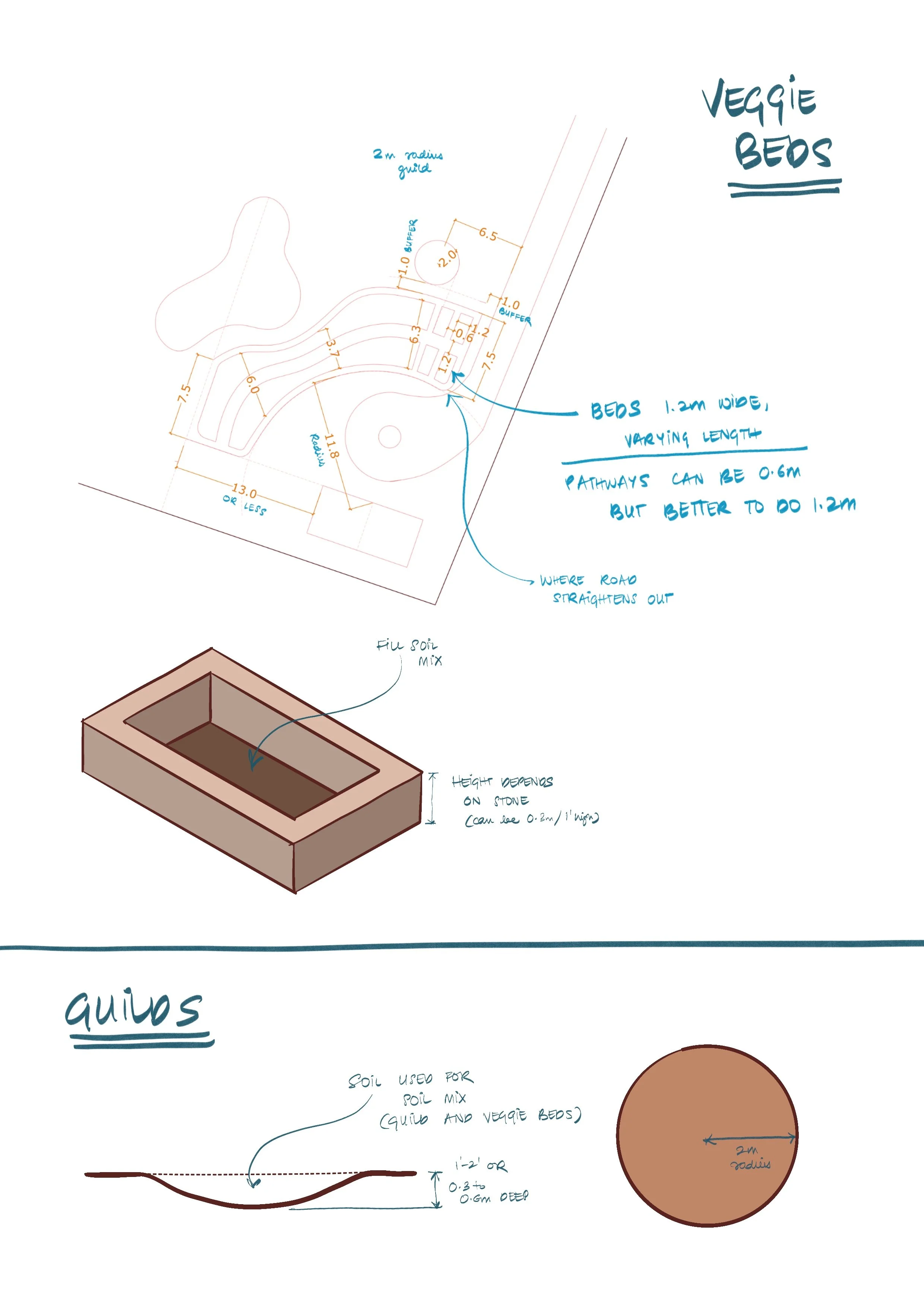
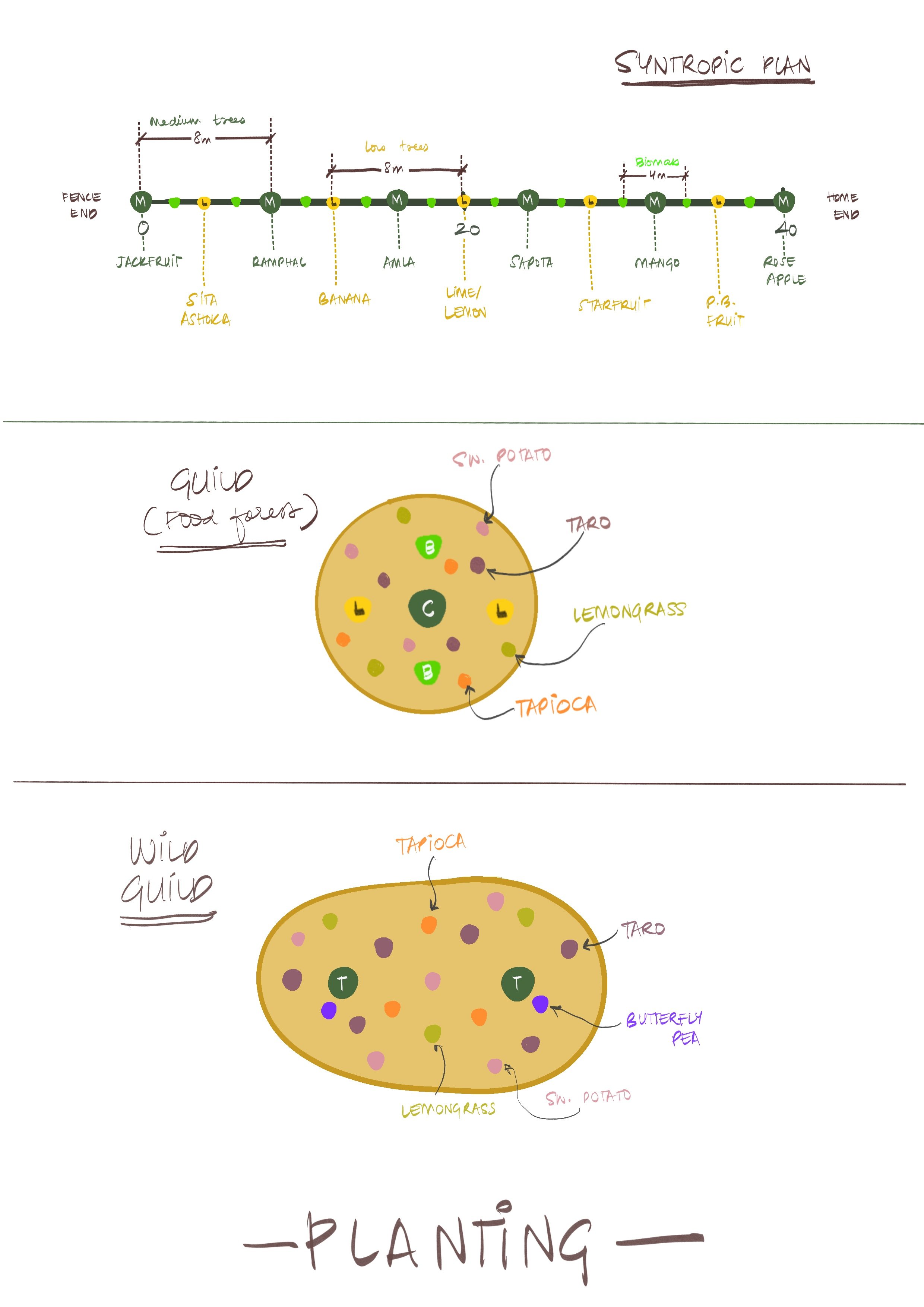
As part of the design engagement, we also demonstrated the implementation of key landscape elements on site. This included one example each of a pond, syntropic row, swale, overflow structures, a peripheral trench, plantings for the wild zone, food forest and living fence, as well as a vegetable bed.
Over several days of hands-on fieldwork, we guided the clients through the full process, from design interpretation and site marking to digging, shaping, planting, mulching, and final finishing. These demonstrations served as working prototypes for the larger landscape.
Following this process, the clients continued the implementation independently, replicating the systems and units that had been demonstrated during the on-site sessions.
Implementation photos
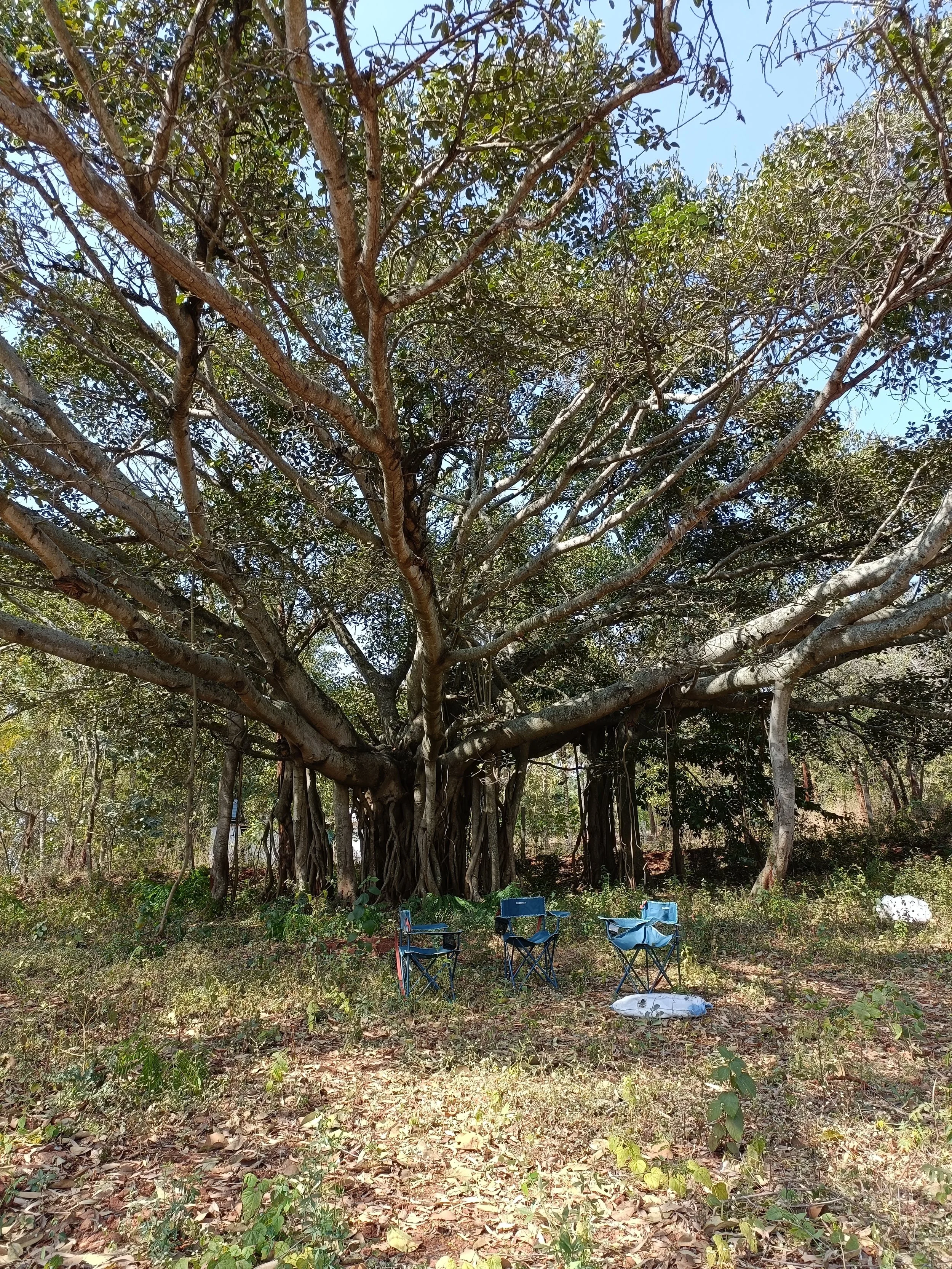
Base camp for site work
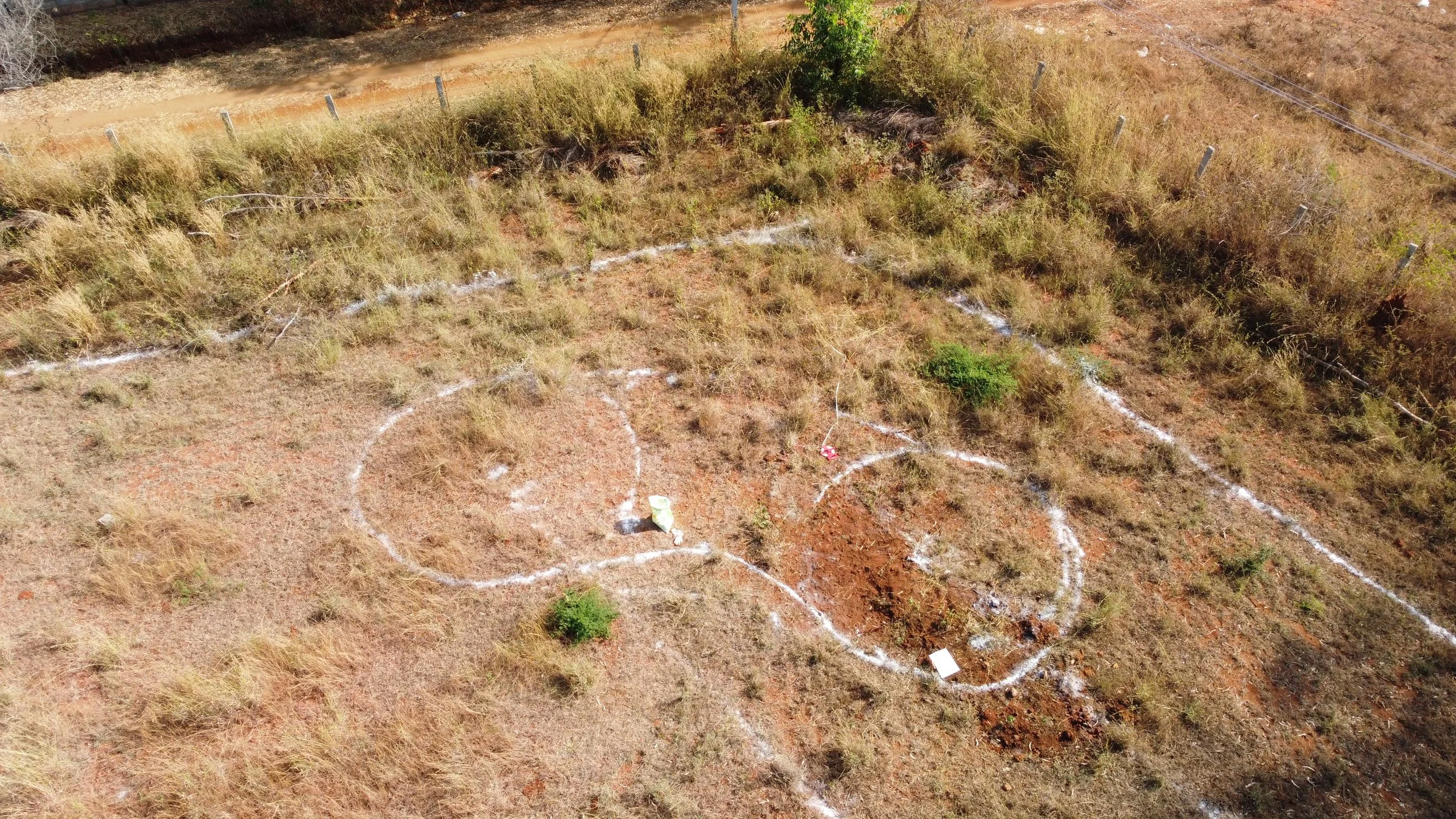
Marking the pond
Drone view of pond
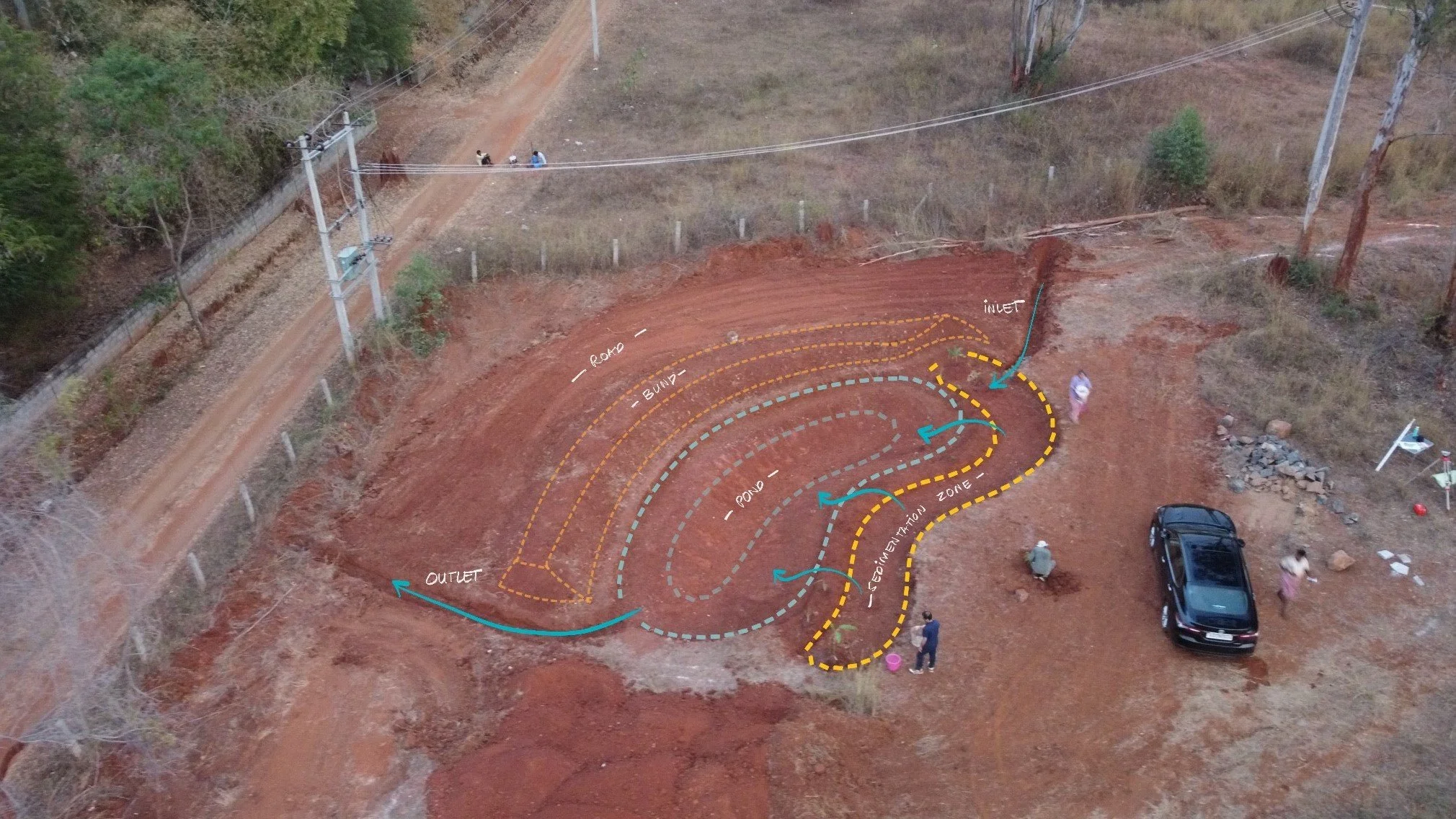
Drone view of pond
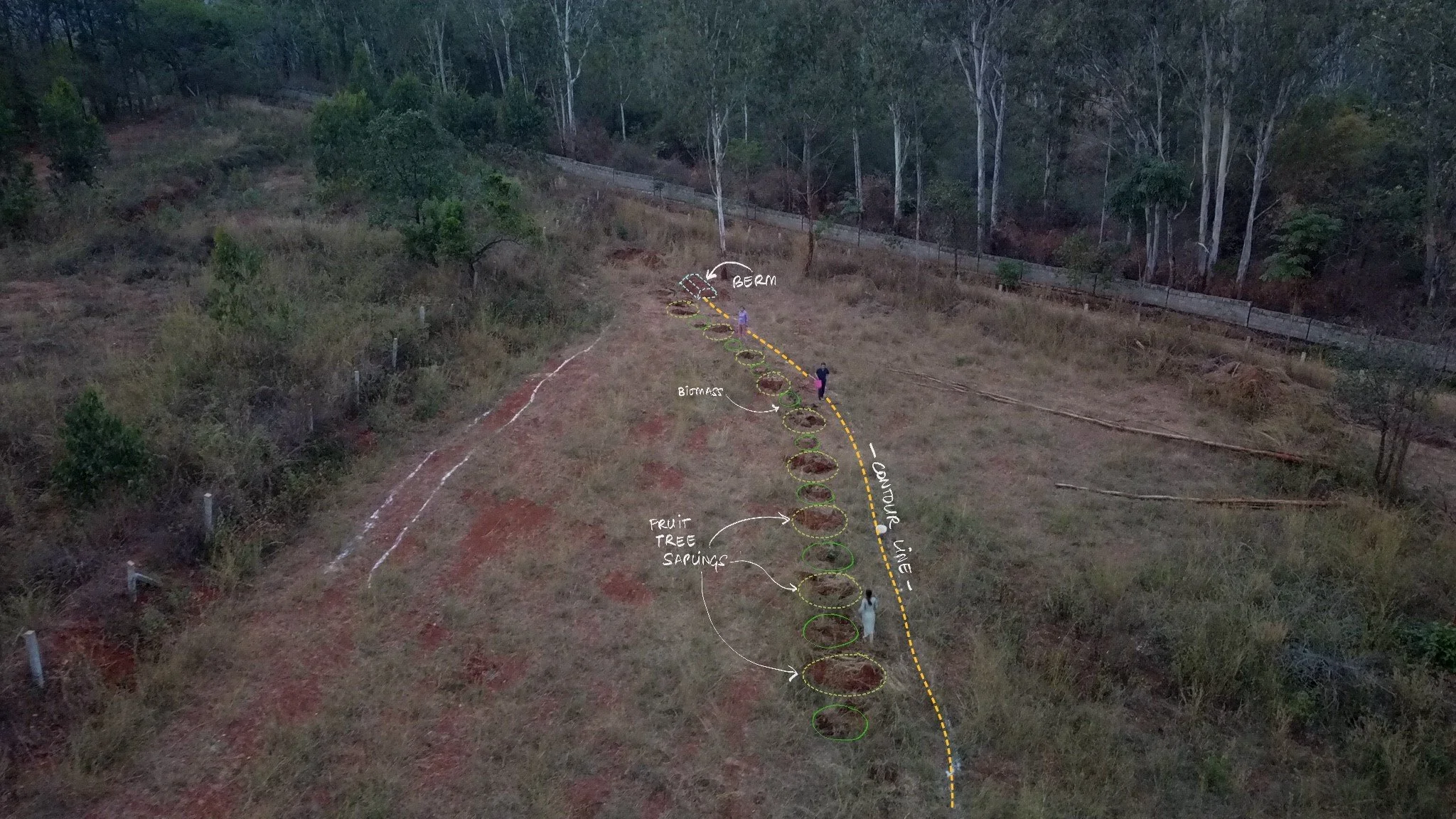
Syntropic row demo
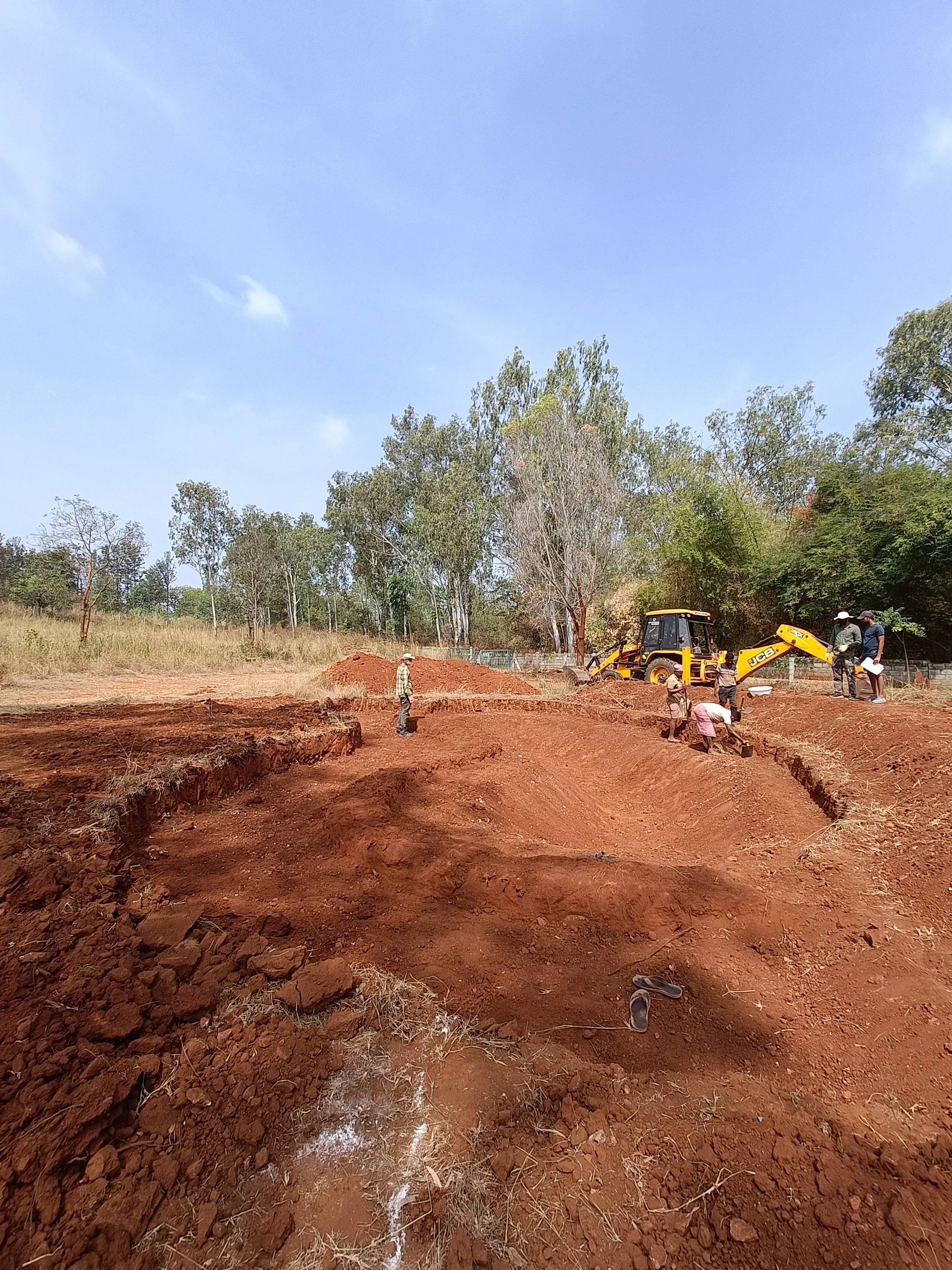
Pond after finishing
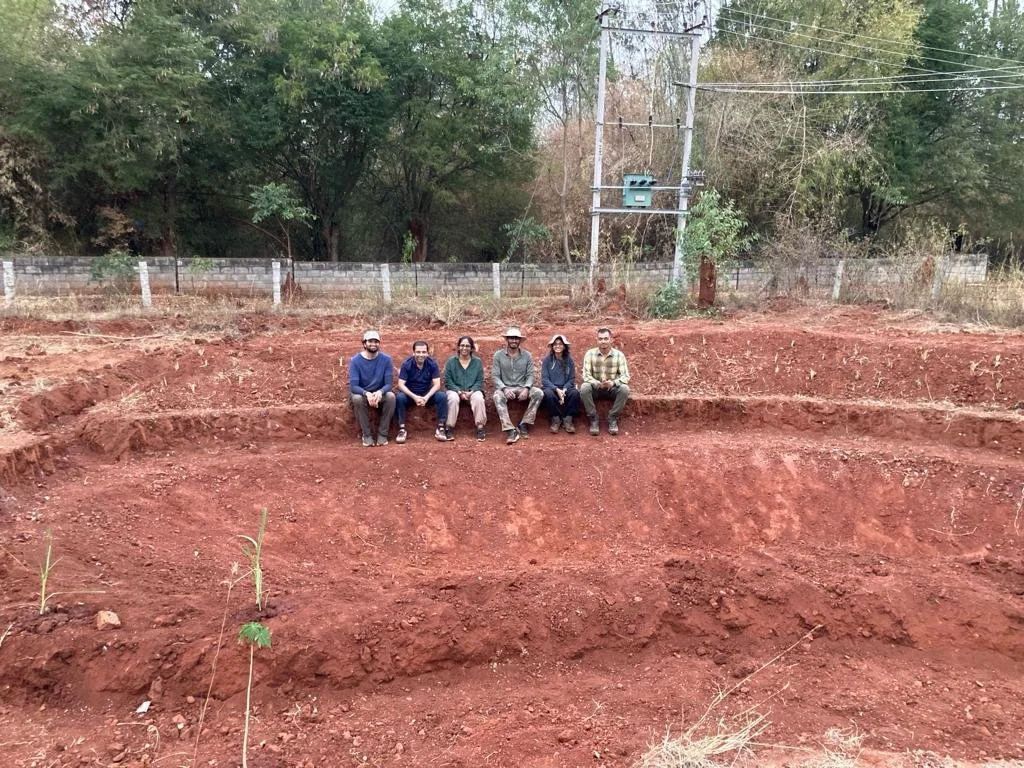
Site team and clients
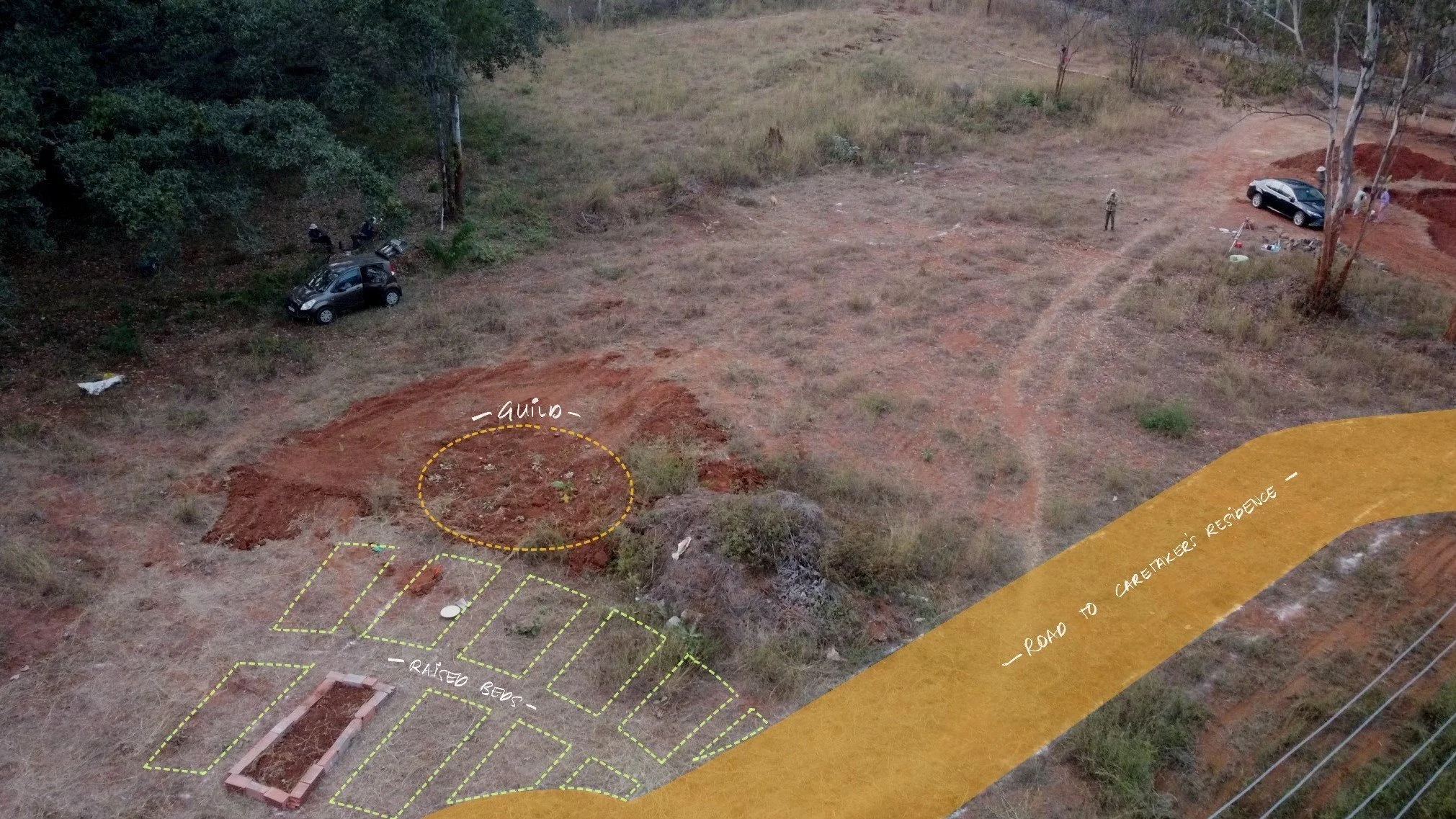
Demo of food forest guild and veggie bed
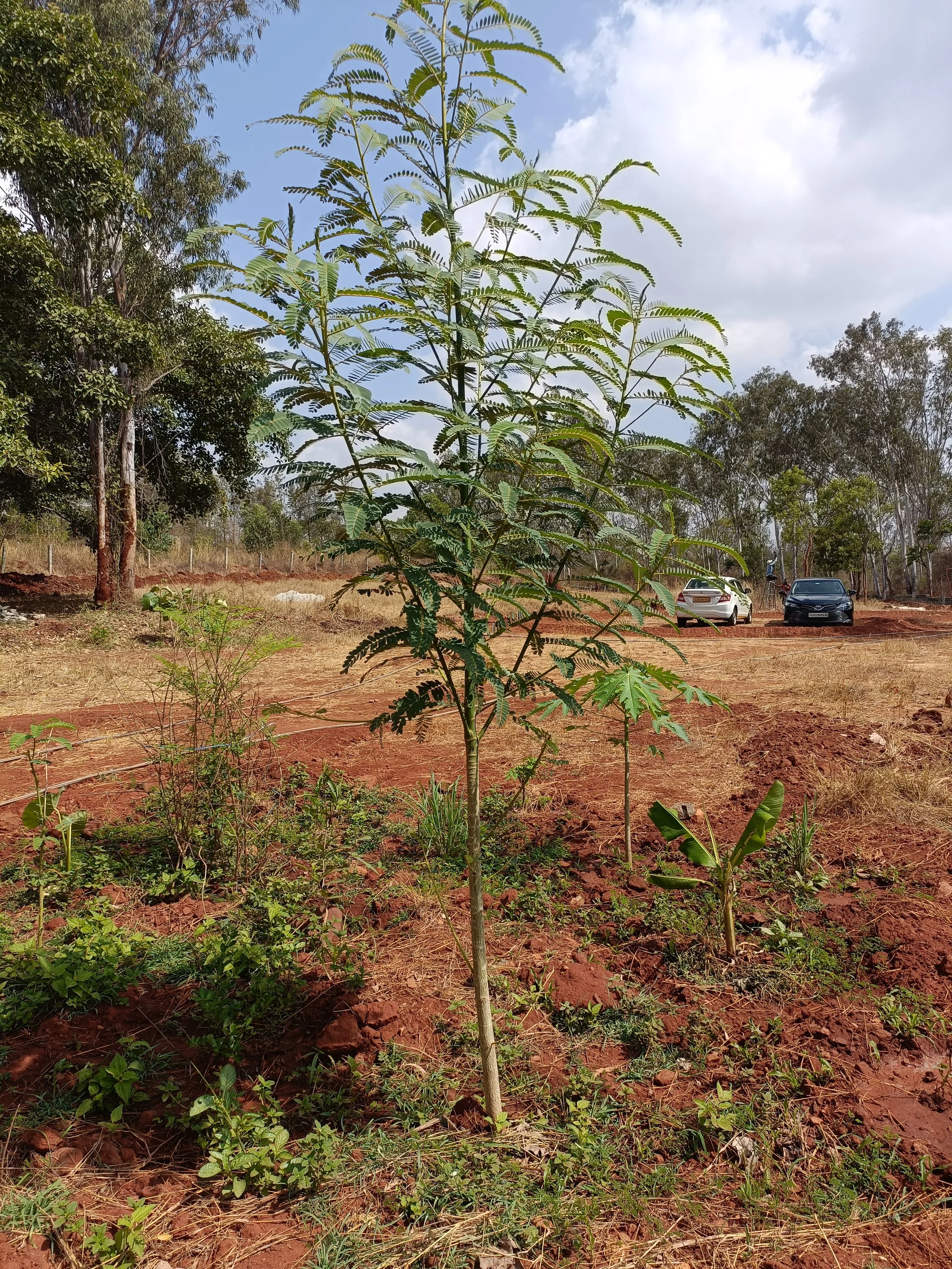
Guild 3 months post implementation
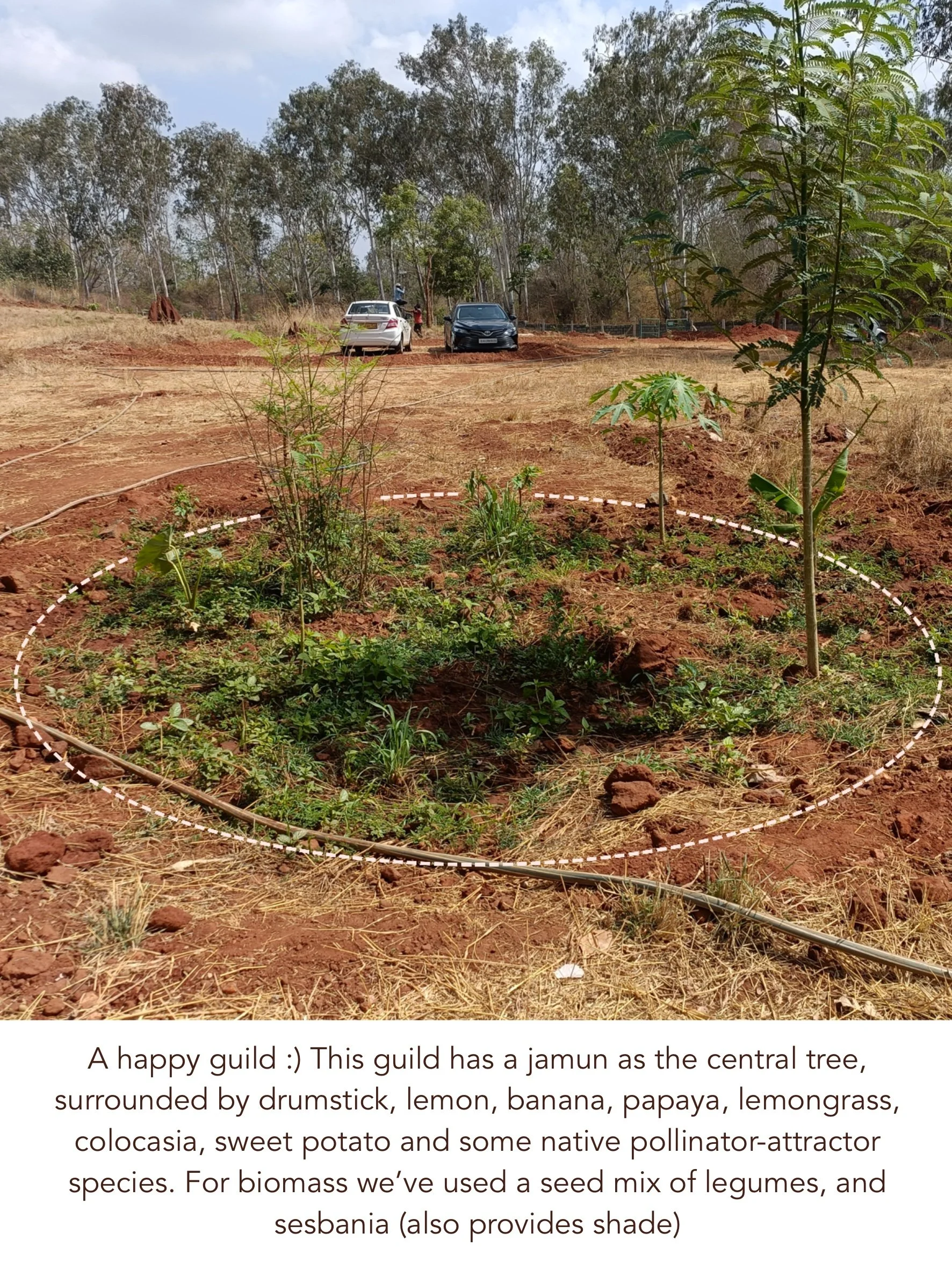
Guild 3 months post implementation
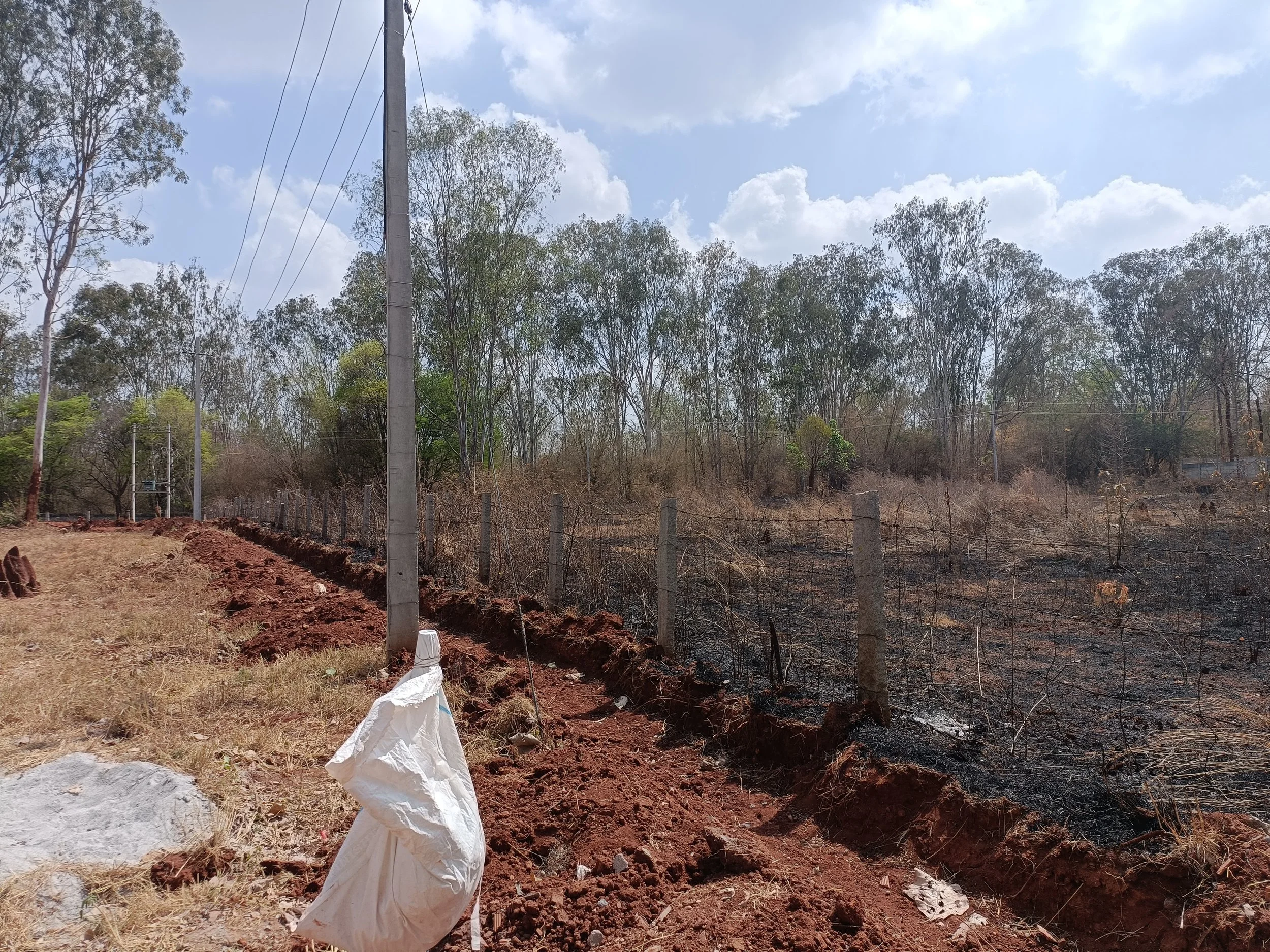
Trench acting as firebreak
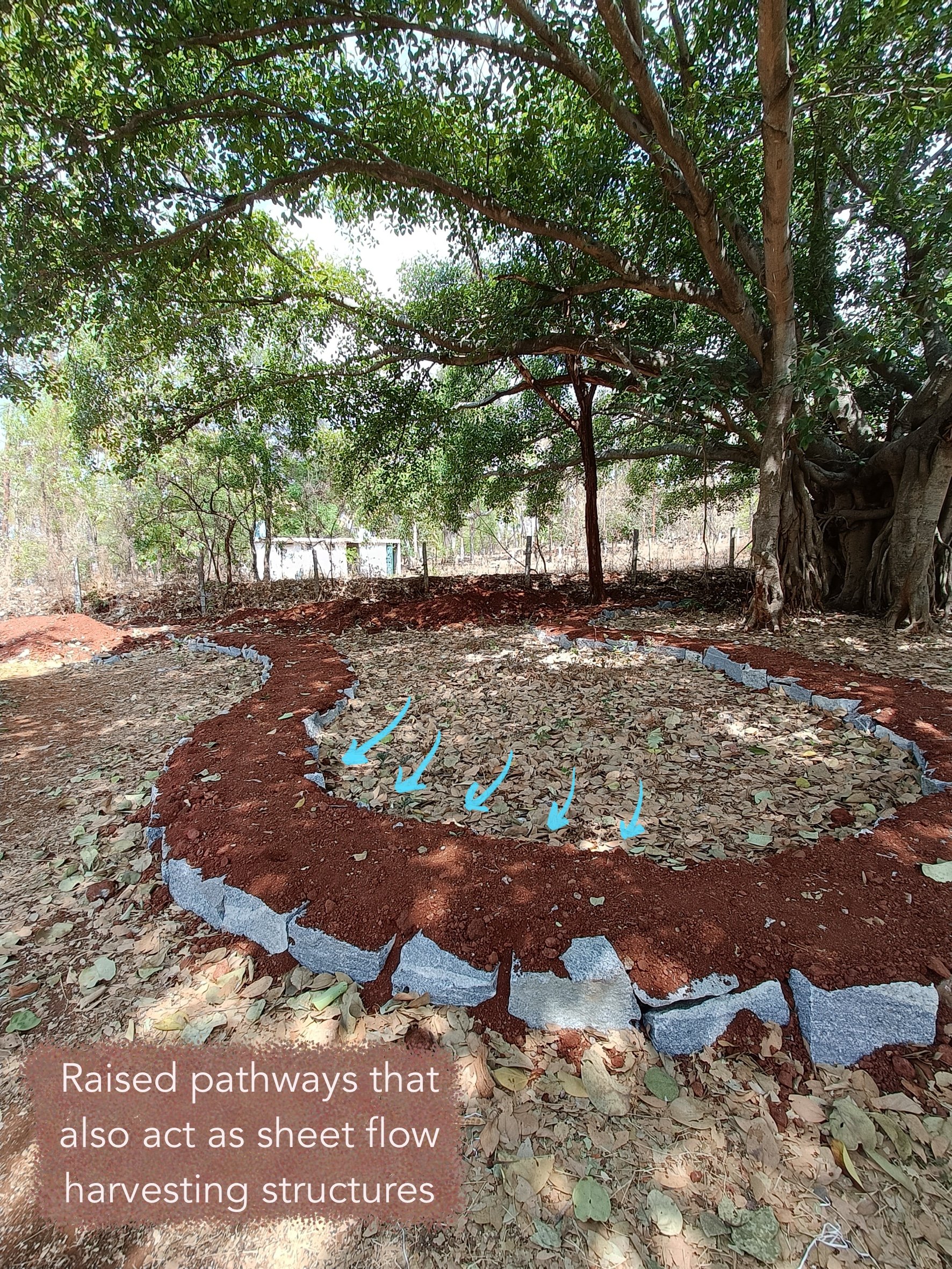
Wild zone raised pathways
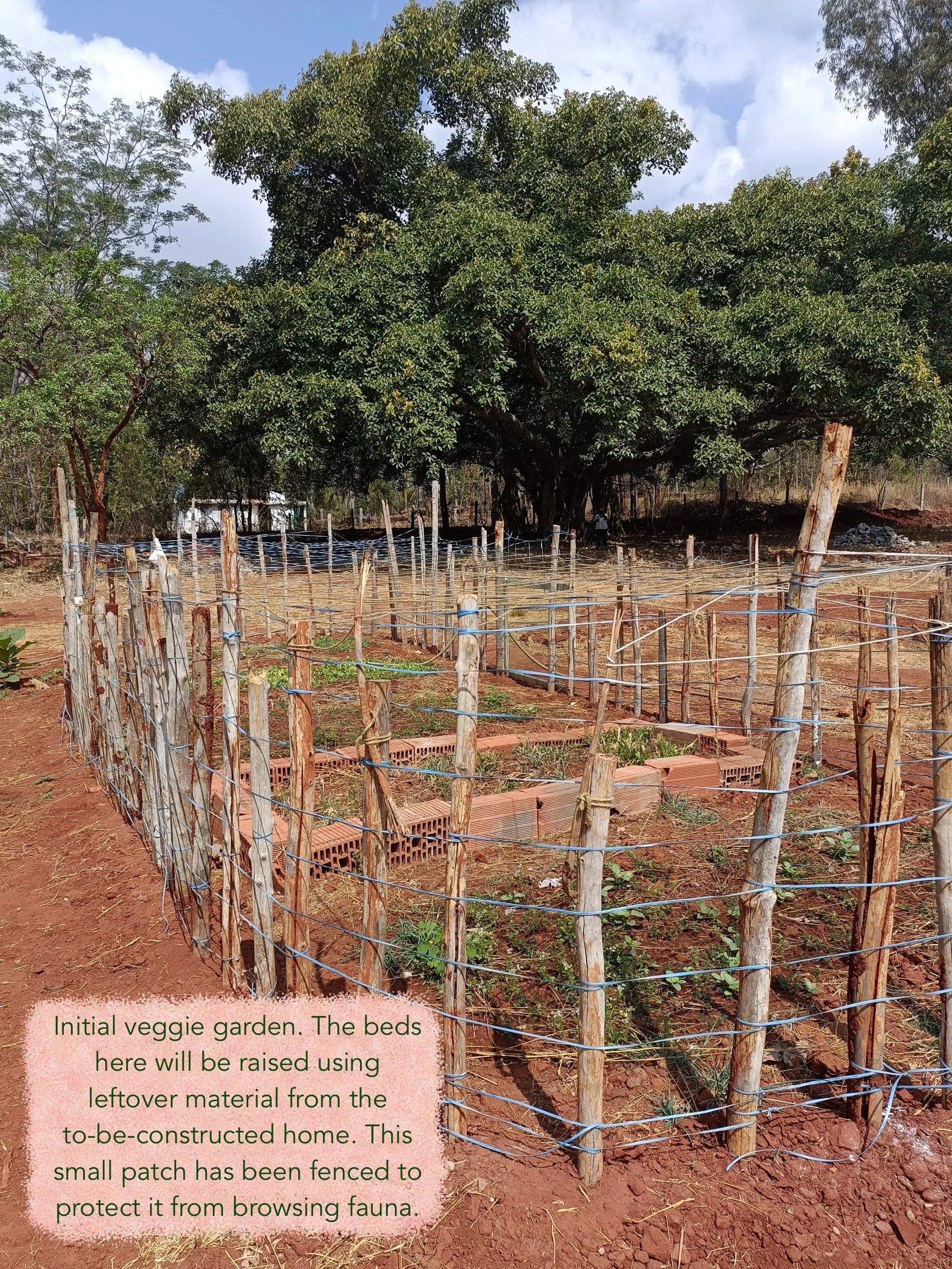
Veggie beds extended
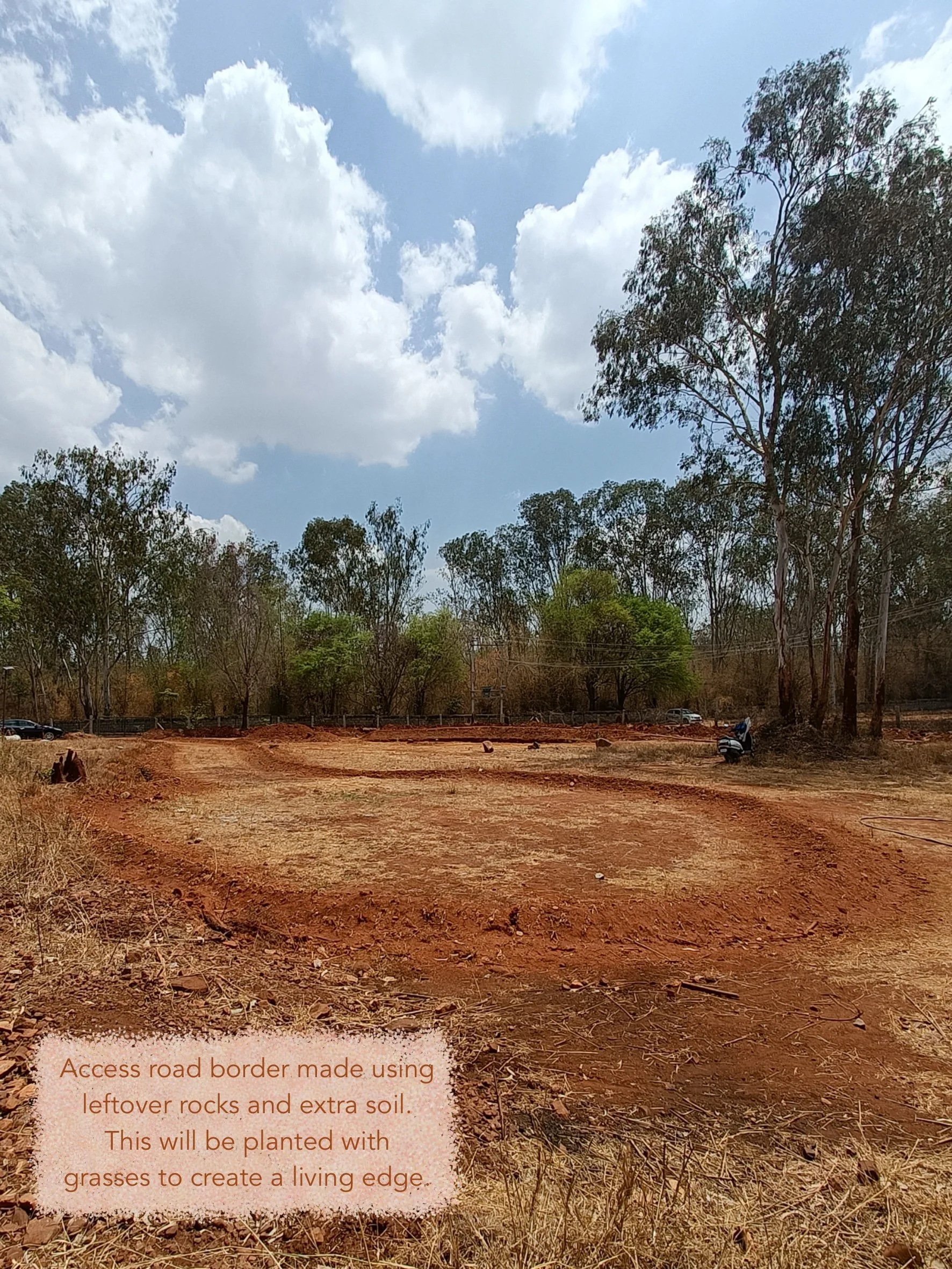
Access pathway
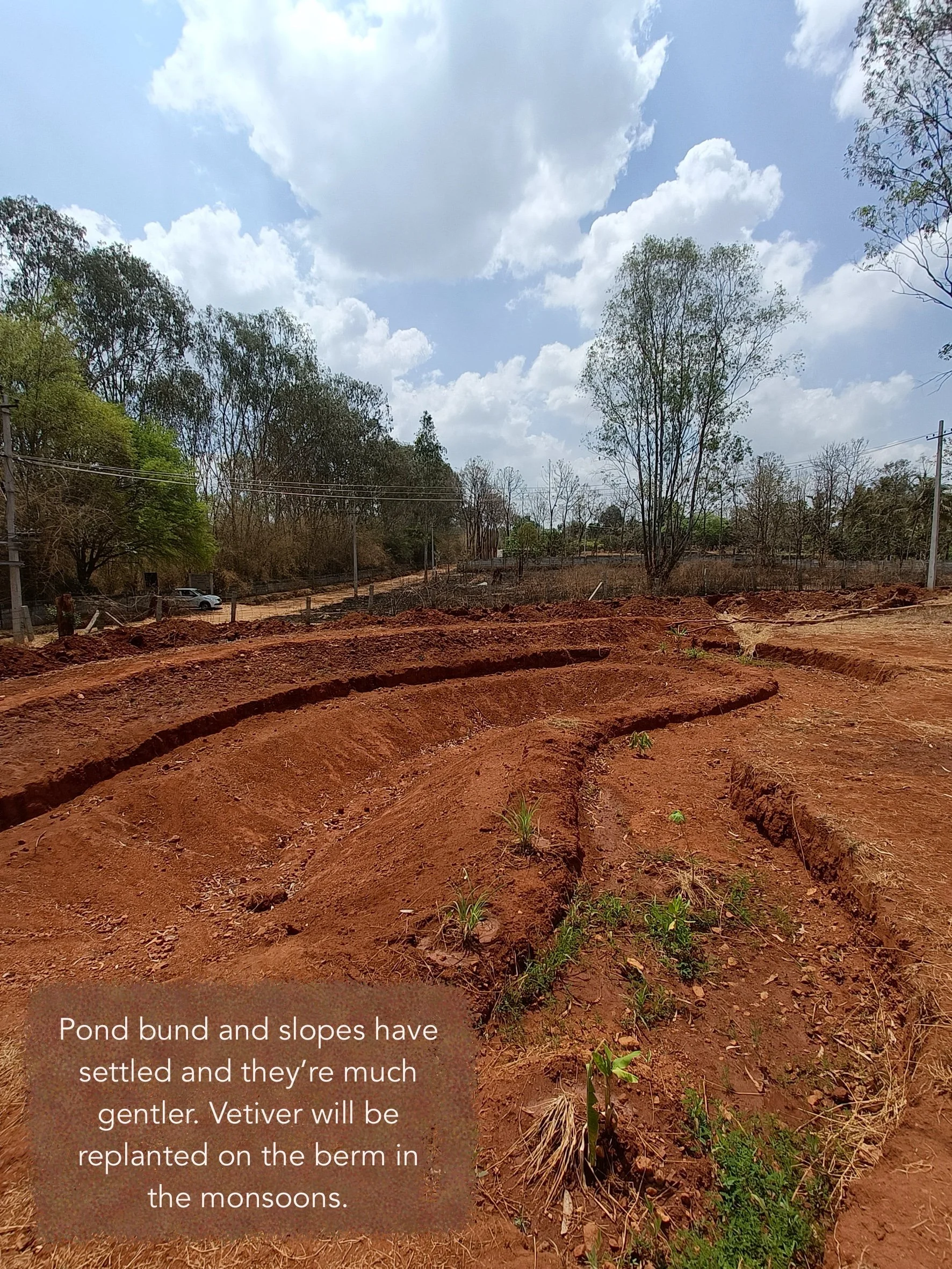
Pond 3 months post implementation