

Yelahanka Garden
Project size: 800 sqft
Yelahanka, North Bangalore, Karnataka, India
April - June 2025
Key features: Regenerative design, garden beds, pond, aquatic species, native species, home kitchen garden
Project team: Debasish Satapathy (Project lead); Sanjana Radhakrishnan, Kiri Meili
Elevation: 900 metres above sea level
Annual rainfall: 956mm / 37.6 inches
Climate: Tropical Savana
Bioregion: South Deccan Plateau dry deciduous forest
Soil type: Sandy loam
Project overview
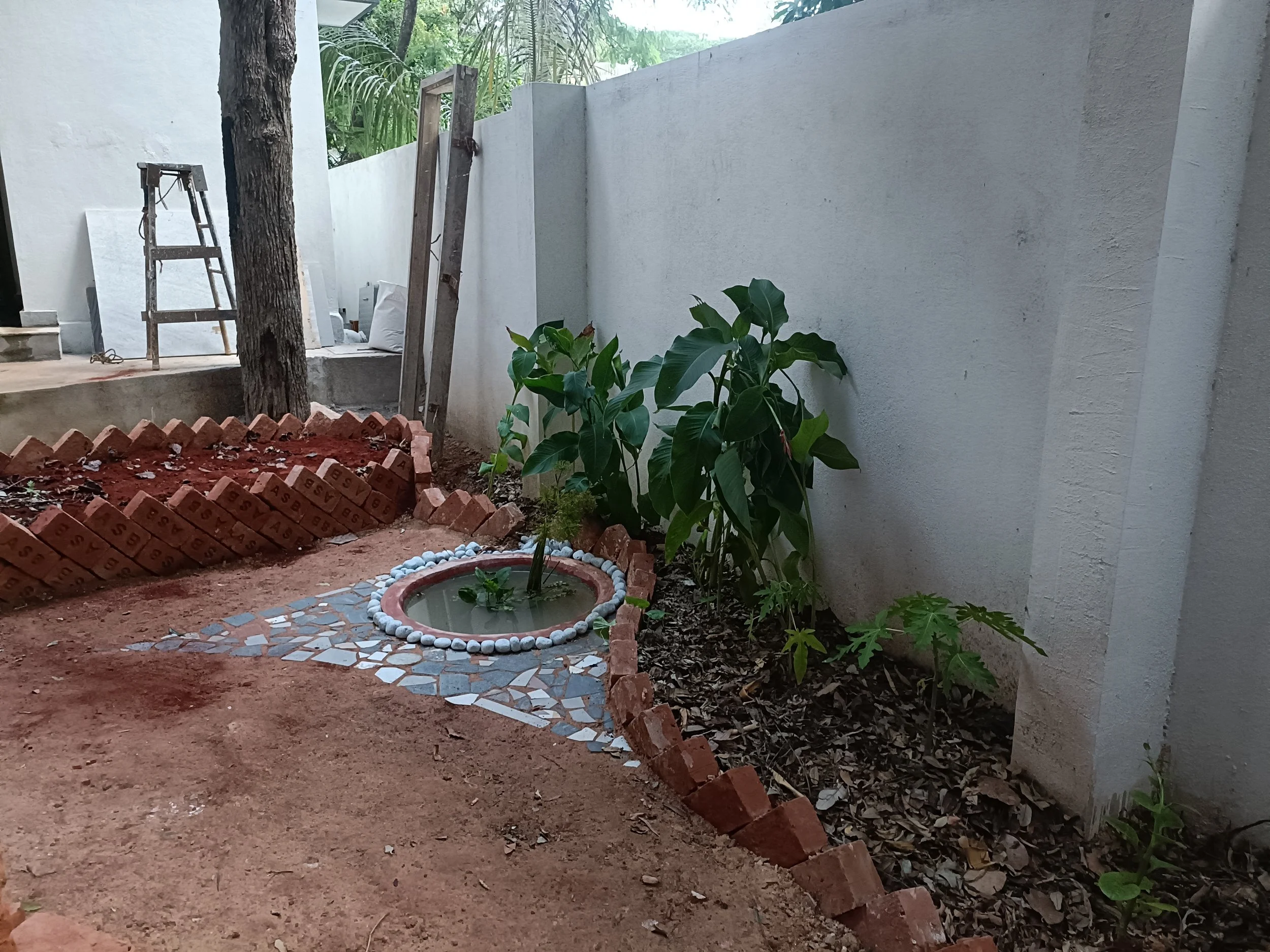
The project began with the intention of transforming a residential front and backyard into a space for daily engagement with the land. The brief called for a garden that could harbour biodiversity, support edible cultivation, and offer spaces for retreat.
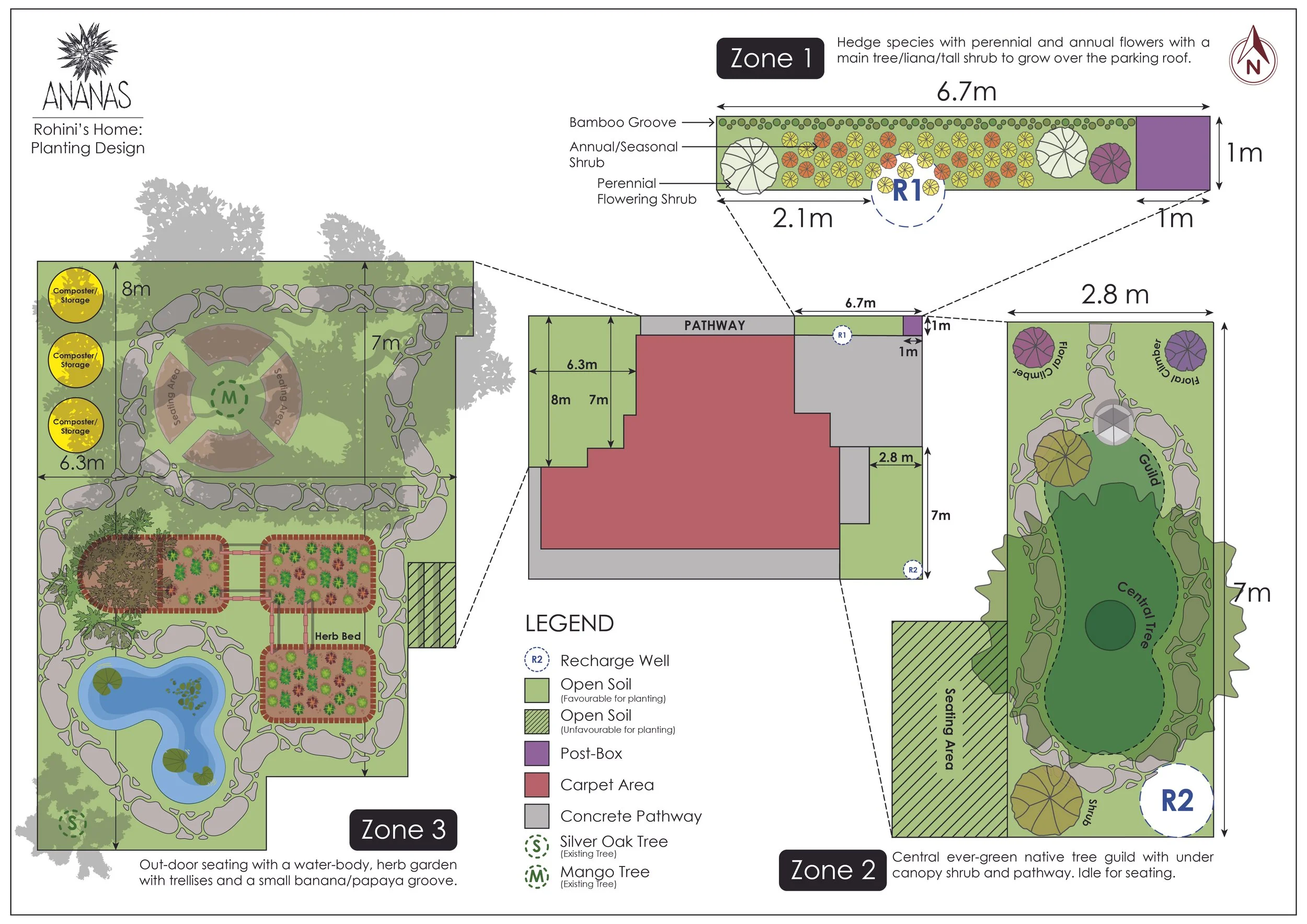
Based on a detailed sunpath analysis, Ananas developed a conceptual design supported by a detailed planting plan, structuring the site into interconnected zones. The implementation phase focused on executing the design and planting interventions to bring the vision to life.
Design and implementation
The garden was organized into three functional zones to focus on productivity, ecology, and experience. The design was marked and implemented on site over three days, including bed building, pond installation, planting, some mosaic work and mulching.
Zone 1: Side garden
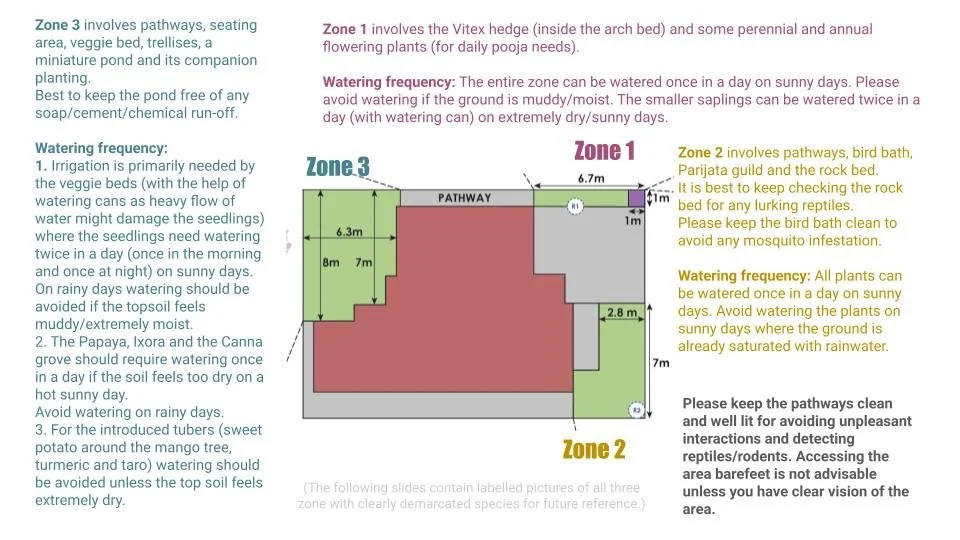
The side garden supports daily ritual use through a Vitex hedge and a mix of perennial and seasonal flowering plants. Flowering vines add vertical interest and seasonal variation.

Zone 2: Front garden biodiversity patch
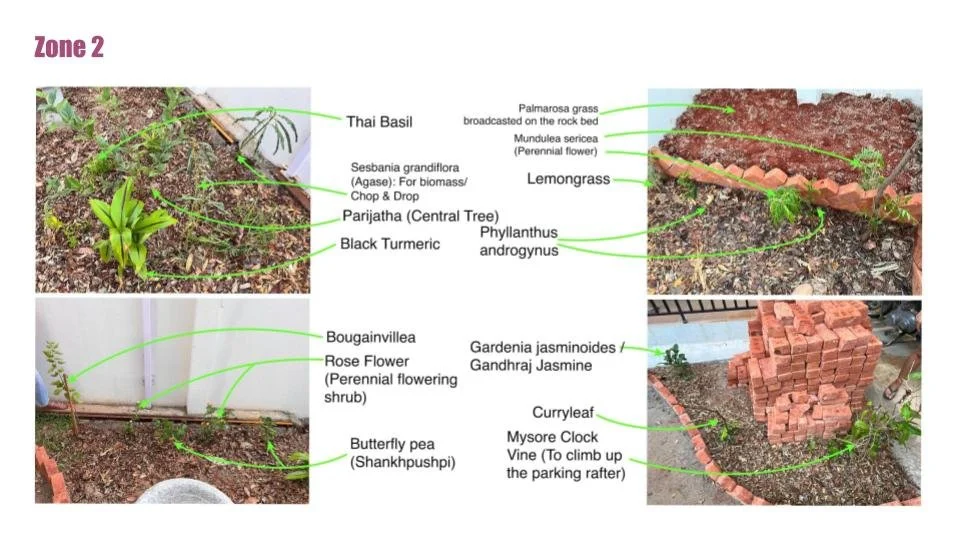
The front garden was reshaped to strengthen ecological function. Excavated construction material was consolidated into a corner and seeded with native grasses. The remaining area was planted with pollinator species.
A Parijata guild, rock bed, bird bath, and pathways were integrated to attract avifauna and create a layered transition from street to home.
Zone 3: Backyard garden
The backyard integrates movement, cultivation, and habitat creation. Interventions included brick-edged vegetable beds, native species beds, trellises, a seating area, and a small concrete pond with companion planting.
A circular planting bed around the existing mango tree defines both a productive edge and a pathway. Tubers such as sweet potato, turmeric, and taro were introduced. All beds were mulched to support soil health and moisture retention.


Implementation process
Backyard garden
Front garden
Backyard garden
Pond
Prepping broken tiles for mosaic
Creating a mosaic around the pond
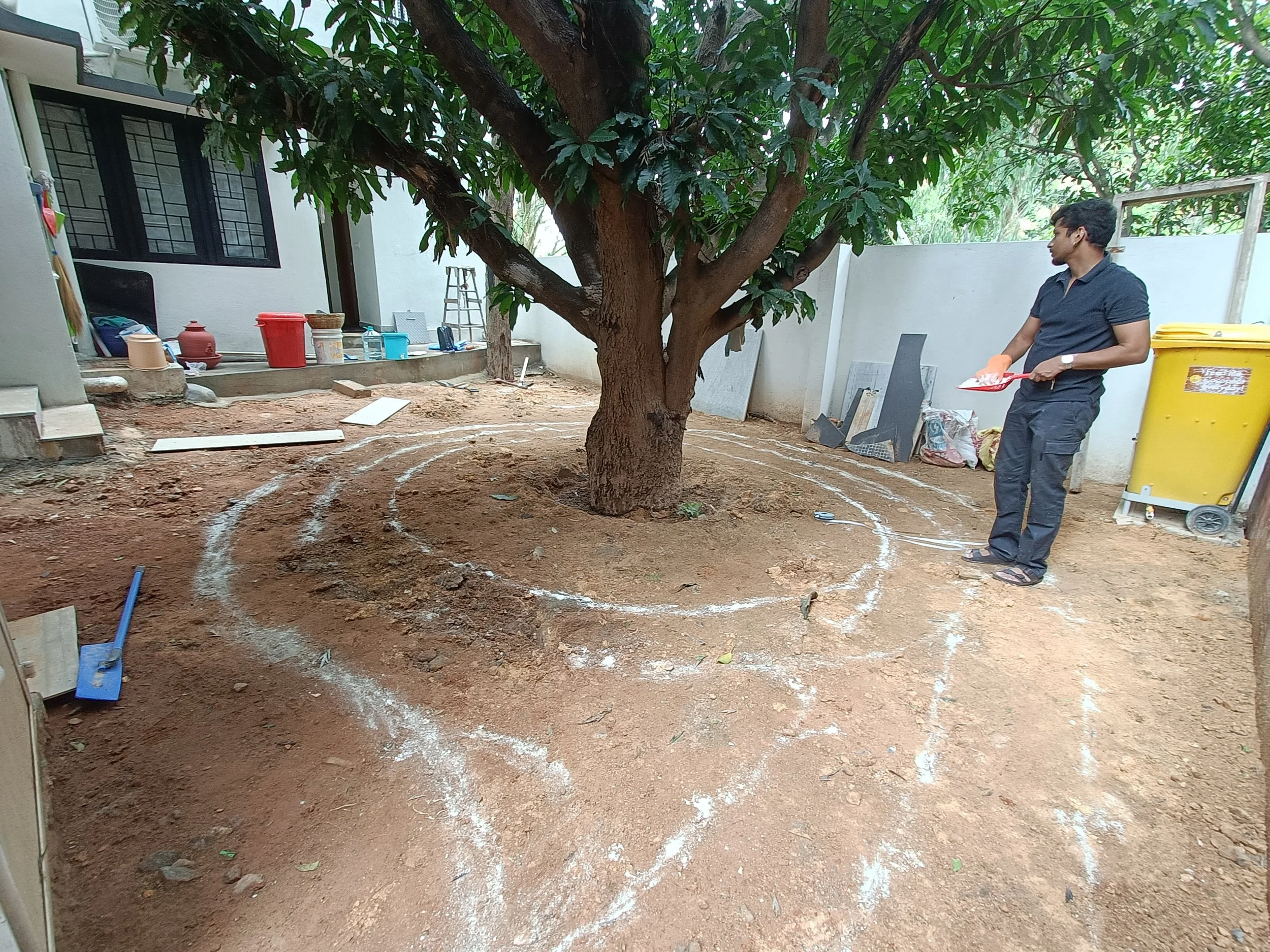
Marking
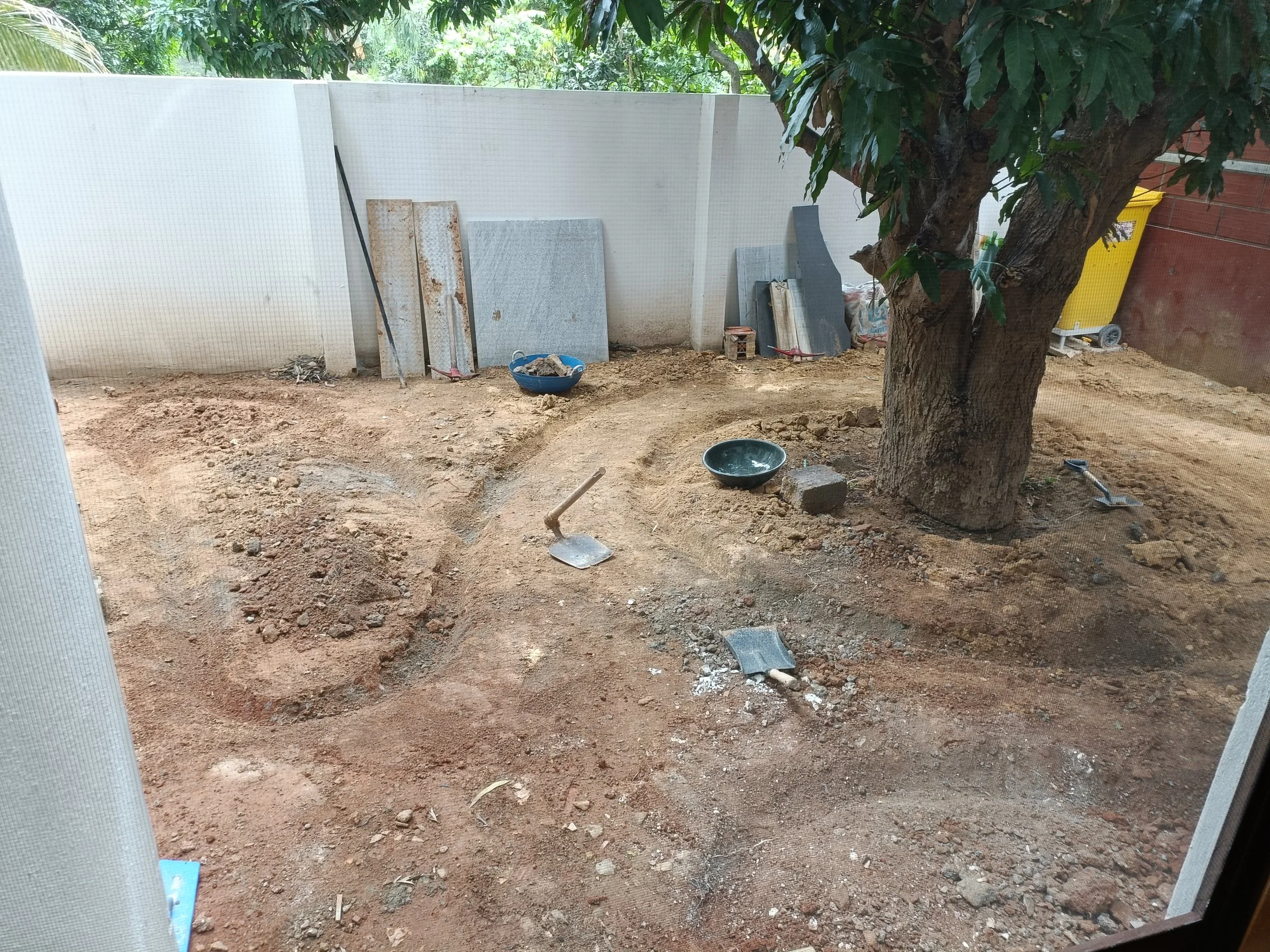
Digging trench to place bricks for pathways and beds
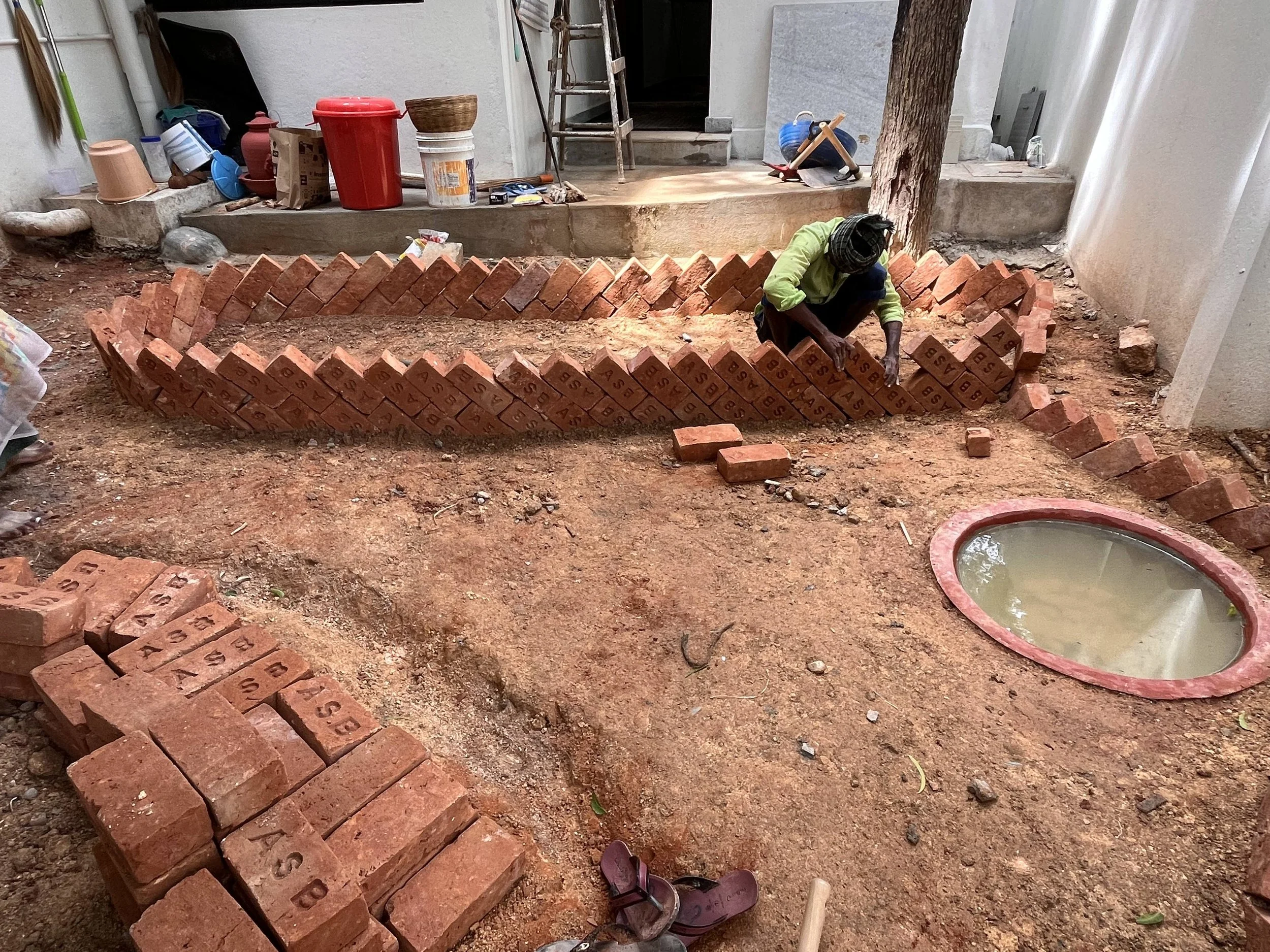
Building veggie bed
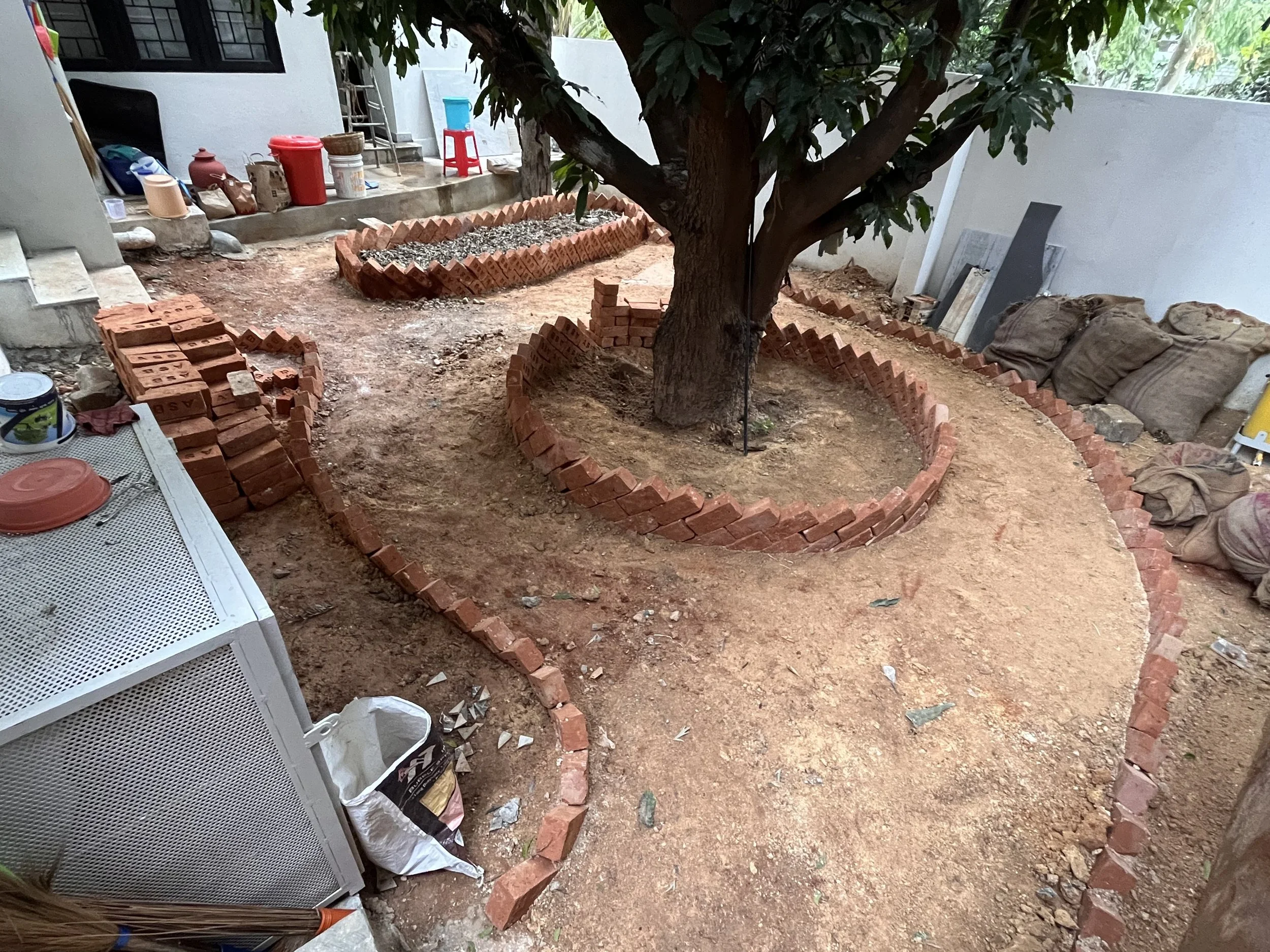
Bricks defining pathways and beds
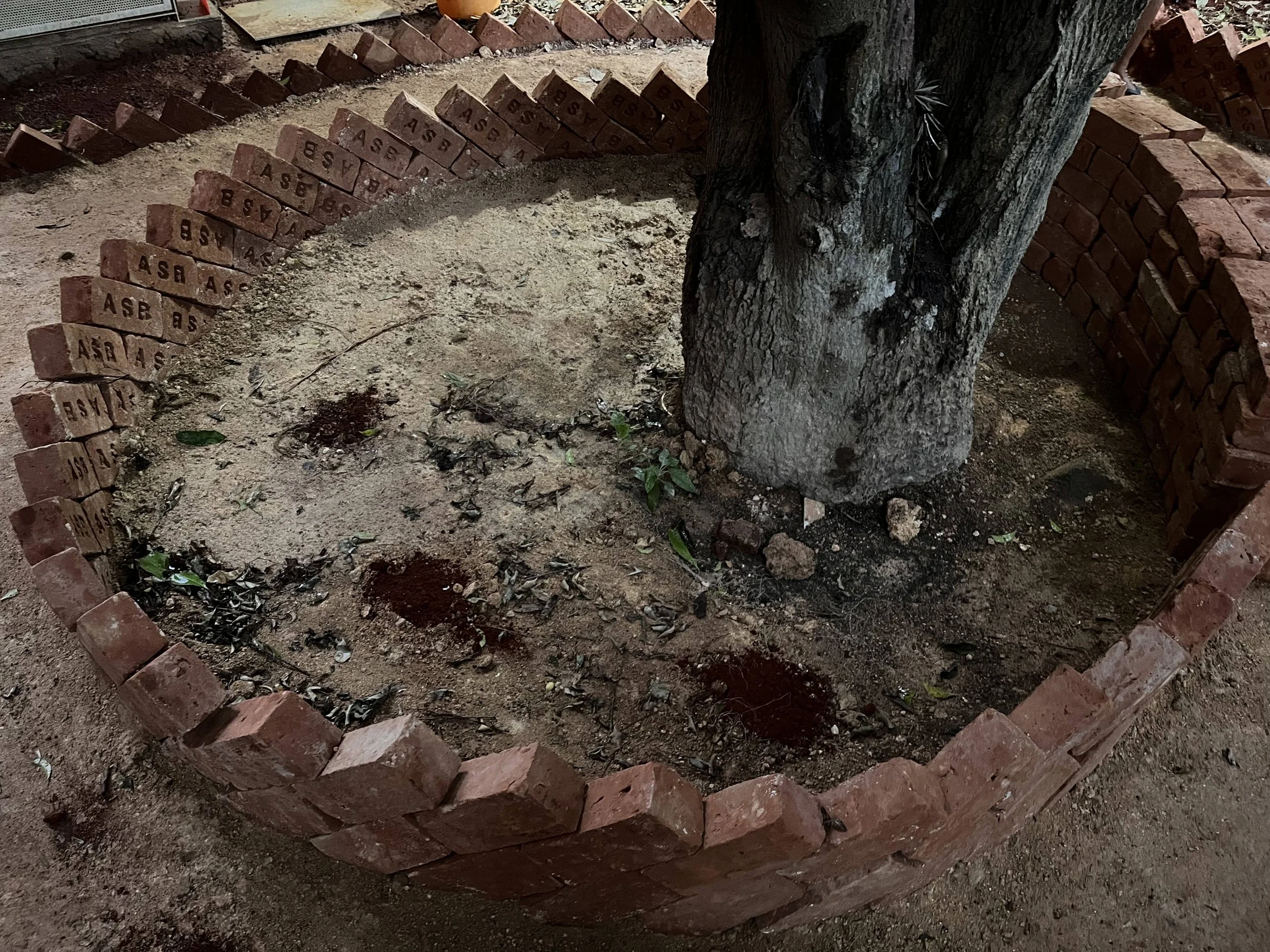
Brick edge around existing mango tree
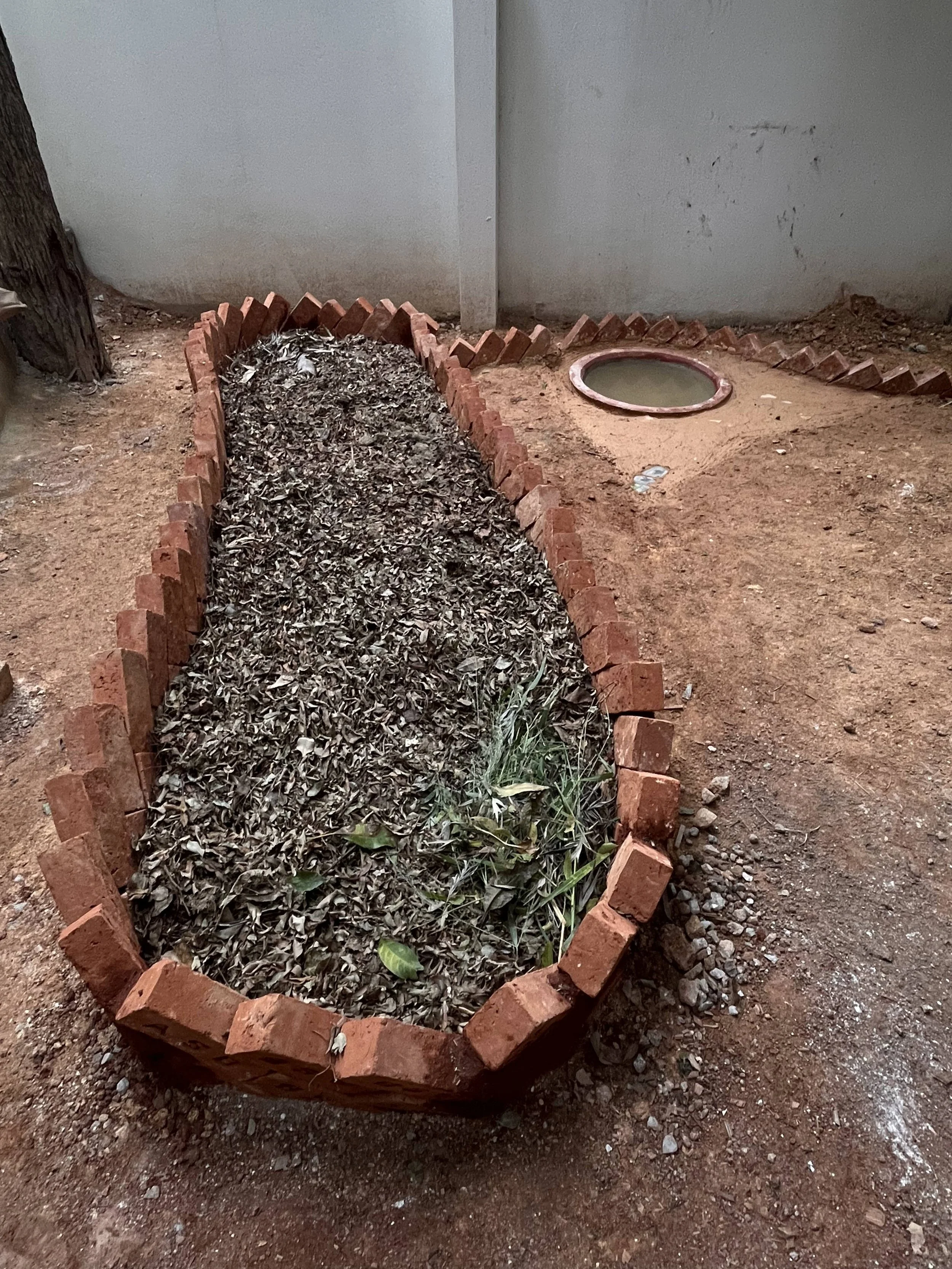
Veggie bed - soil built and mulched
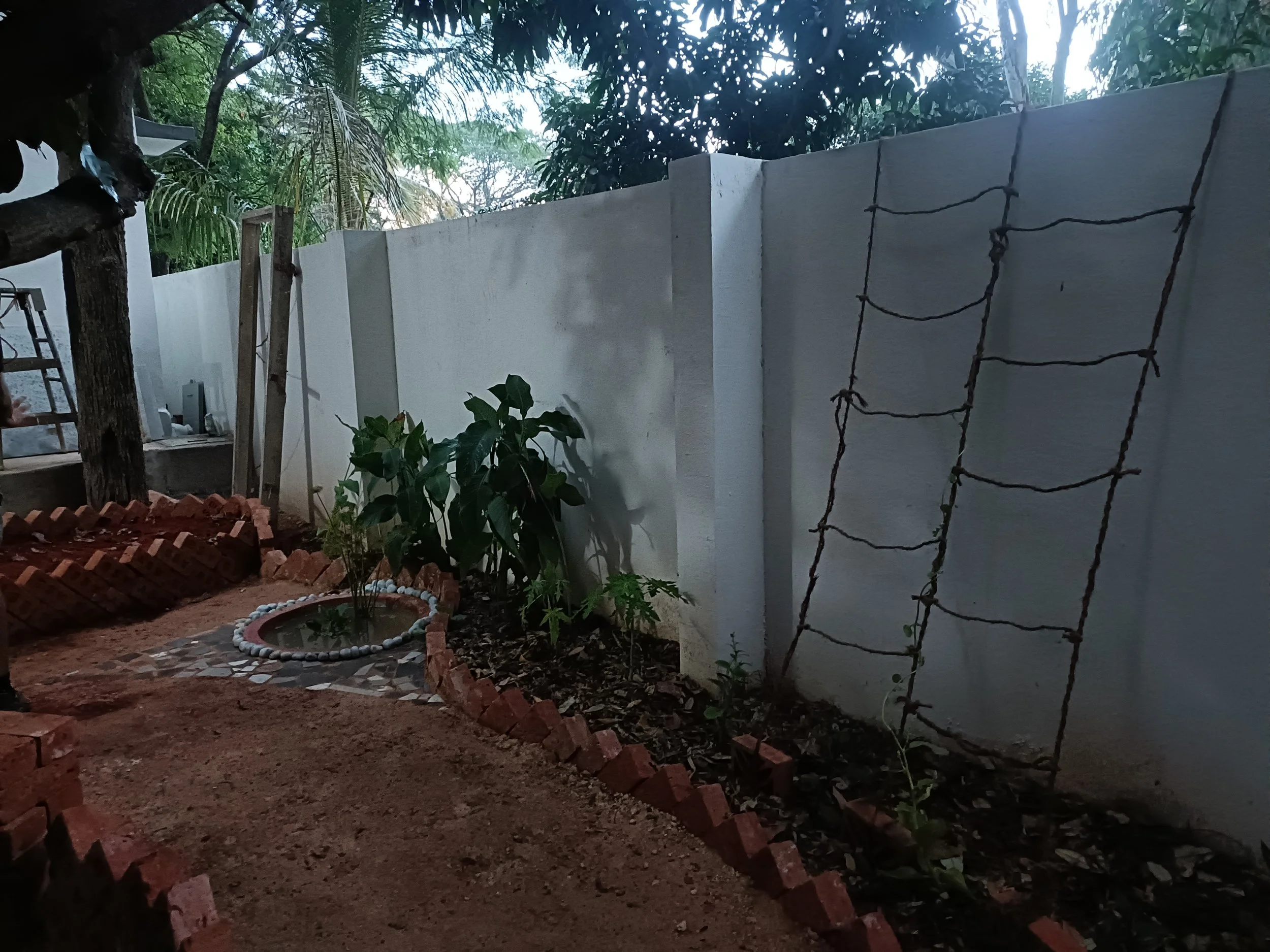
View of backyard garden
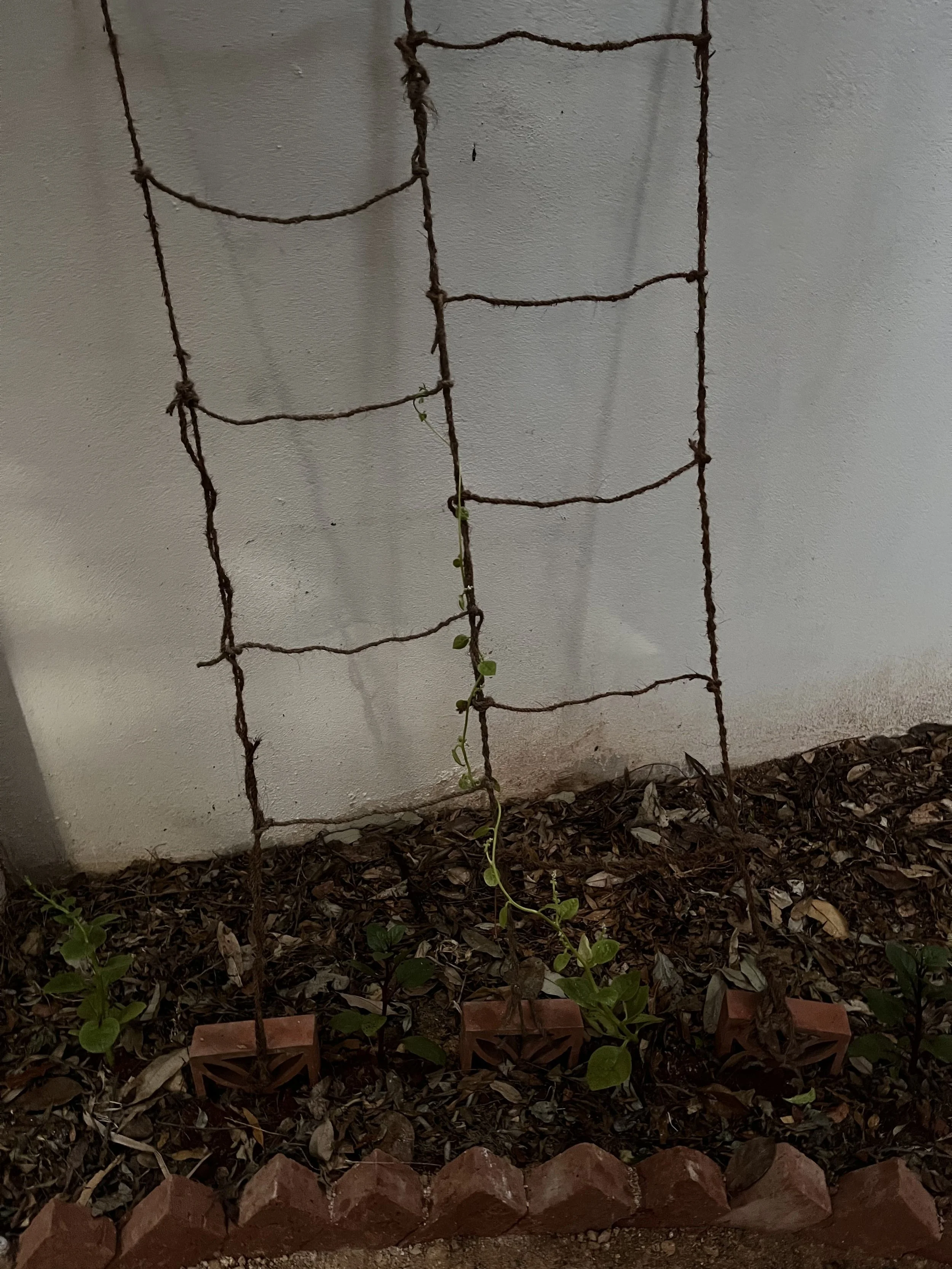
Edible vine section
Pond and water-loving species
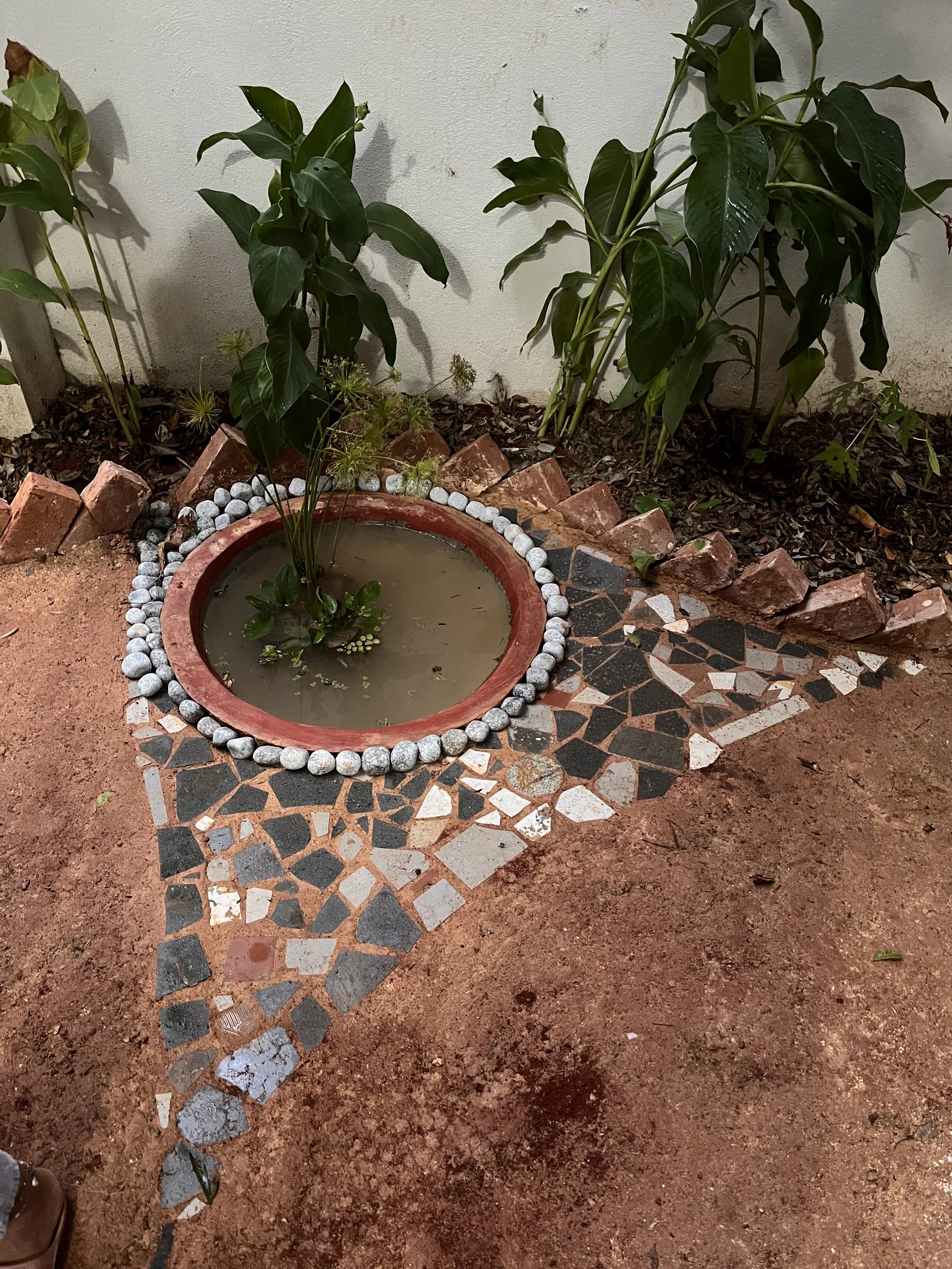
Pond with mosaic (made from waste tiles)
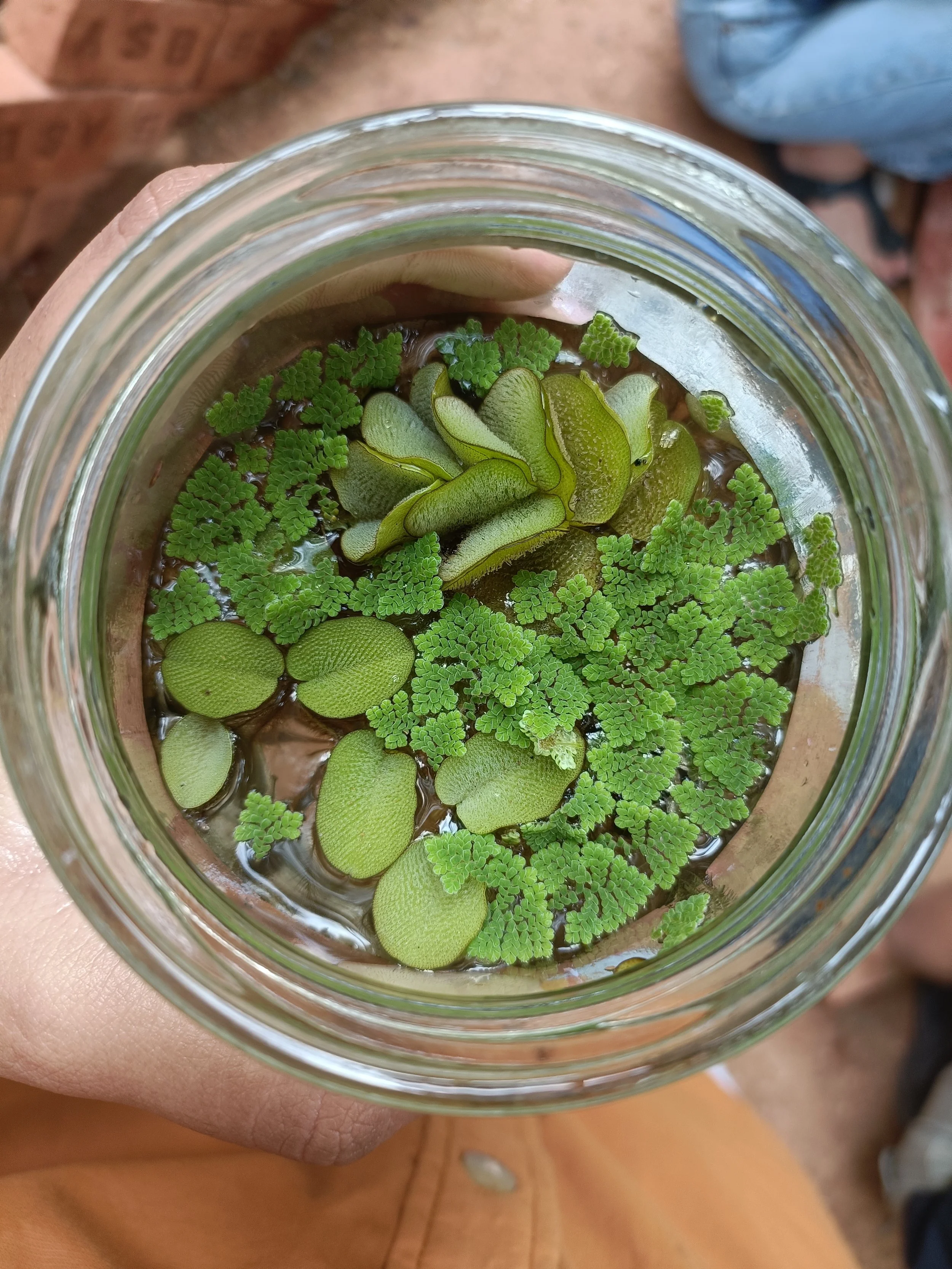
Culture for pond
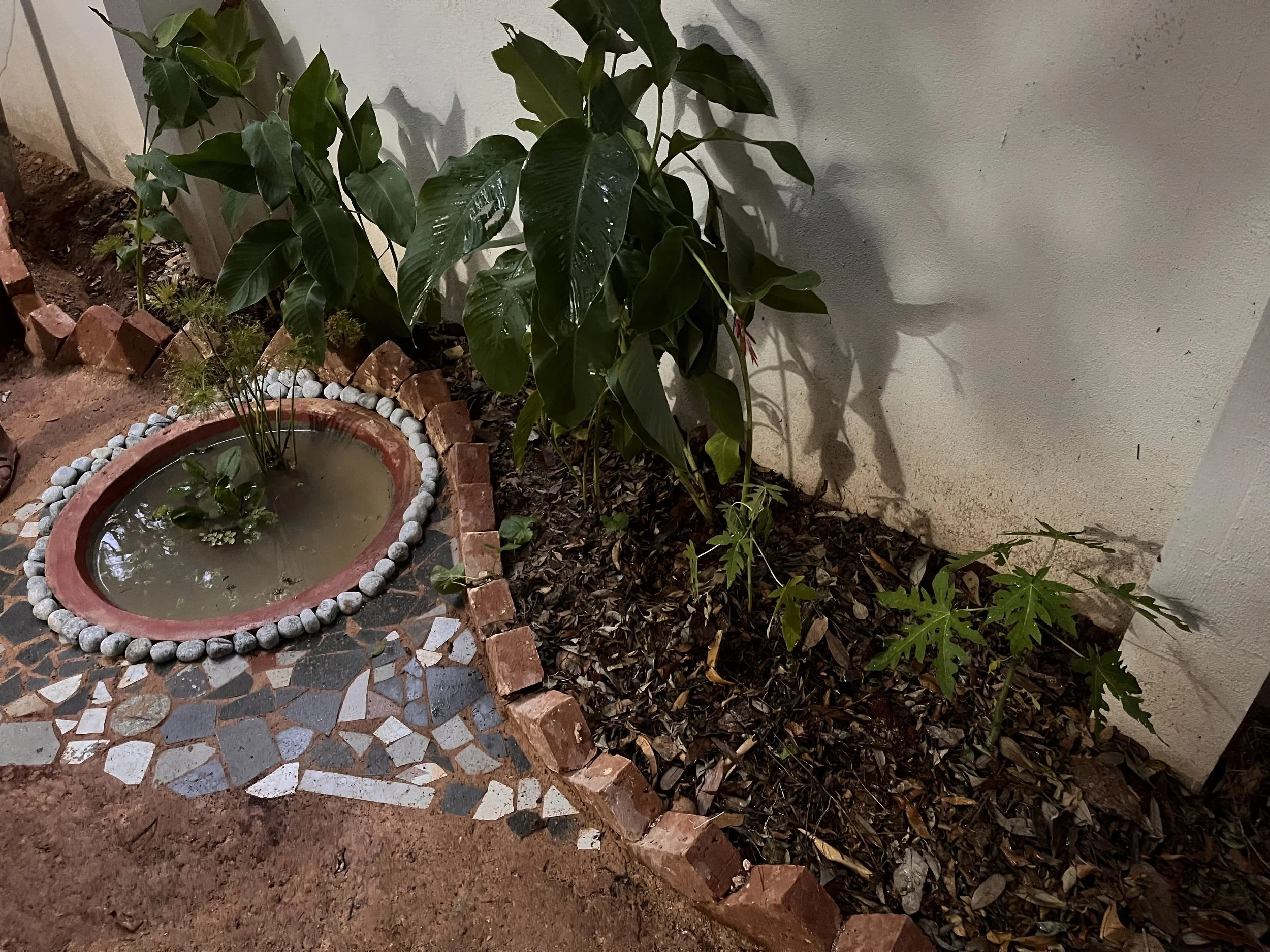
Water-loving species planted by the pond
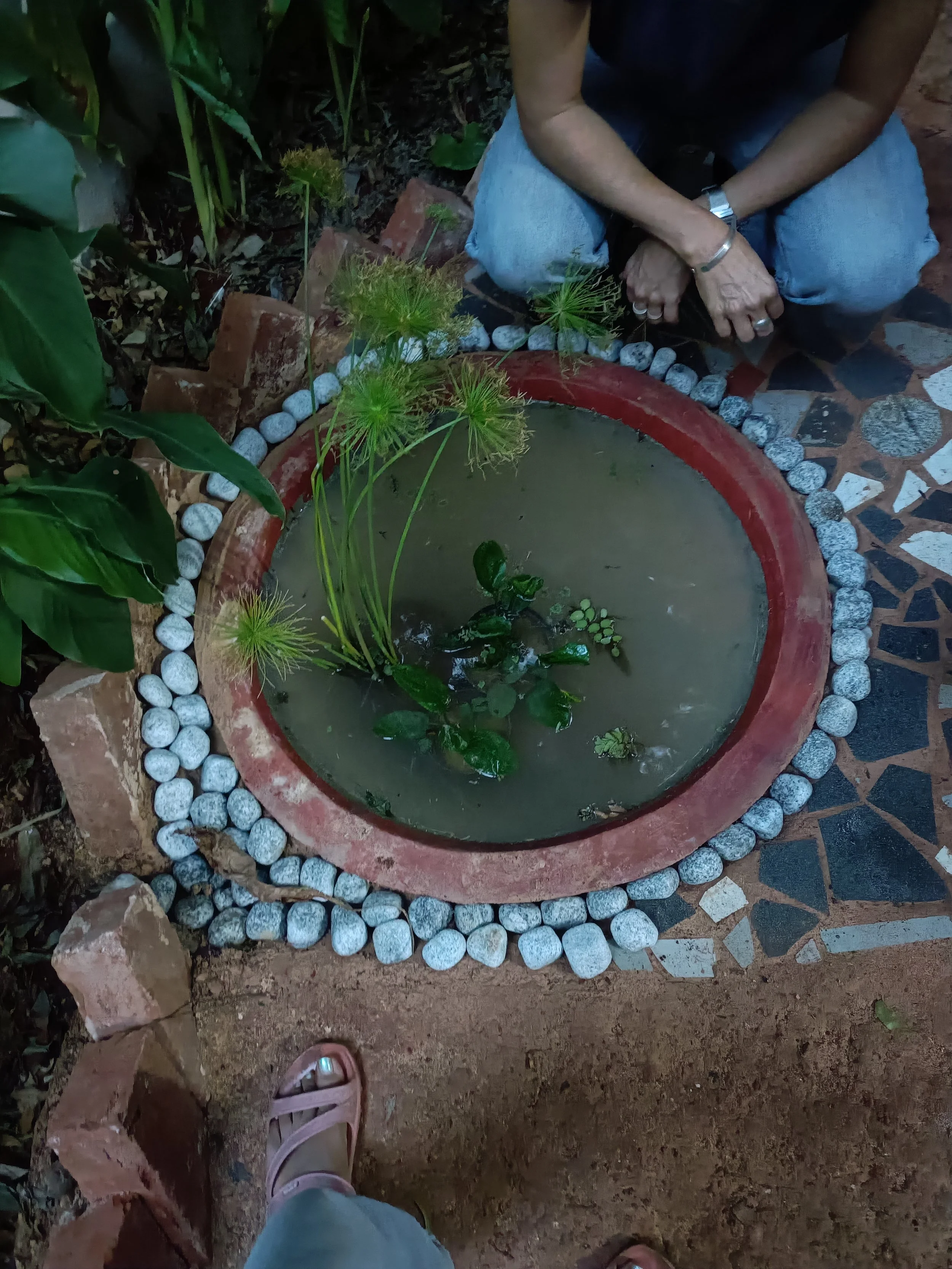
Pond with aquatic species
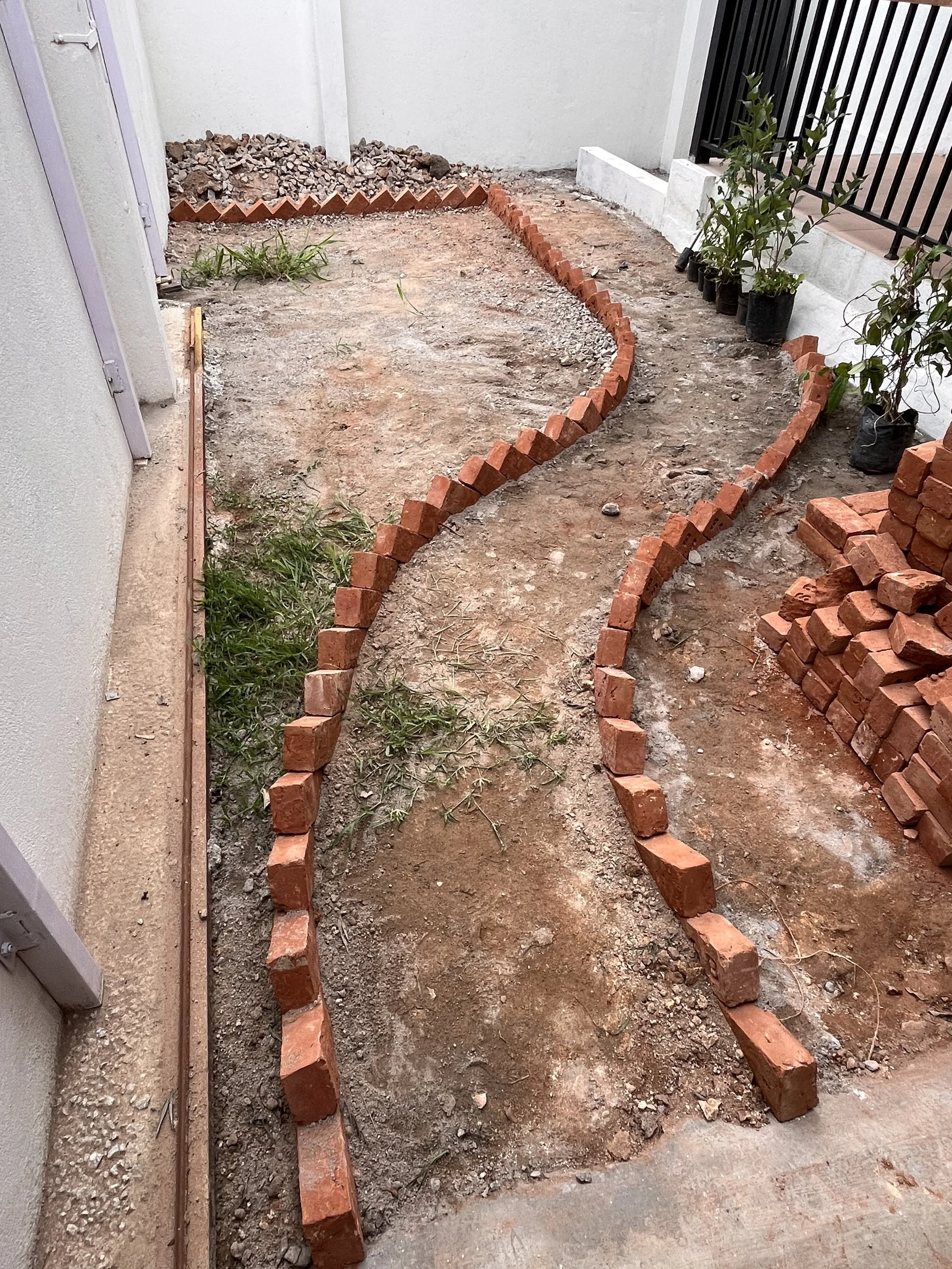
Front garden - pathway
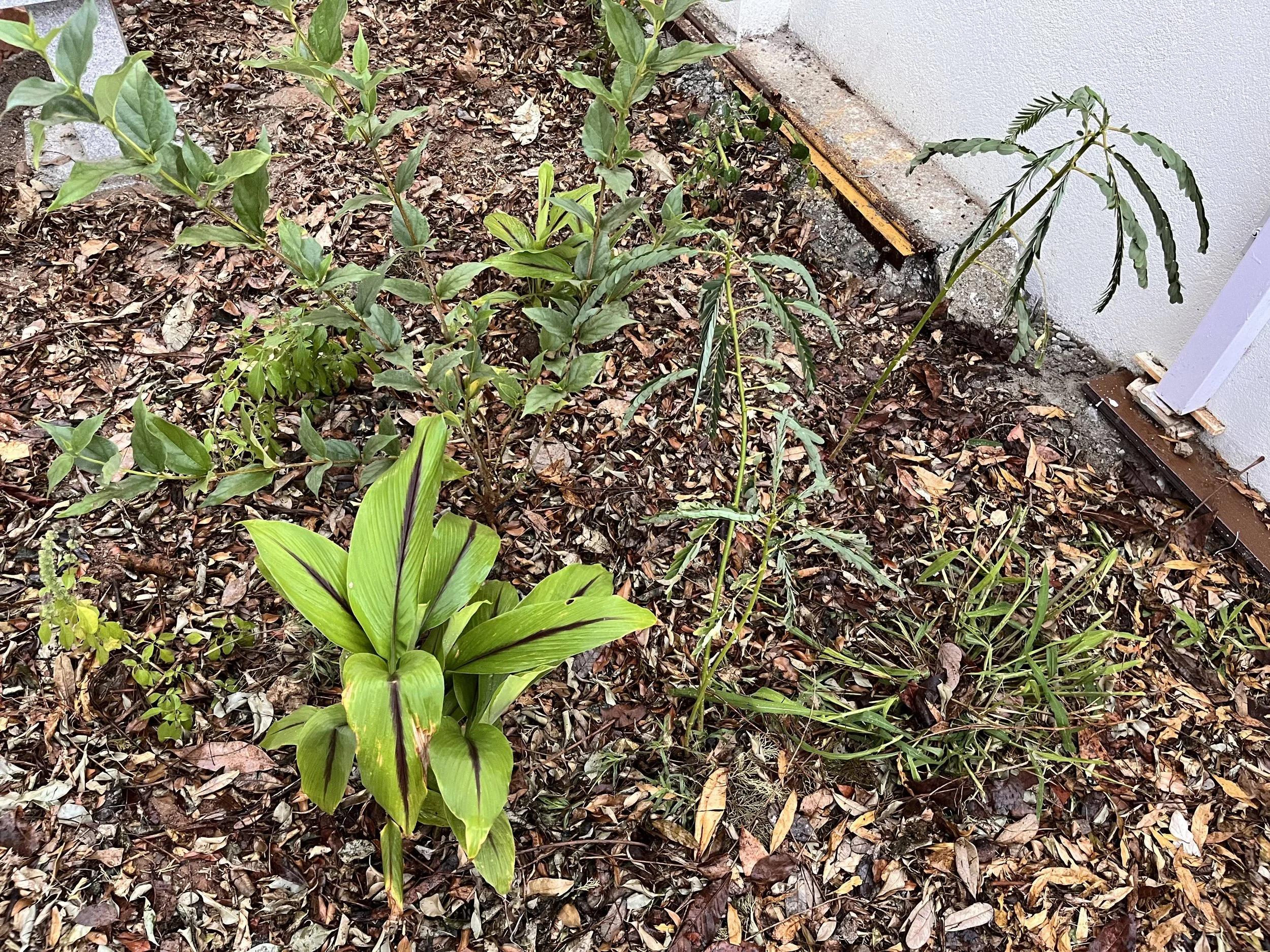
Front garden - planting