

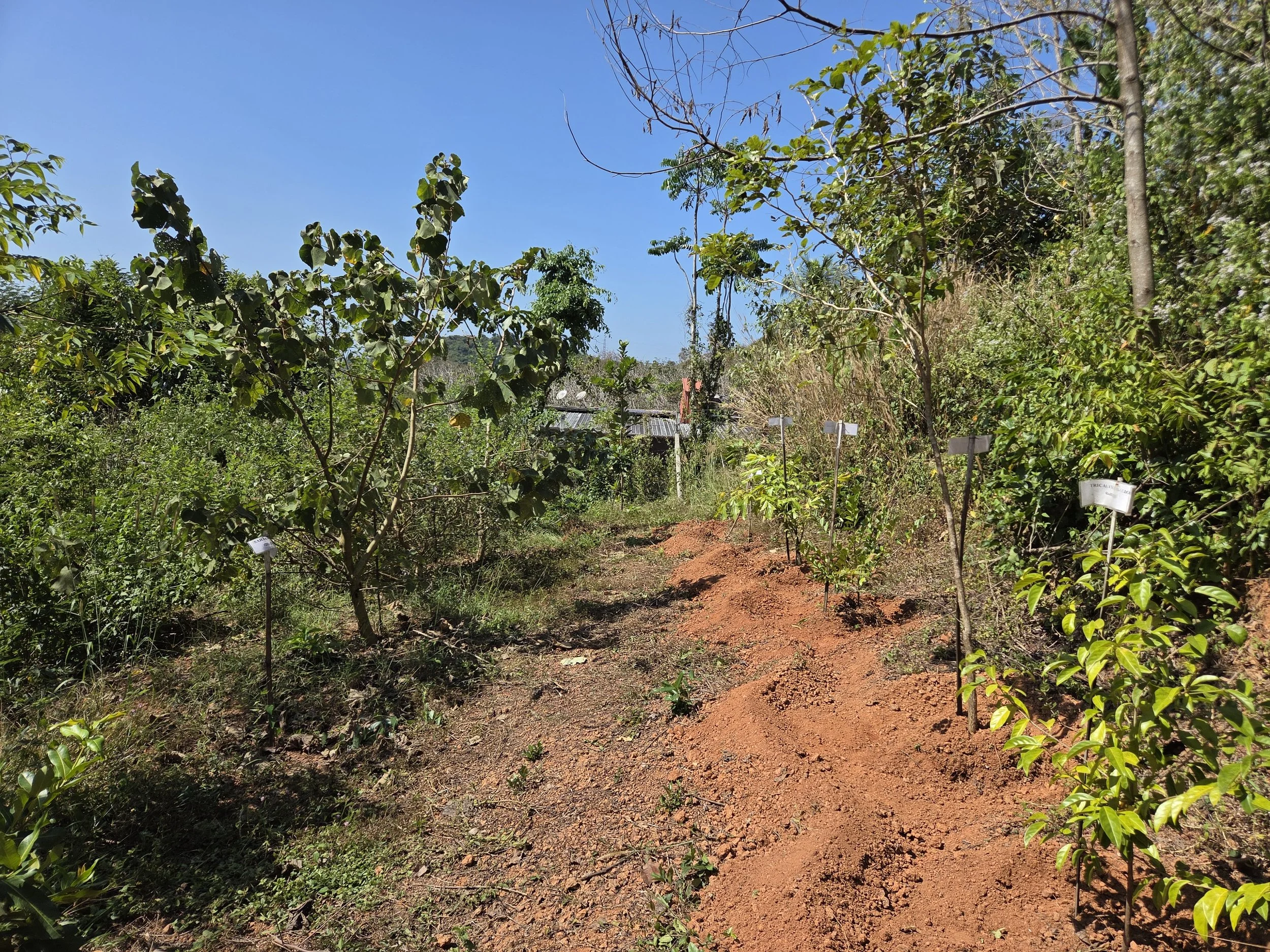
Ayzi Farm
Project size: 2.5 acres
Taliparamba, Kannur, Kerala, India
December 2023 - December 2025
Key features: Regenerative design, food forest, wild zone, earthworks, species diversification, Living fence
Project team: Theertha Ravindran (Project lead); Joshua Danesh, Himanshu Arteev, Varun Behroonani, Sanjana Radhakrishnan, Gautam Shanbhag, Amol Kadam
Elevation: 50 metres above sea level
Annual rainfall: 3400 mm / 133.85 inches
Climate: Tropical Monsoon
Bioregion: Tropical Moist Deciduous Forests / Tropical Wet Evergreen Forests
Soil type: Lateritic soils
Masterplan / Design
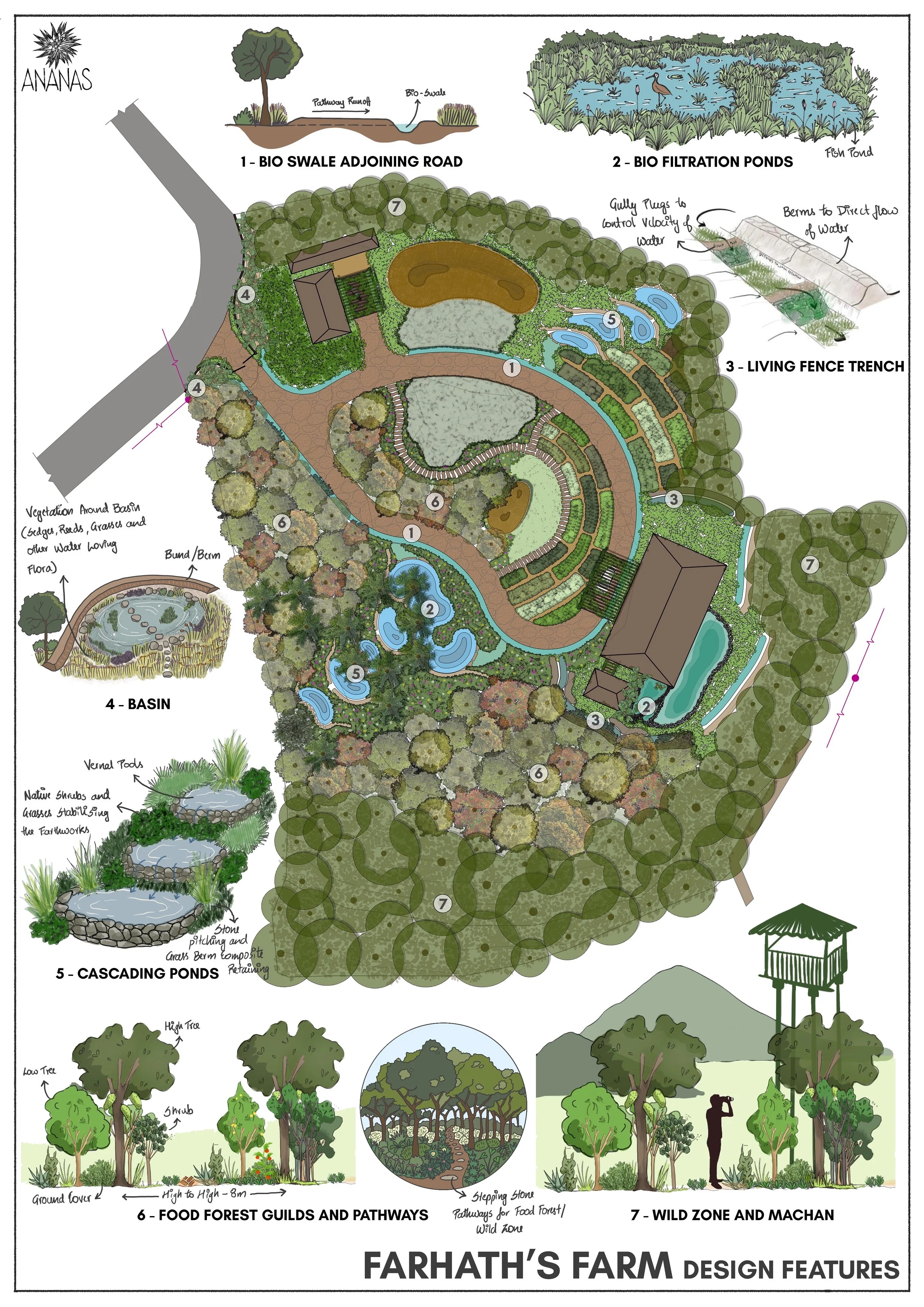
The 2.5-acre parcel used to be a rubber plantation that was not maintained for a long time. The land is a knoll within a low-lying area at an elevation of just 50m above sea level. The land is the highest point in relation to its neighbouring sites.
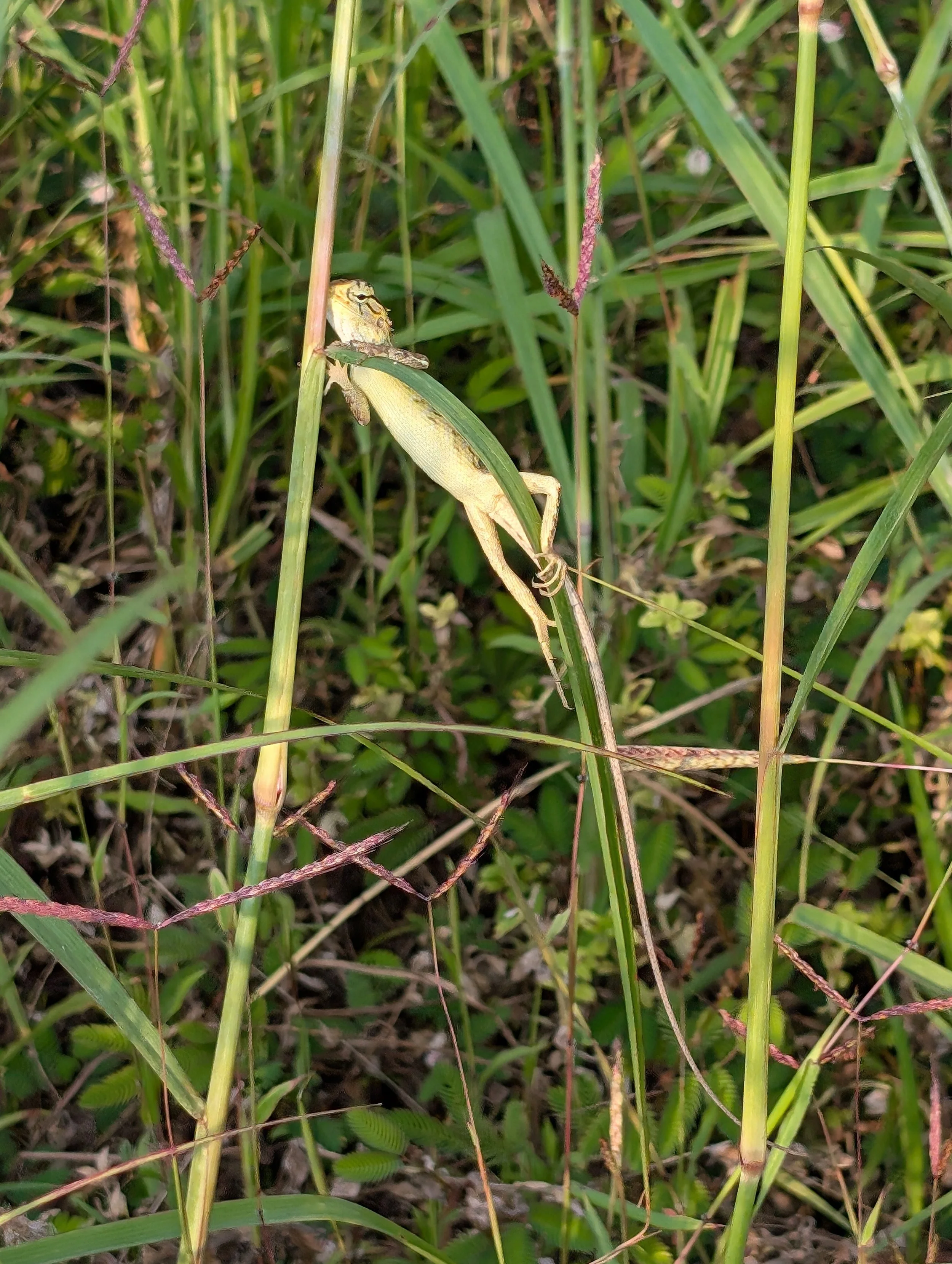
As the land was cleared before the clients procured it, the clients wanted to create a dense forest that focused on growing food species, designing perennial food sources and a holiday home to use during the summers and winters. After studying the context of the land and understanding the rich biodiversity that the currently disturbed land held, as well as the steep slopes on the southern side that showed signs of erosion, Ananas recommended the introduction of dense wild zones that represented the native biodiversity of Tropical Moist Deciduous and Tropical Evergreen Forests. The Wild zone was also recommended as a way to support the existing faunal diversity observed on site including porcupines and a plethora of birds, butterflies, dragon flies and snakes.
The design focused on locating high activity zones on the flatter and less dense patches of the land in close proximity to one another, while ensuring earthworks were meticulously detailed out.
Since the land is located at a vantage, importance was also given to privacy while ensuring to not block any views by carefully selecting species for different parts of the fence.
Implementation
To translate the design vision into reality, the team led the turnkey implementation of earthworks and planting across two site visits. Since the work began in the monsoon, the initial implementation focused on wild zone and living fence planting. The species were carefully selected based on the bioregion and context of their function. The wild zone species were selected to bring back the diversity of the site and replant a part of the land that was disturbed.
The planting phase was divided into two phases across two years to ensure that there was no pressure on the land to water a large set of plants. Therefore, the food forest guilds for this project were introduced a year later (during the pre-monsoons).
Post the planting phases, the focus was on implementing the earthworks to slow down and capture water at the highest point to increase water retention.
The next engagement for the finer landscaping and pathway details will be determined once the construction of the staff quarters and home are completed.
Implementation photos
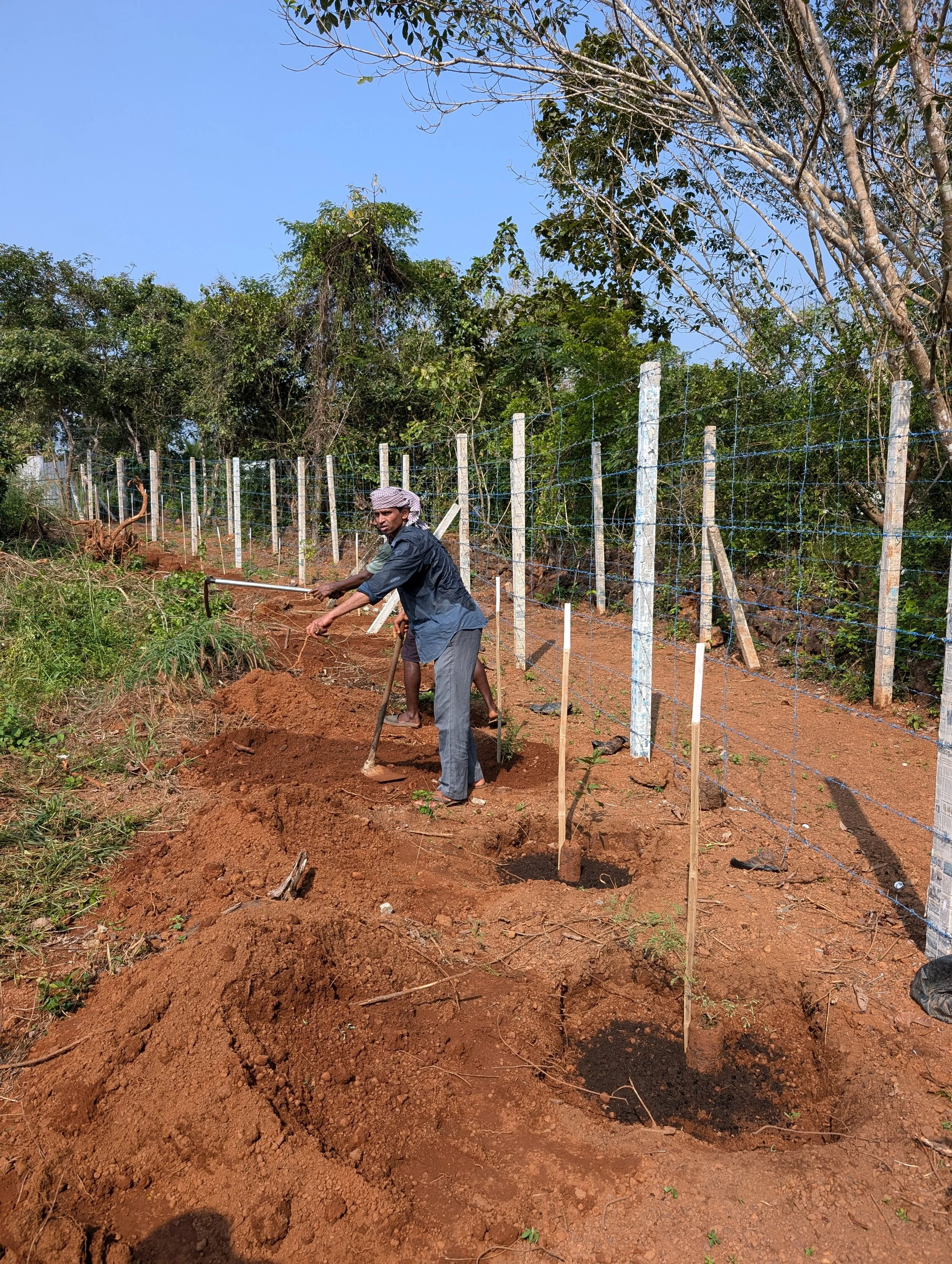
Planting living fence
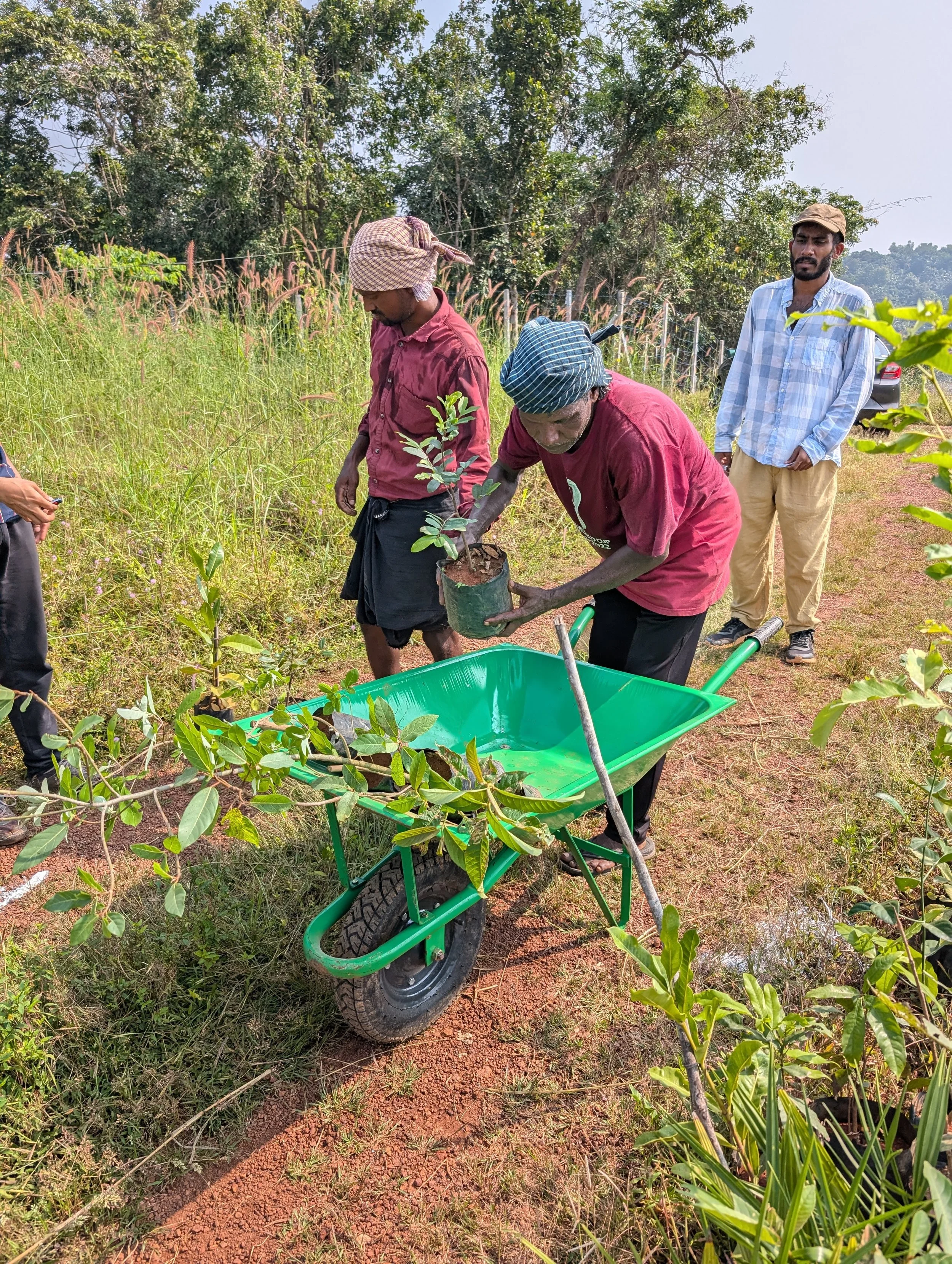
Plants being staged
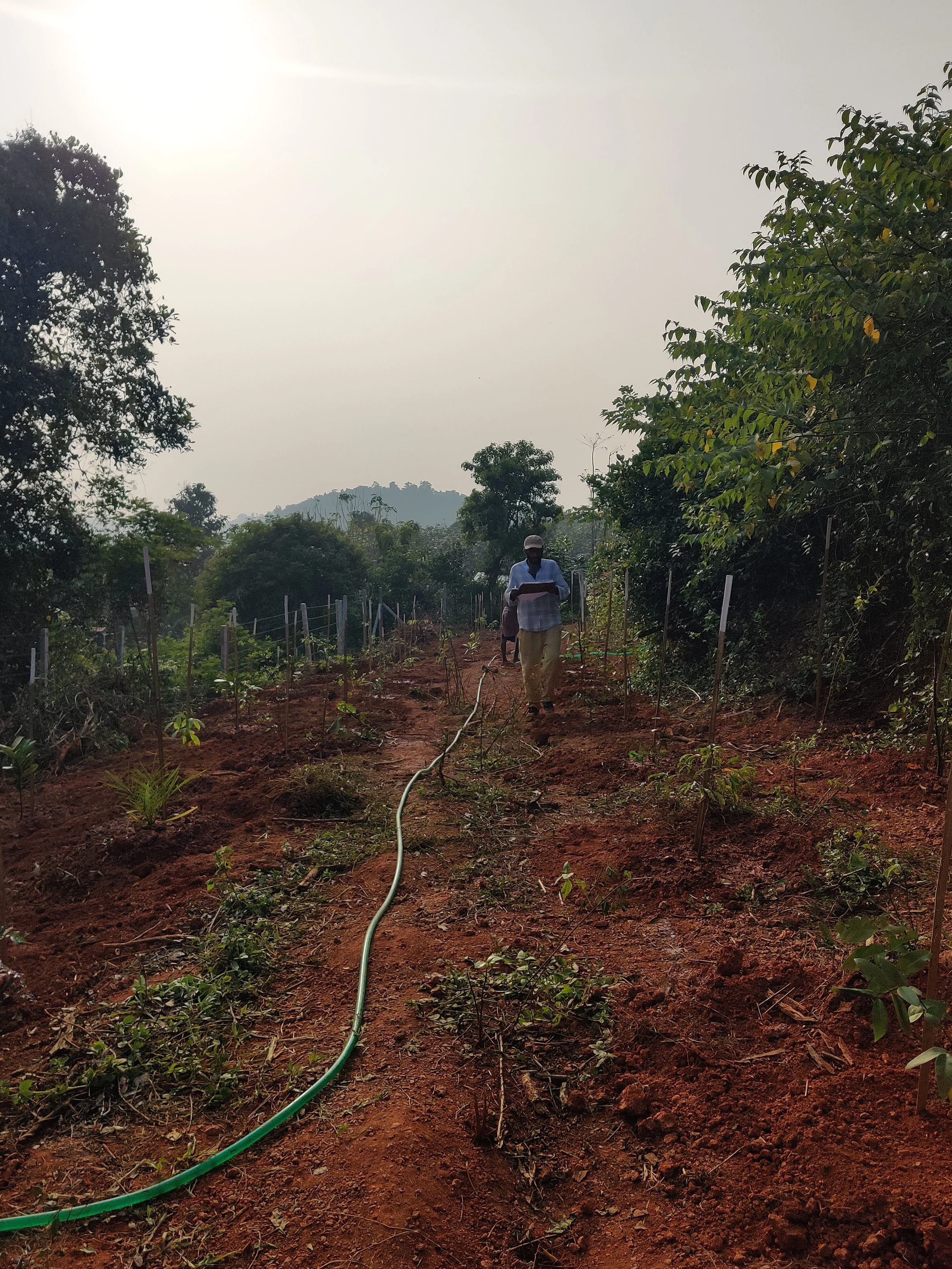
Wild Zone planting
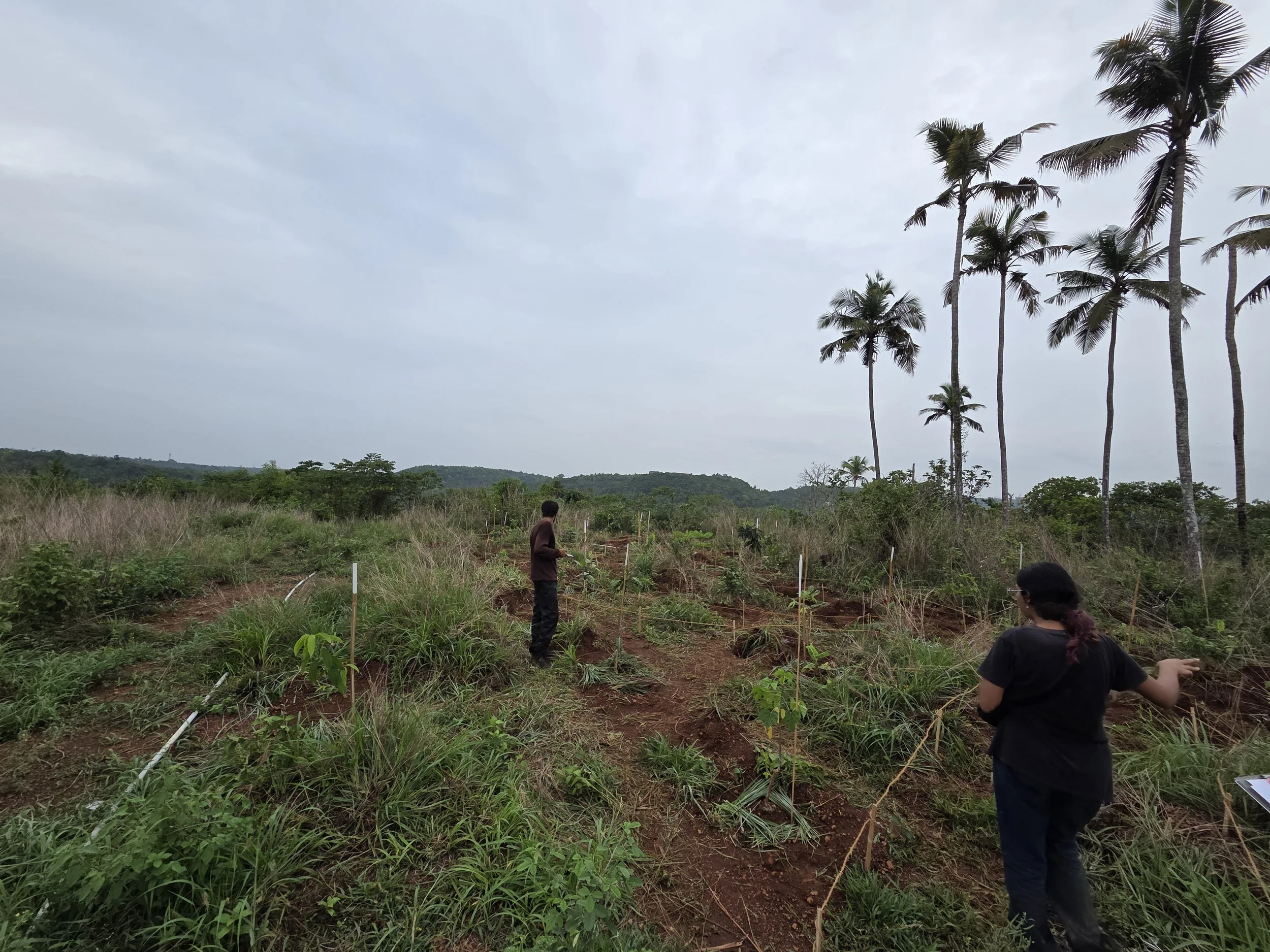
Food forest planting
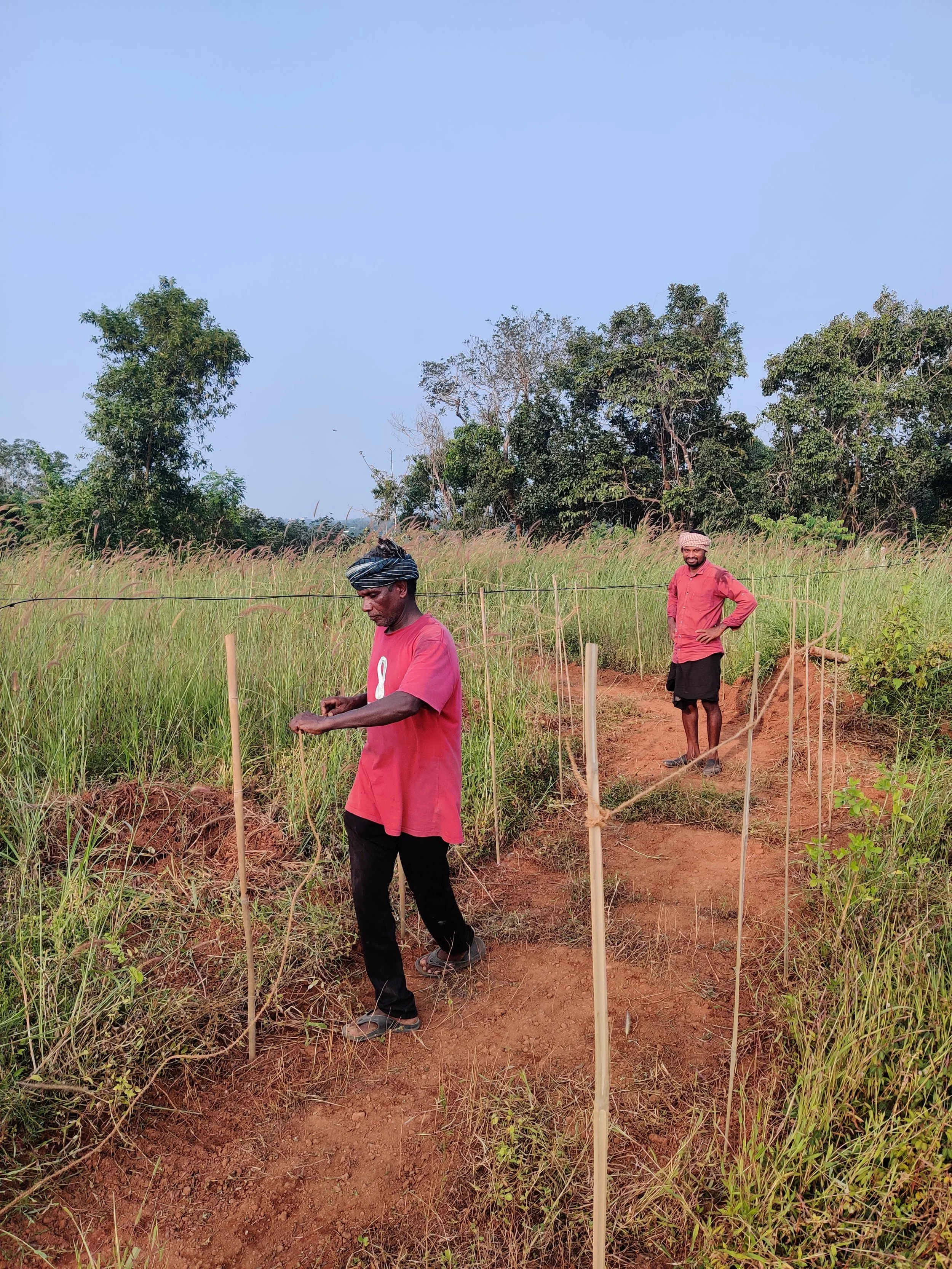
Demarcated the pathways to be maintained
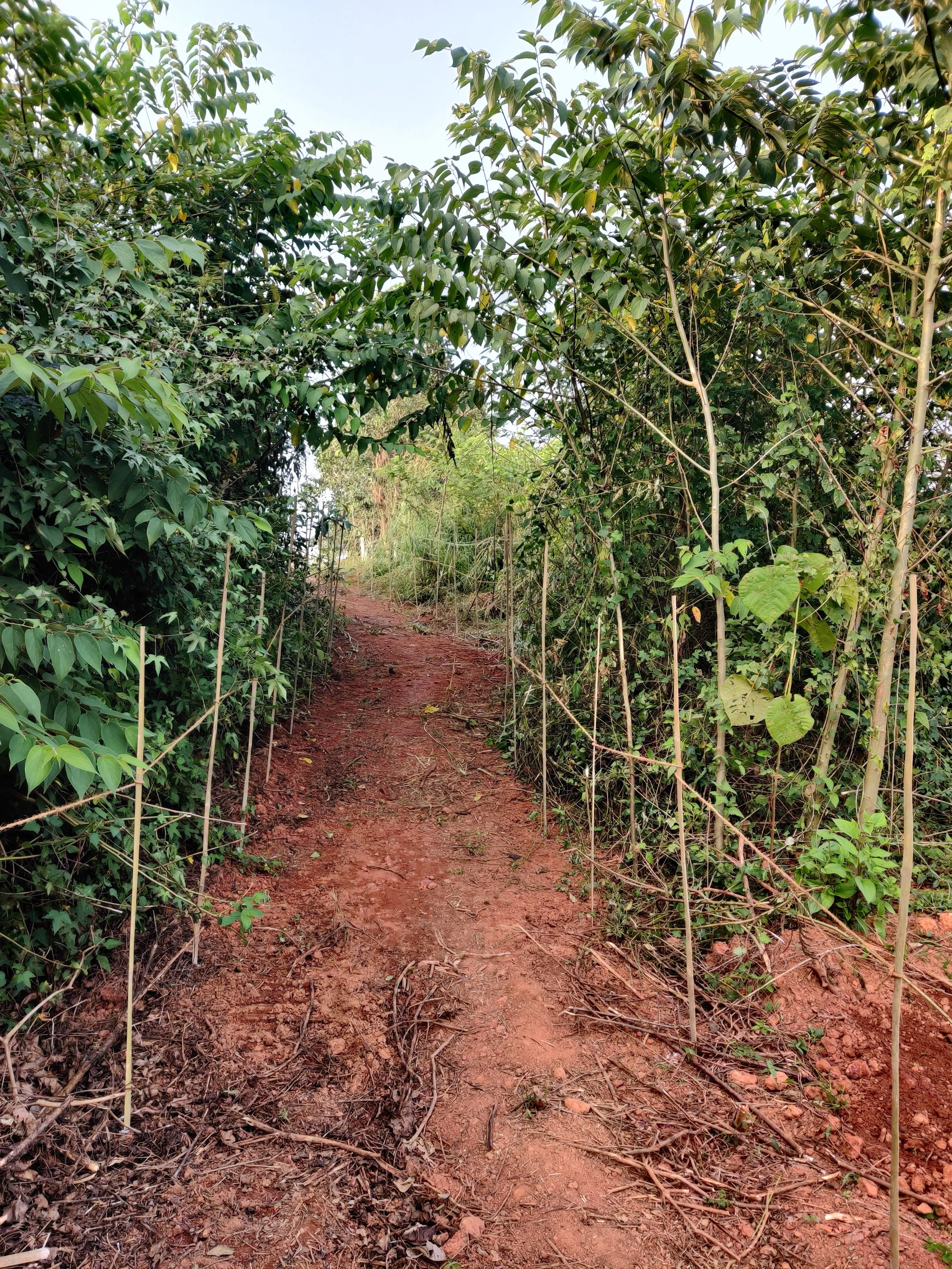
Demarcated the pathways to be maintained
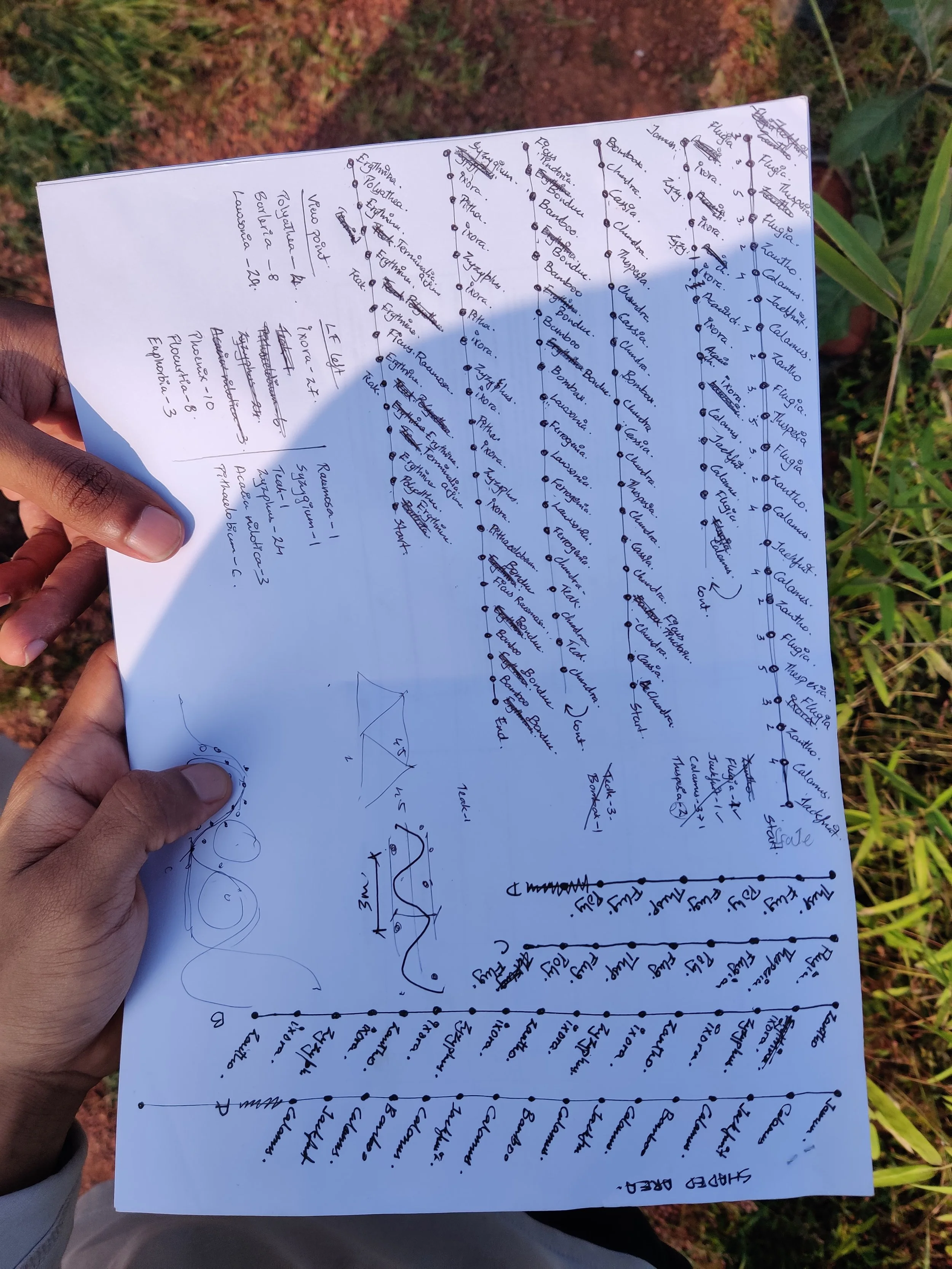
Docuementing changes to be planned
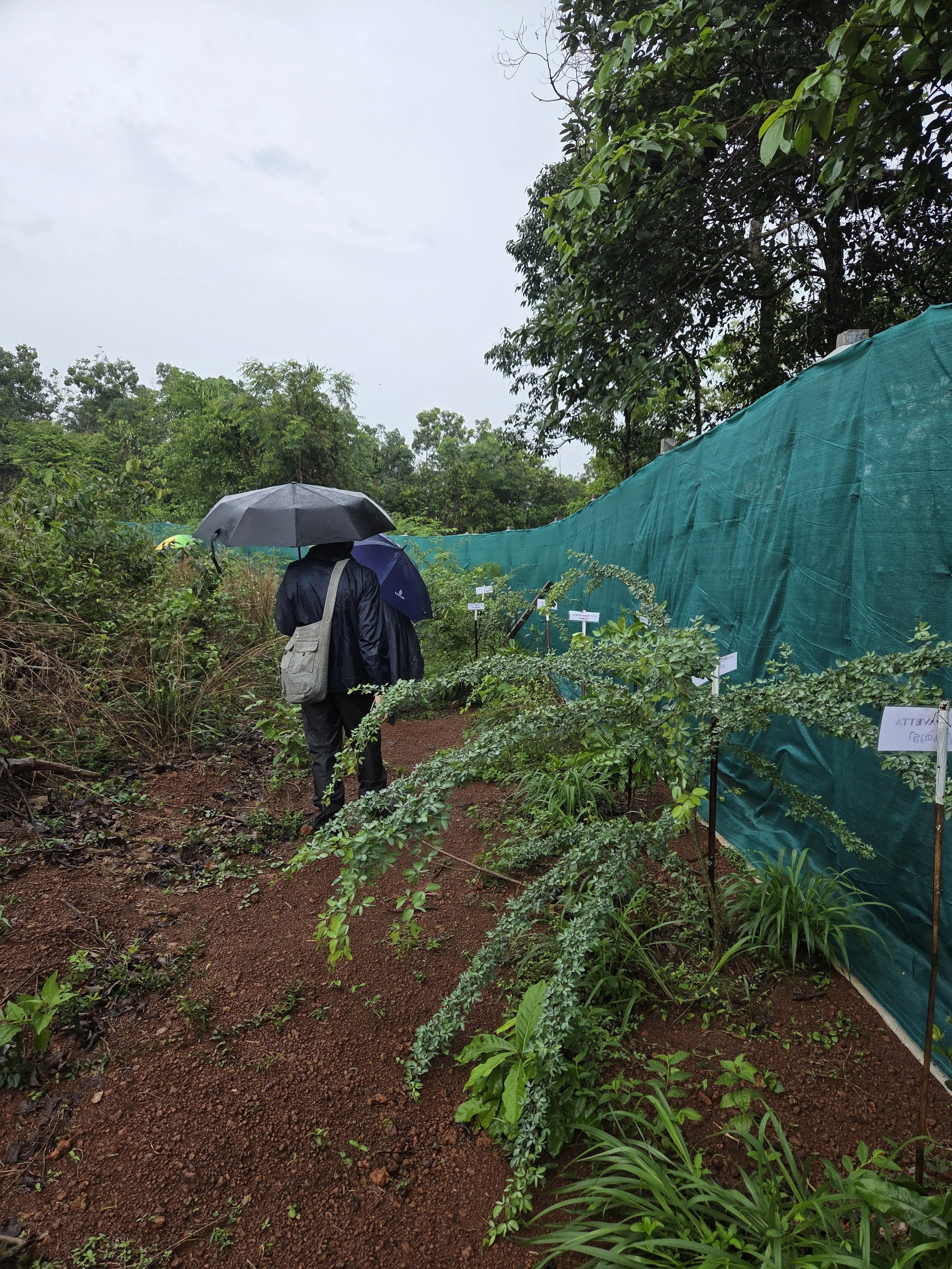
Living fence in 6 months (Pithecellobium Dulce)
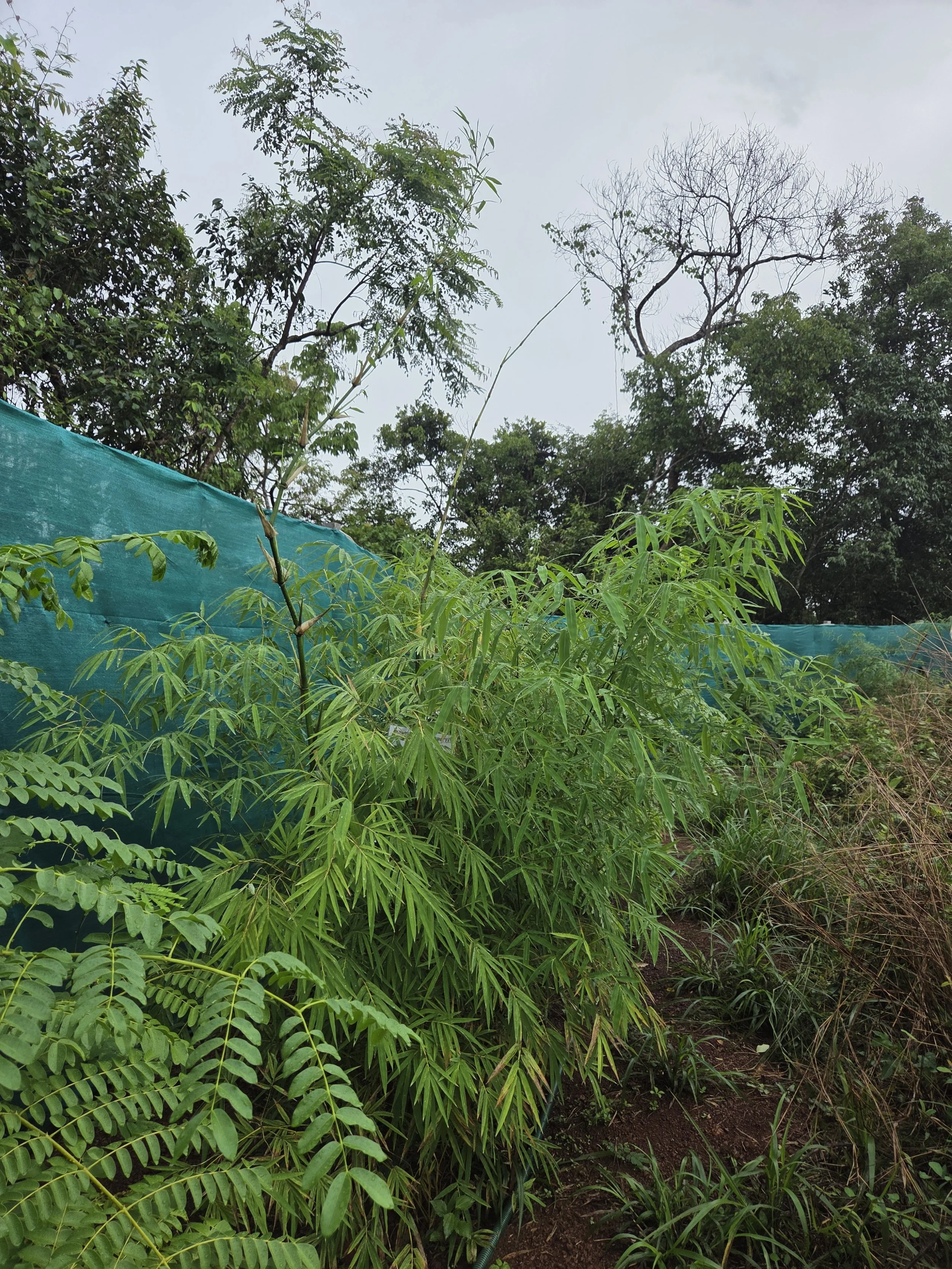
Living fence in 6 months (Dendrocalamus Strictus)
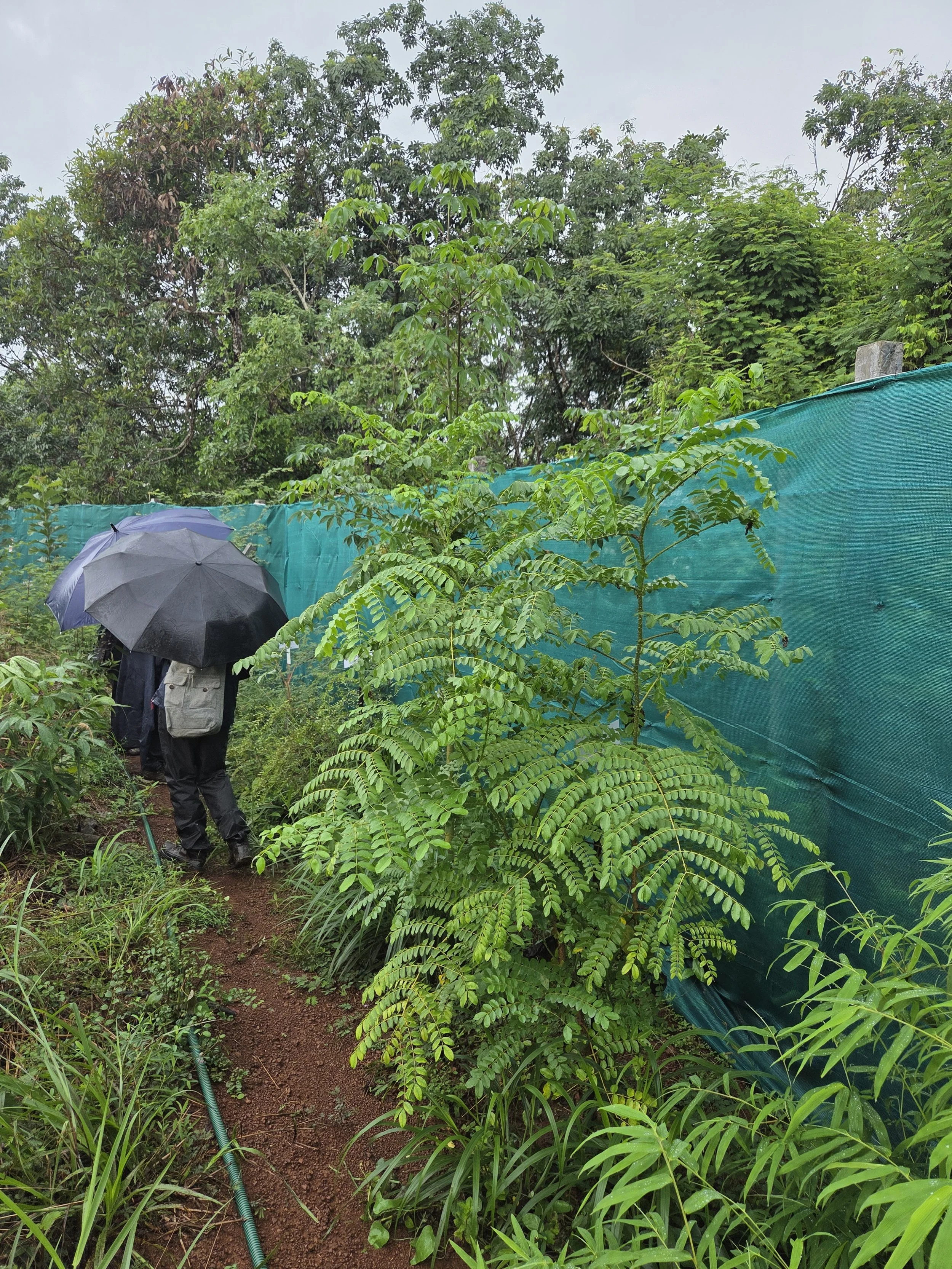
Living fence in 6 months (Caesalpinia bonducella)
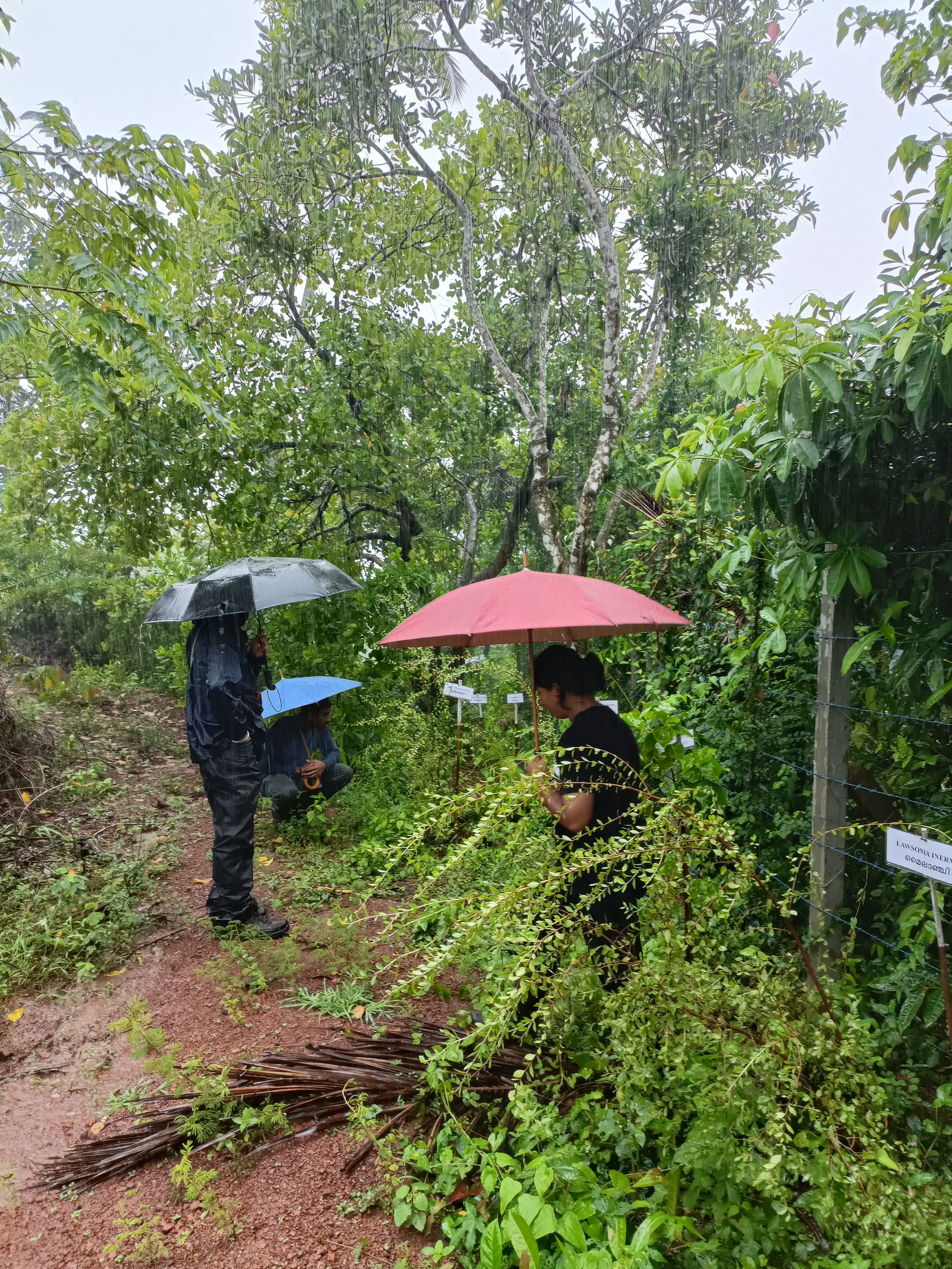
Living fence in 6 months (Lawsonia inermis)
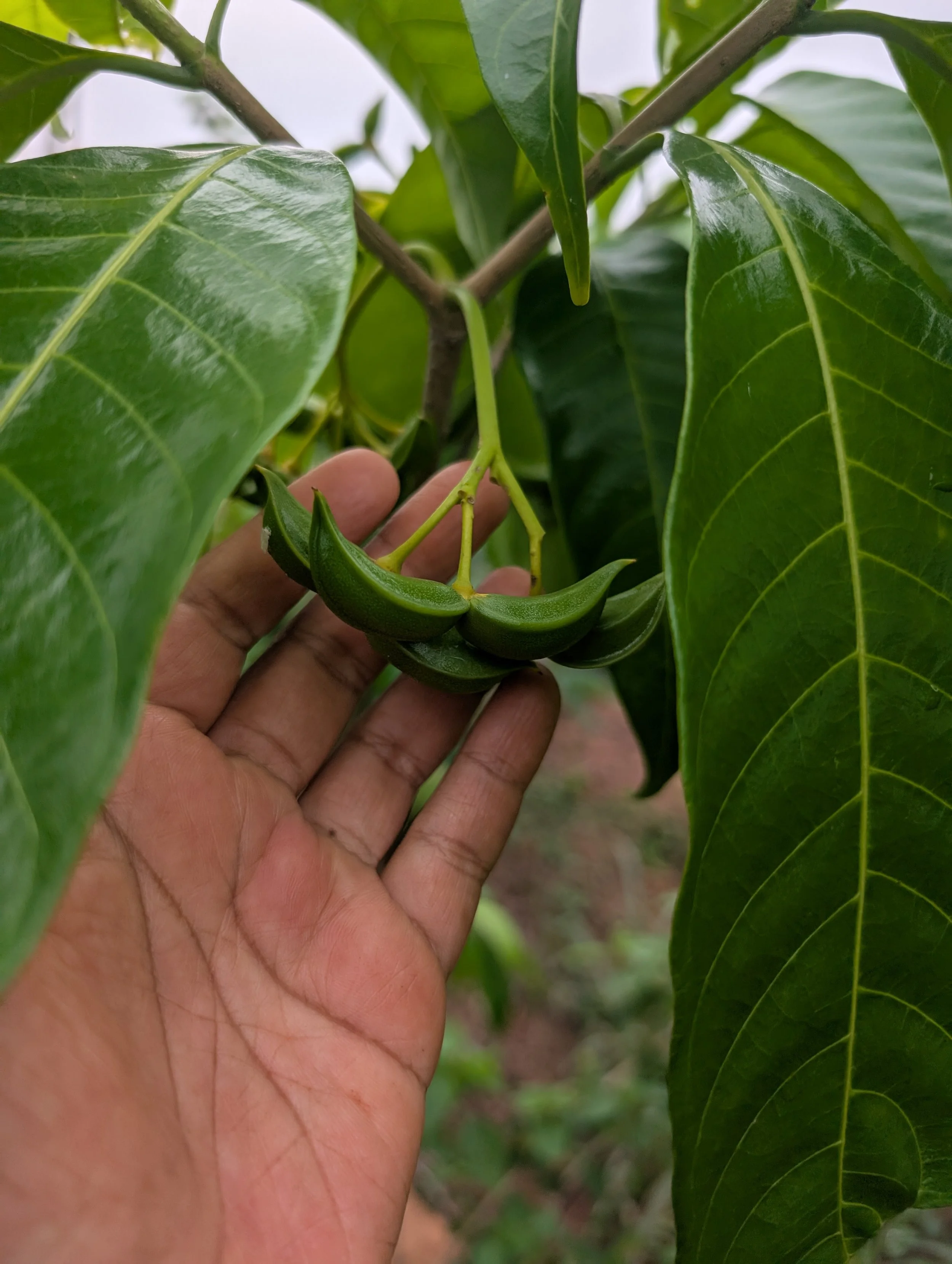
Endemic species identified on site
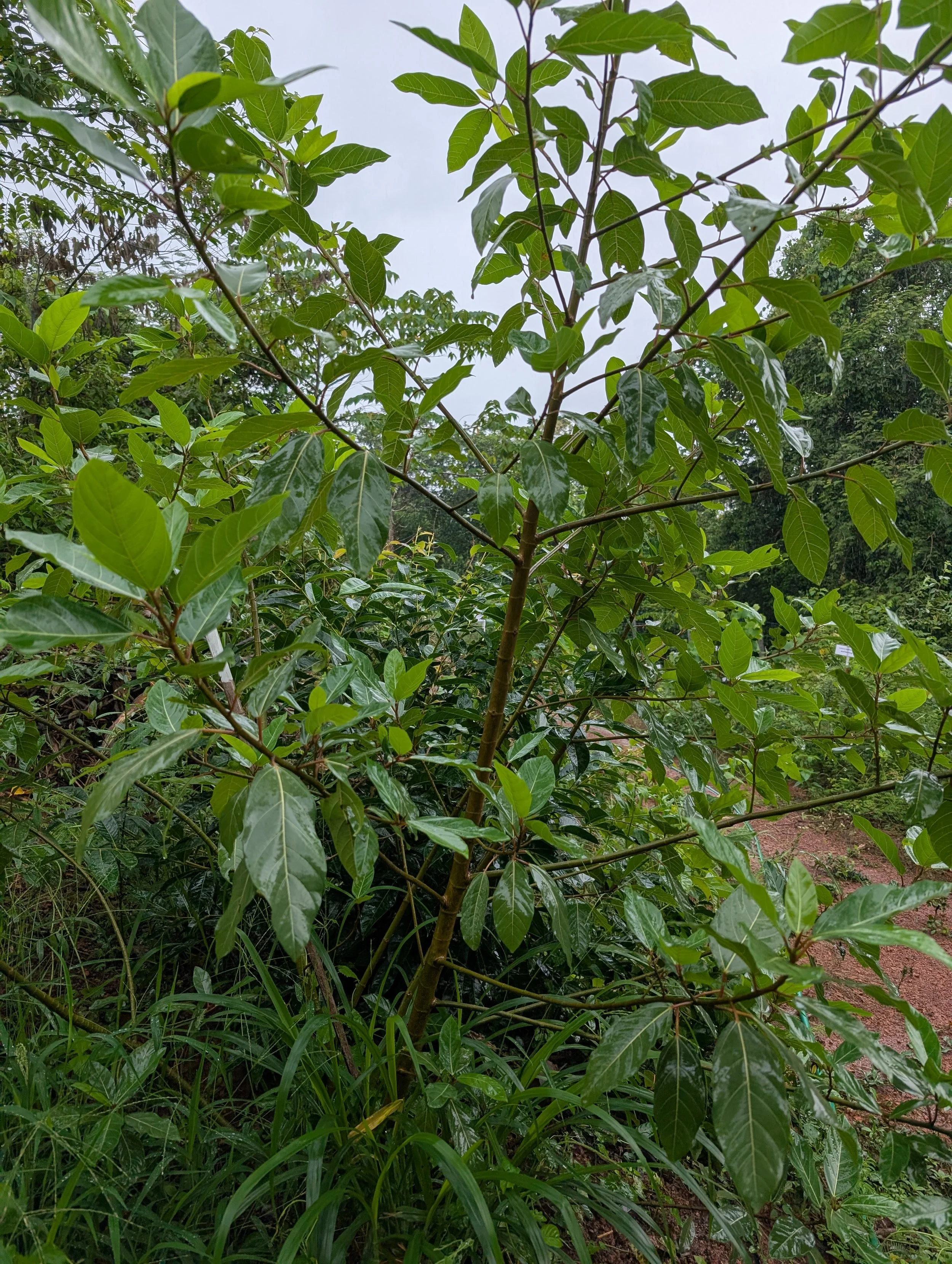
Ficus racemosa after 6 months of planting
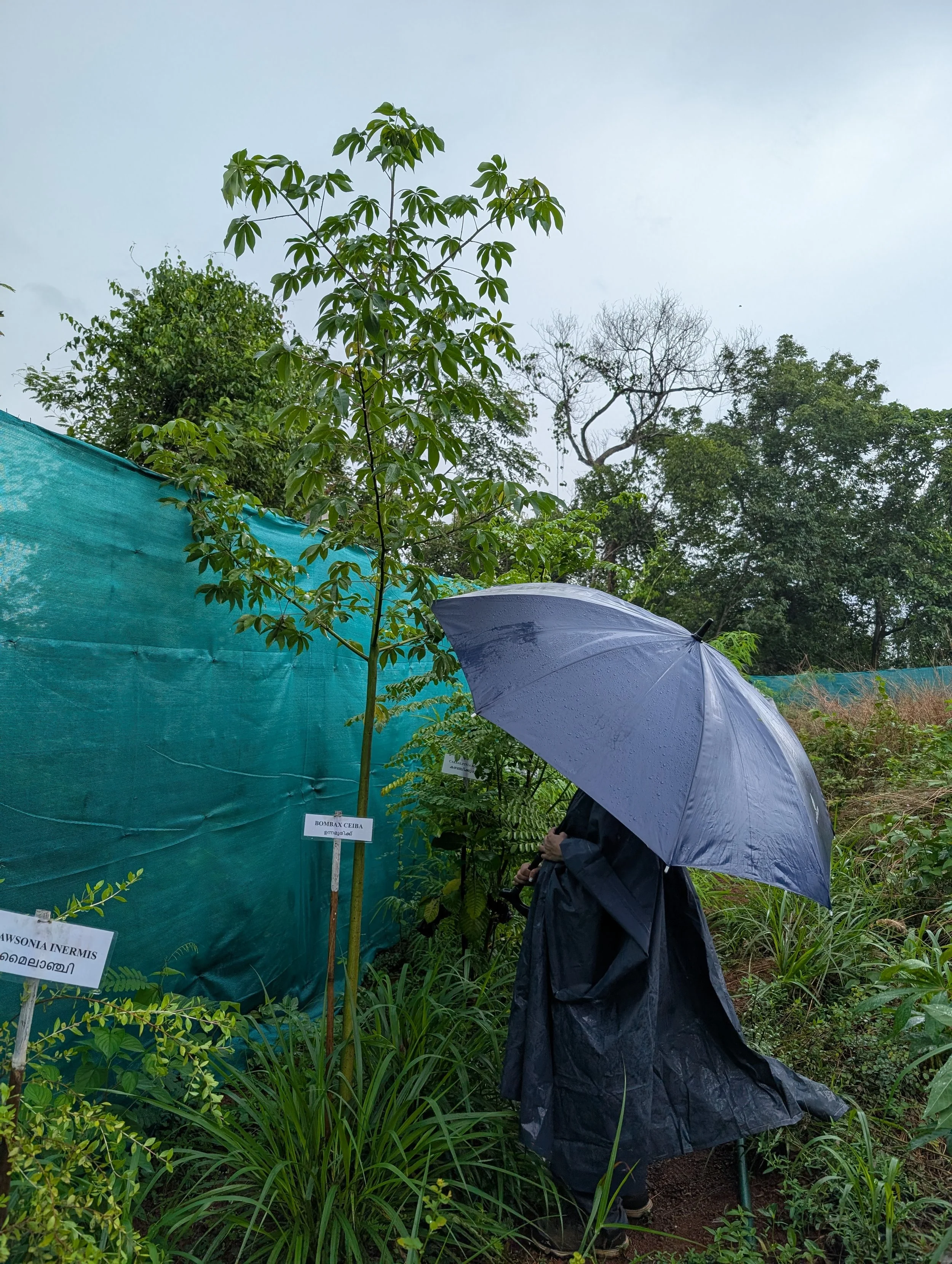
Living fence in 6 months (Bombax ceiba)
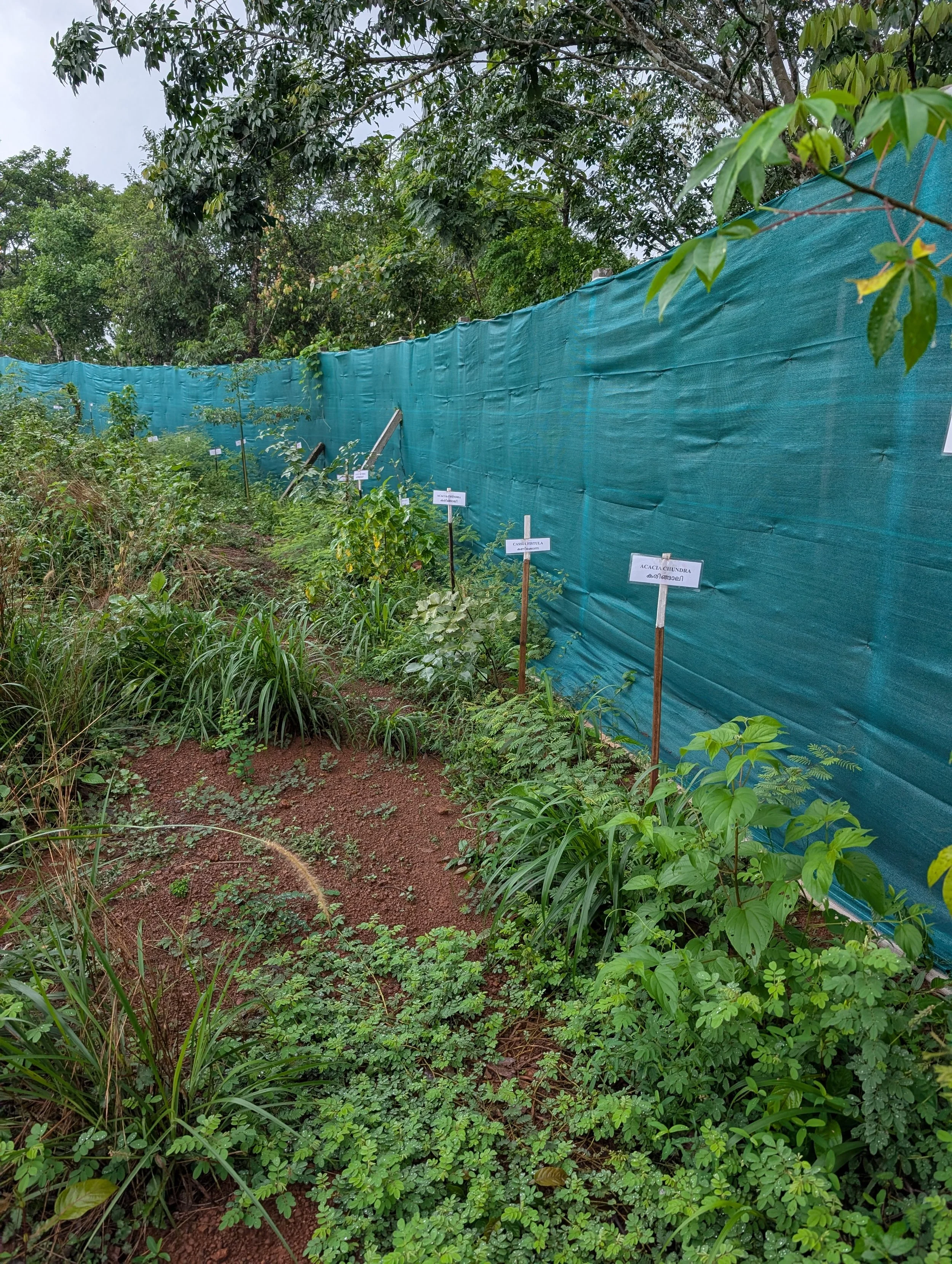
Living fence in 6 months (area that is drier)
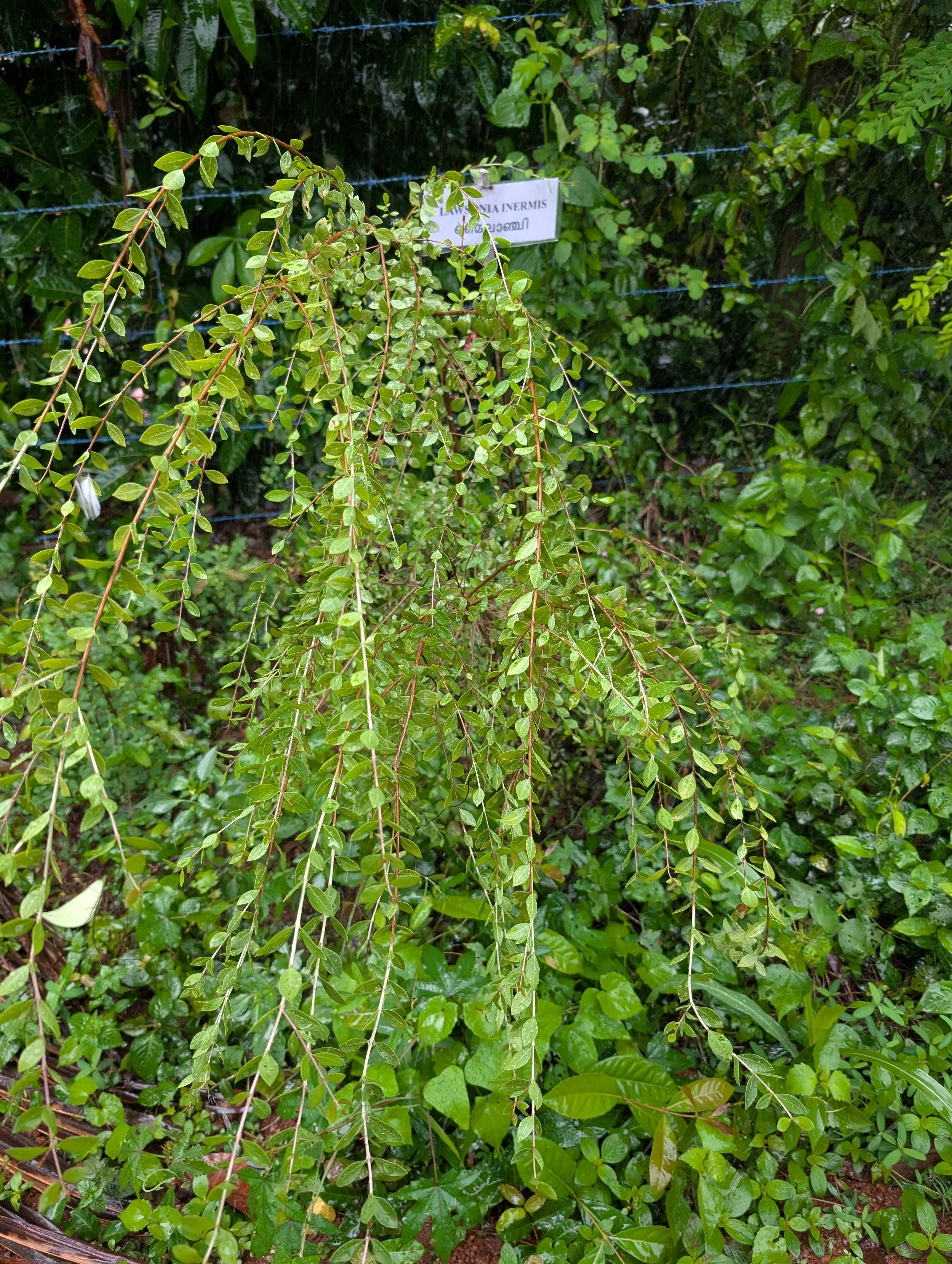
Living fence in 6 months (Lawsonia inermis)
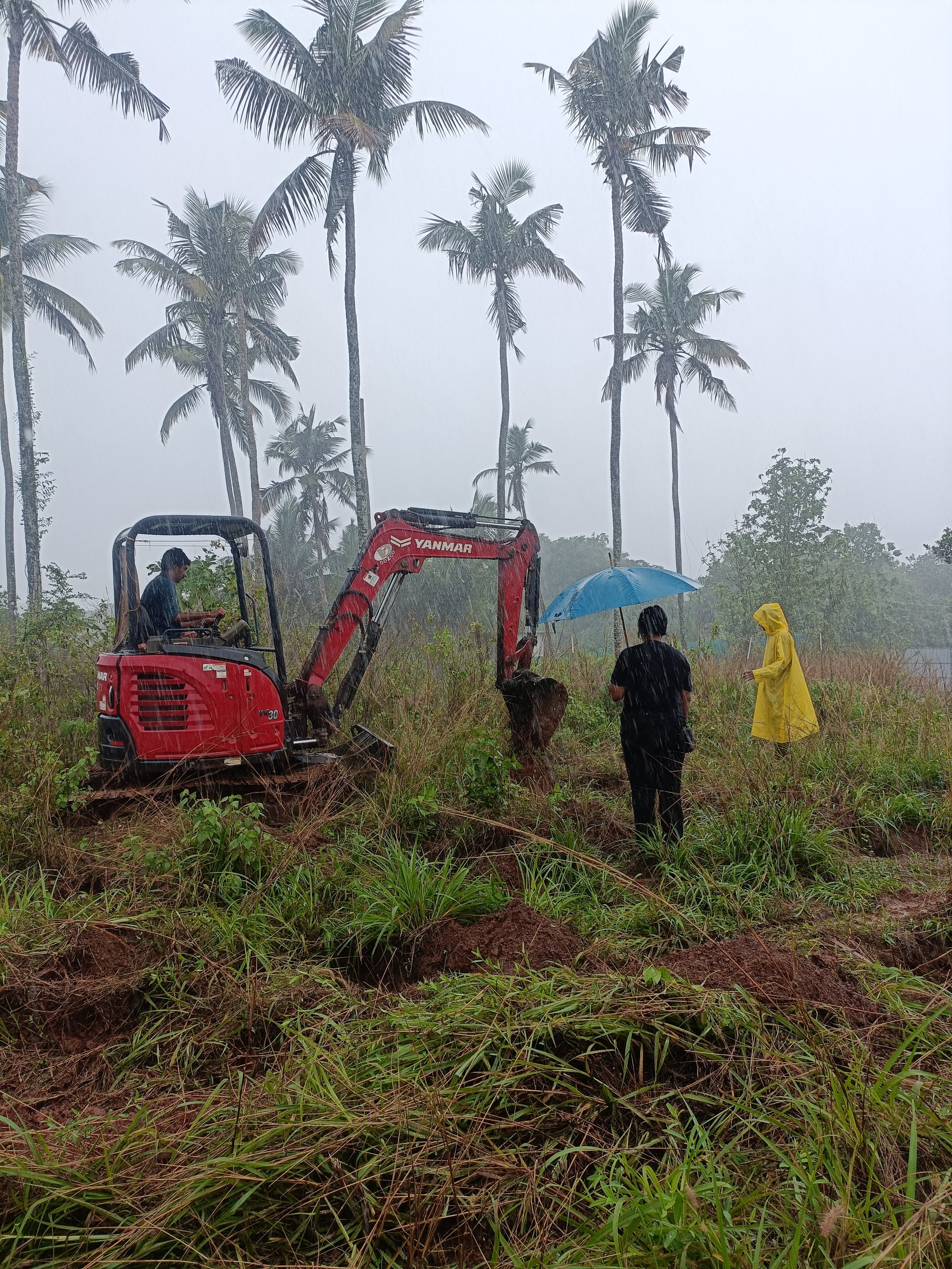
Planting of Food forest
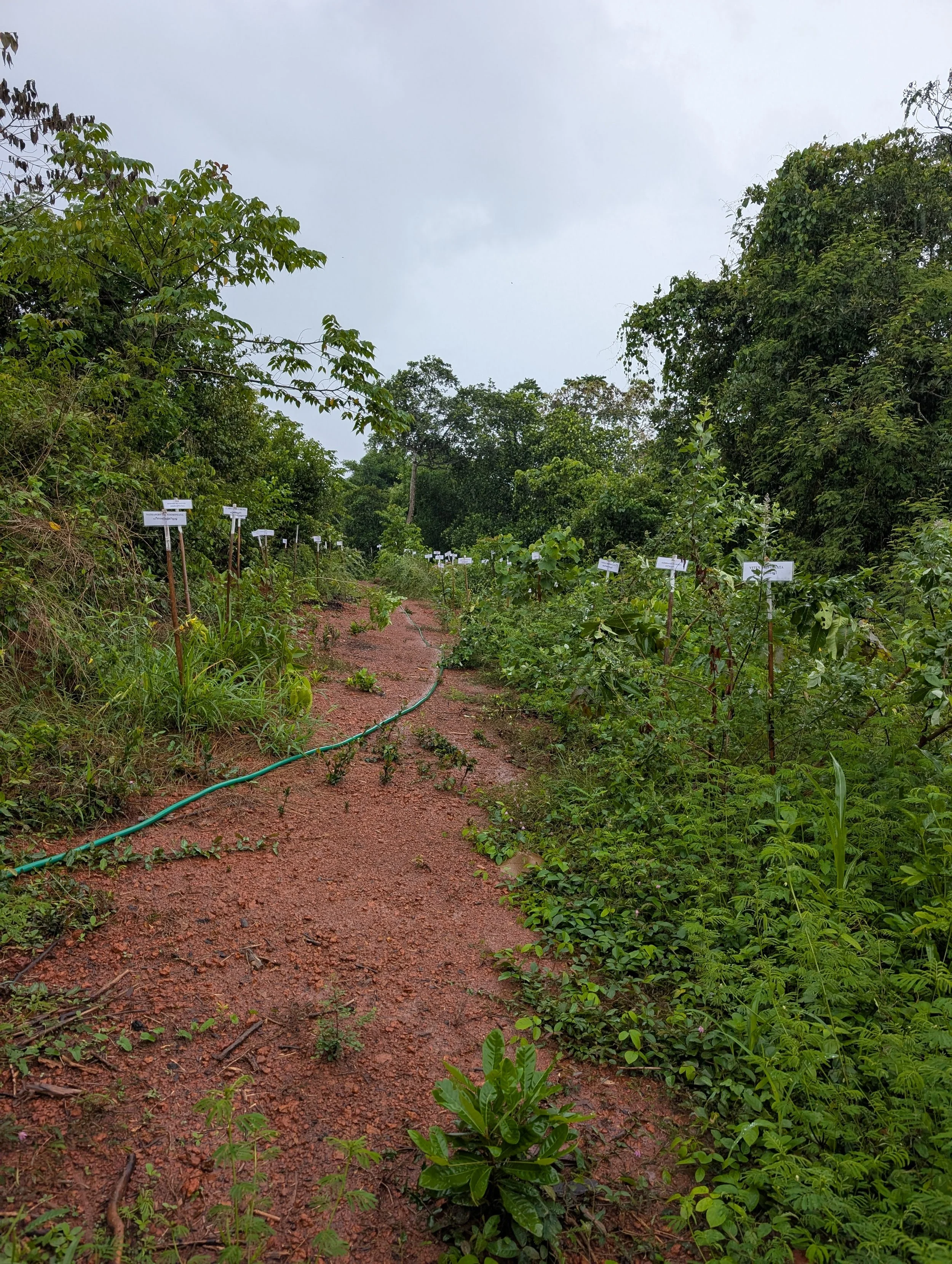
Wild Zone in 6 months
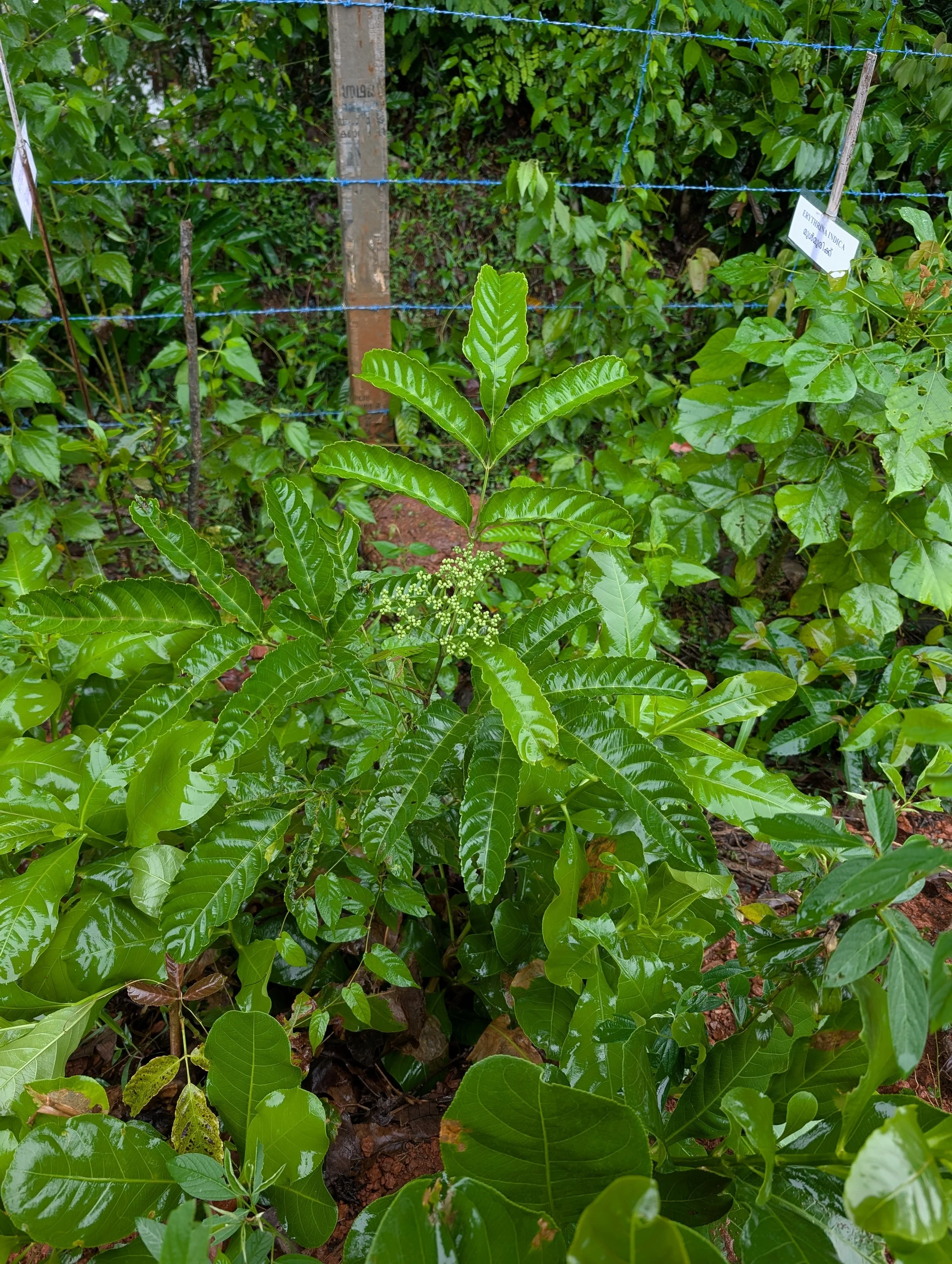
Leea indica regeneration on site
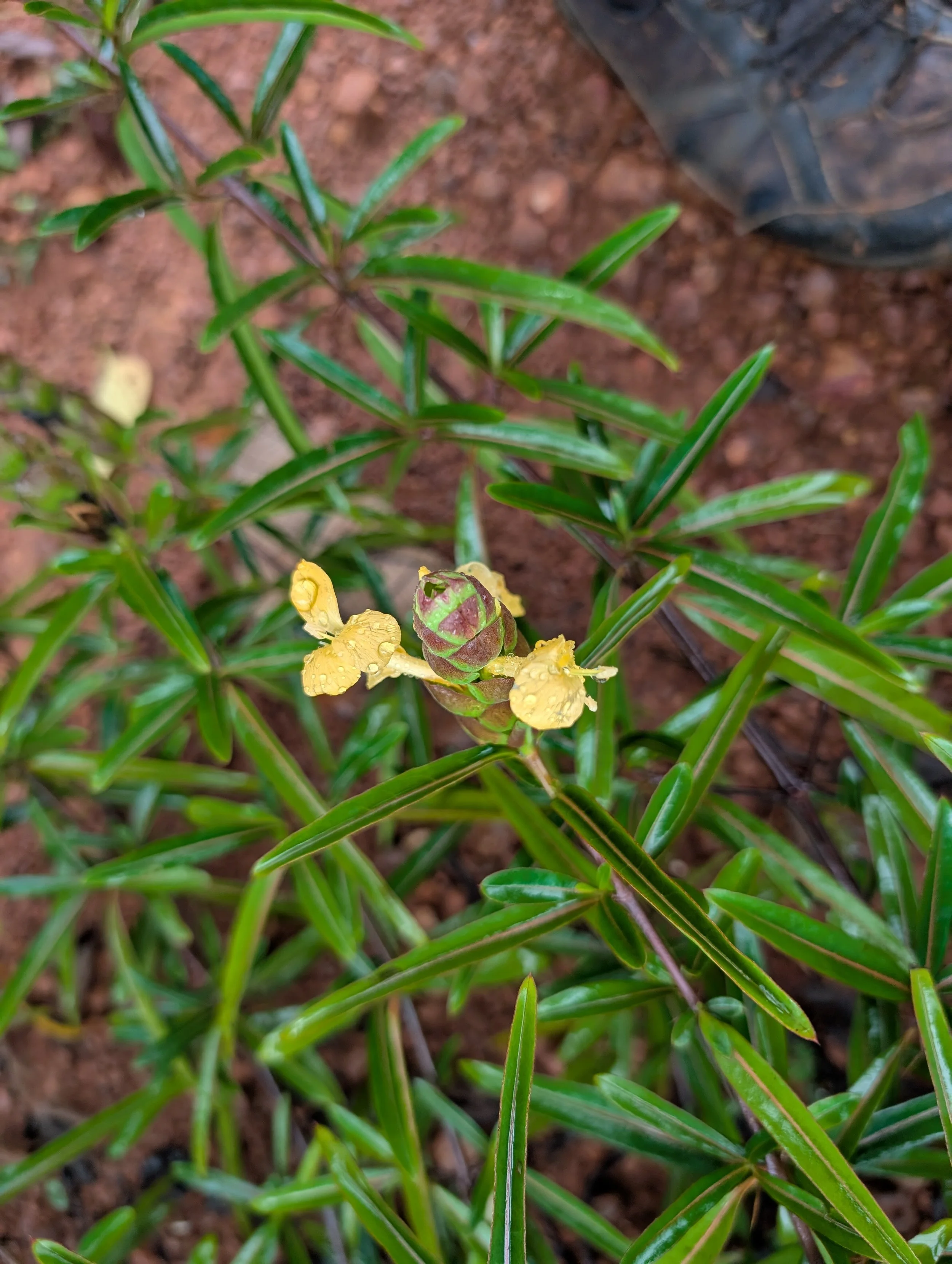
Living fence in 6 months (Barleria prionitis)
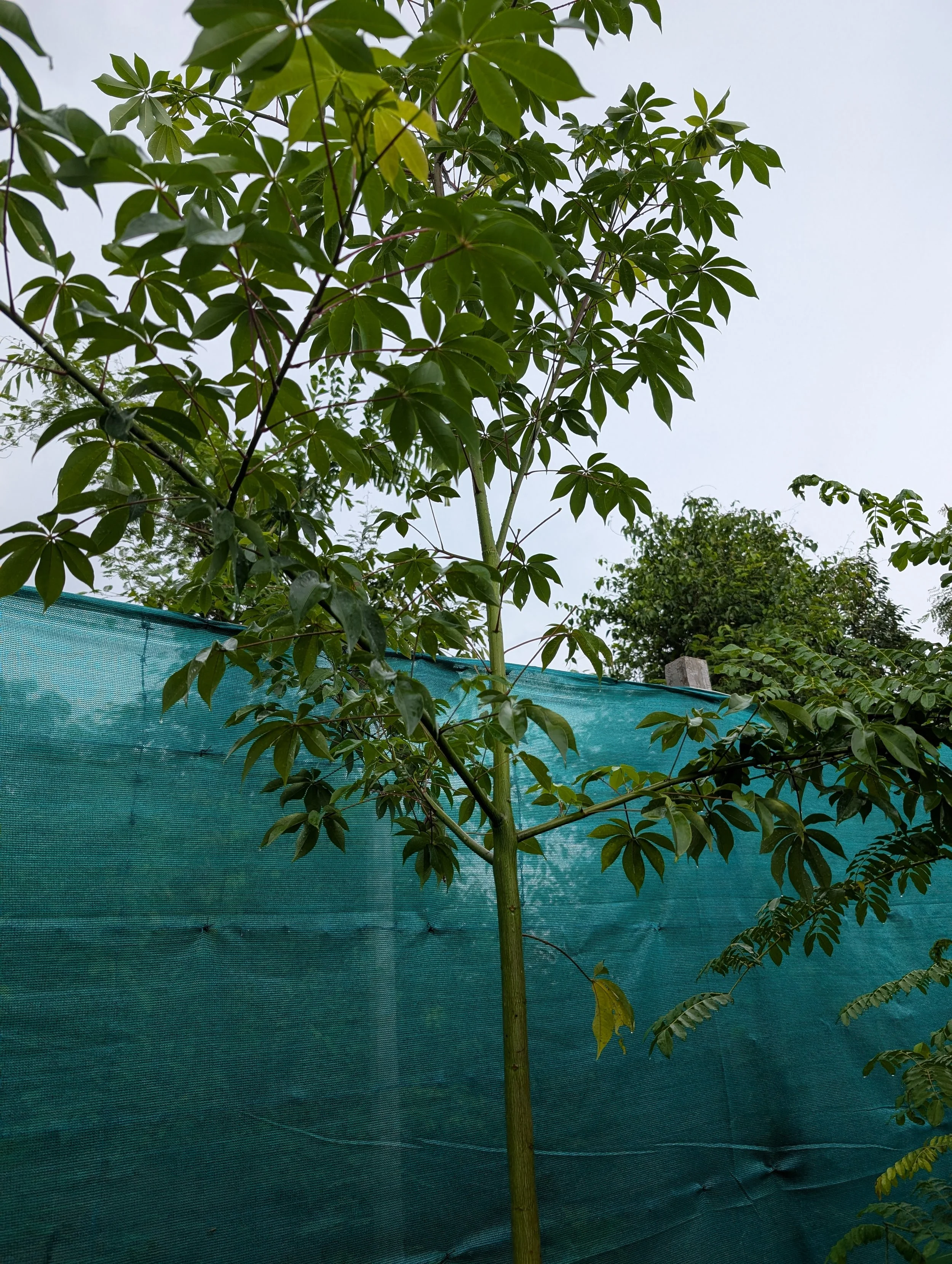
Bombax Ceiba
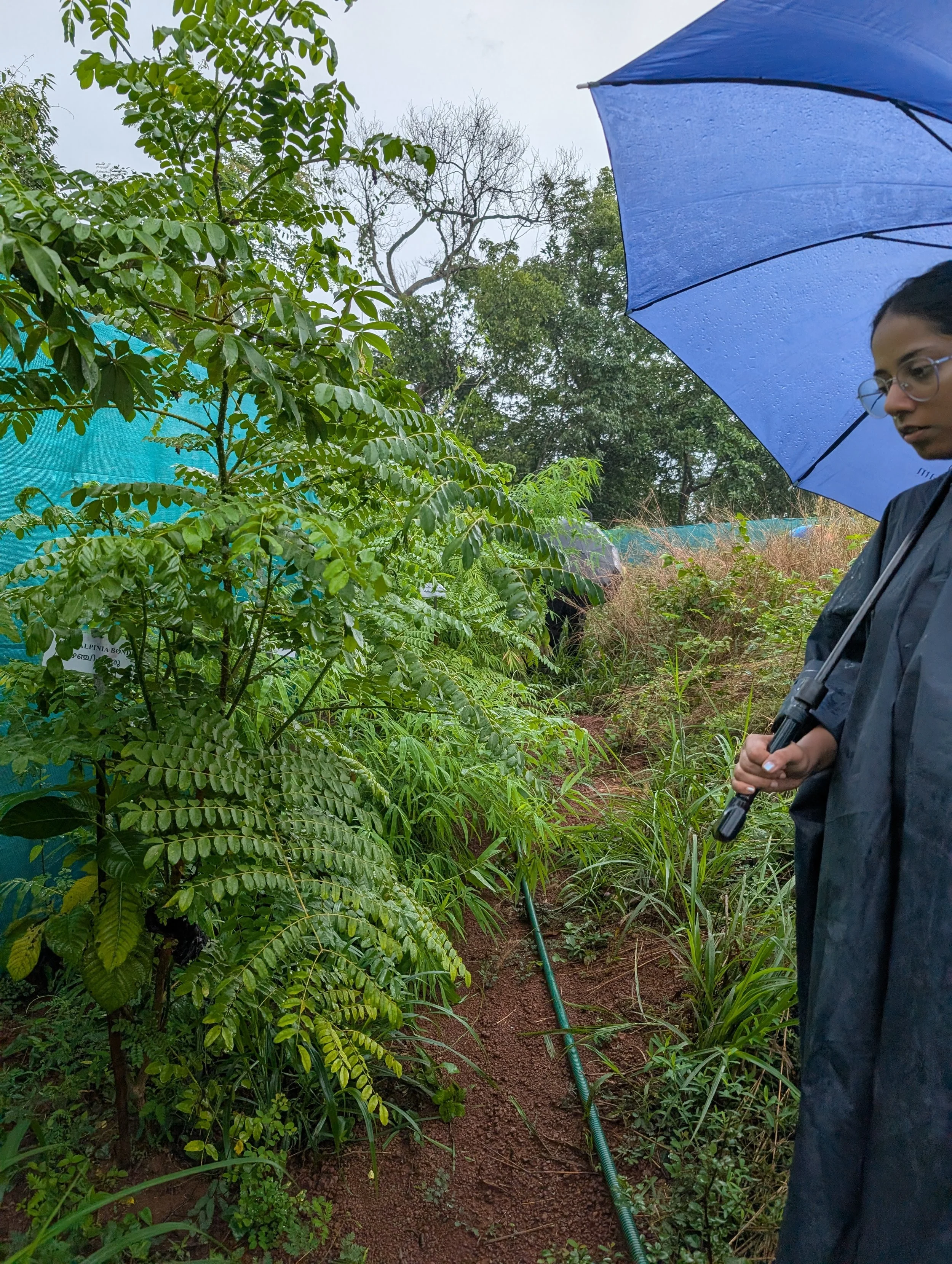
Observing growth on site
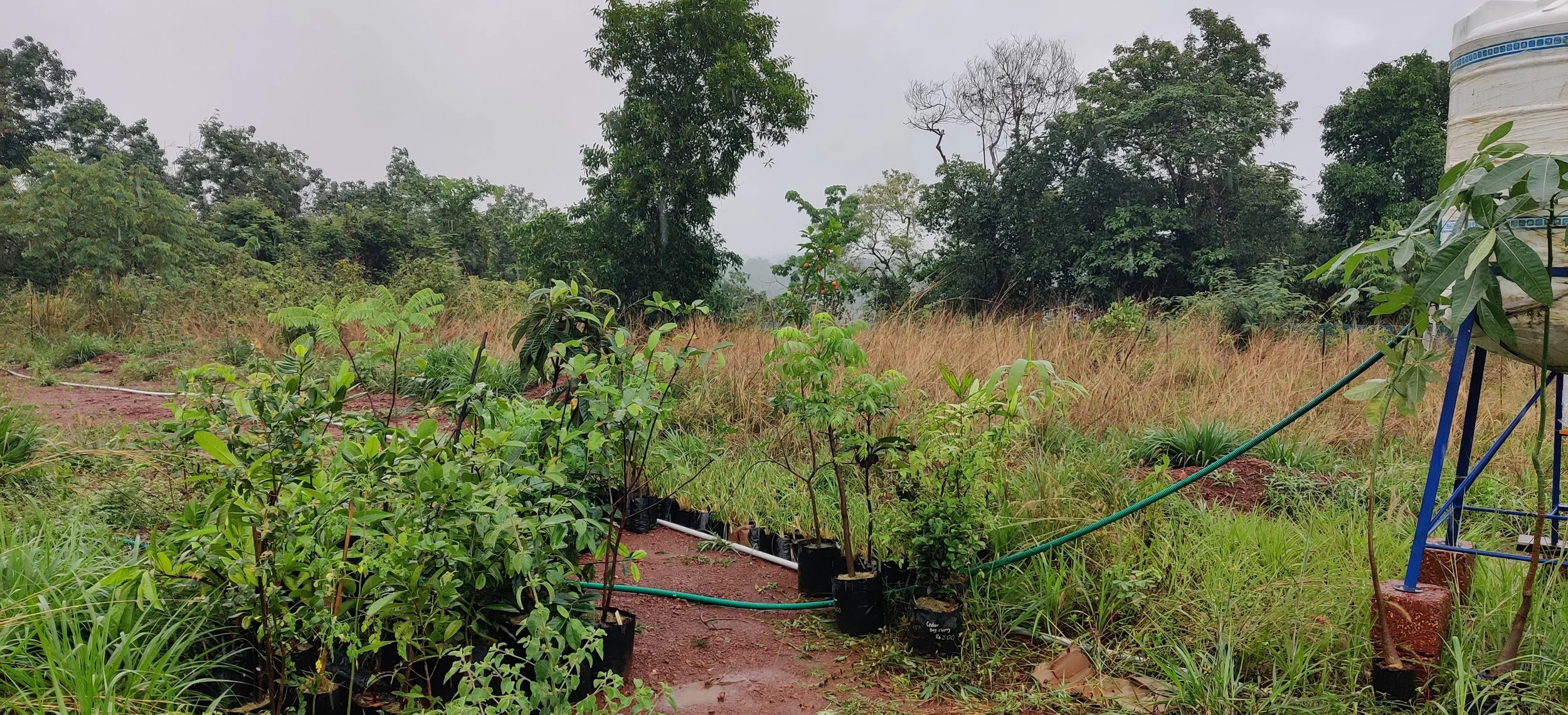
Saplings reaching site
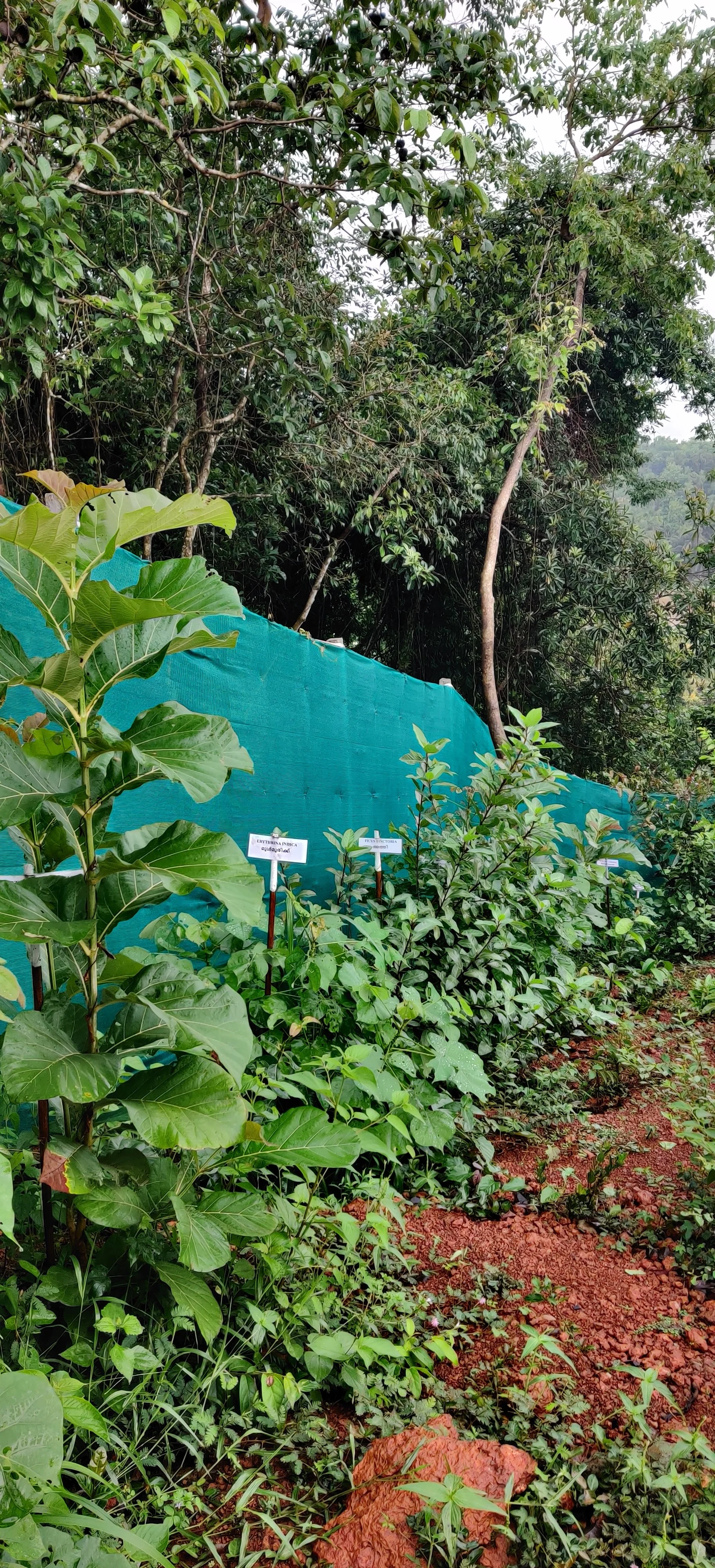
Living Fence in 6 months
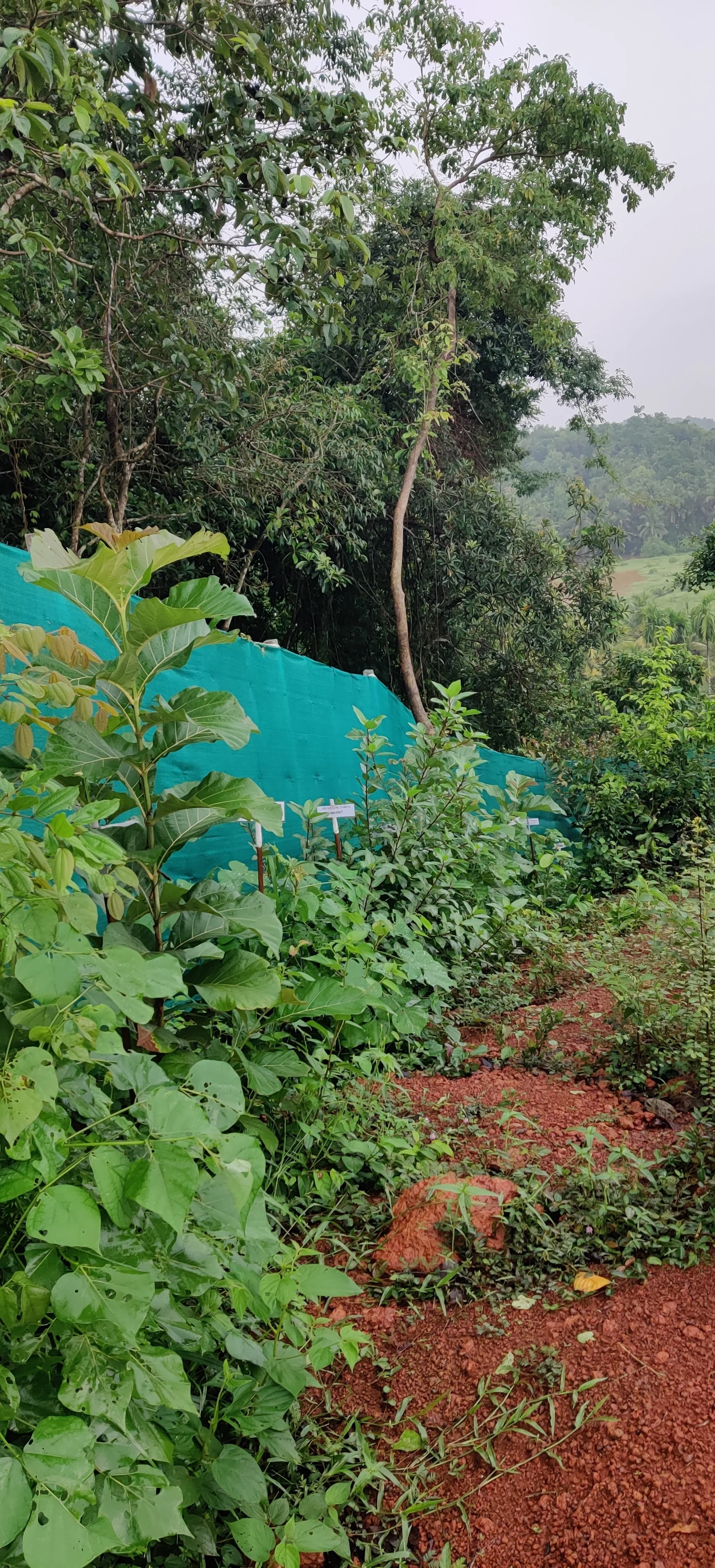
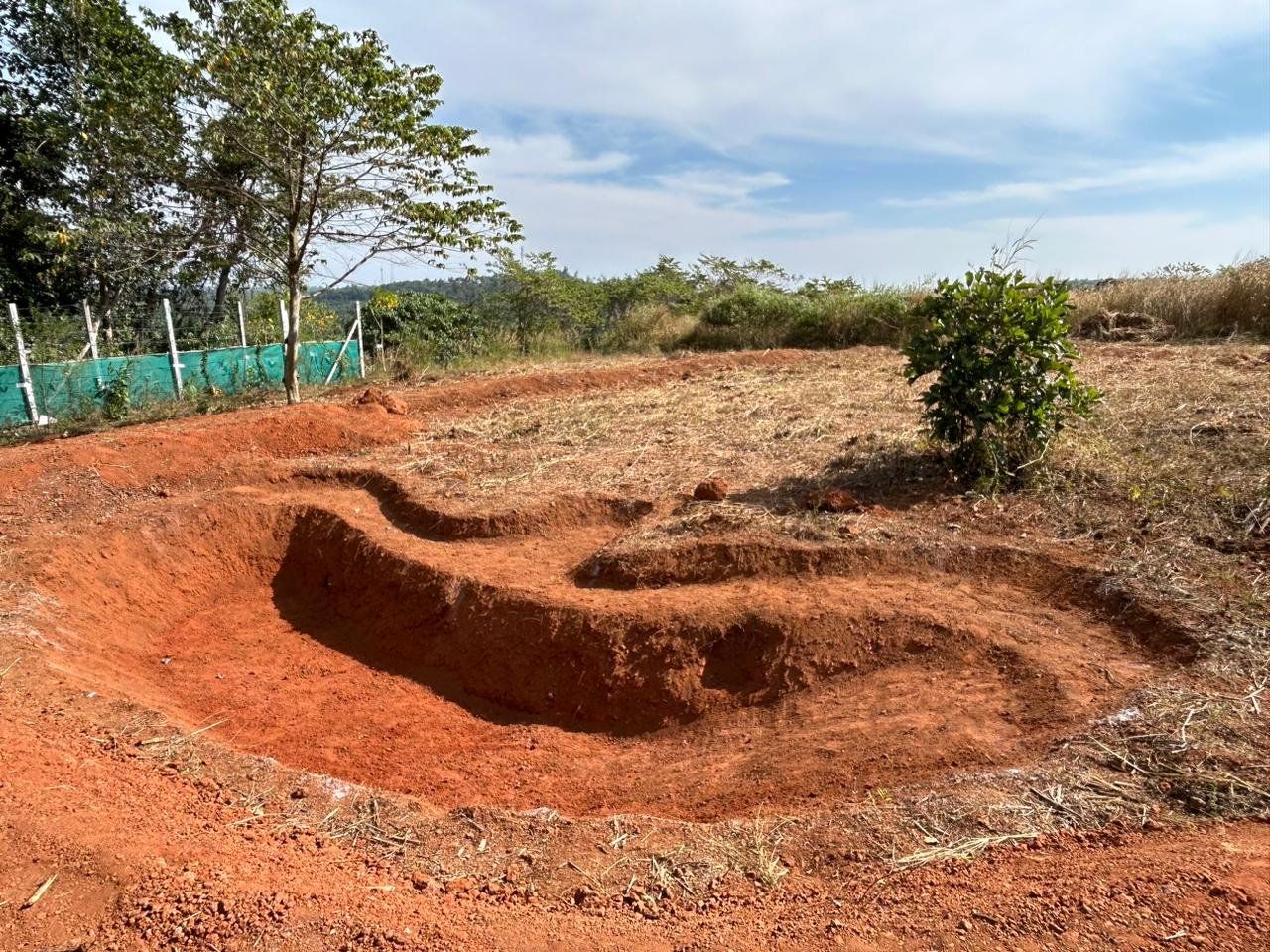
Pond implementation
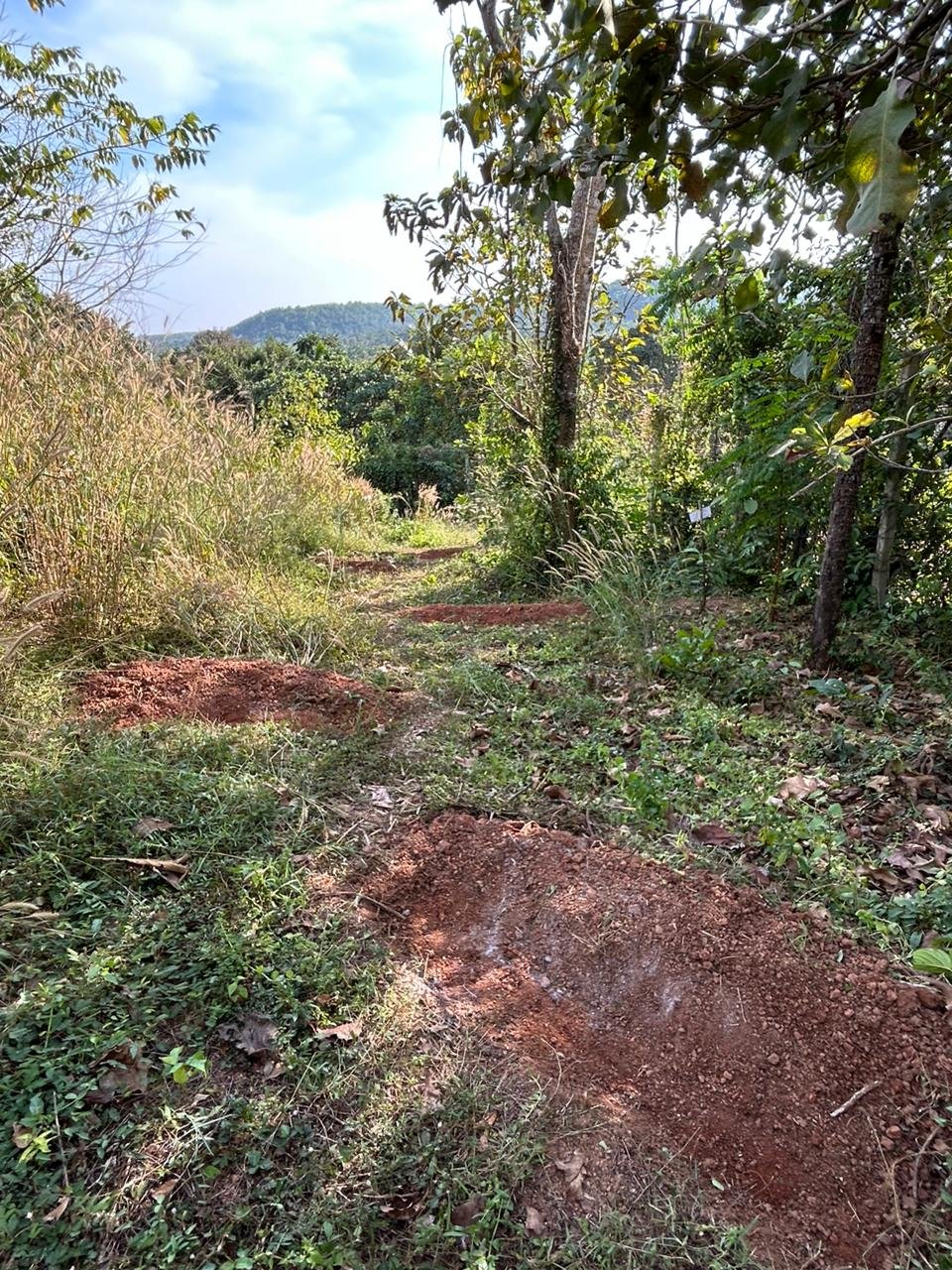
trenches for slowing down water
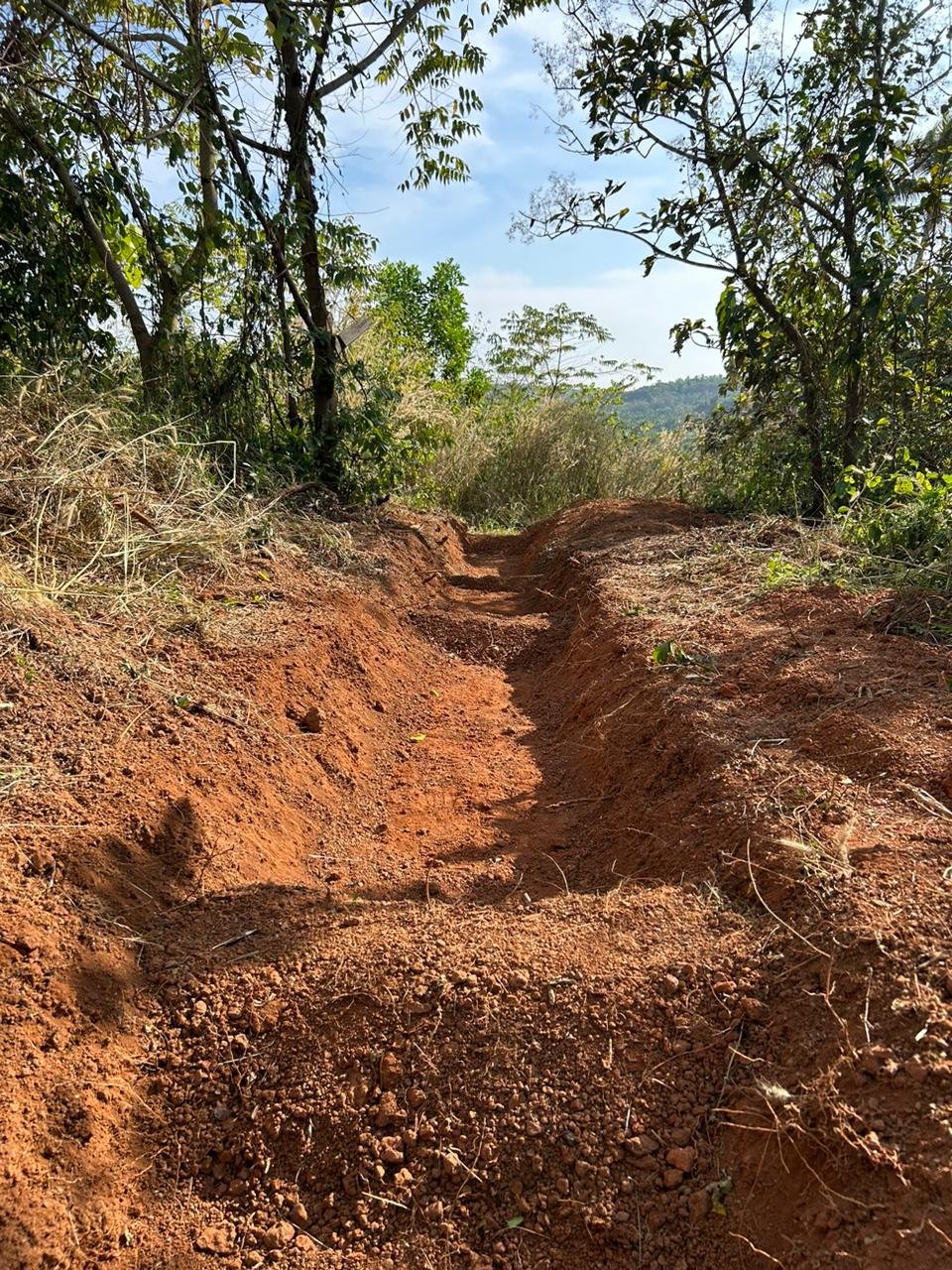
Pond overflow
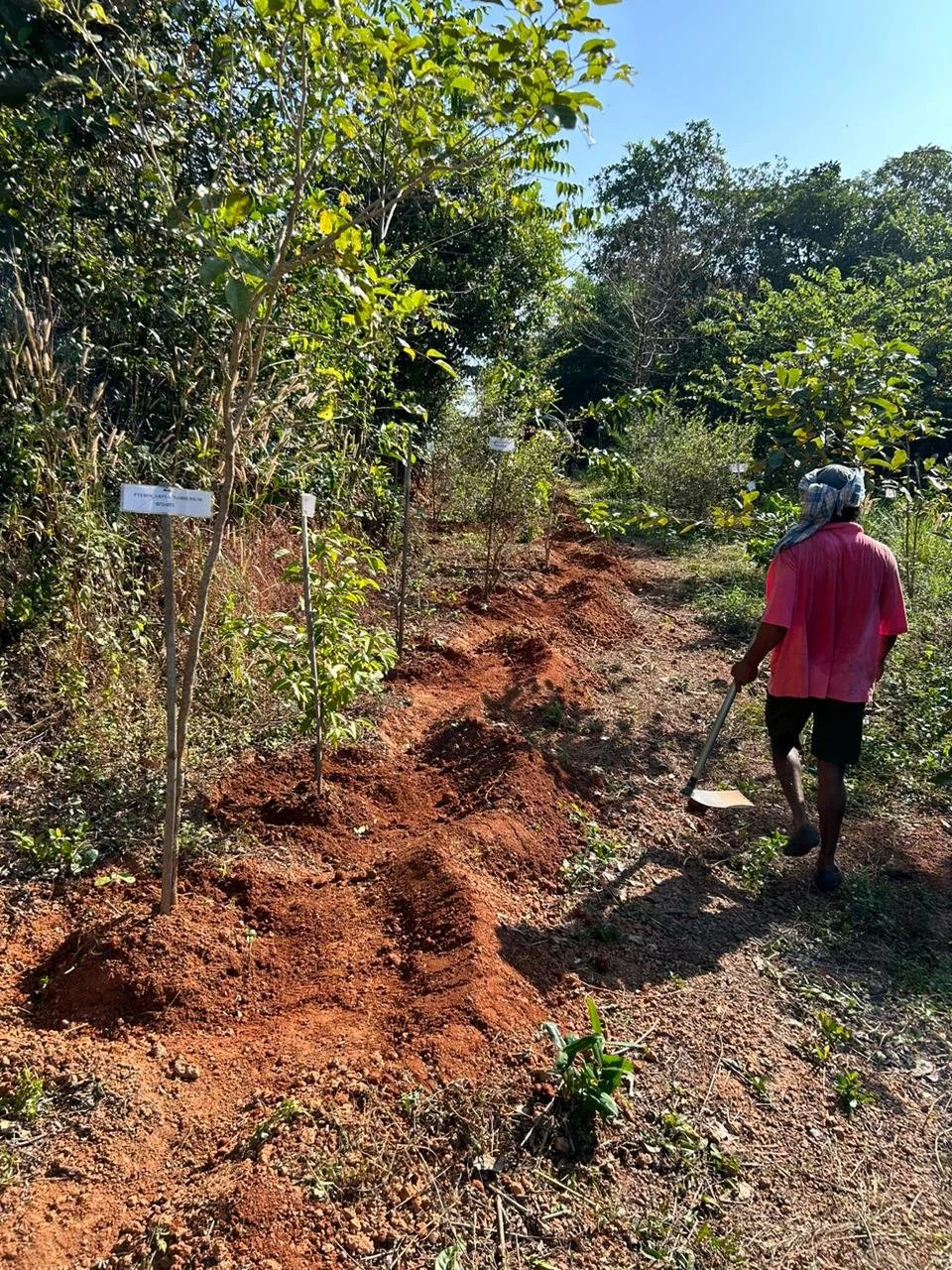
Boomerangs for Wild zone species
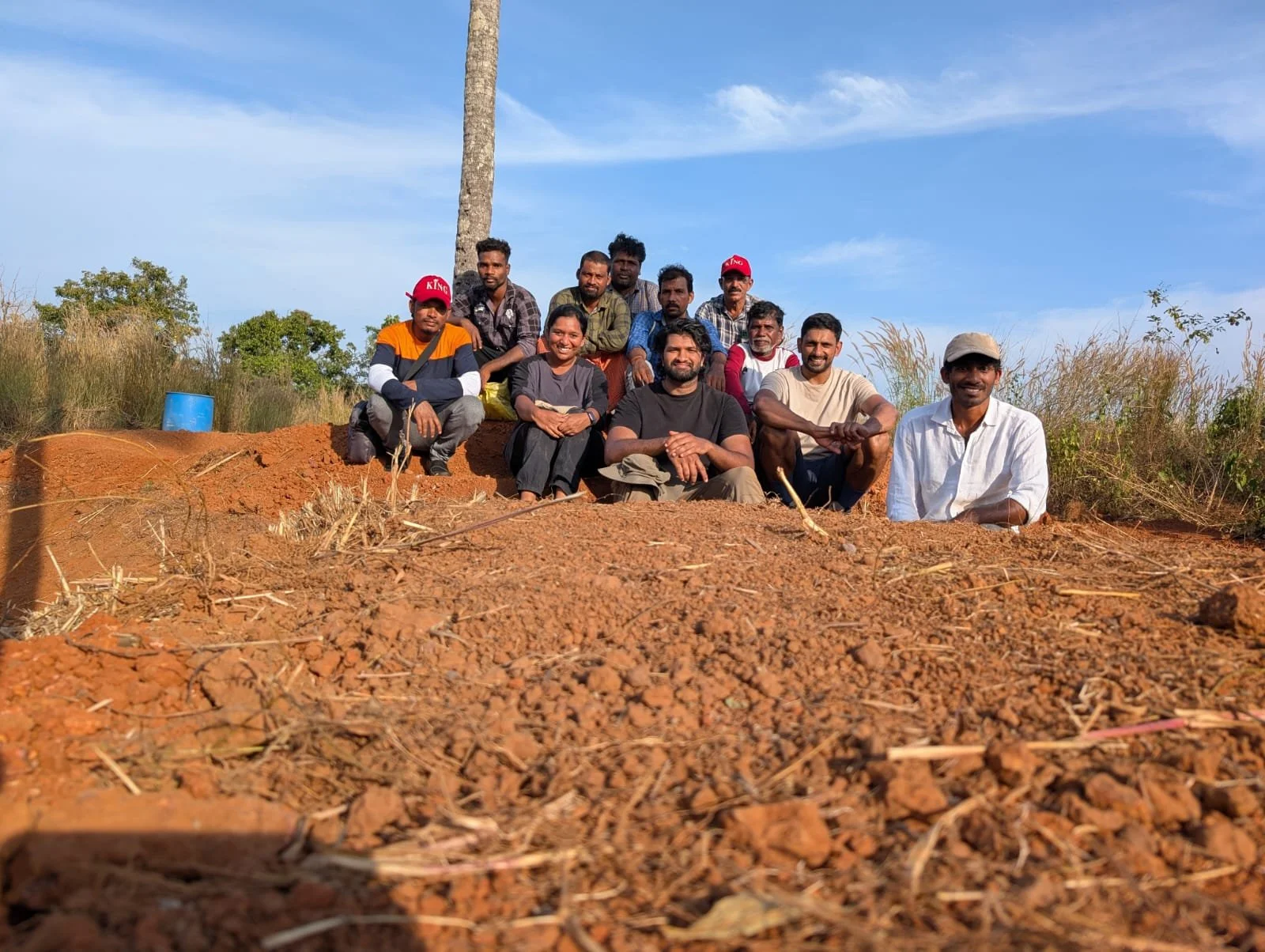
Team that worked on earthworks and planting
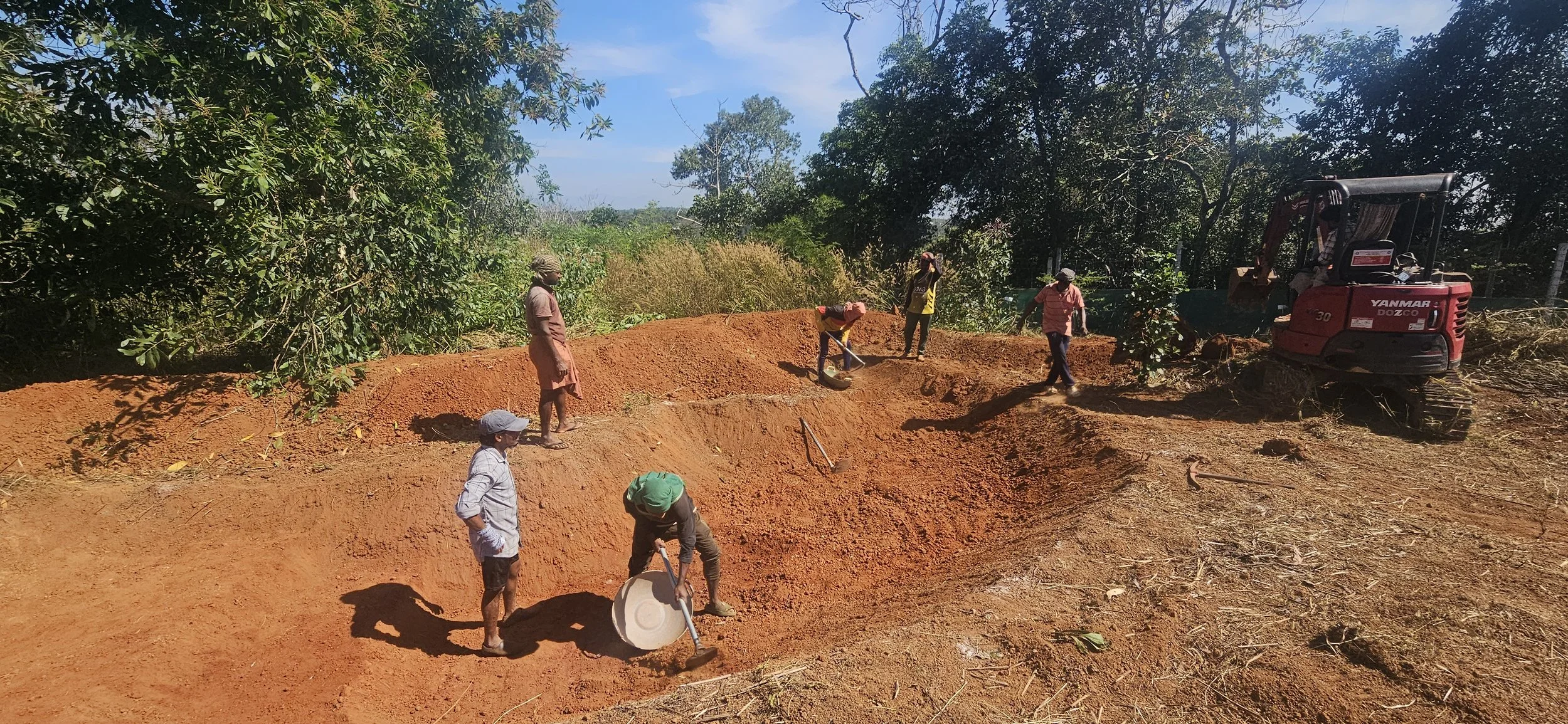
Pond finishing
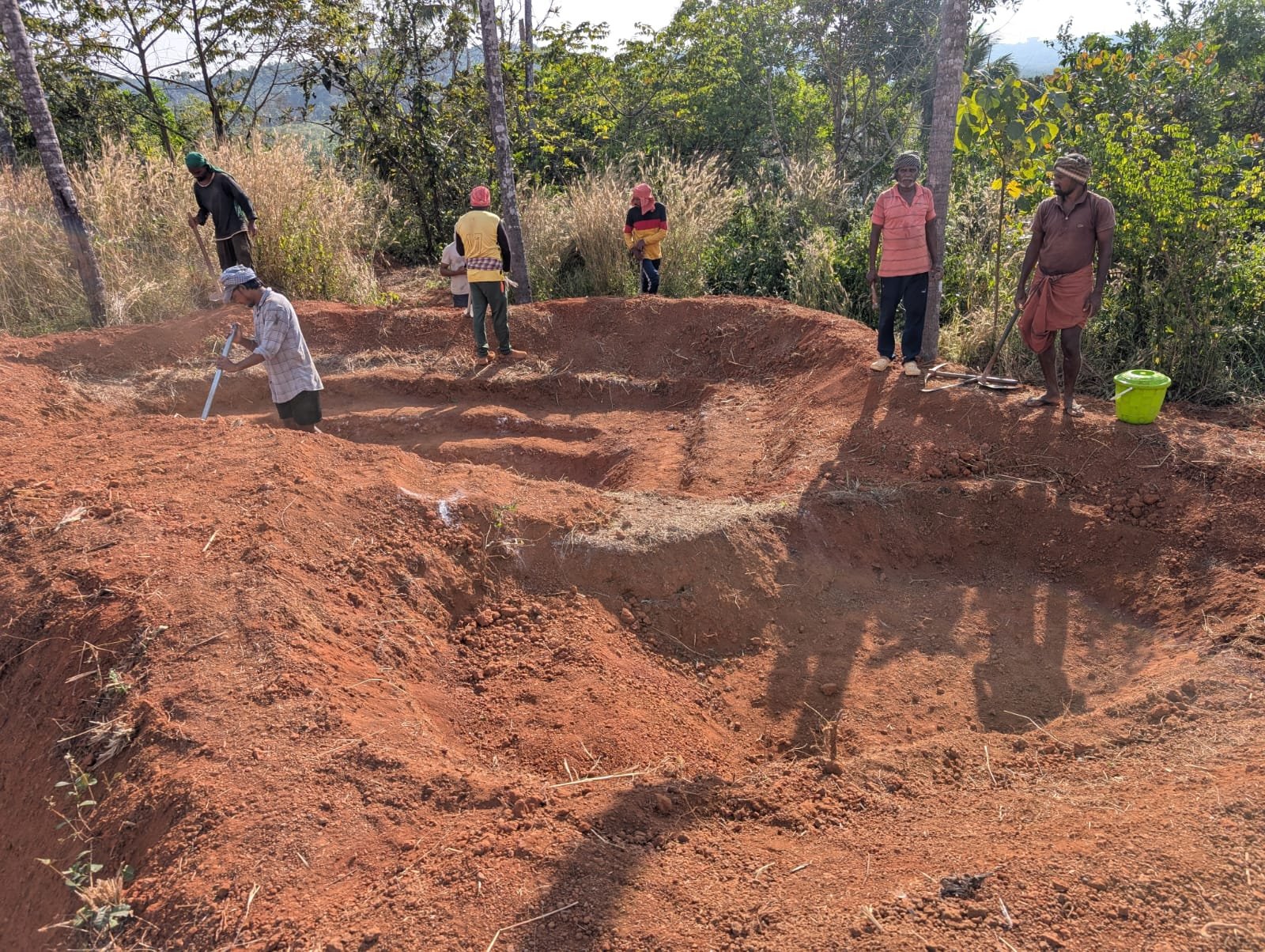
Pond finishing
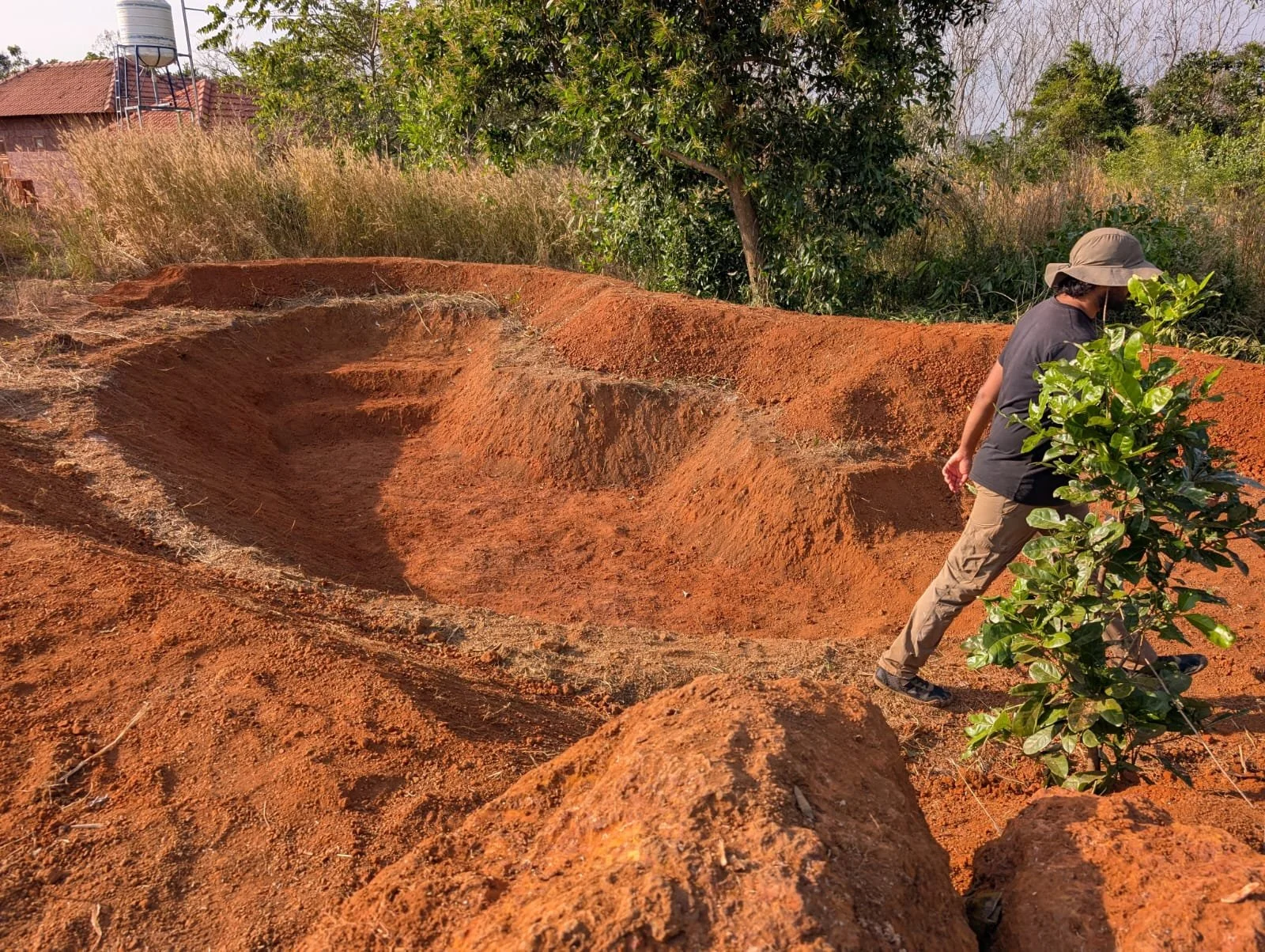
Implemented pond after finishing
Wild zone in 1 year