

STS Farm
Project size: 10 acres
Kunigal, Tumkur, Karnataka
Jan 2024 - ongoing
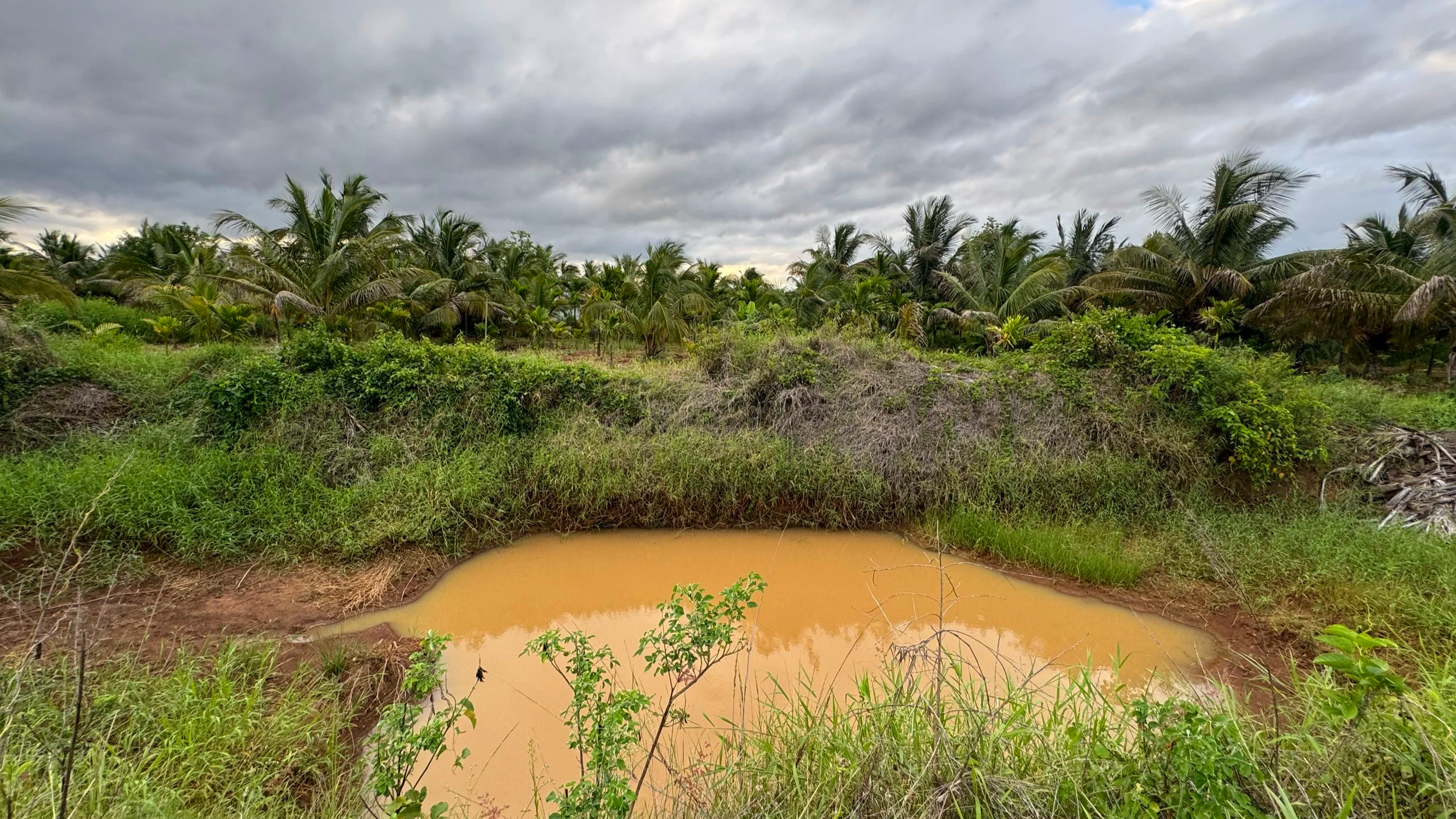
Key design features: Coconut & Areca plantation diversification; Repairing existing ponds;
Planted guild basins
Project team: Varun Behroonani (Project Lead - former) Amol Kadam (Project Lead - current); Theertha Ravindran, Kiri Meili, Prithvi Rajesh
Elevation: 810 metres above sea level
Annual rainfall: 983 mm / 38 inches
Climate: Tropical Savannah
Bioregion: Deccan Thorn Scrub Forests
Soil type: Red Sandy Loam
Masterplan / Design
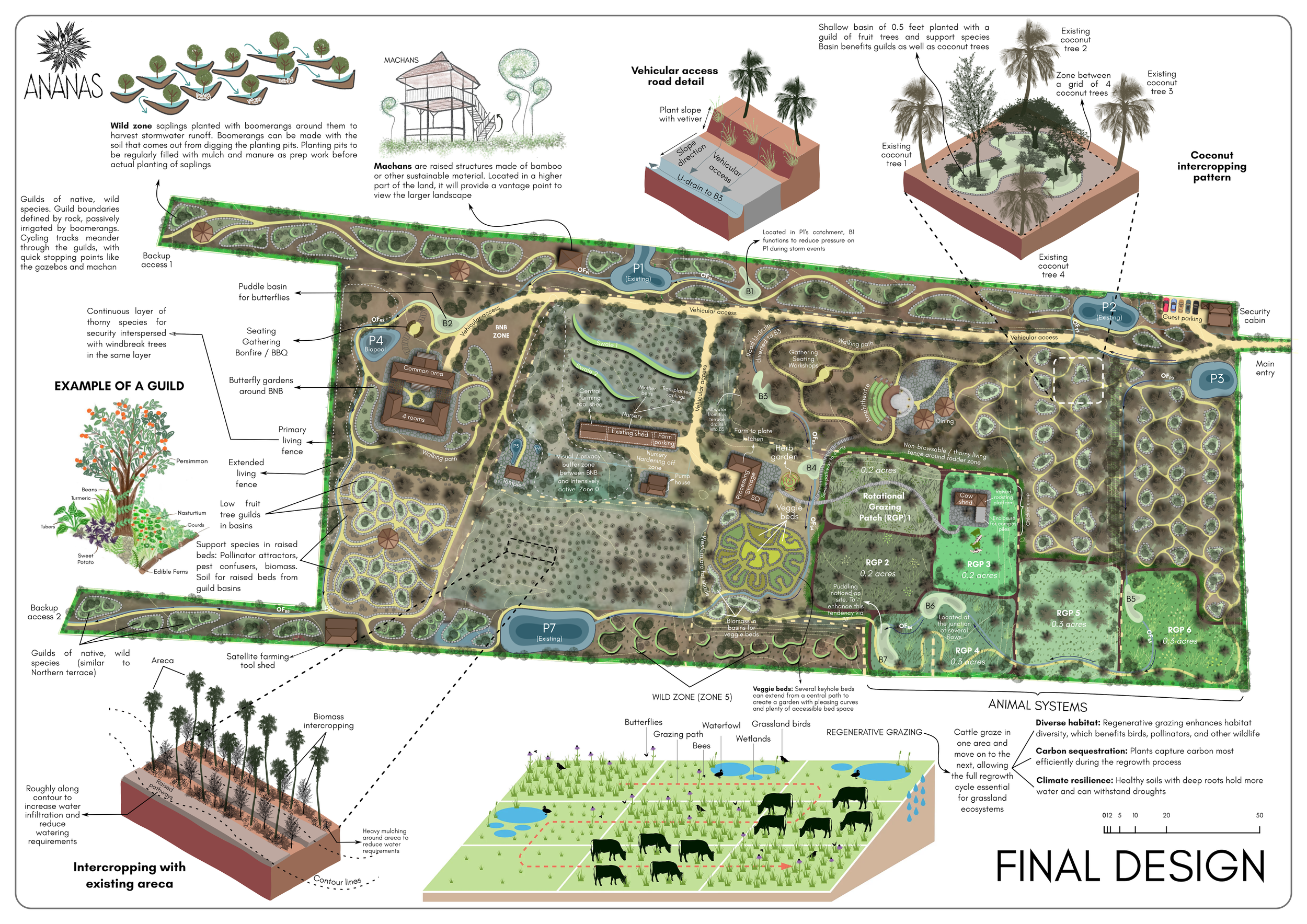
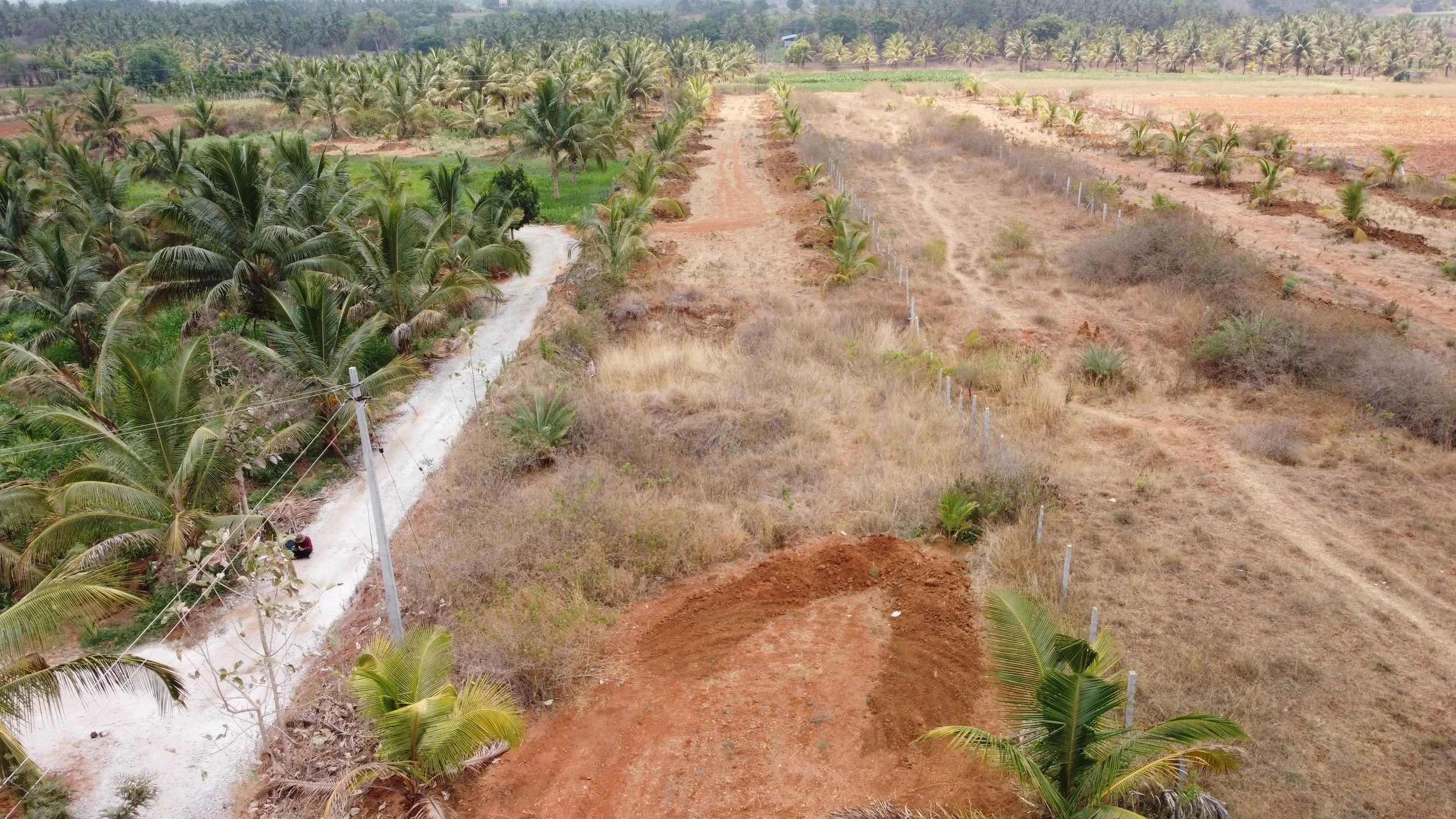
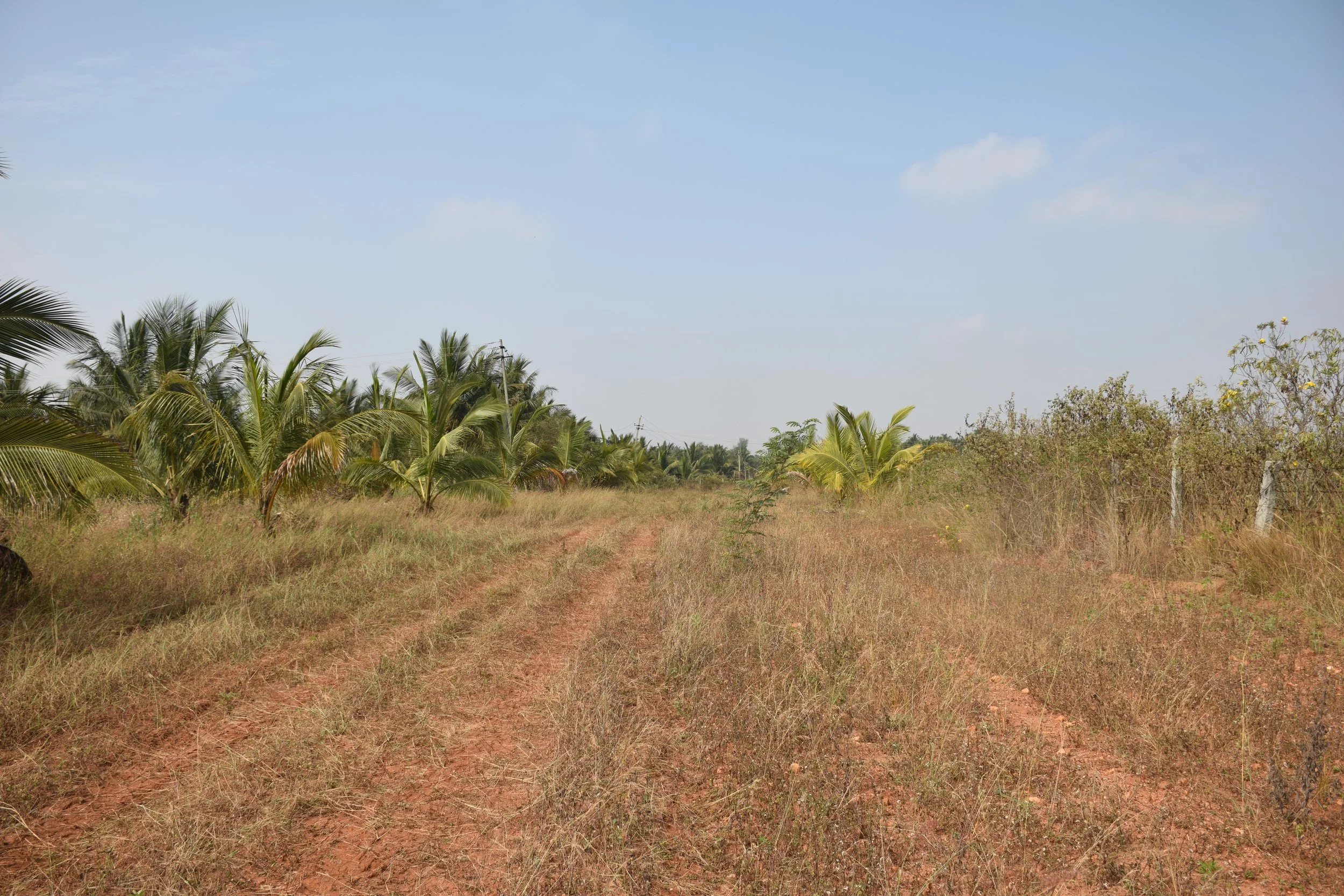
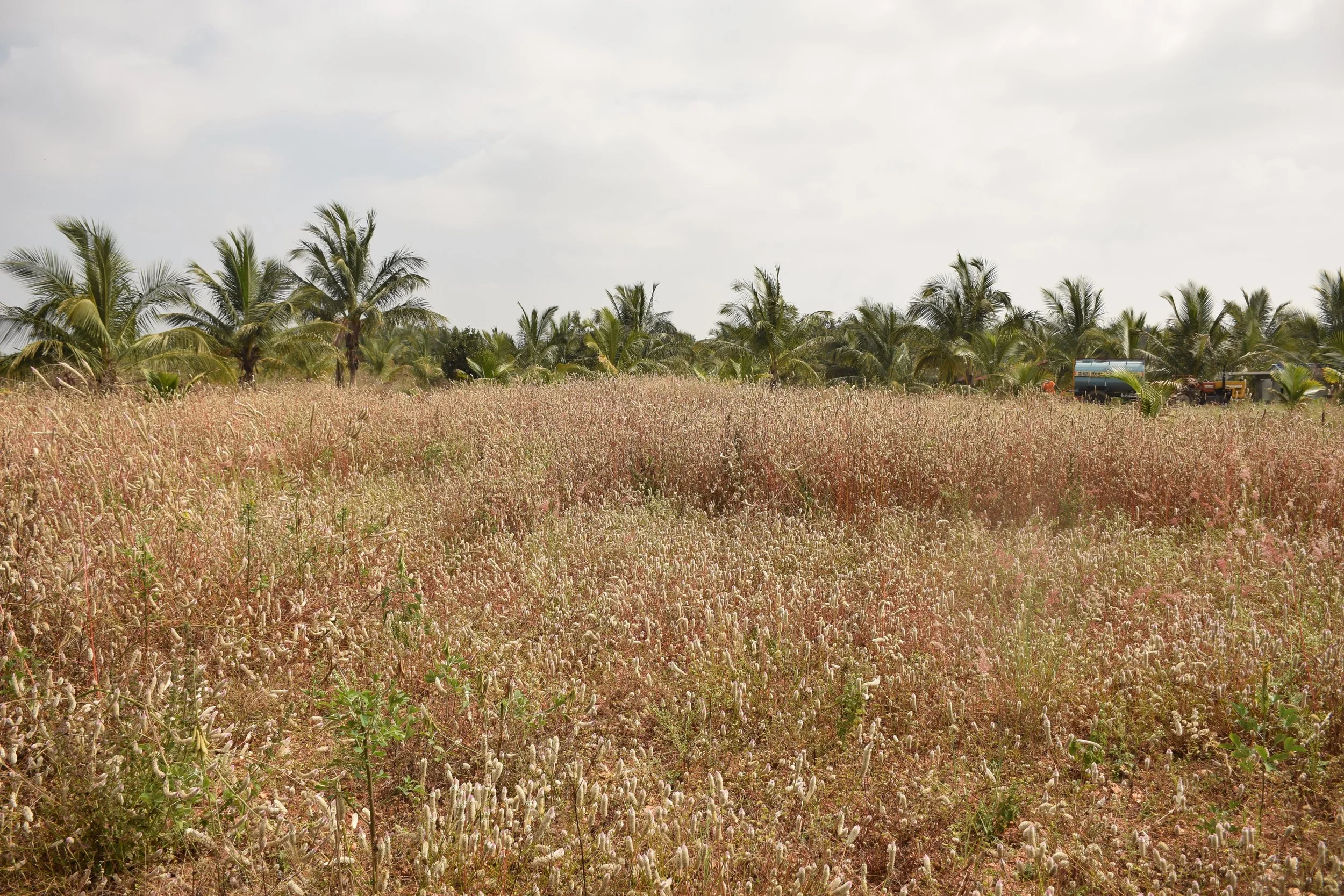
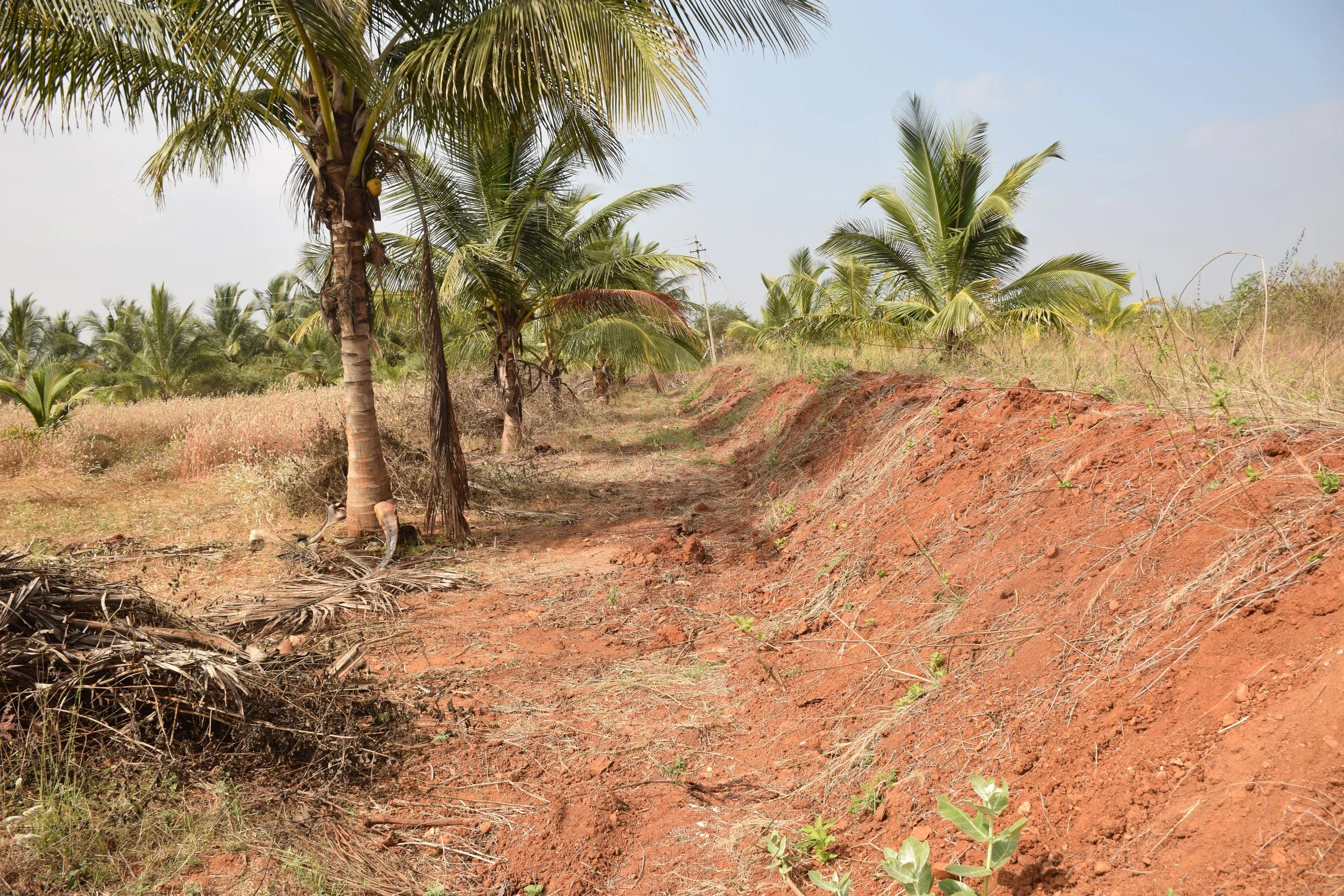
The land is a coconut orchard that was established about 7 years ago by the client’s father. The client would like to would like to diversify the species on site through layered planting, and create an AirBnB for families to experience the farm life during the weekend.
Ananas is currently working on the project focusing on reshaping existing earthworks, creating new earthworks that enable a controlled cascade and overflow throughout the land. In terms of planting, the focus has been on planting a layered living living fence covering the entire periphery, consisting of only species native to the region, as well as diversifying the coconut and areca groves with a mixed set of perennial edibles, fruit species and support biomass species to enrich the soil. Work has also been directed towards improving the health of the coconut trees - which had started attracting pests and disease due to stress - and improve their yield over time.
The idea is also to support the client in shifting from an intensive tractor-based watering system (which has resulted in soil compaction and erosion across the site) to more gentle zone-specific approaches including passive irrigation through earthworks, hand watering from narrow hoses and a drip network.
Site Photos
Implementation
The implementation of this project began in January 2025 and has four main phases, with some visits for monitoring in between.
All earthworks are being done in the dry season (Jan), pit preparation in pre-monsoon (Apr) and planting in the monsoons (June).
Go through the images below to see the work we have done so far.
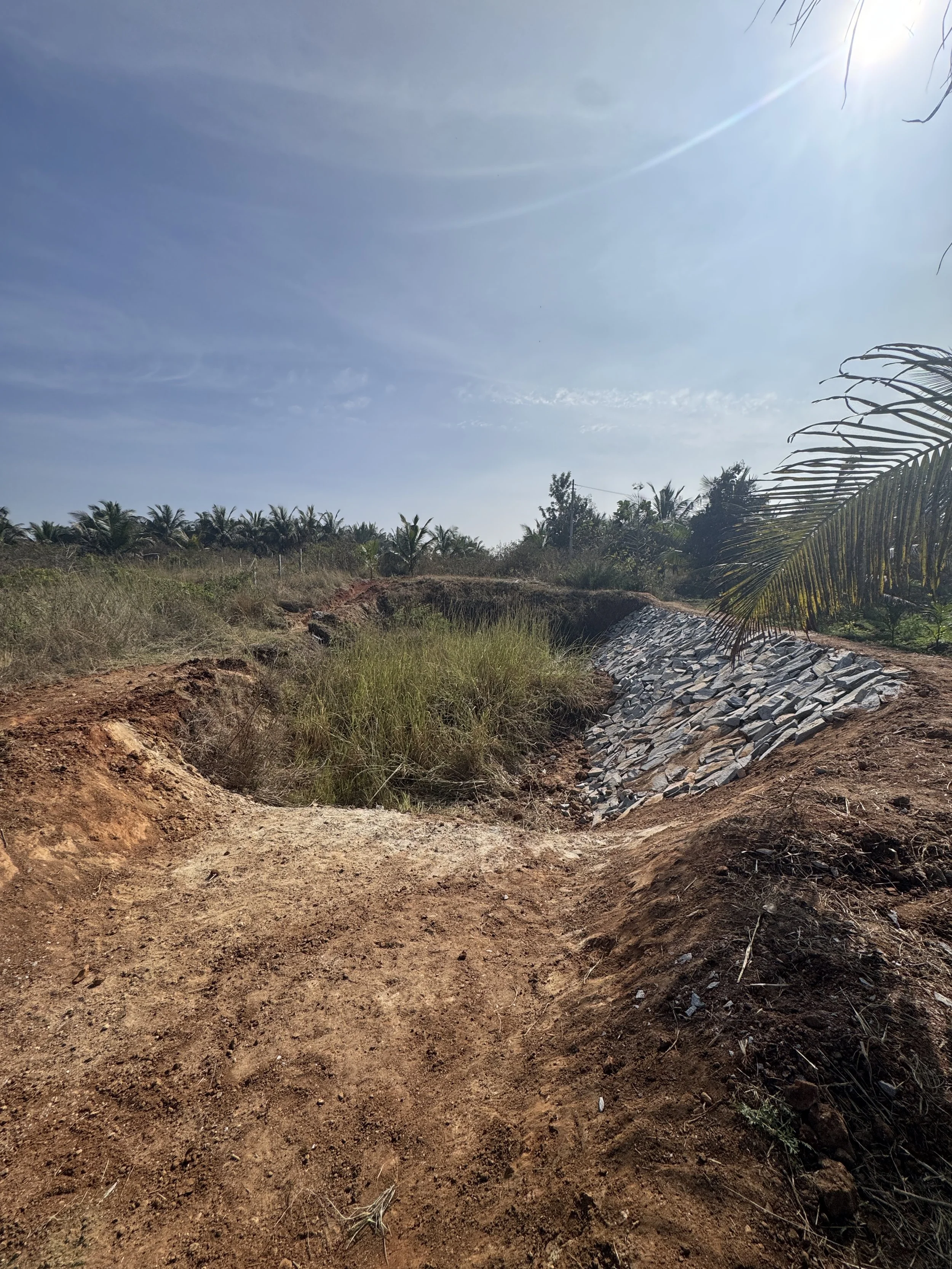
Pond 1 (P1), dug before our joining, breached every year during the monsoons. Image shows repaired bundh and pitching for reinforcement
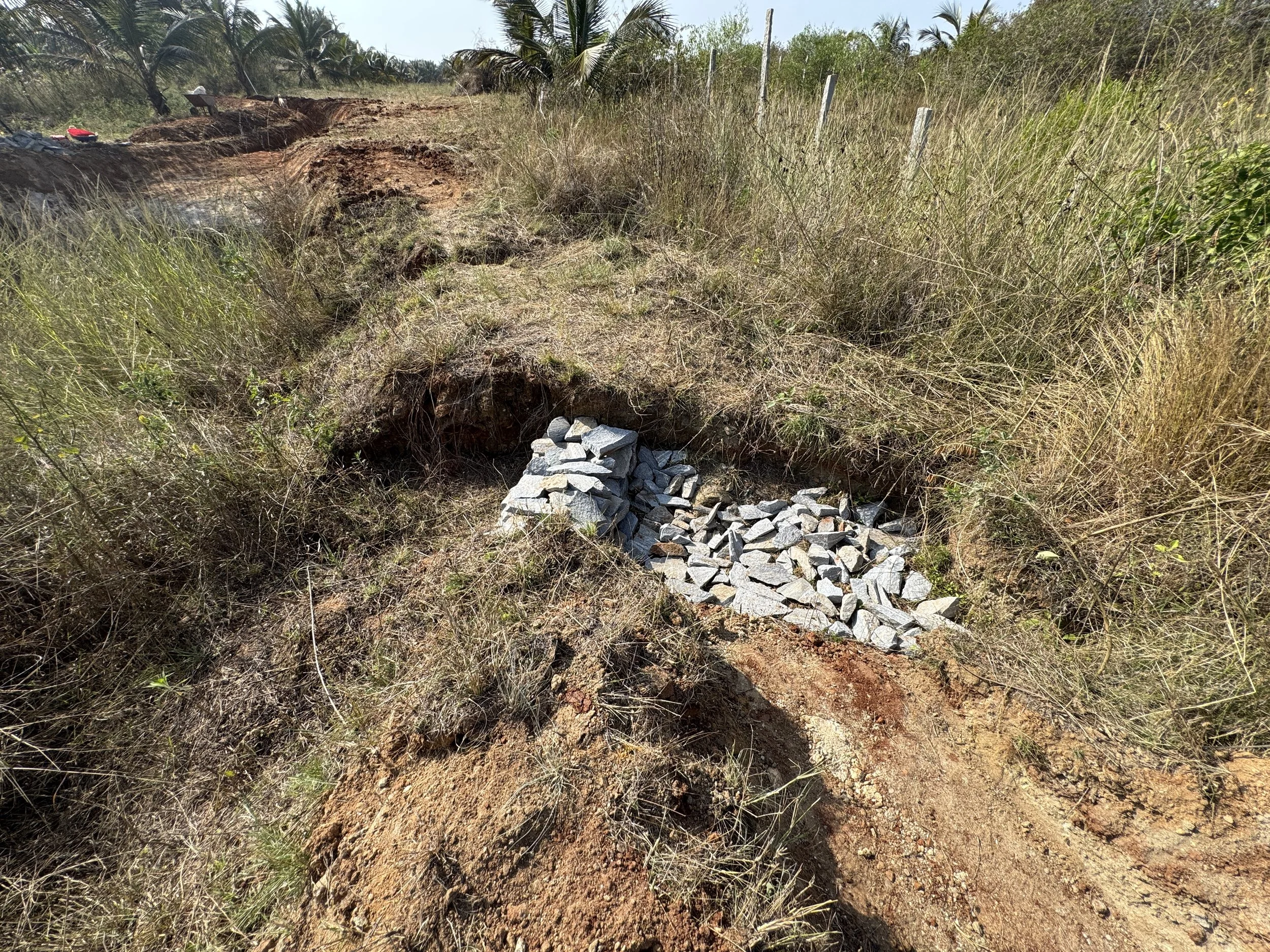
Gulley plugs in P1 inlets to reduce erosion of inlets and trap silt before it enters the pond
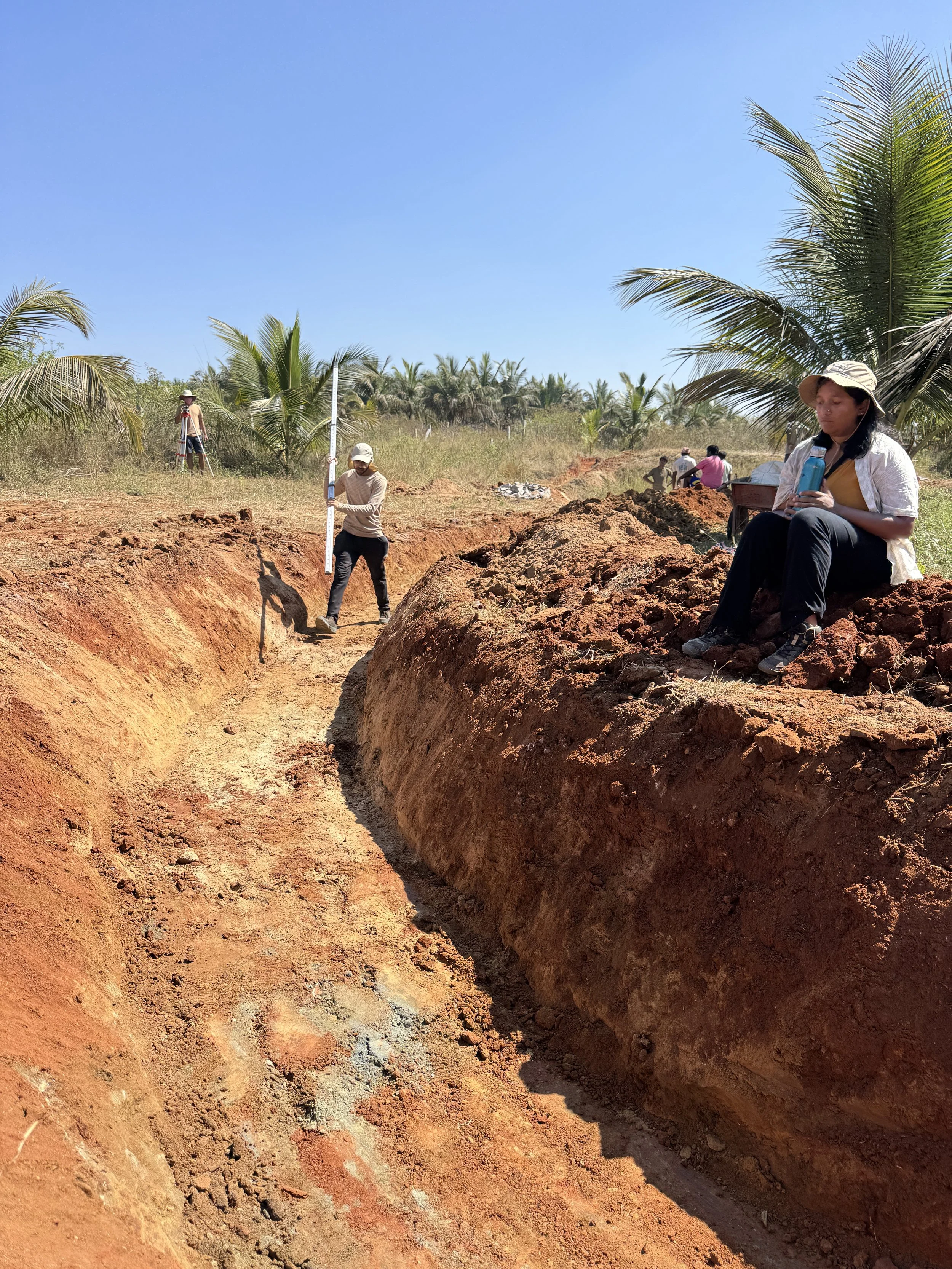
New overflow created to reduce pressure on P1 bundh
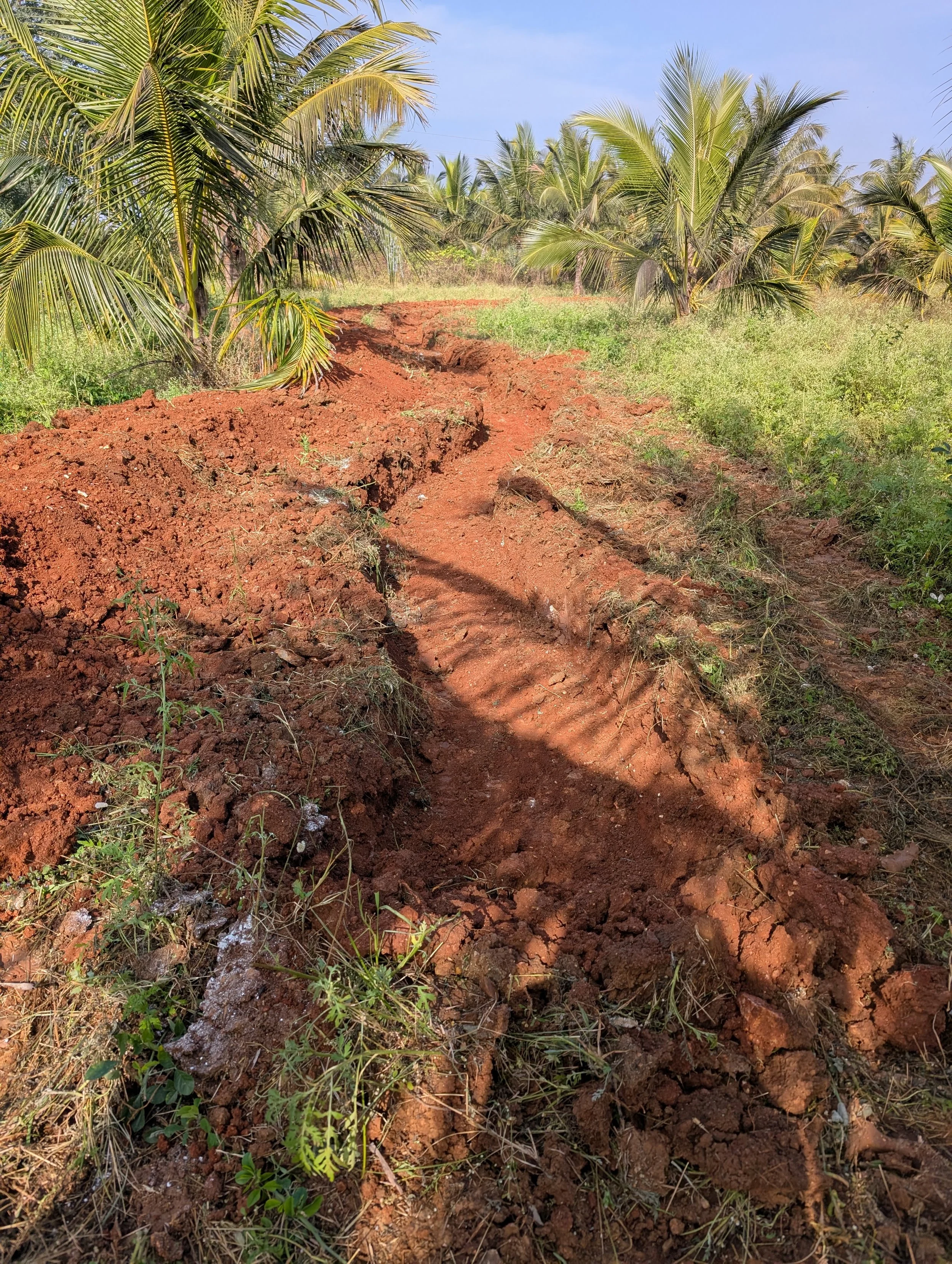
Meandering overflow from P1 to Basin 1 (B1)
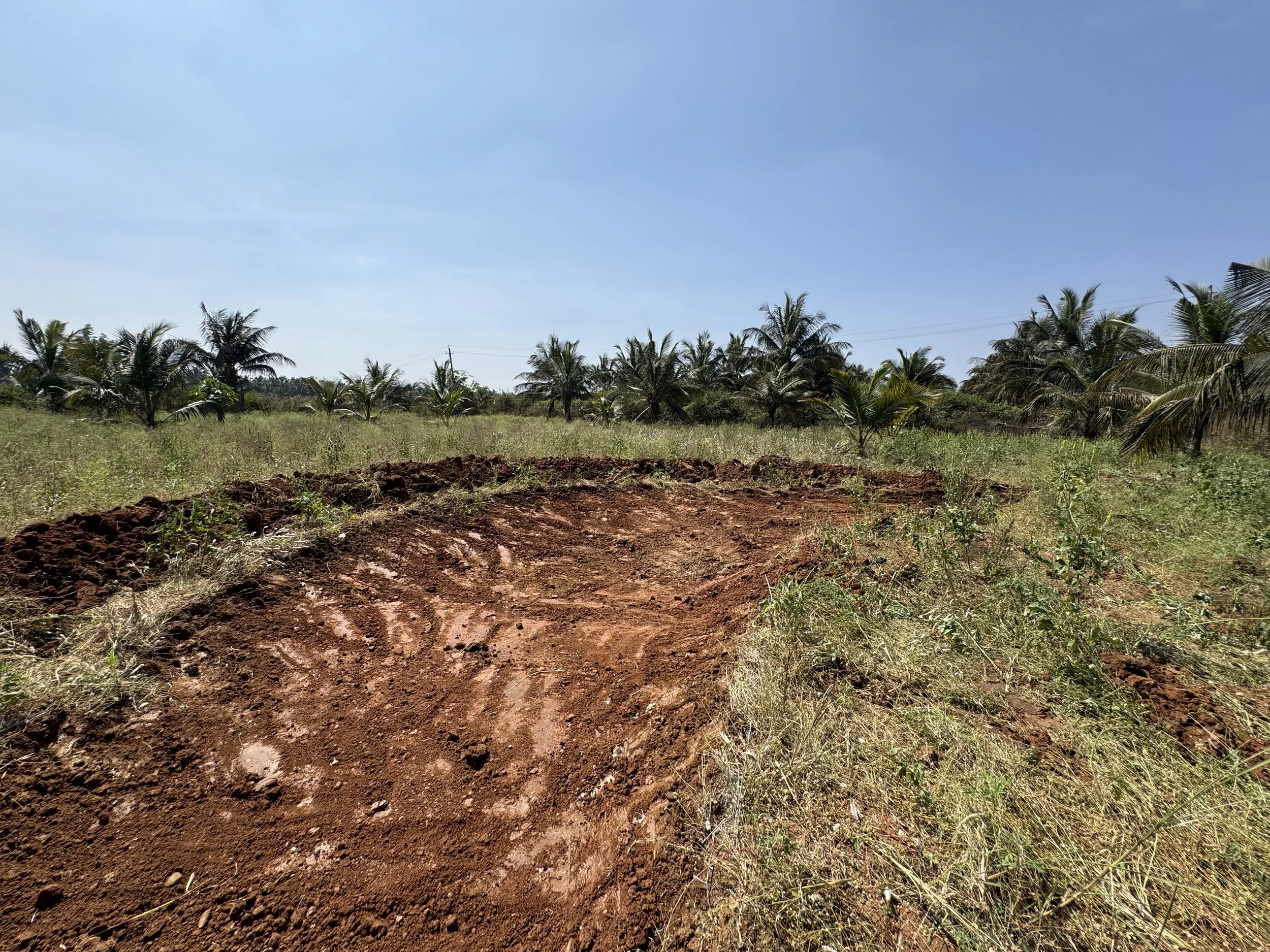
B1 slowing and infiltrating overflow from P1; it continues through the land in a planted bioswale into Pond 7 (P7)
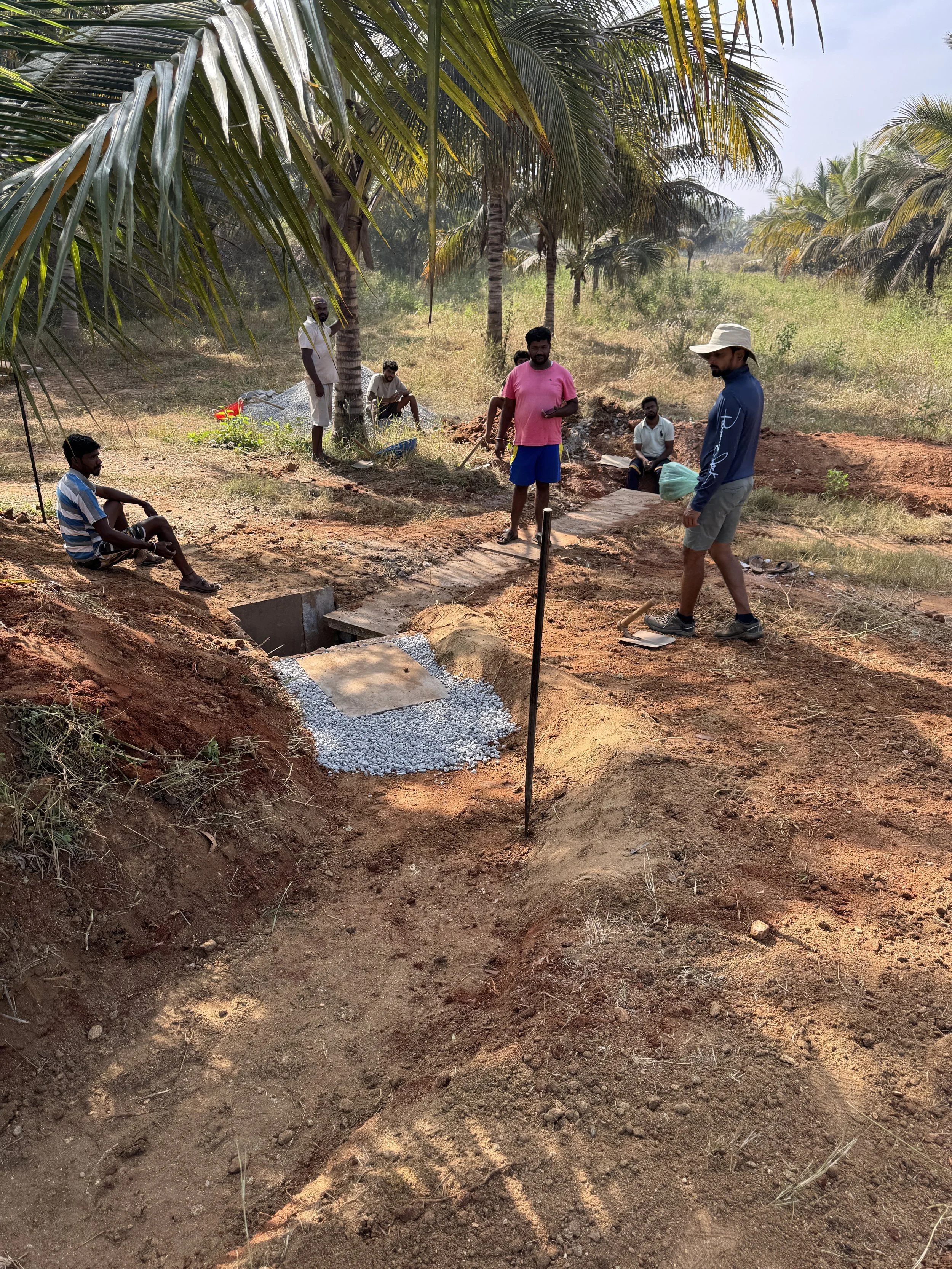
Silt trap and causeway allowing water from Pond 2 (P2) to cross the road and enter the roadside bioswale
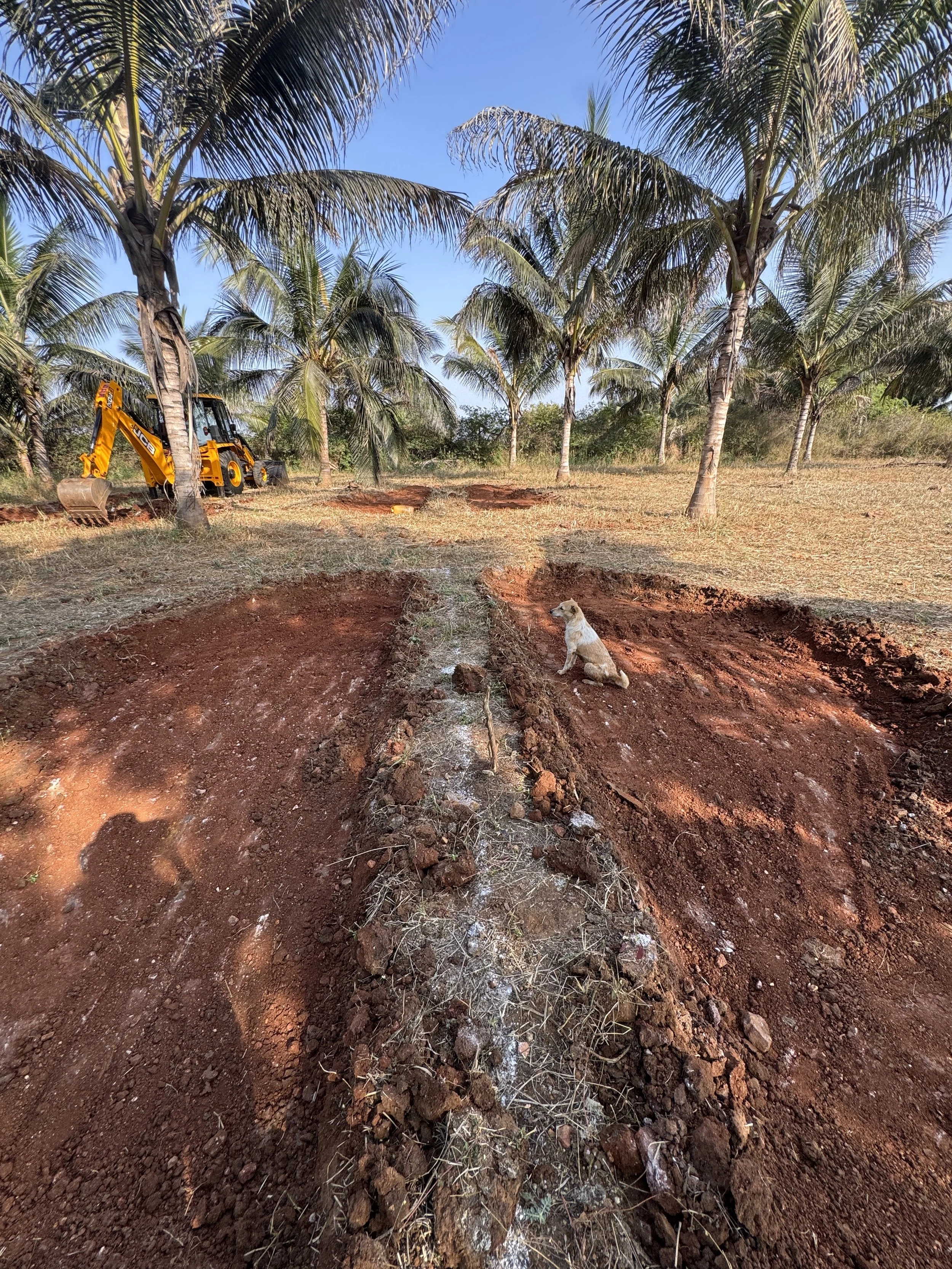
Sunken basins staggered between coconut trees to improve passive irrigation of the coconuts as well as new fruit tree guilds
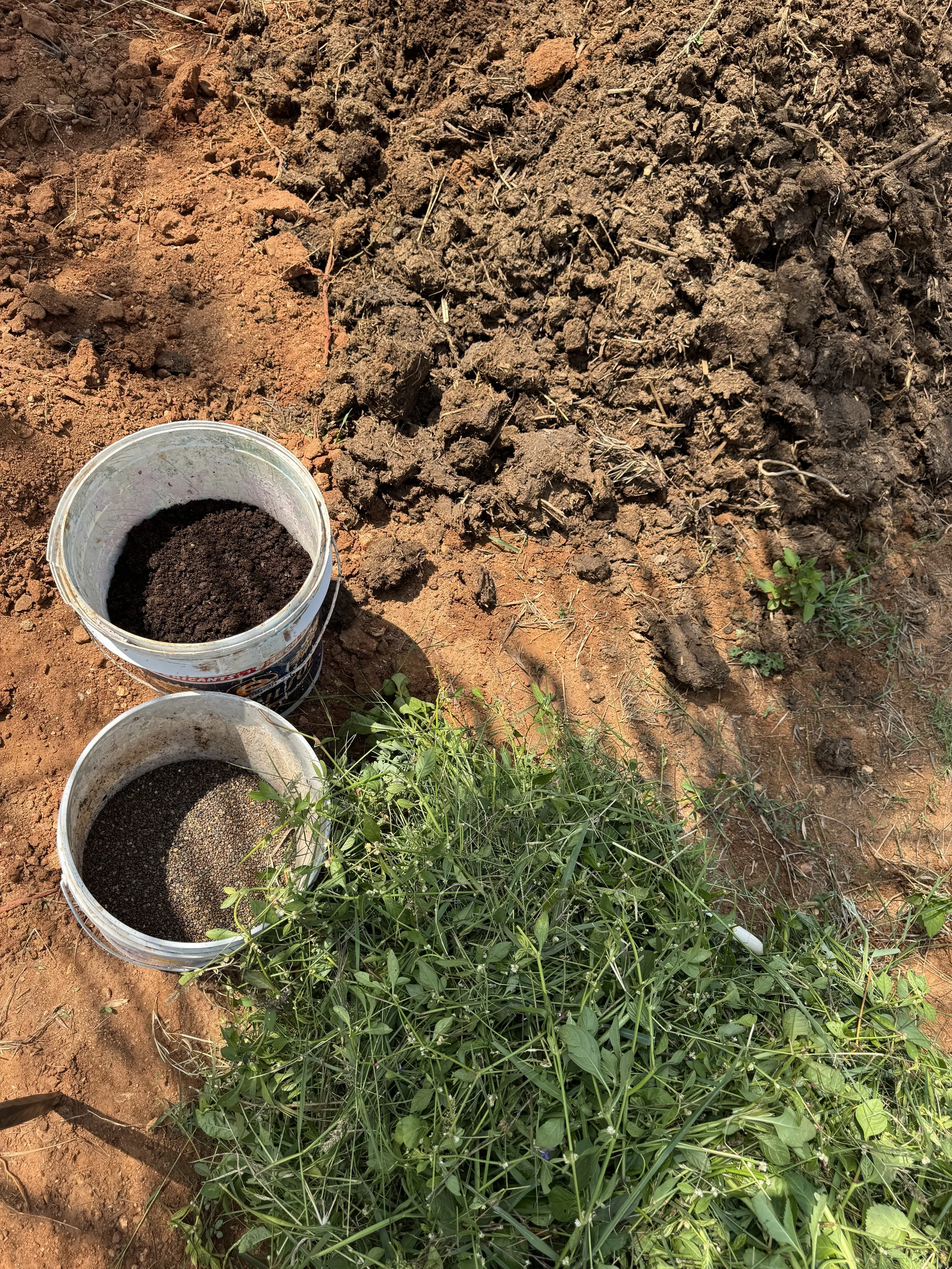
Pits being prepared two months in advance of planting
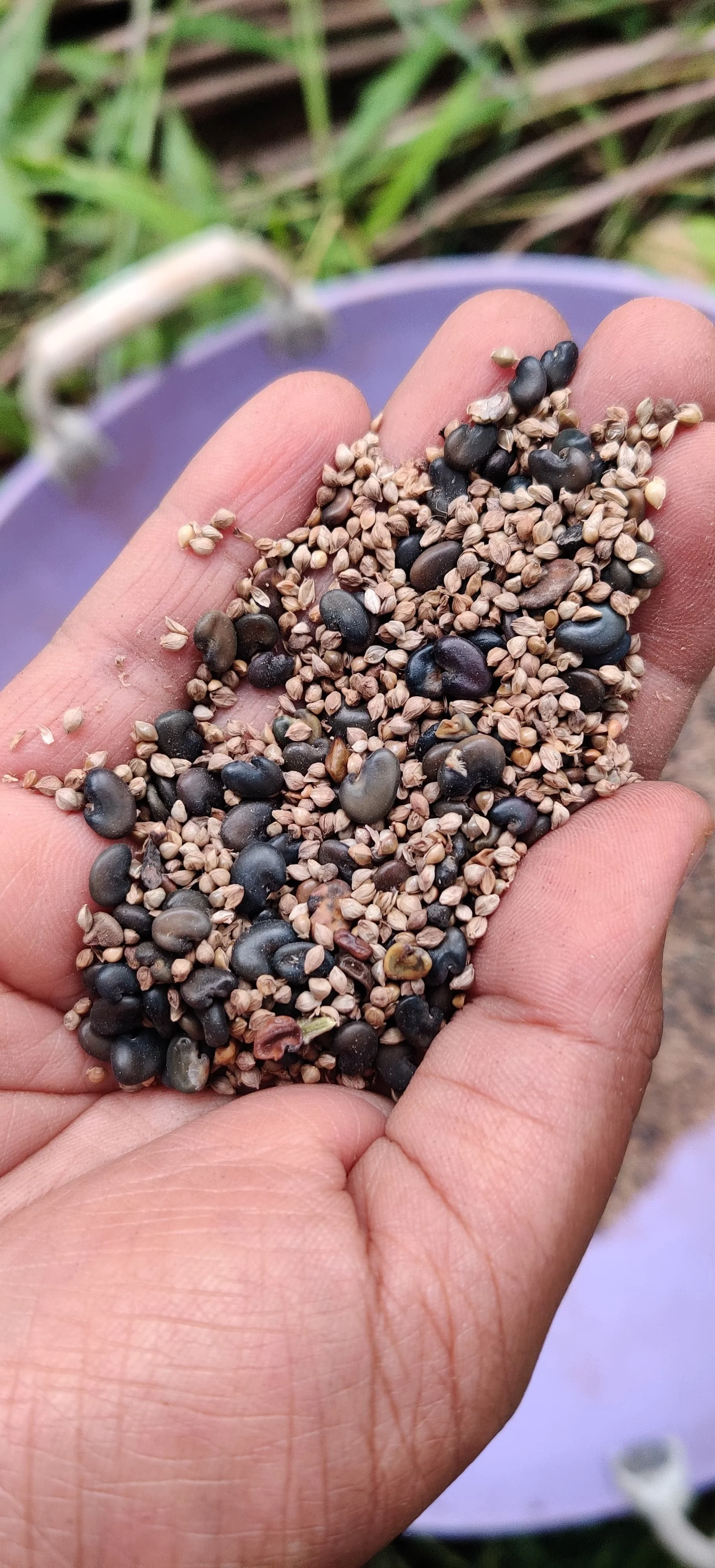
Biomass seed mix for pits and newly-made coconut pathis/rounds
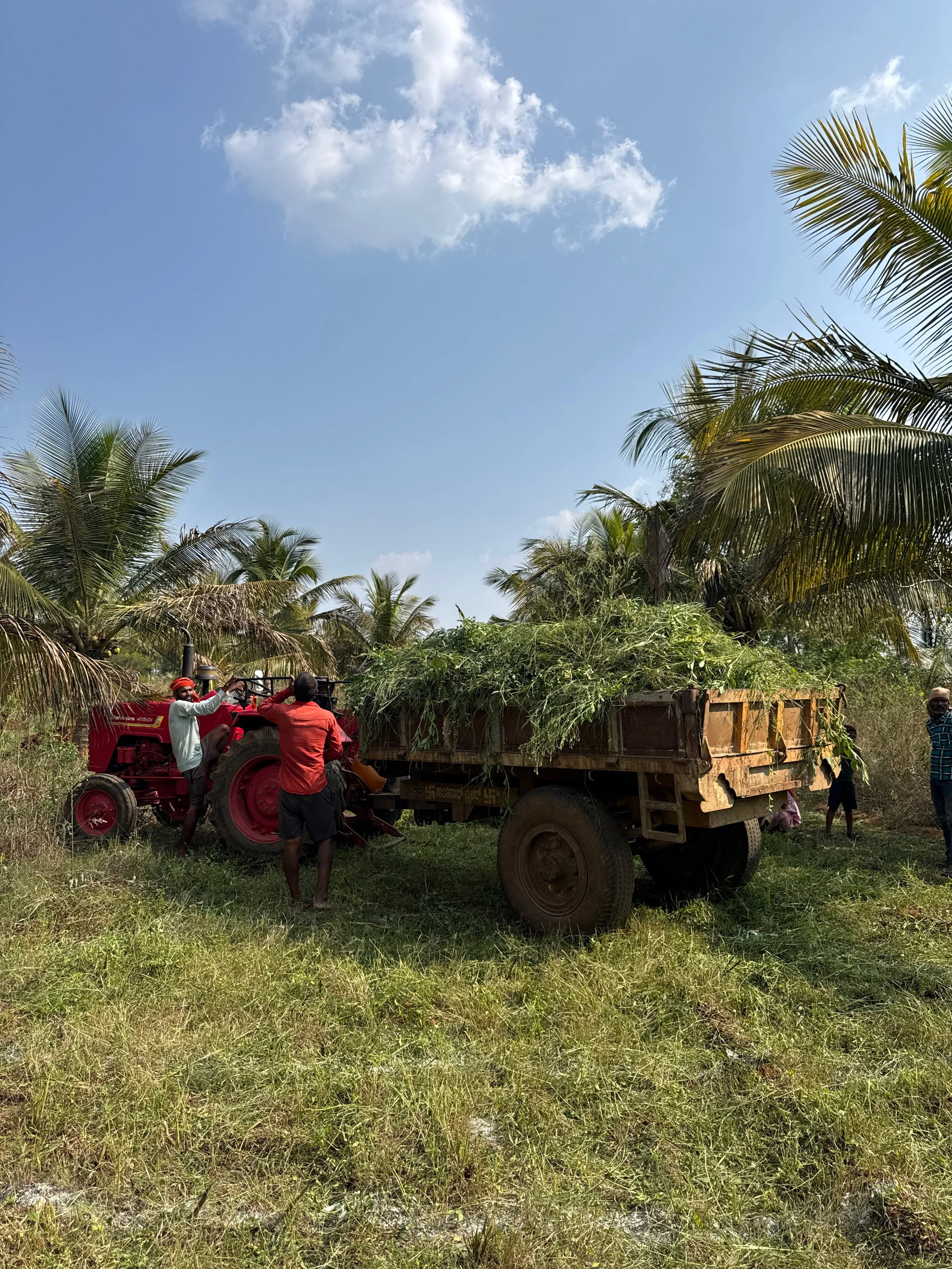
Collecting grasses from the land for filling pits
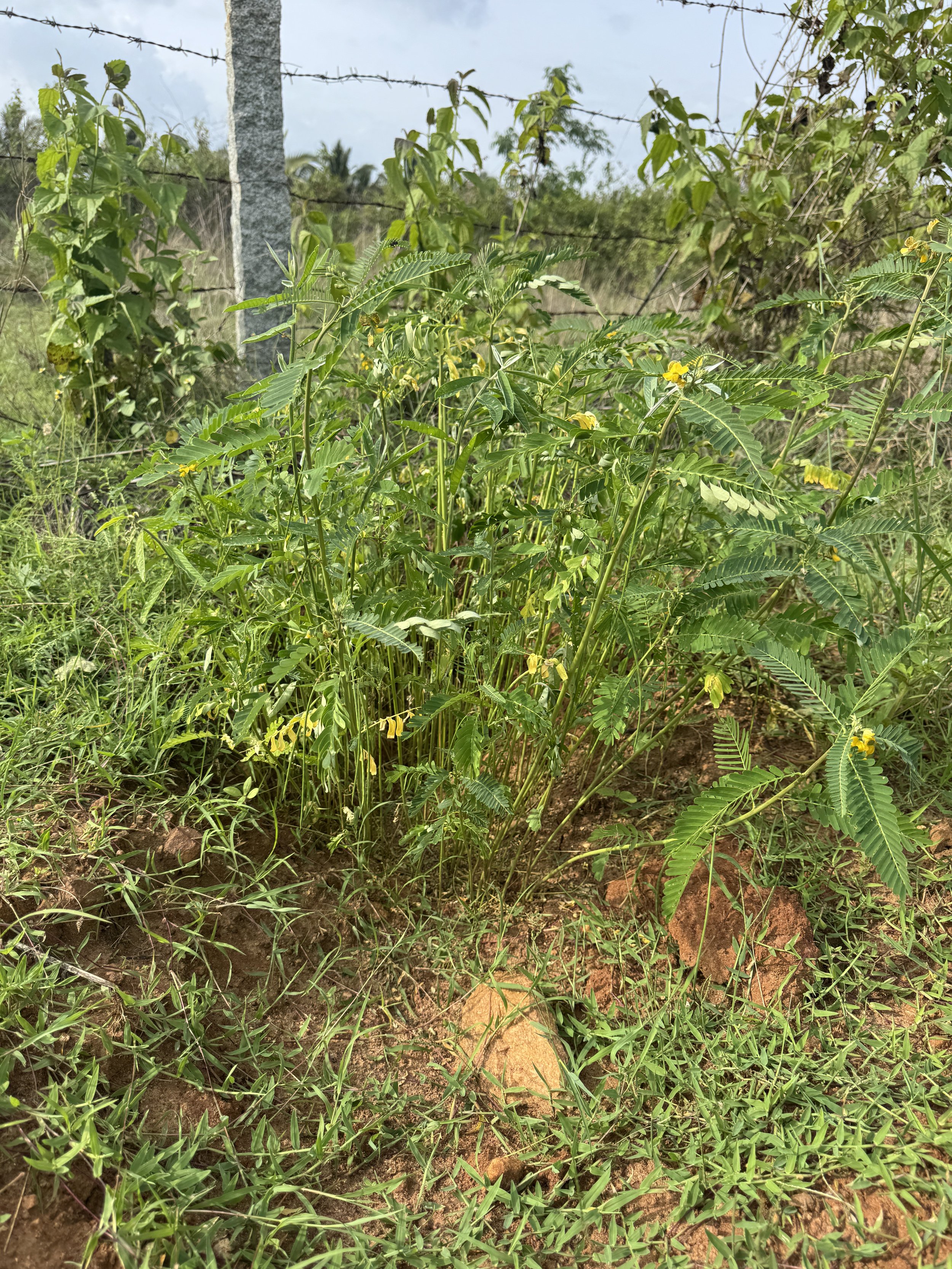
Two months later, each pit has 1.5 ft of growth of mixed biomass plants to be added back into the pit during planting
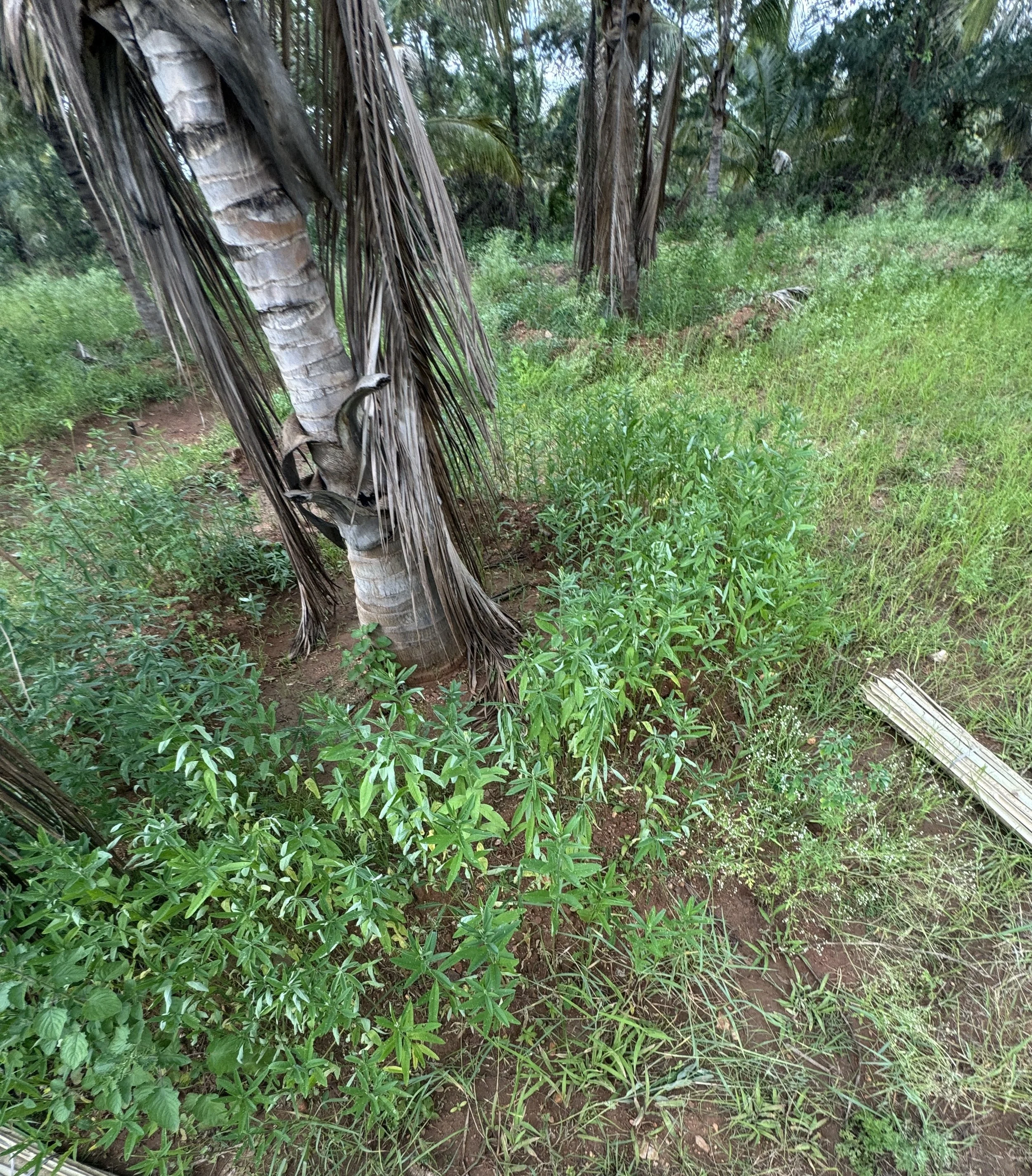
Biomass plants growing on newly-made coconut pathis
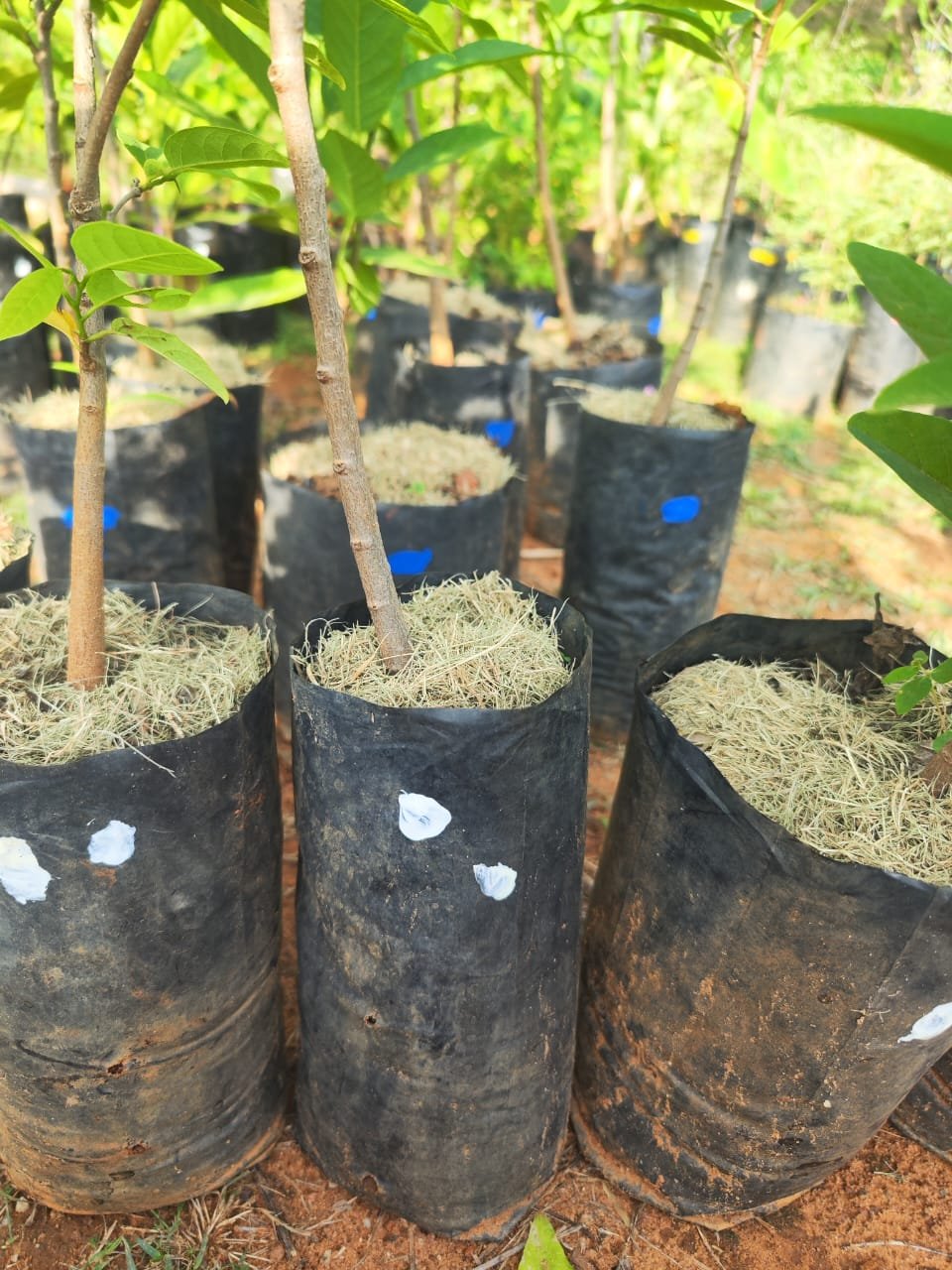
Over 3000 saplings marked according to one of the 5 planting zones
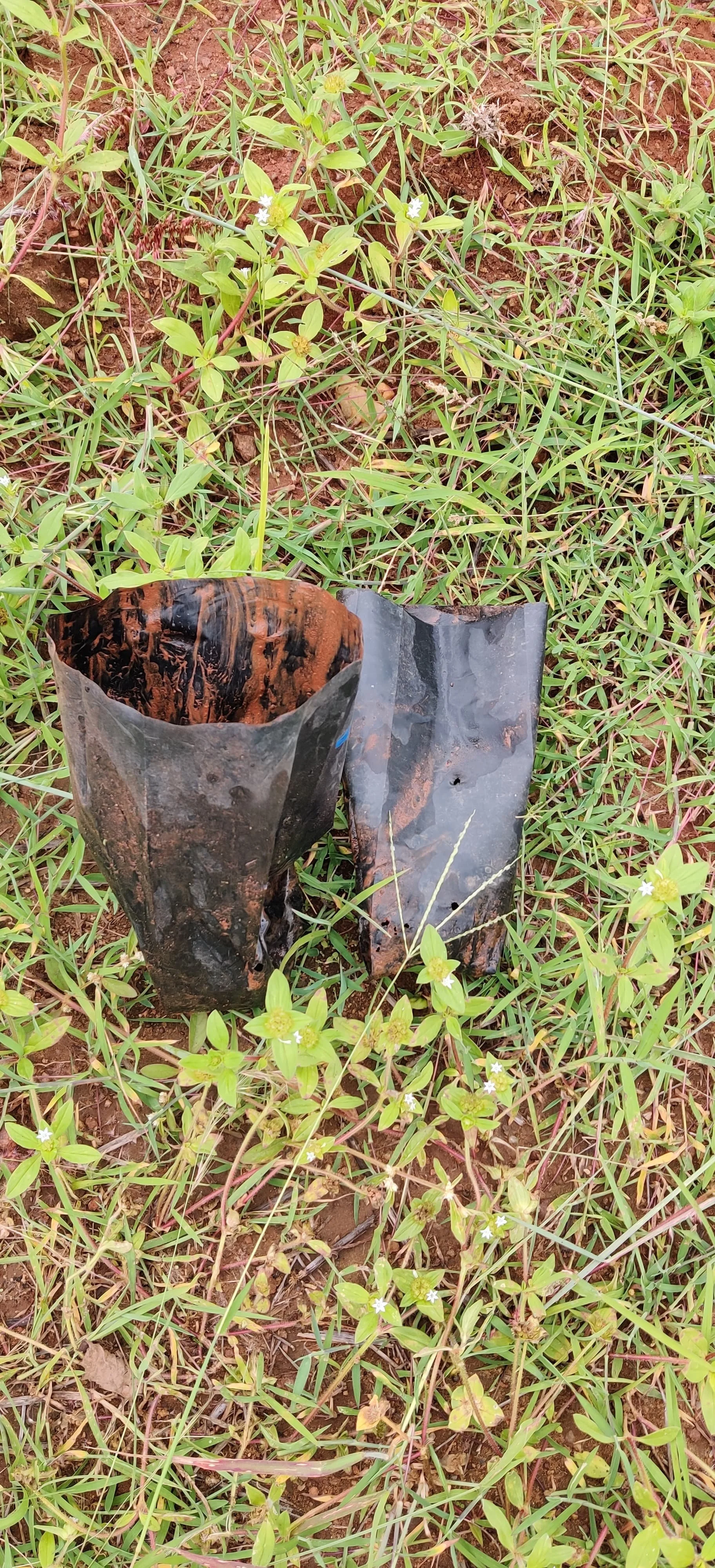
Soaking also allows packets to be slipped off instead of torn and then taken back to our nursery
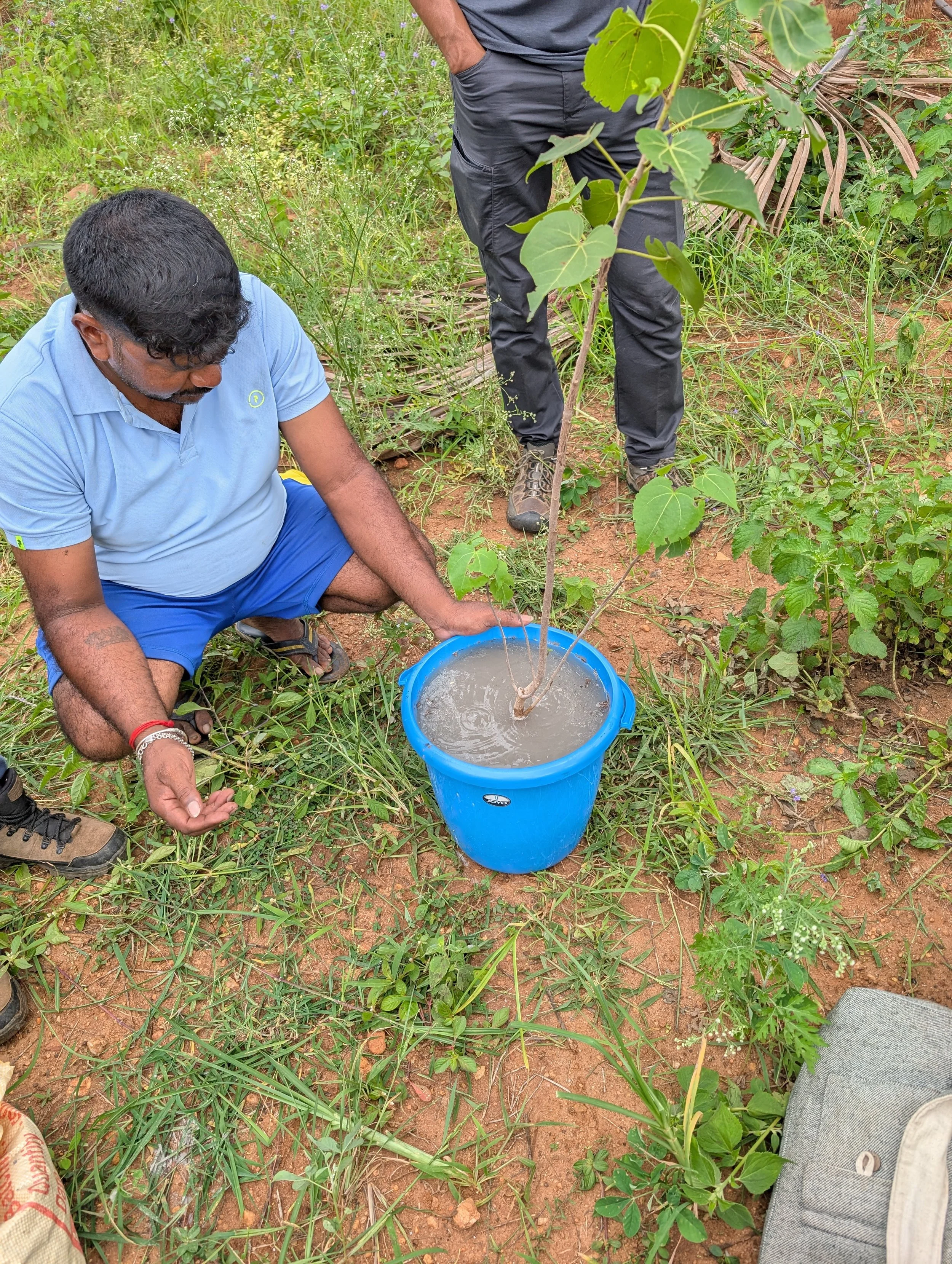
Soaking saplings in a VAM (vascular arbuscular mycorrhiza) solution before planting
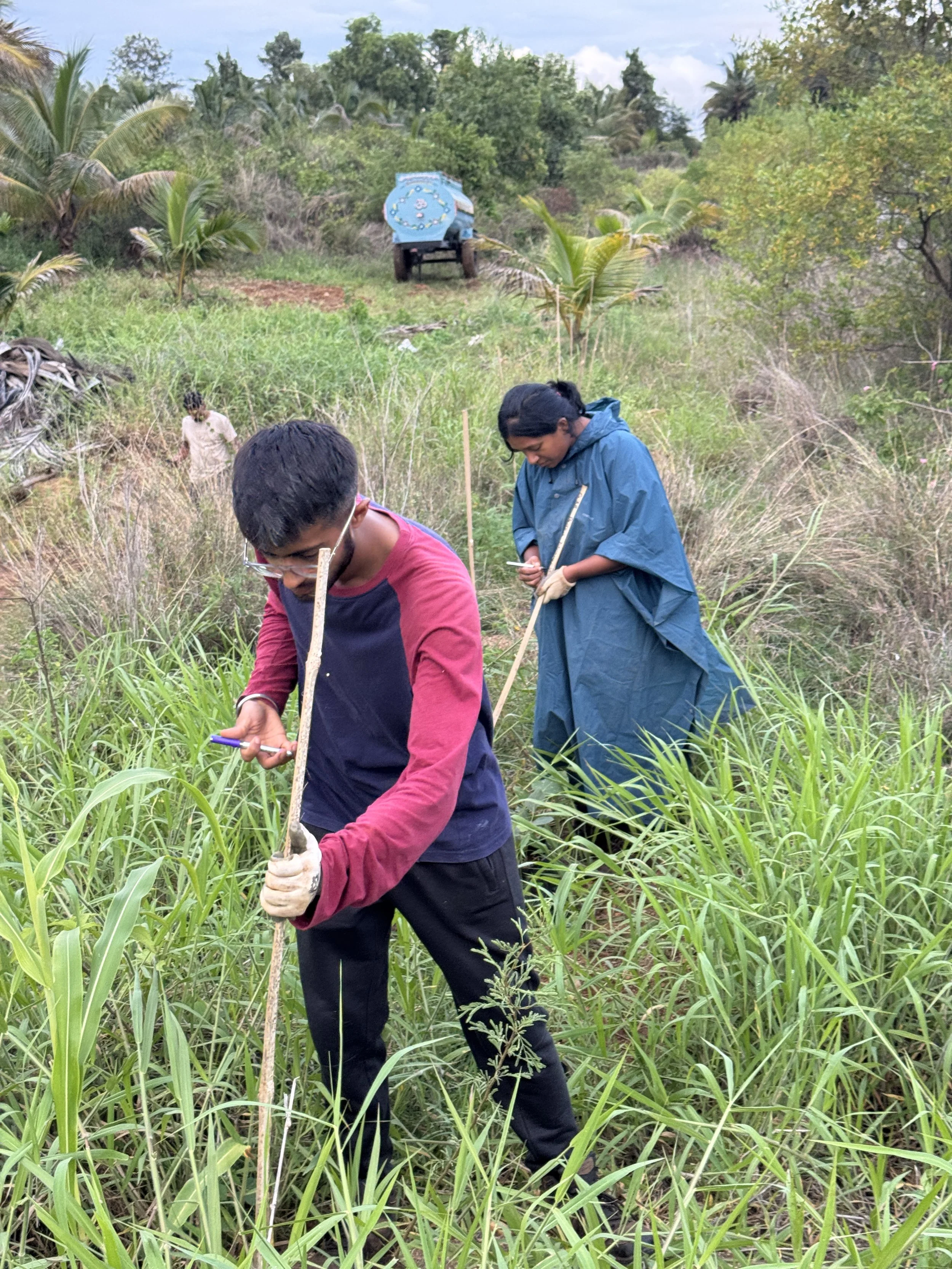
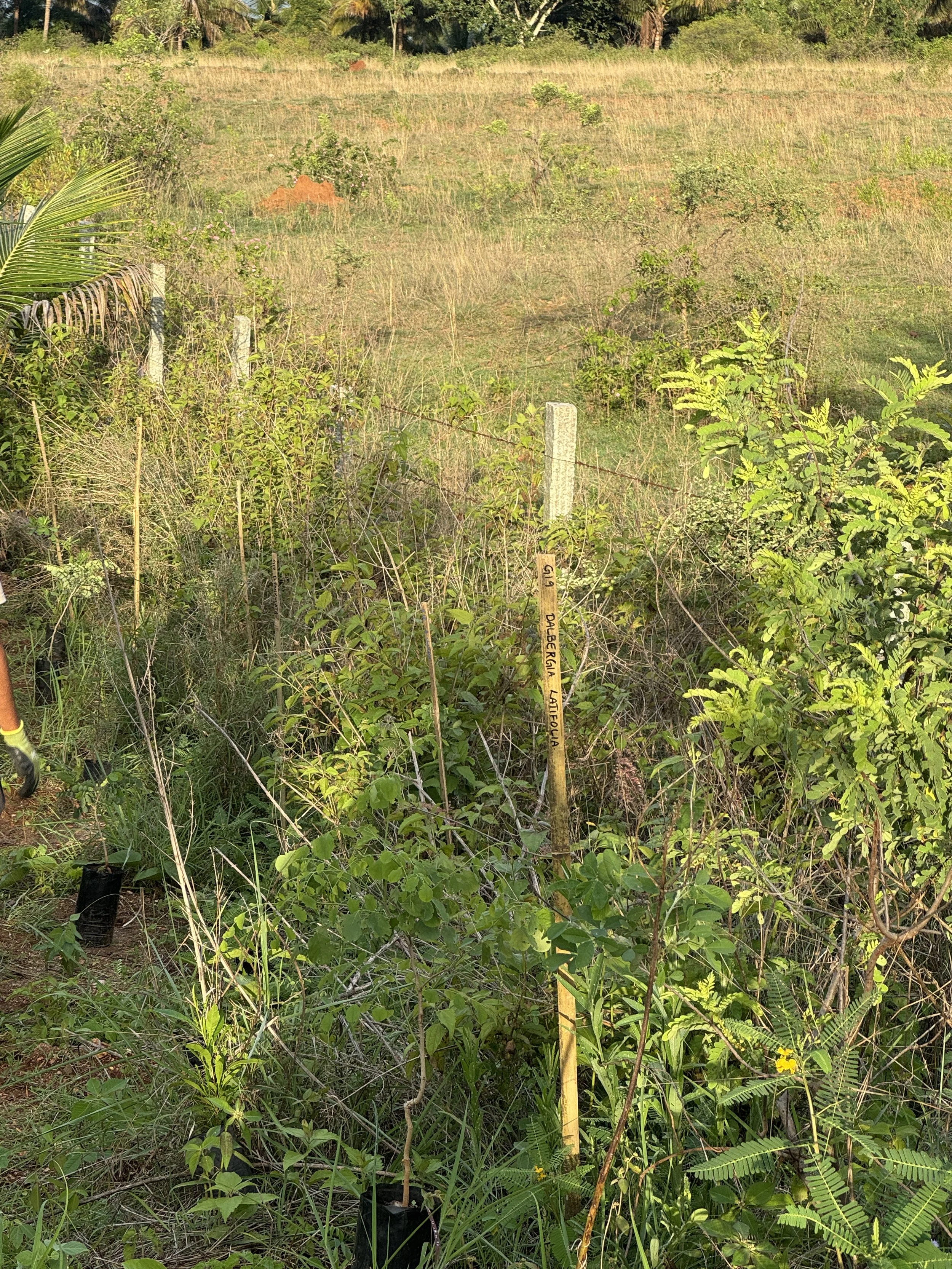
Labelling each sapling with name and number makes it easier to maintain and monitor them
Planting in the wild zone (these will only be rainfed)
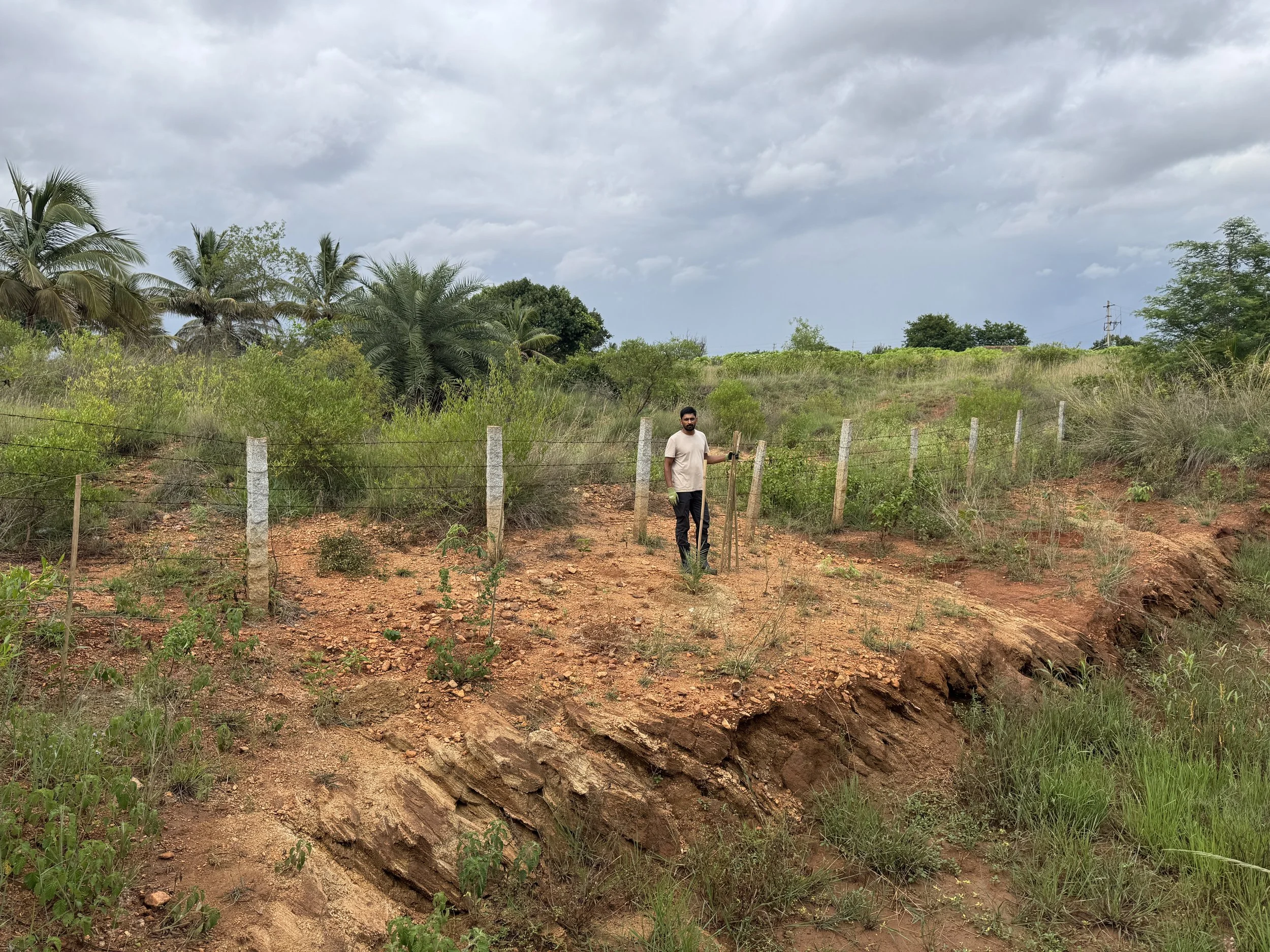
Planting riparian species (e.g. Terminalia arjuna & Phoenix sylvestris) in the stream bed
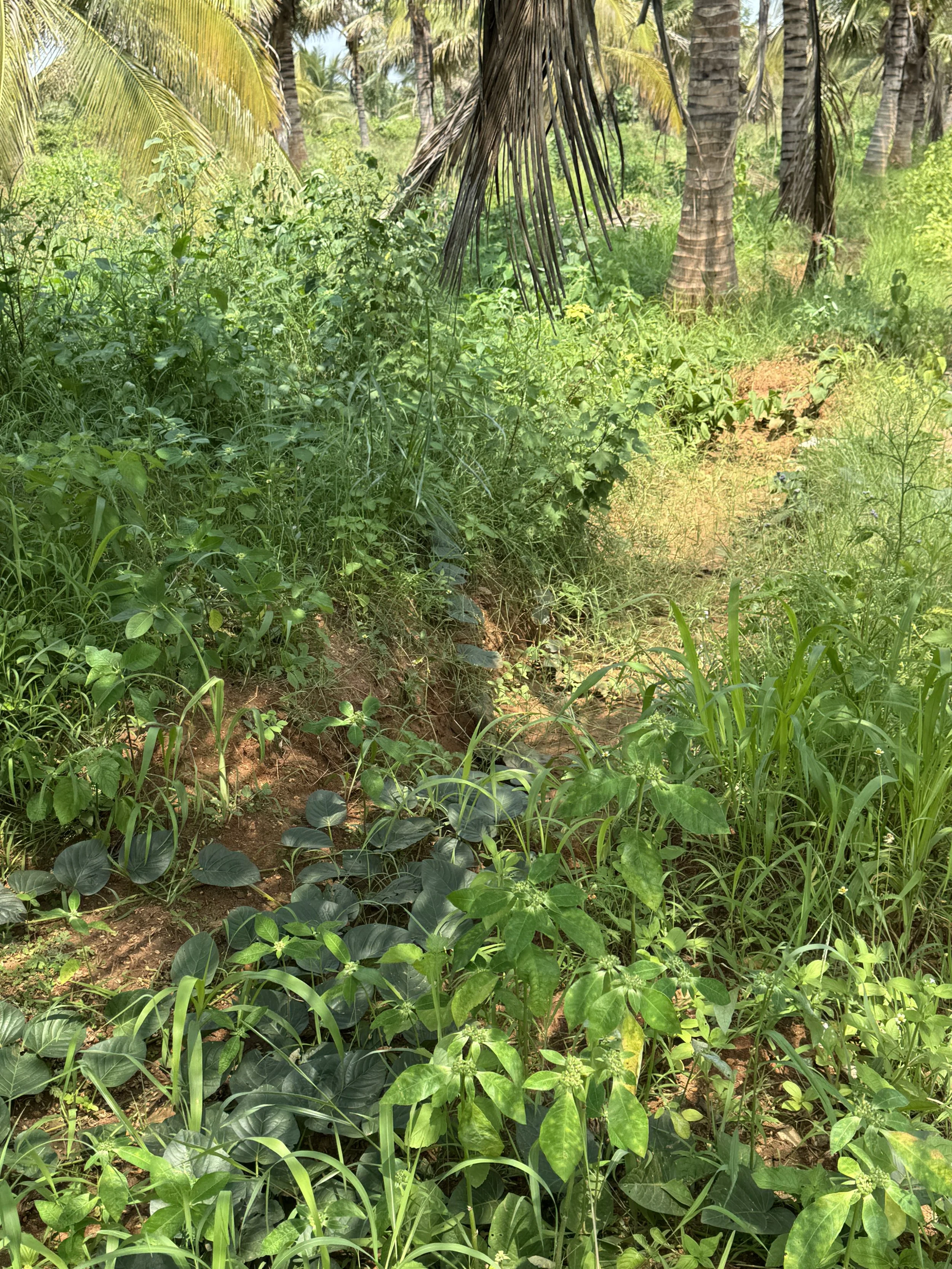
Bioswale dug along the main entrance road, seen five months later, slowly integrating into the land
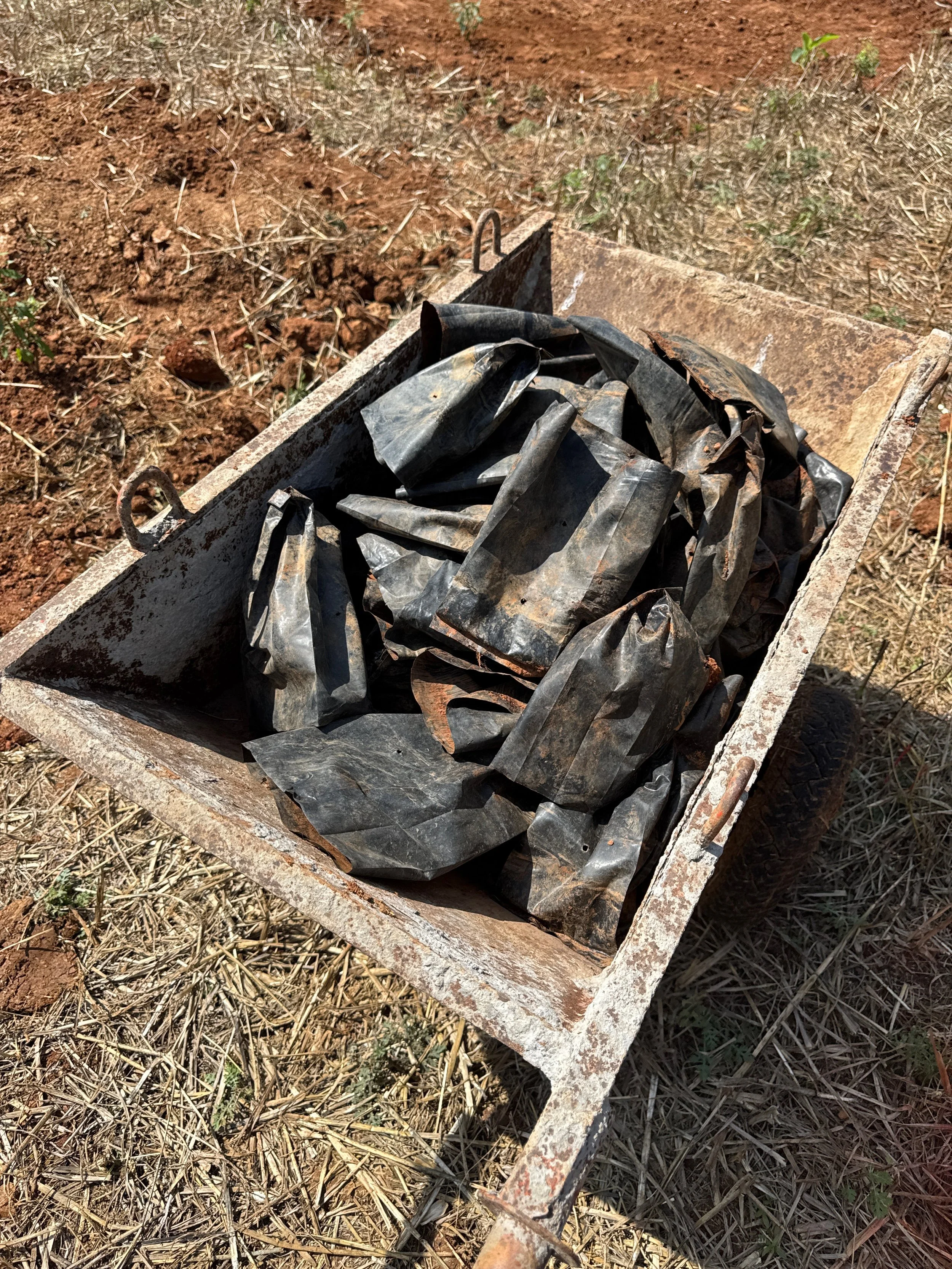
Over 95% of packets saved for reuse
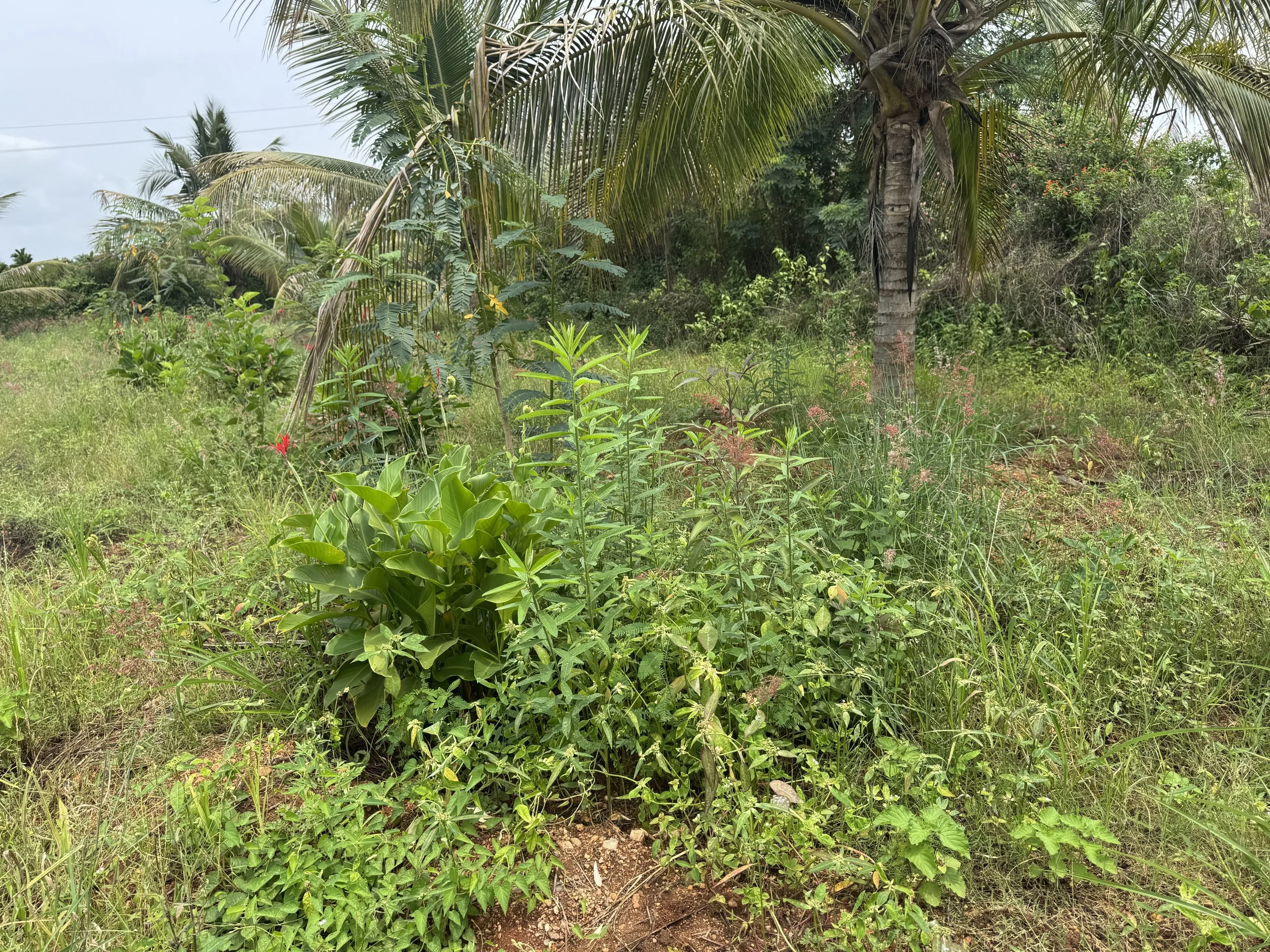
Smaller guilds dug and planted in Jan '25 showing good growth a few months in - all of these species are grown for 'chop & drop'
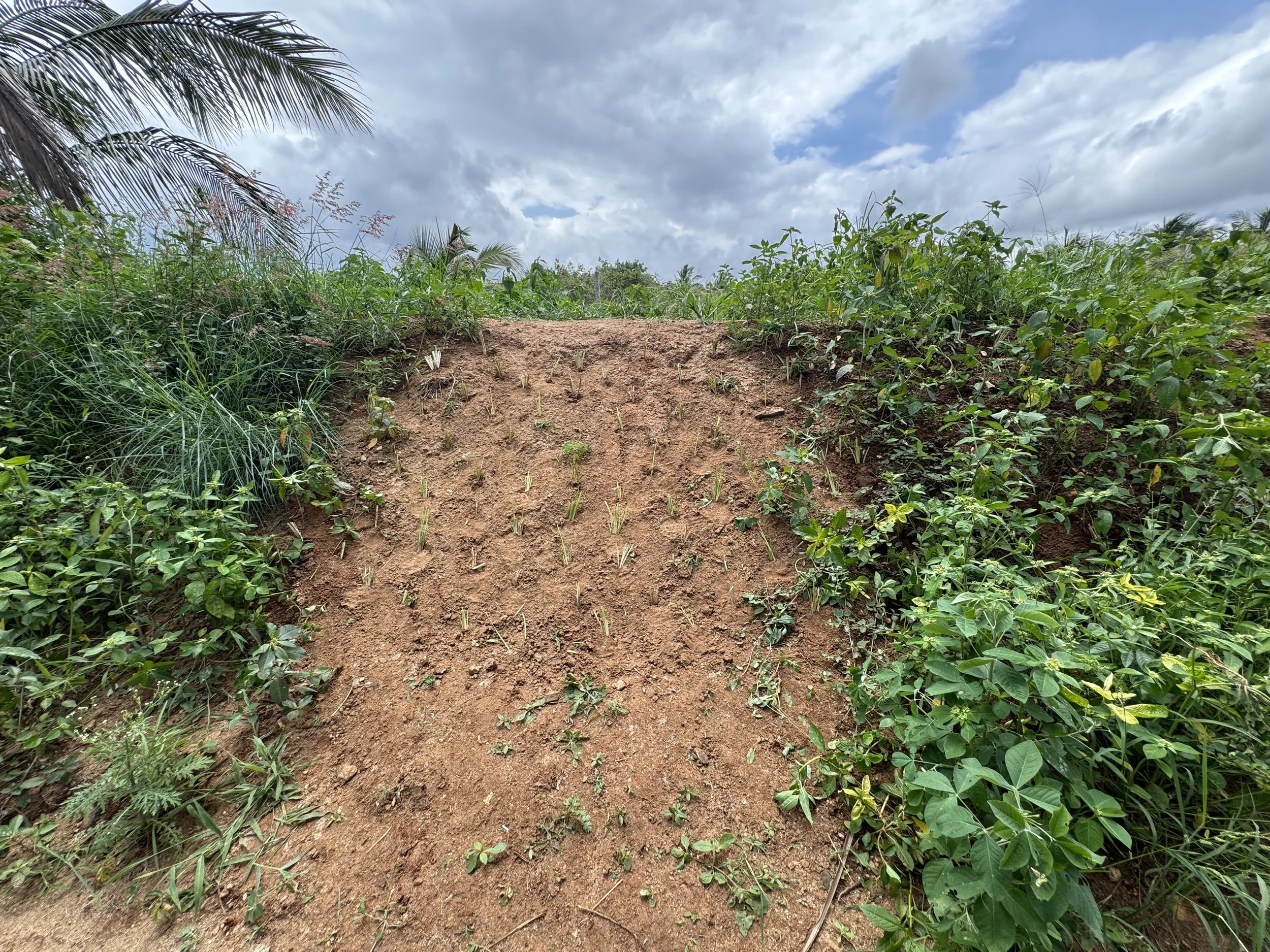
Vetiver planting on outer edge of repaired Pond 2 bundh
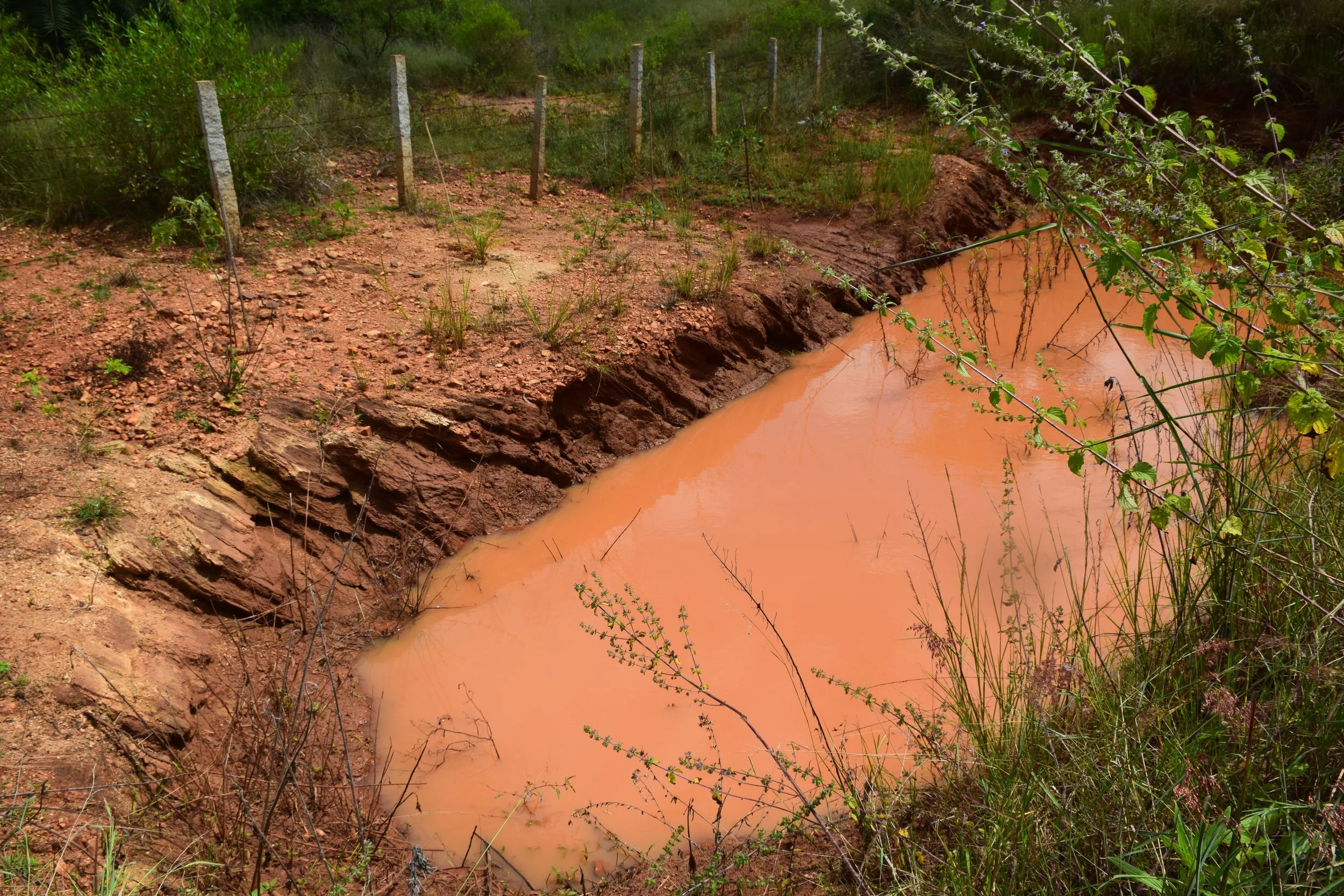
Pond 1 full in October '25, with overflow series working well
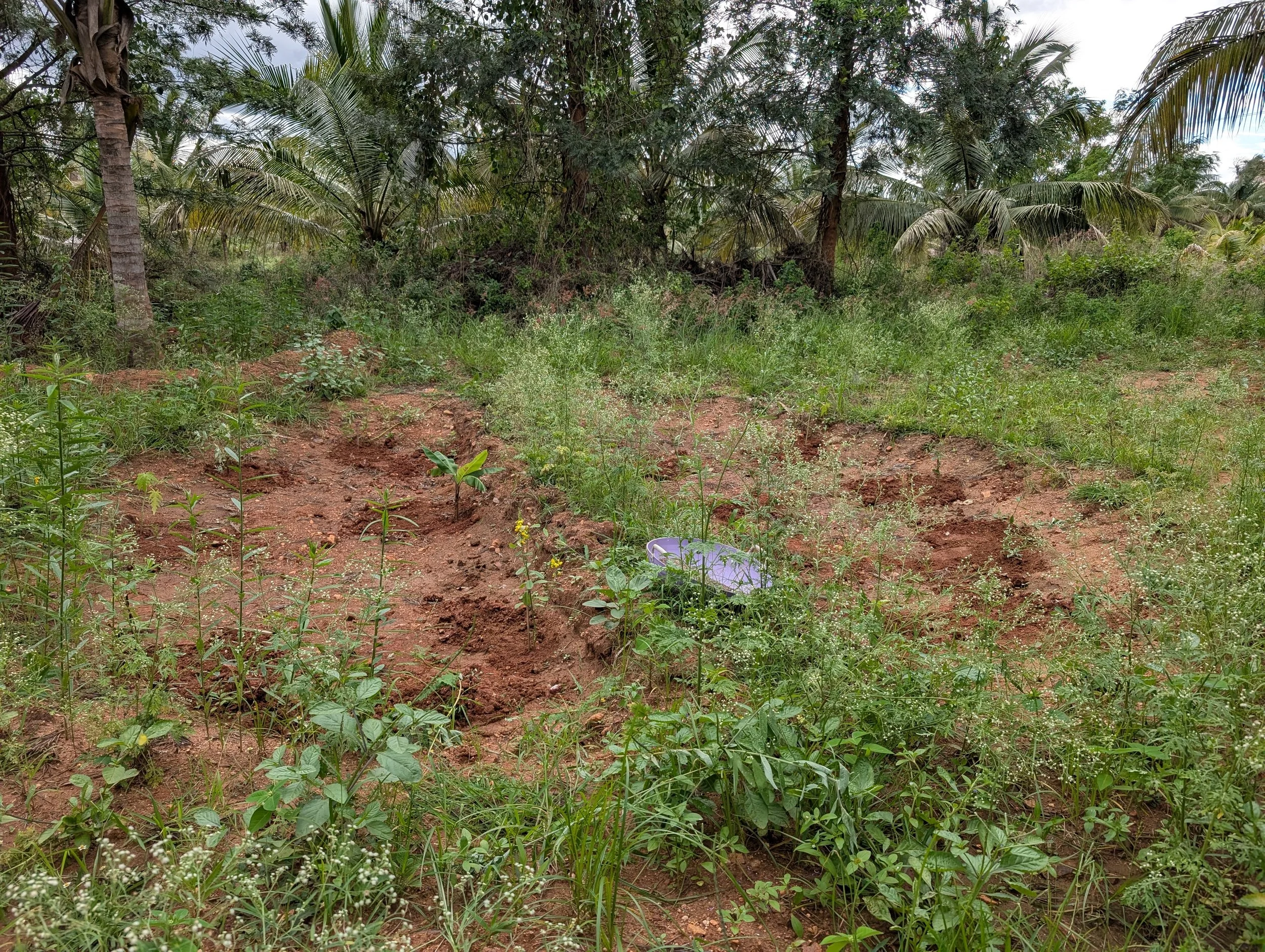
Guilds starting to grow, however much (much) more mulch is needed!
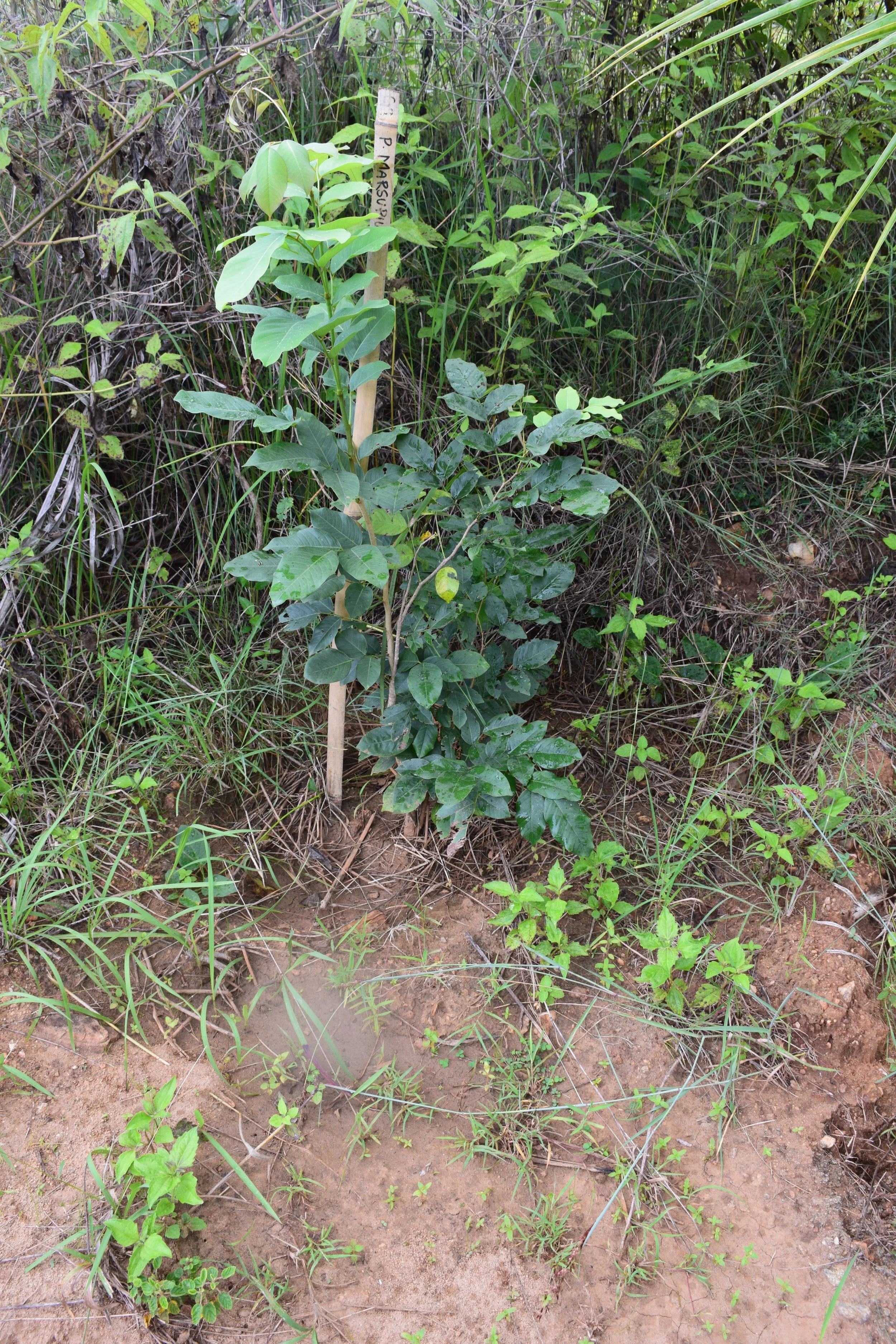
Pterocarpus marsupium thriving four months post planting, despite no direct irrigation since June
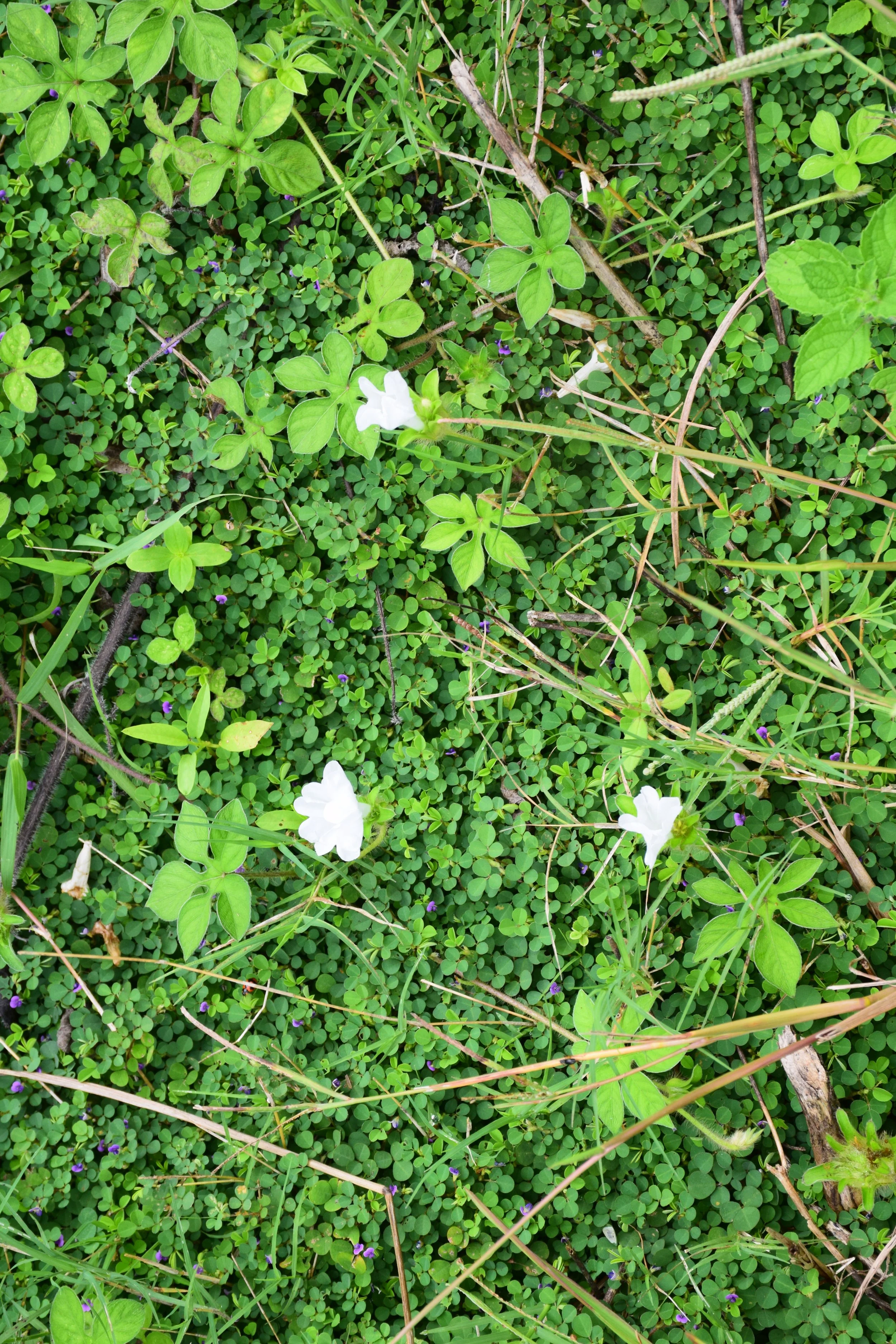
Improved soil moisture (indicated by presence of Grona triflora) and groundcover from influence of basins and reduced tractor use
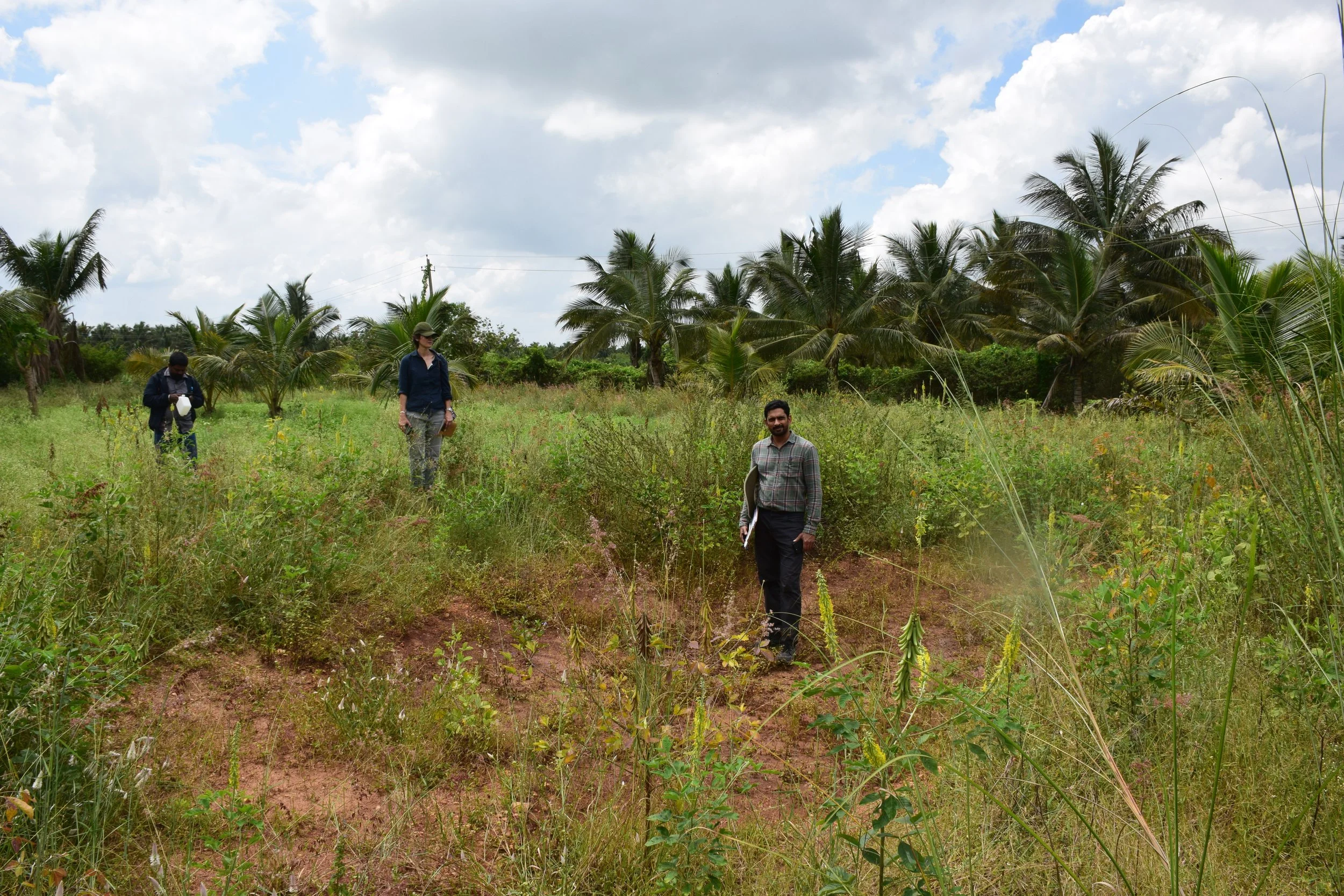
Basin 1 hydrating the landscape
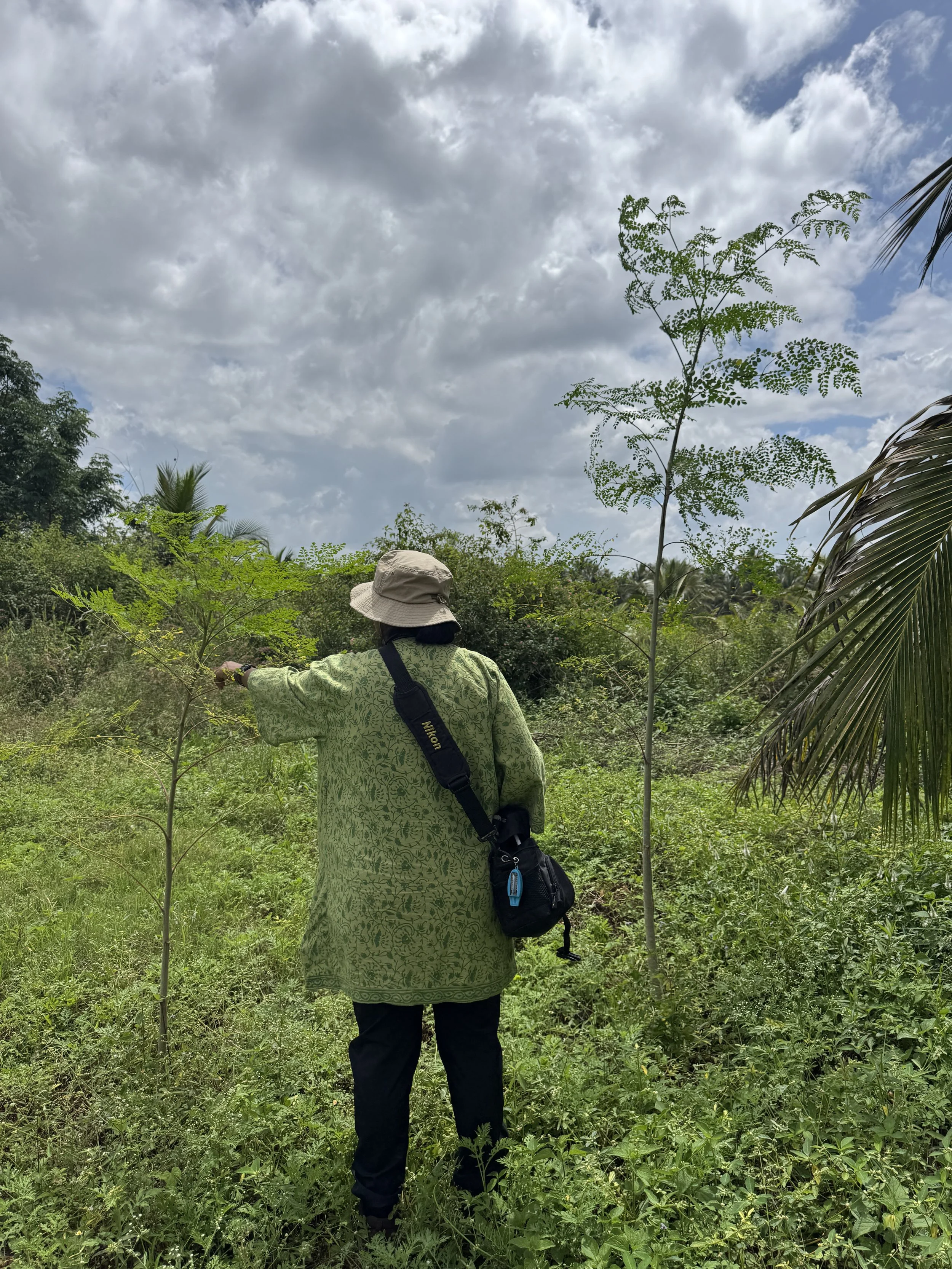
Growth of Moringa oleifera (drumsticks) on the AirBnB terrace
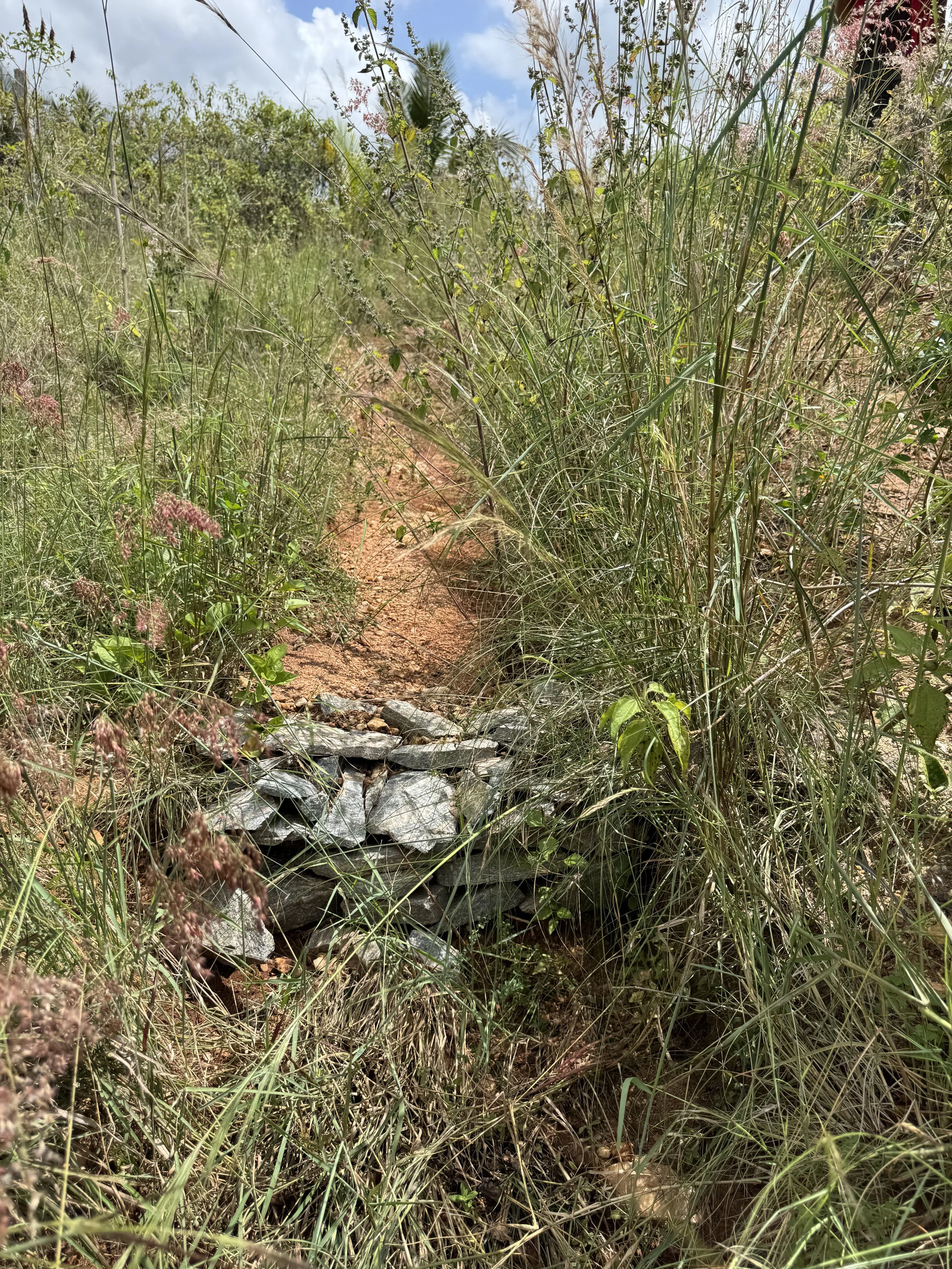
Gulley plugs above P1 caught over 1 ft of silt between April and October '25. This silt is fantastic for use in a nursery or in vegetable beds