

Joy Farm
Project size: 0.4 acres
Edge of Jowlagiri Reserve Forest, Denkanikottai, Krishnagiri, Tamil Nadu, India
March to April 2025
Key design features: Syntropic agroforestry, food forest, veggie beds, on-contour beds, pond, mulching
Project team: Sanjana Radhakrishnan (Project lead); Kiri Meili, Debasish Satapathy
Elevation: 960 metres above sea level
Annual rainfall: 830mm / 32.7 inches
Climate: Tropical savanna
Bioregion: South Deccan Plateau Dry Deciduous Forest
Soil type: Sandy loam / sandy clay loam
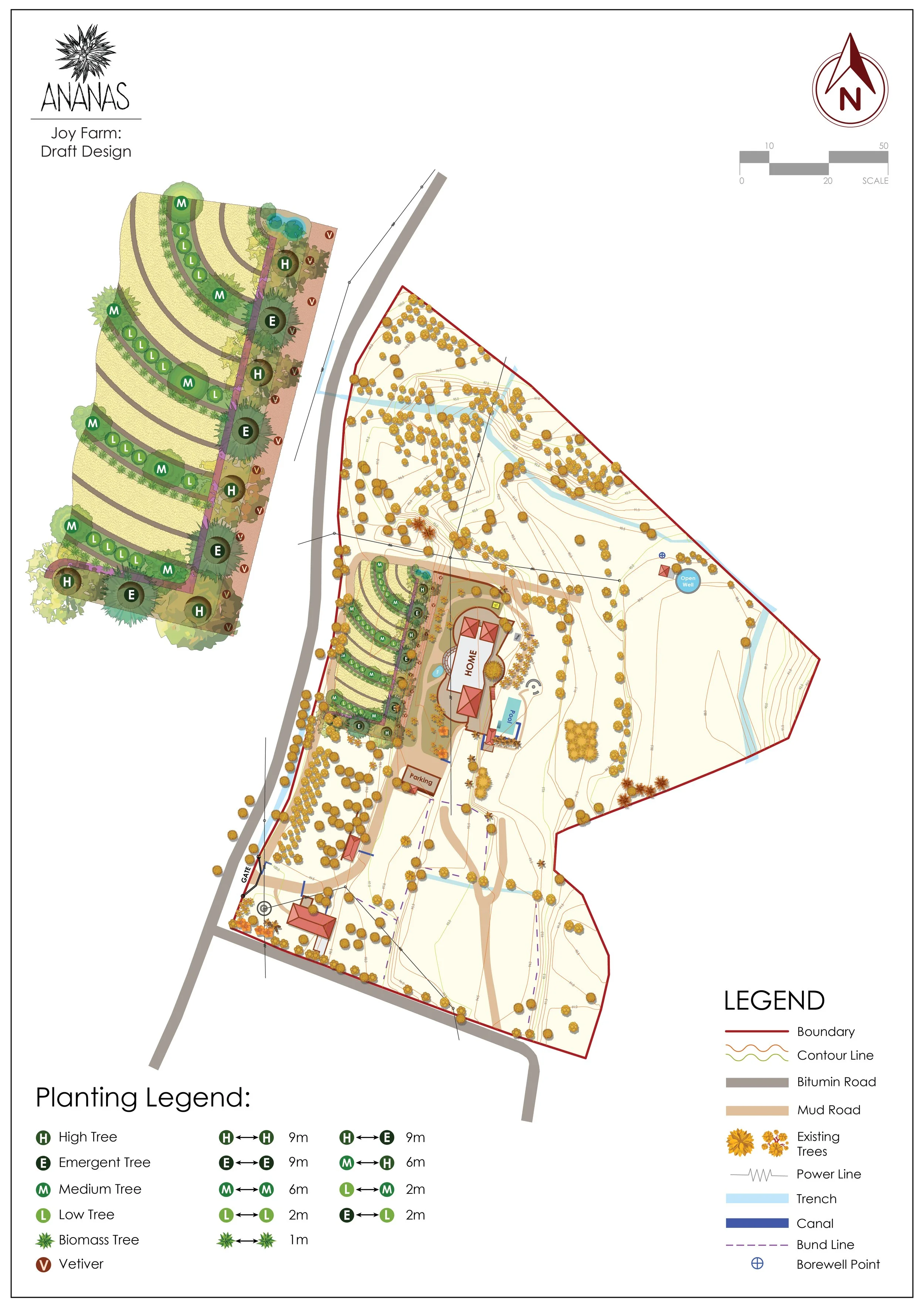
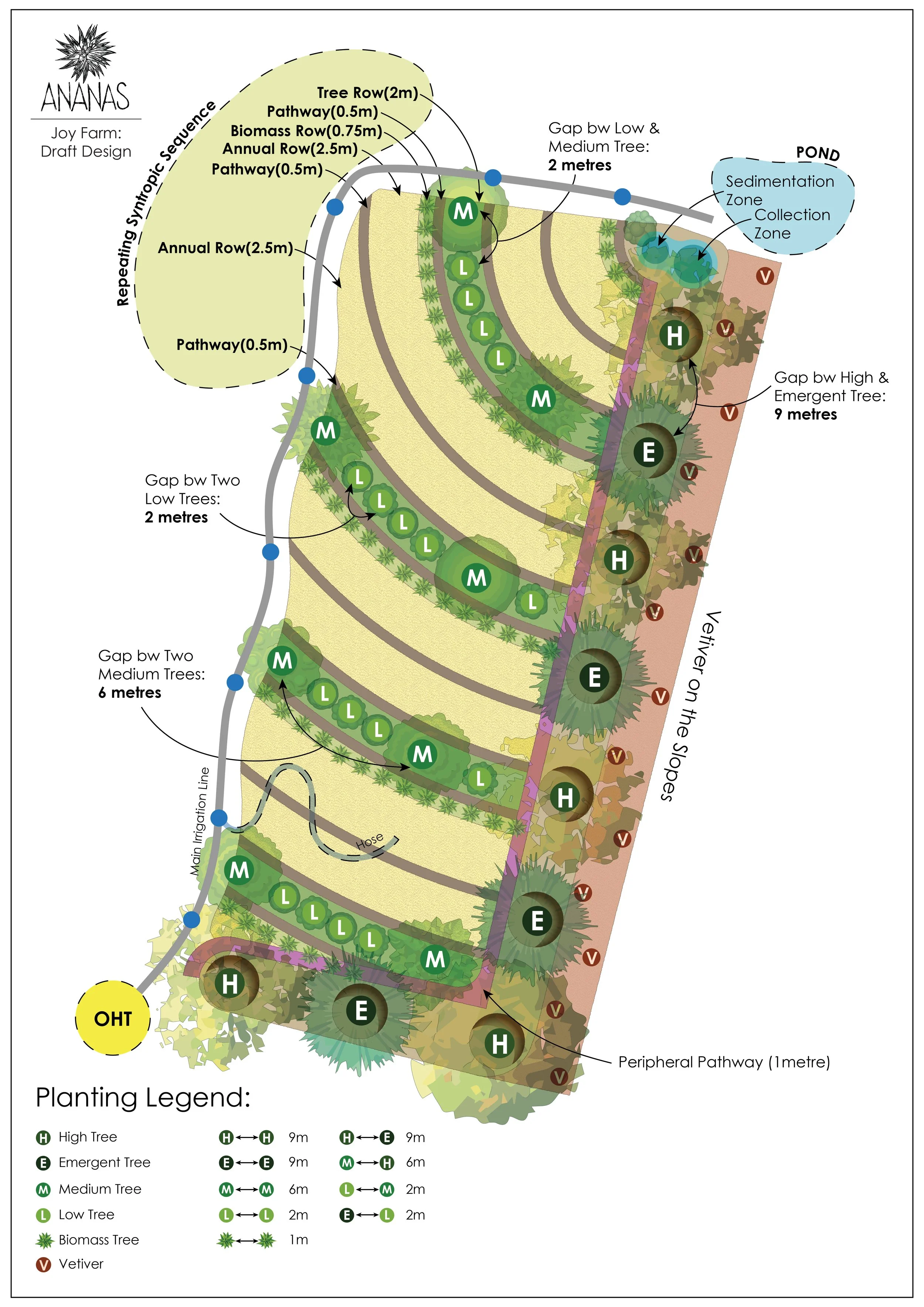
The project envisions a resilient, high-yielding food forest rooted in regenerative practice. The site is a 0.4-acre part of a larger farm, designed using Syntropic Agroforestry and perennial plant guilds. The design aims to establish a self-sustaining food system that becomes increasingly productive while reducing external inputs over time.
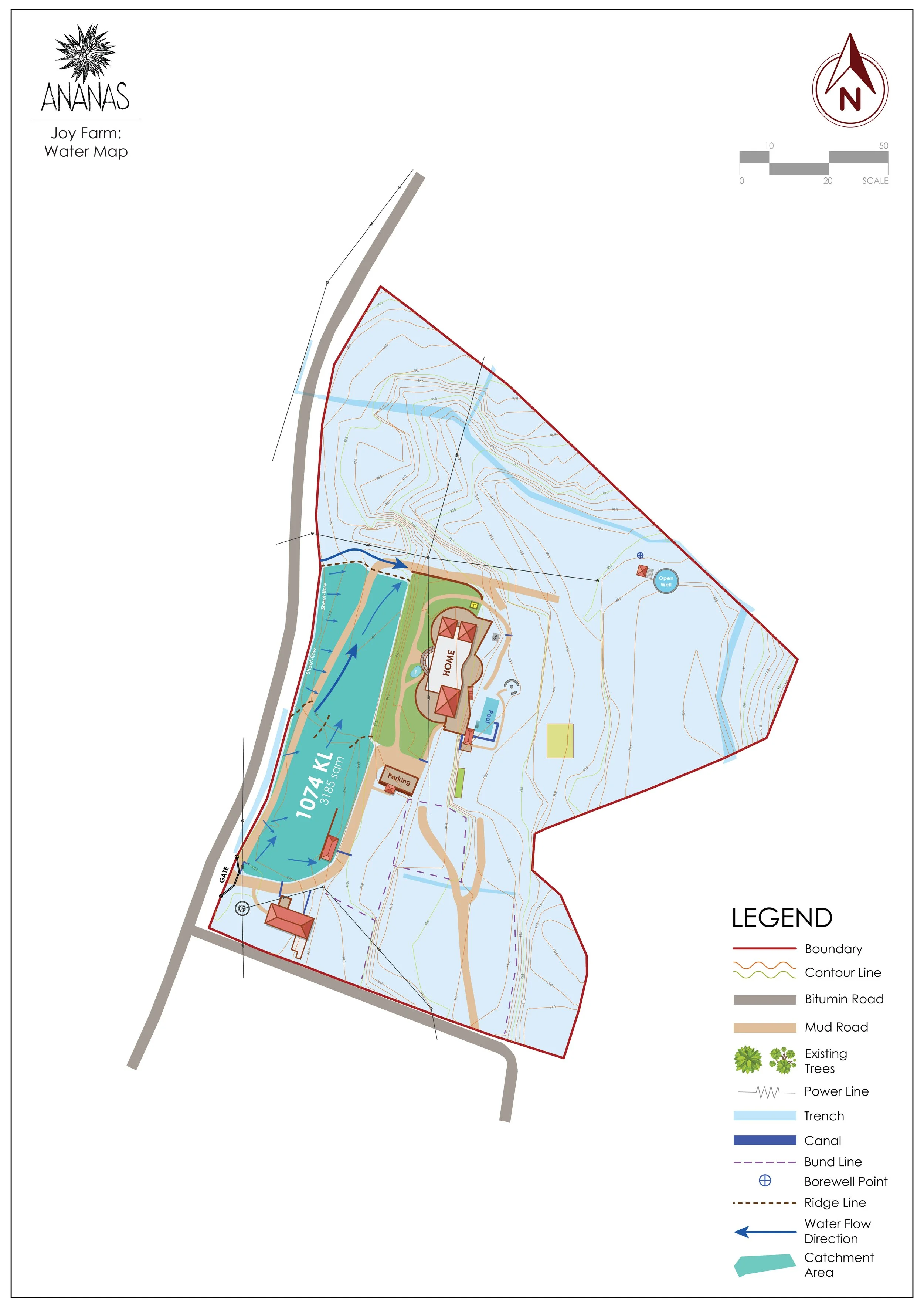
The design began with mapping water flows and identifying rainwater harvesting potential within the agroforestry catchment. Recommendations focused on clearing key invasive species including Mimosa pudica, Chromolaena odorata, Parthenium hysterophorus, and Lantana camara through physical removal, followed by composting and strategic revegetation to prevent regrowth.
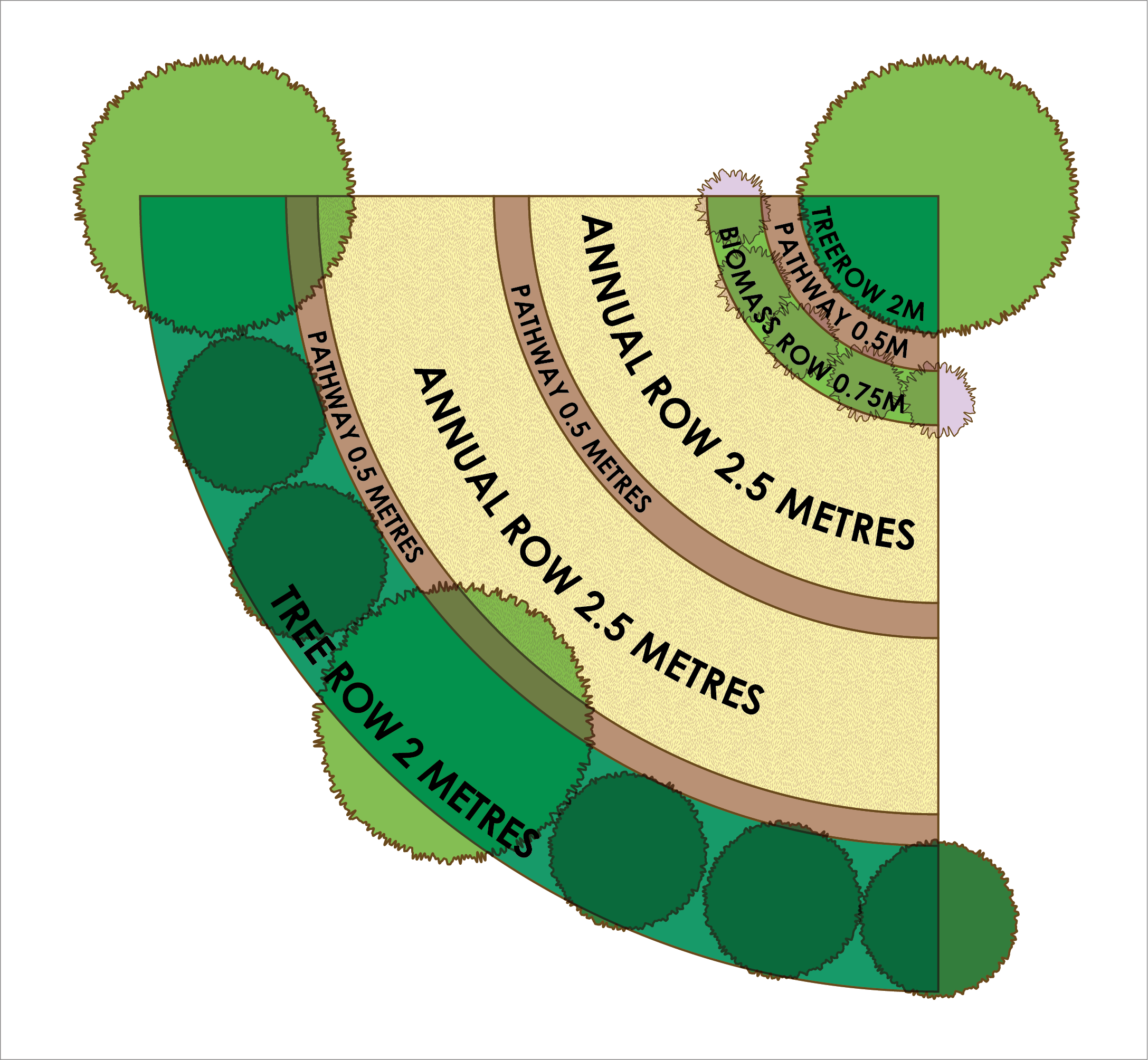
Syntropic agroforestry accelerates natural succession through dense planting, structured pruning, and grouping species by lifespan to create long term waves of harvest. Plant guilds were organized around central canopy trees, with phased planting that transitions from sun loving pioneer species to shade tolerant understory and groundcover as the system matures.
Soil improvement strategies included composting, mulching, chop and drop biomass cycling, and the integration of biochar to enhance fertility and nutrient retention. Earthworks supported passive monsoon irrigation, complemented by hand watering and clay pot systems.
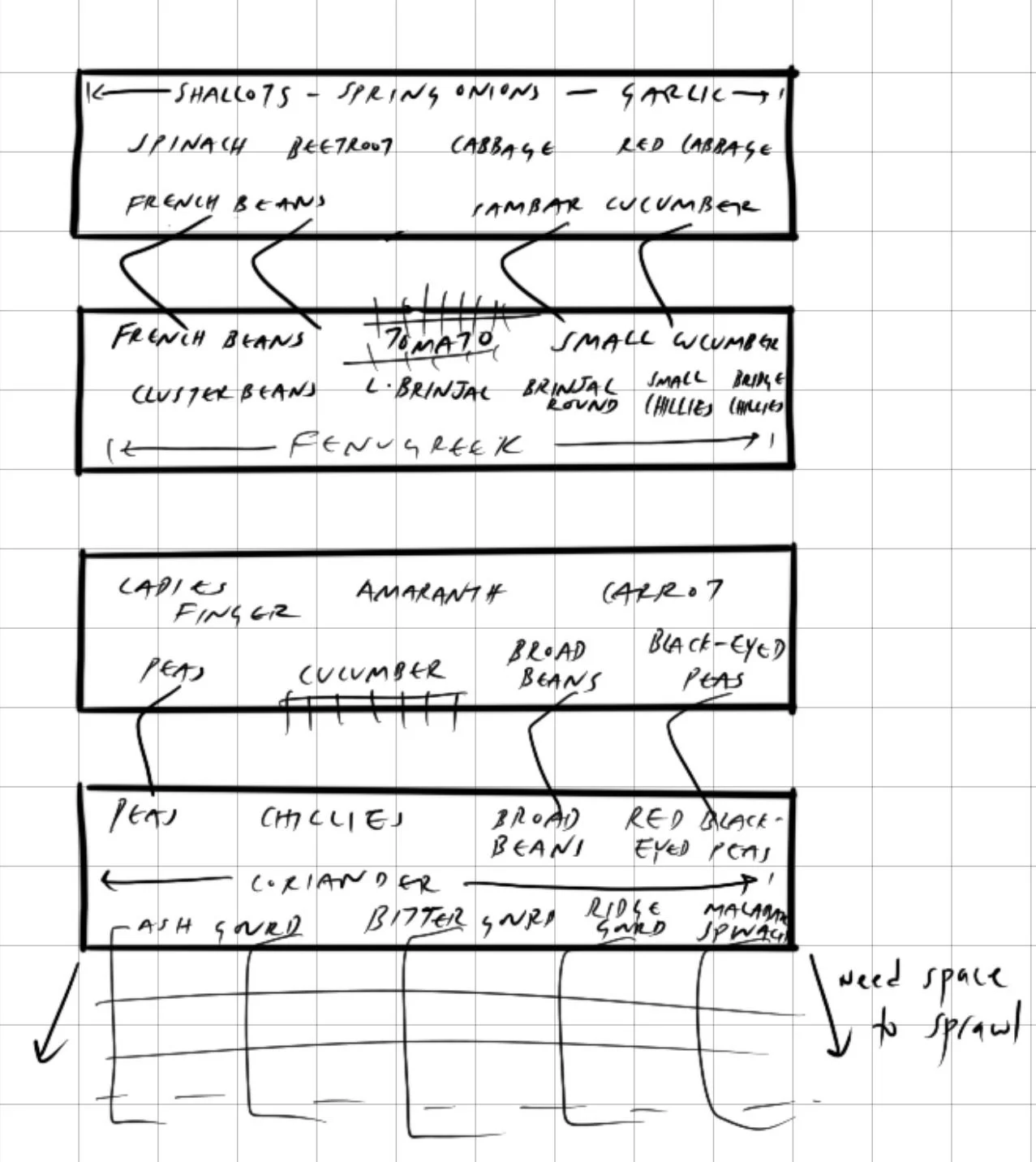
While the client undertook on ground implementation, our team provided remote guidance and technical support throughout the process. Veggie beds were constructed first, to get an initial yield while establishing the more long-term tree-based systems. Glyricidia, growing abundantly on site, was suggested as the main component for mulching veggie beds.
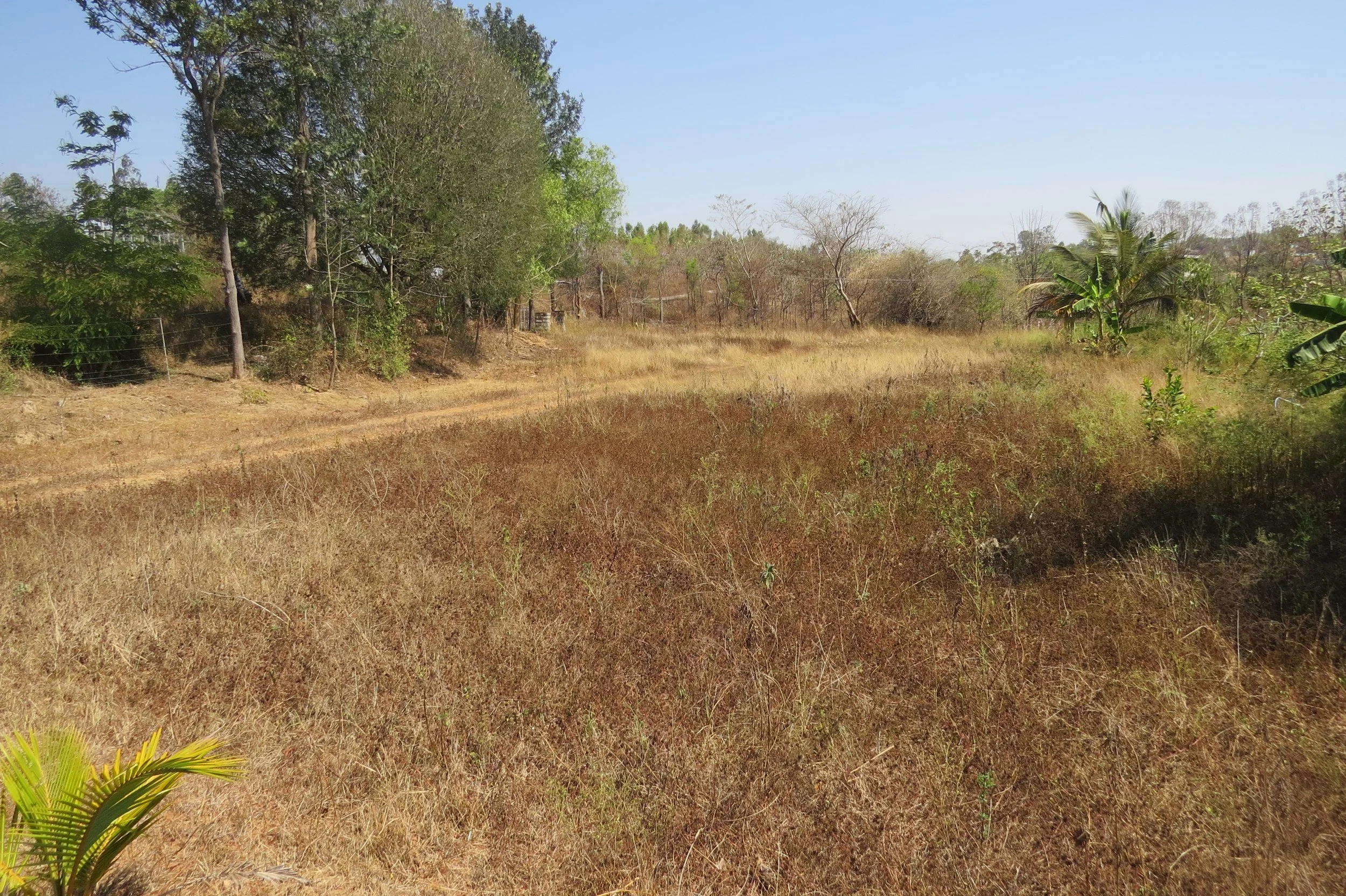
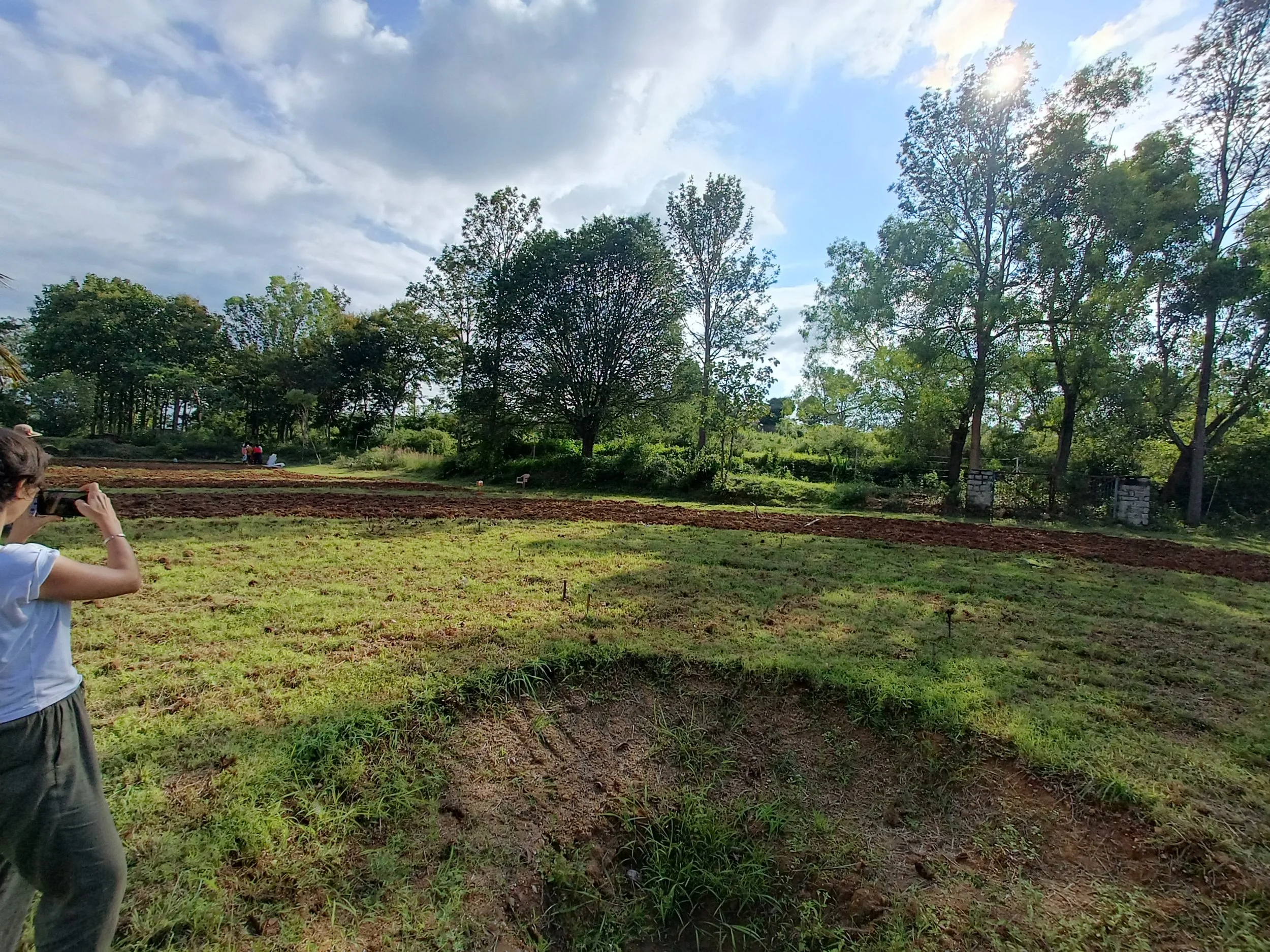
Food forest site before implementation
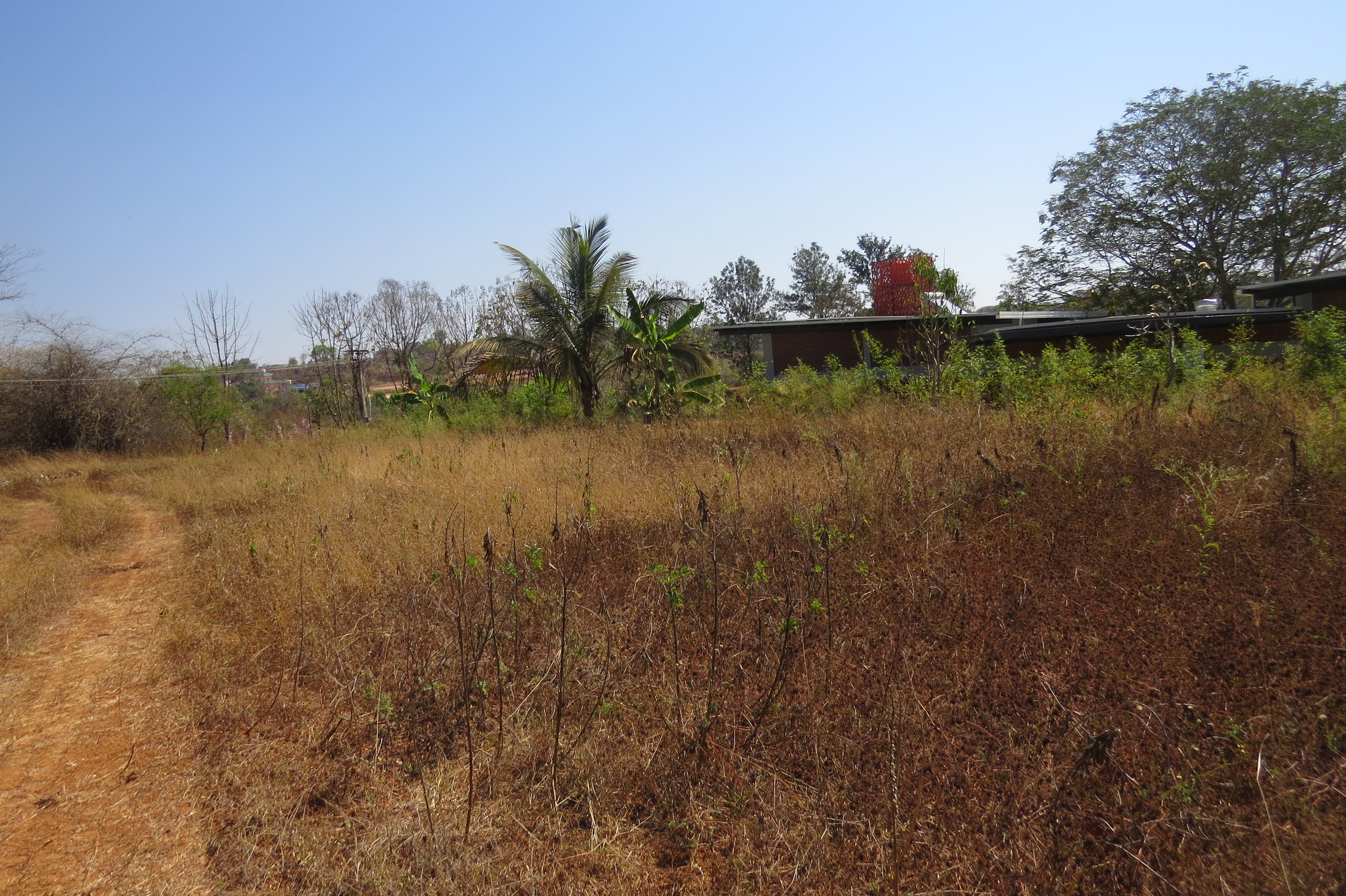
Food forest site before implementation
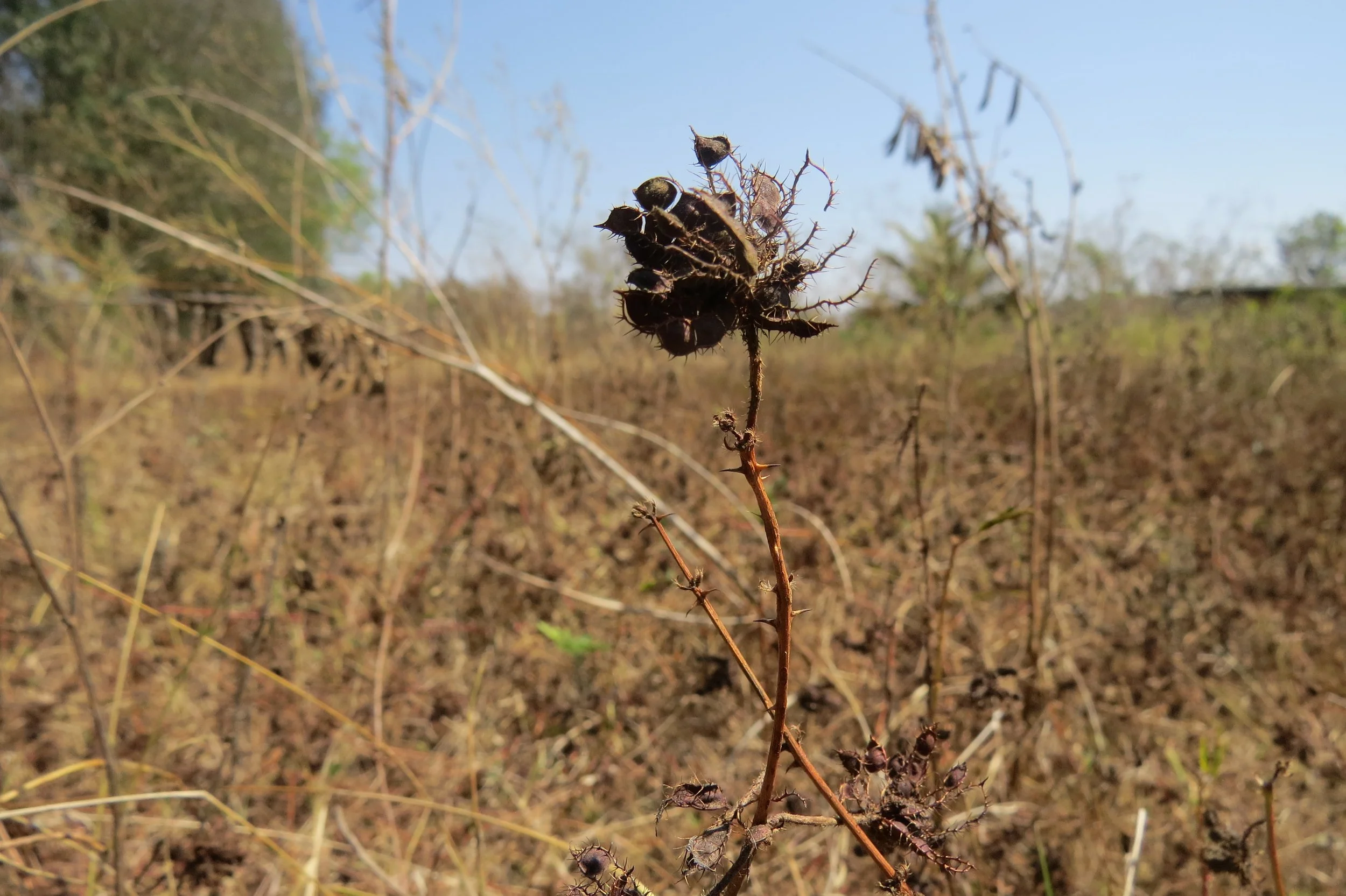
Mimosa pudica - dominant species on the parcel
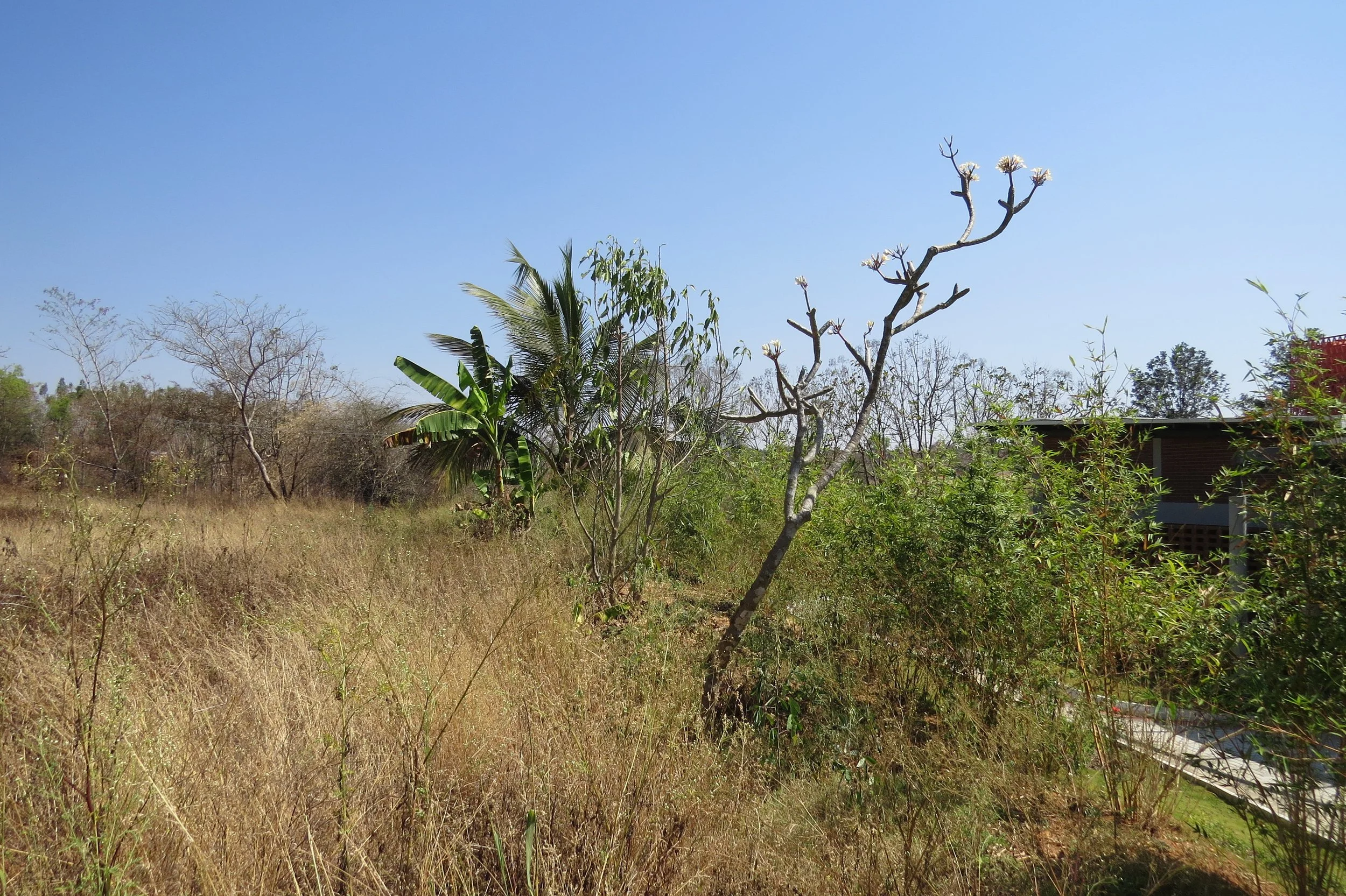
Eastern edge of parcel - planted with banana and coconut
![Pre-implementation, post-clearing [photo from client]](https://images.squarespace-cdn.com/content/v1/592fb71ae4fcb5f604d4a106/fb89ec90-fe8a-447c-b1d9-6cac8e01e1ee/IMG-20250508-WA0022.jpg)
Pre-implementation, post-clearing [photo from client]
![After marking concentric, on-contour rows [photo from client]](https://images.squarespace-cdn.com/content/v1/592fb71ae4fcb5f604d4a106/8e4f7c83-901c-4f04-8fb0-a4eddbcbf876/IMG-20250516-WA0006.jpg)
After marking concentric, on-contour rows [photo from client]
![Soil building [photo from client]](https://images.squarespace-cdn.com/content/v1/592fb71ae4fcb5f604d4a106/83b5c009-ae74-465b-9b14-606965c15976/IMG-20250521-WA0026.jpg)
Soil building [photo from client]
![Soil building using shredded biomass processed on site [photo from client]](https://images.squarespace-cdn.com/content/v1/592fb71ae4fcb5f604d4a106/6b042a17-f304-4a36-b0fe-625d1fe0ccfe/IMG-20250521-WA0024.jpg)
Soil building using shredded biomass processed on site [photo from client]
![Tree pits [photo from client]](https://images.squarespace-cdn.com/content/v1/592fb71ae4fcb5f604d4a106/568cc246-d0ec-45c9-8dd0-9c5e409955b9/IMG-20250521-WA0023.jpg)
Tree pits [photo from client]
![Mulching veggie bed with Glyricidia [photo from client]](https://images.squarespace-cdn.com/content/v1/592fb71ae4fcb5f604d4a106/b6b0870c-3992-4452-8127-5e052776bc05/IMG-20250808-WA0021.jpg)
Mulching veggie bed with Glyricidia [photo from client]
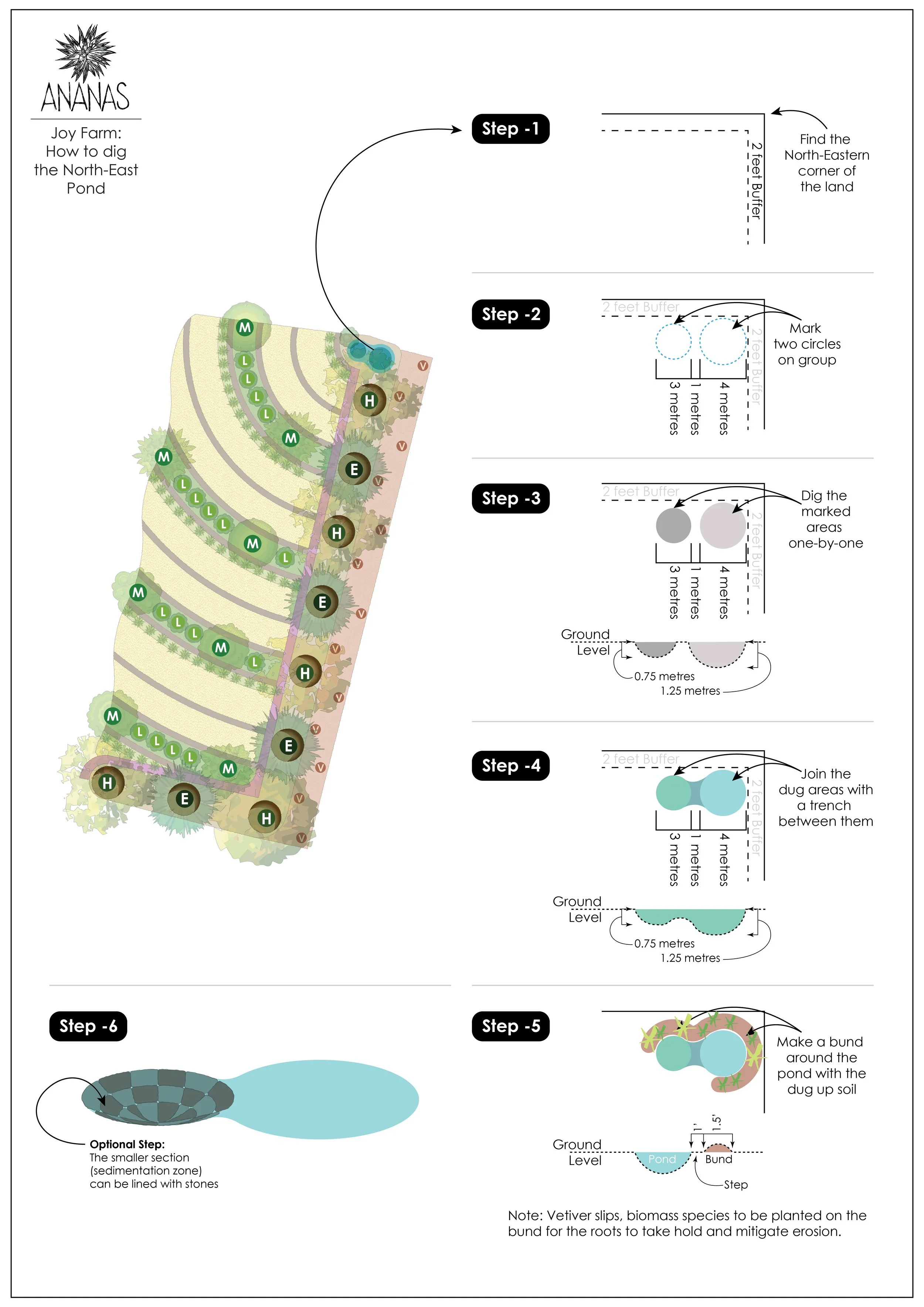
![Pond at the lowest point [photo from client]](https://images.squarespace-cdn.com/content/v1/592fb71ae4fcb5f604d4a106/18ba18c1-1b11-4083-826a-0727092dcbf6/IMG-20250516-WA0007.jpg)
Pond at the lowest point [photo from client]
Pond after a few rains
![Veggie beds with trellises [photo from client]](https://images.squarespace-cdn.com/content/v1/592fb71ae4fcb5f604d4a106/ff53135b-2e66-40e5-a643-669006a7131f/IMG-20251022-WA0031.jpg)
Veggie beds with trellises [photo from client]
![Left - tree row; right - veggie beds [photo from client]](https://images.squarespace-cdn.com/content/v1/592fb71ae4fcb5f604d4a106/f20d55cf-dbf3-4fbb-ba01-4f89fcfb81d5/IMG-20251022-WA0033.jpg)
Left - tree row; right - veggie beds [photo from client]
![First greens [photo from client]](https://images.squarespace-cdn.com/content/v1/592fb71ae4fcb5f604d4a106/b570bac1-3158-4b76-9f73-ba308e46e1c5/IMG-20251022-WA0029.jpg)
First greens [photo from client]
![First harvest [photo from client]](https://images.squarespace-cdn.com/content/v1/592fb71ae4fcb5f604d4a106/408fa7d9-c76b-4d60-8ee4-dcf08b26d259/Photo+from+Sanjana+Radhakrishnan.jpg)
First harvest [photo from client]