

‘Somewhere’ Eco-resort
Project size: 12.5 acres
Kota Range (Shivalik Hills), buffer zone of Jim Corbett NP, Uttarakhand
February to August 2021
Key features: Rewilding masterplan, eco-resort, wildlife corridors, zoning, wild zones, buffers, grasslands, riparian, elephant pond, decks and machans, trails
Elevation: 750 metres above sea level
Annual rainfall: 1743mm / 69 inches
Climate: Monsoon influenced humid subtropical climate
Bioregion: Terai-duar savanna / Upper Gangetic Plains moist deciduous forest / Tropical mixed sal forest
Soil type: Alluvial sandy loam
Masterplan
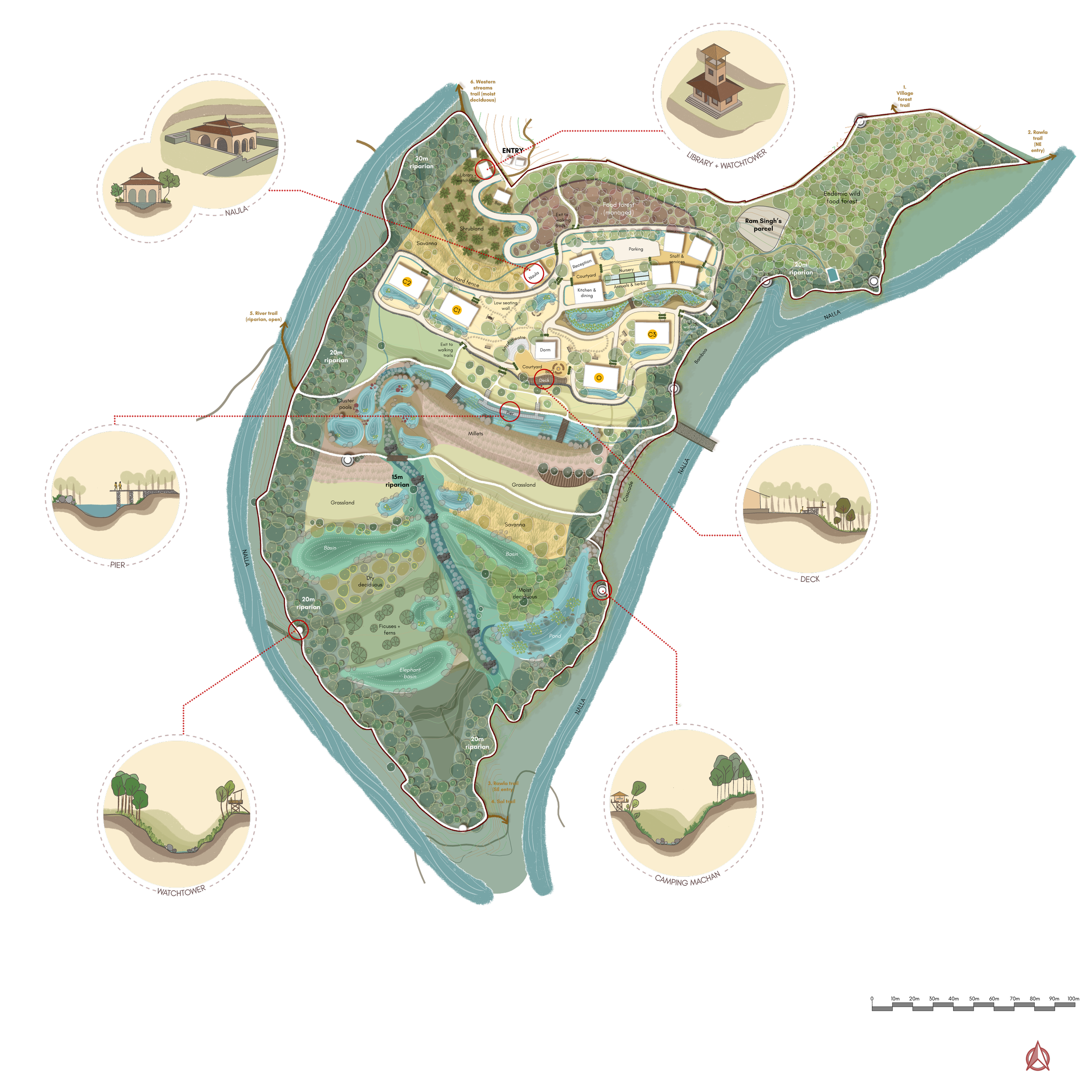
This project envisions a 12.5-acre eco-resort and private forest reserve dedicated to rewilding and restoring wildlife corridors within a highly sensitive landscape. The client’s vision for ‘Somewhere’ was to create a tranquil sanctuary for both wildlife and visitors, encouraging coexistence, quiet reverence, and slow exploration guided by the rhythms of the forest.
The site presented several challenges, including degraded land, active erosion, limited accessibility due to surrounding forests, and frequent elephant movement through the area.
The master plan responds by concentrating human habitation within a protected, fenced zone (Zones 0 and 1), while allowing the majority of the land to remain dedicated to wild zones (Zones 4 and 5). Natural topography and existing water flows were used to shape a network of interconnected wetlands, streams, ponds, and basins. Outside the habitation zone, carefully placed trails, treehouses, and viewing decks enable immersive yet low-impact wildlife observation.
The habitation zone houses luxury cottages, kitchen and dining facilities, staff and service areas, dormitories, and the owner’s cottage. These built spaces are supported by a layered landscape of seasonal water bodies, cottage-side ponds, courtyards, seating areas, pathways, and living fences that provide privacy while remaining ecologically sensitive.
Environmental Study and Zoning
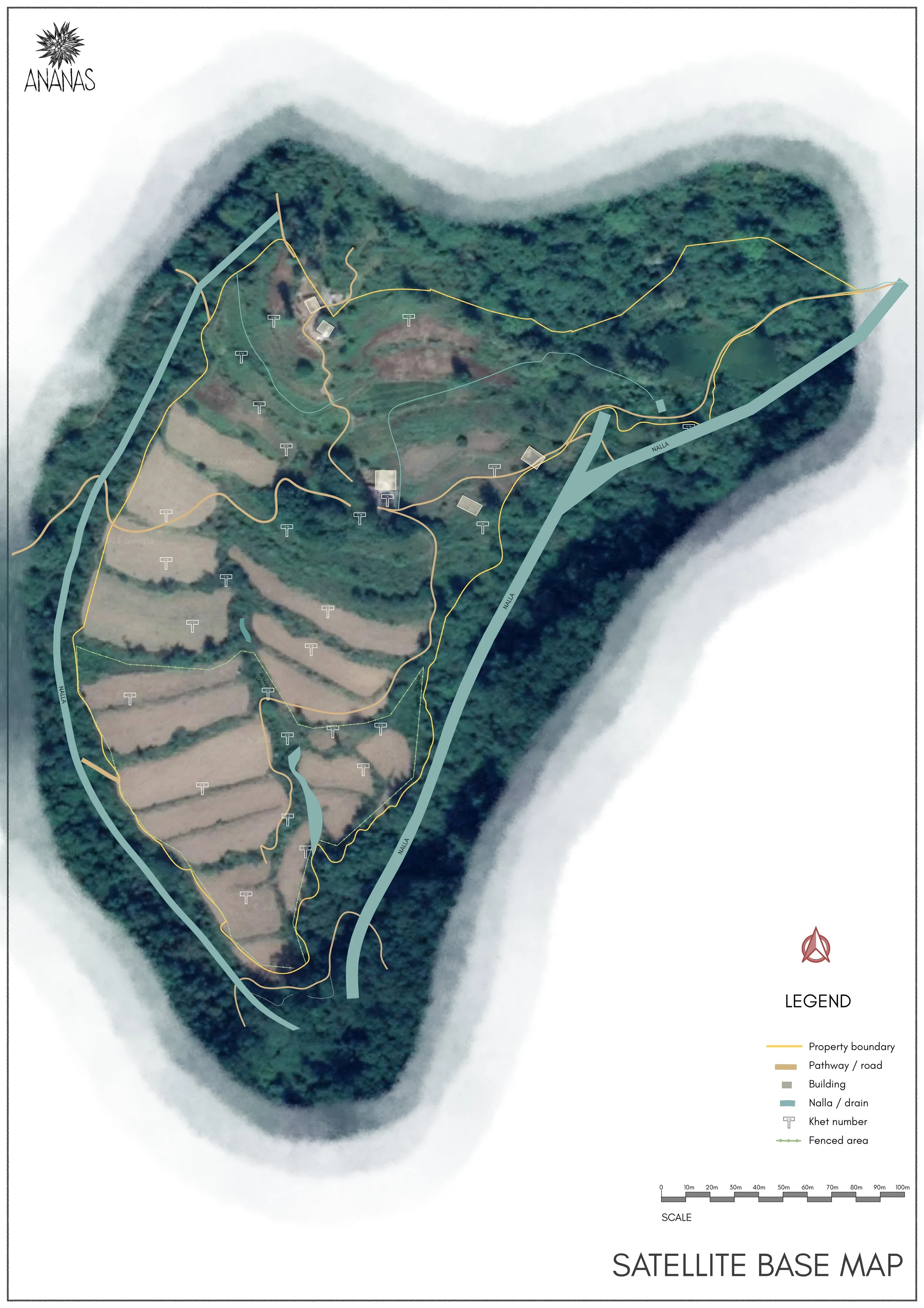
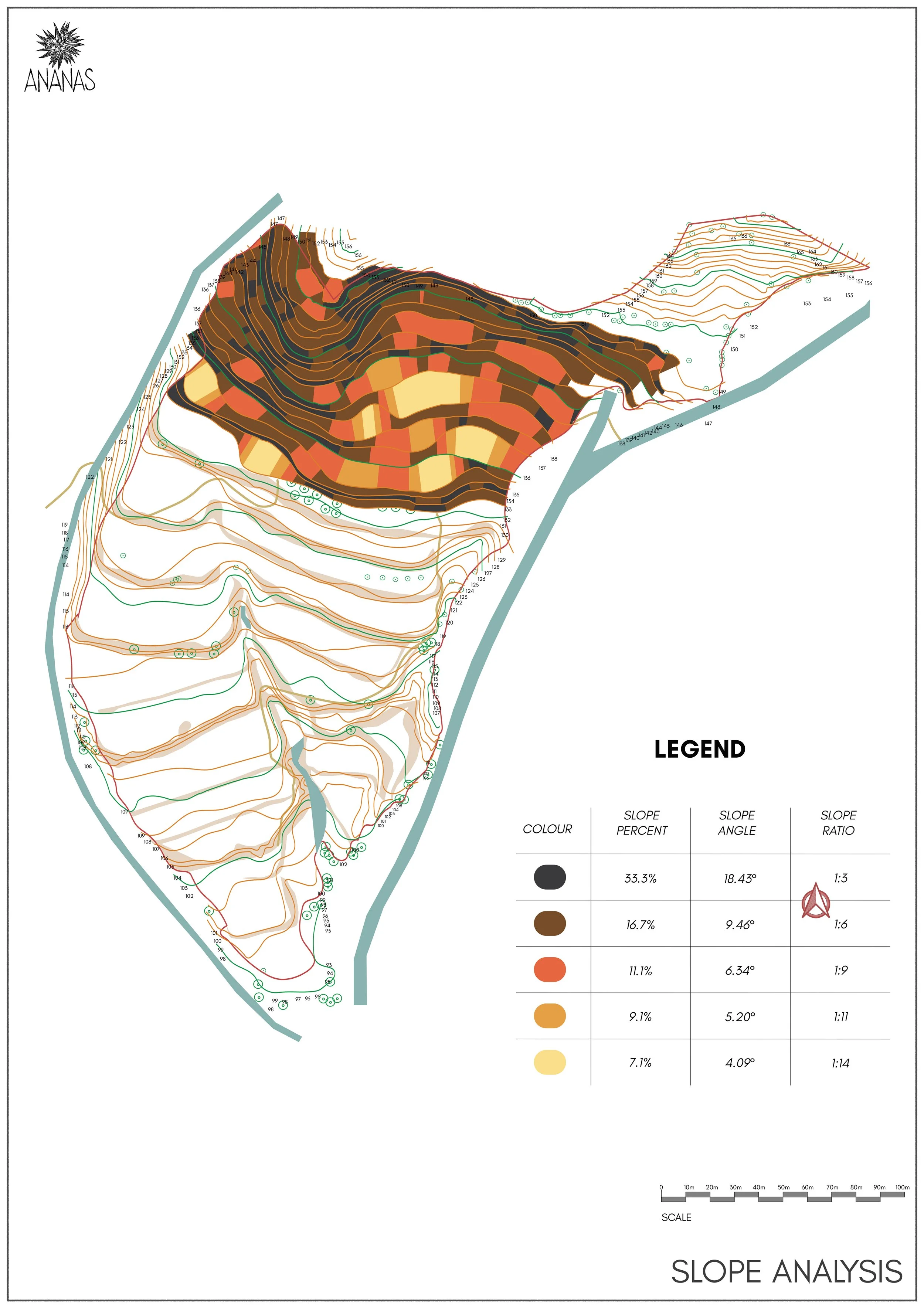
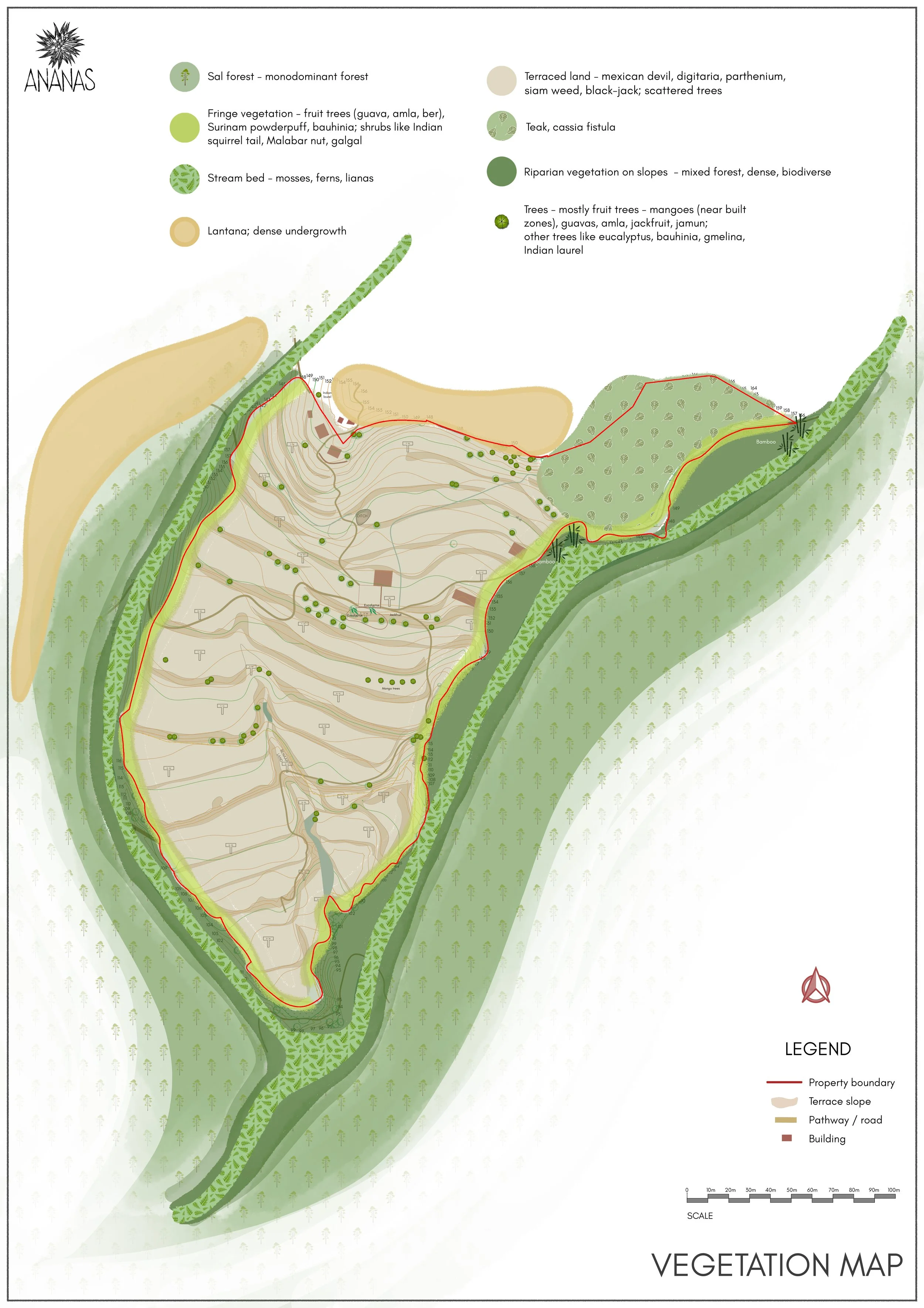
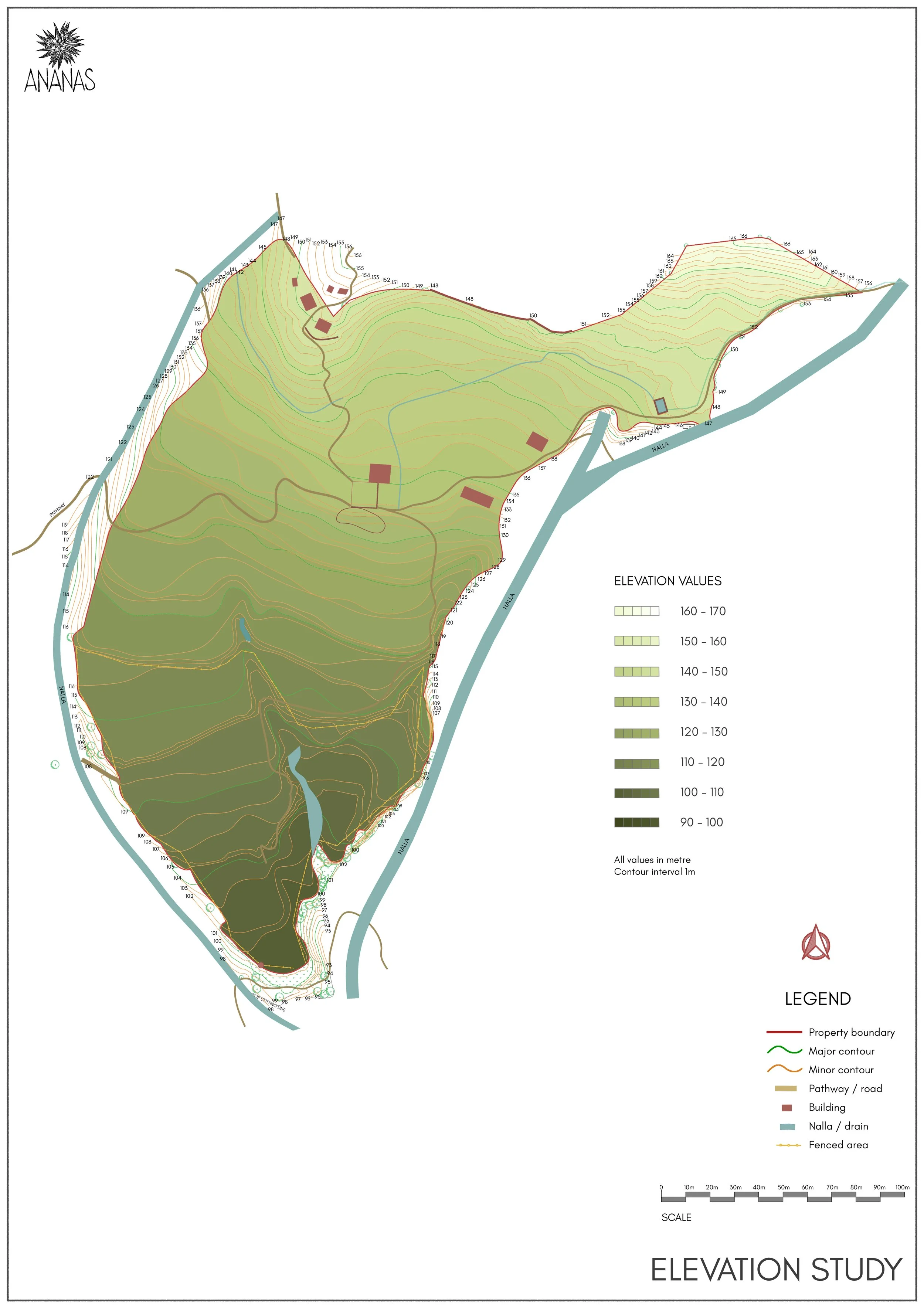
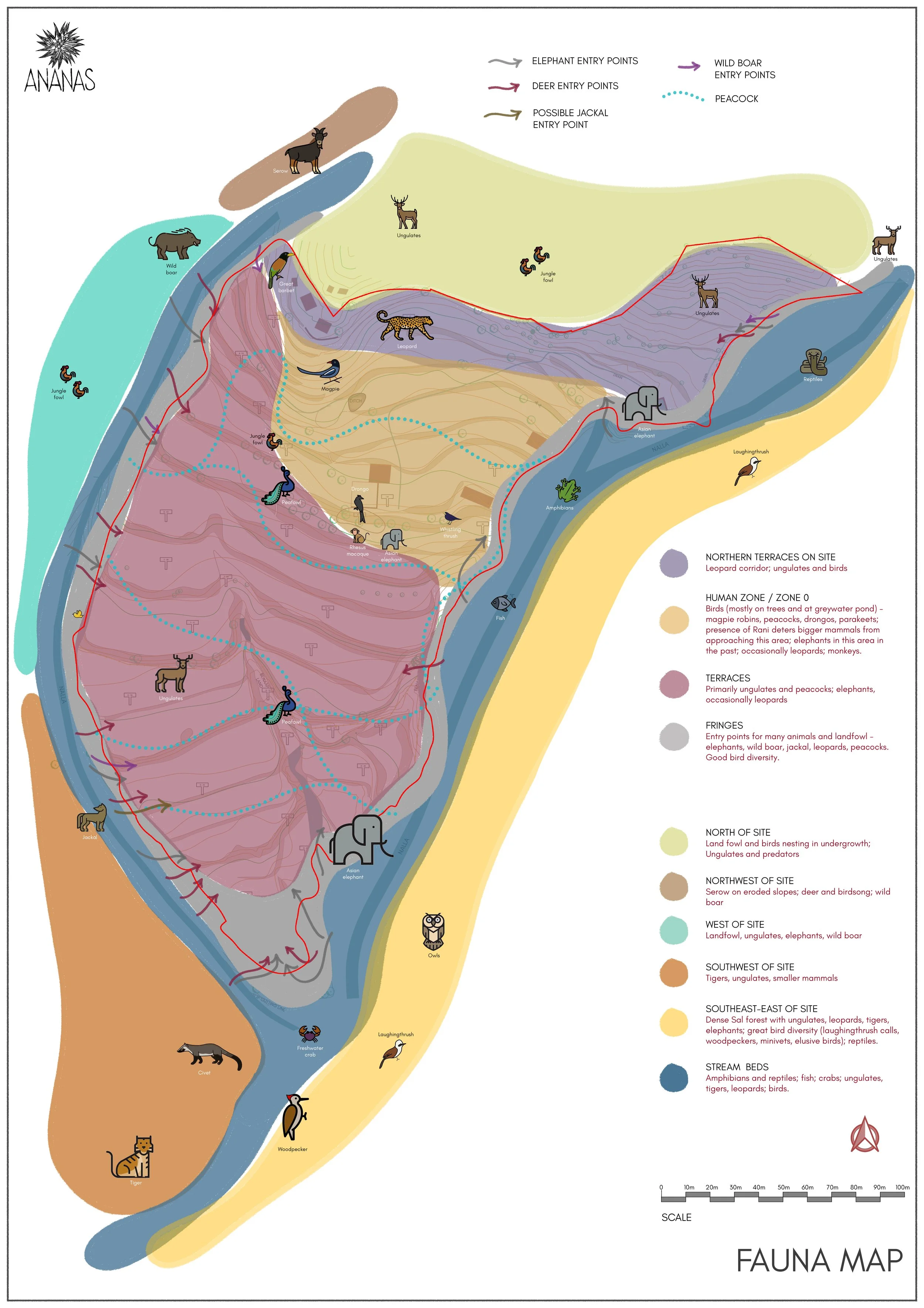
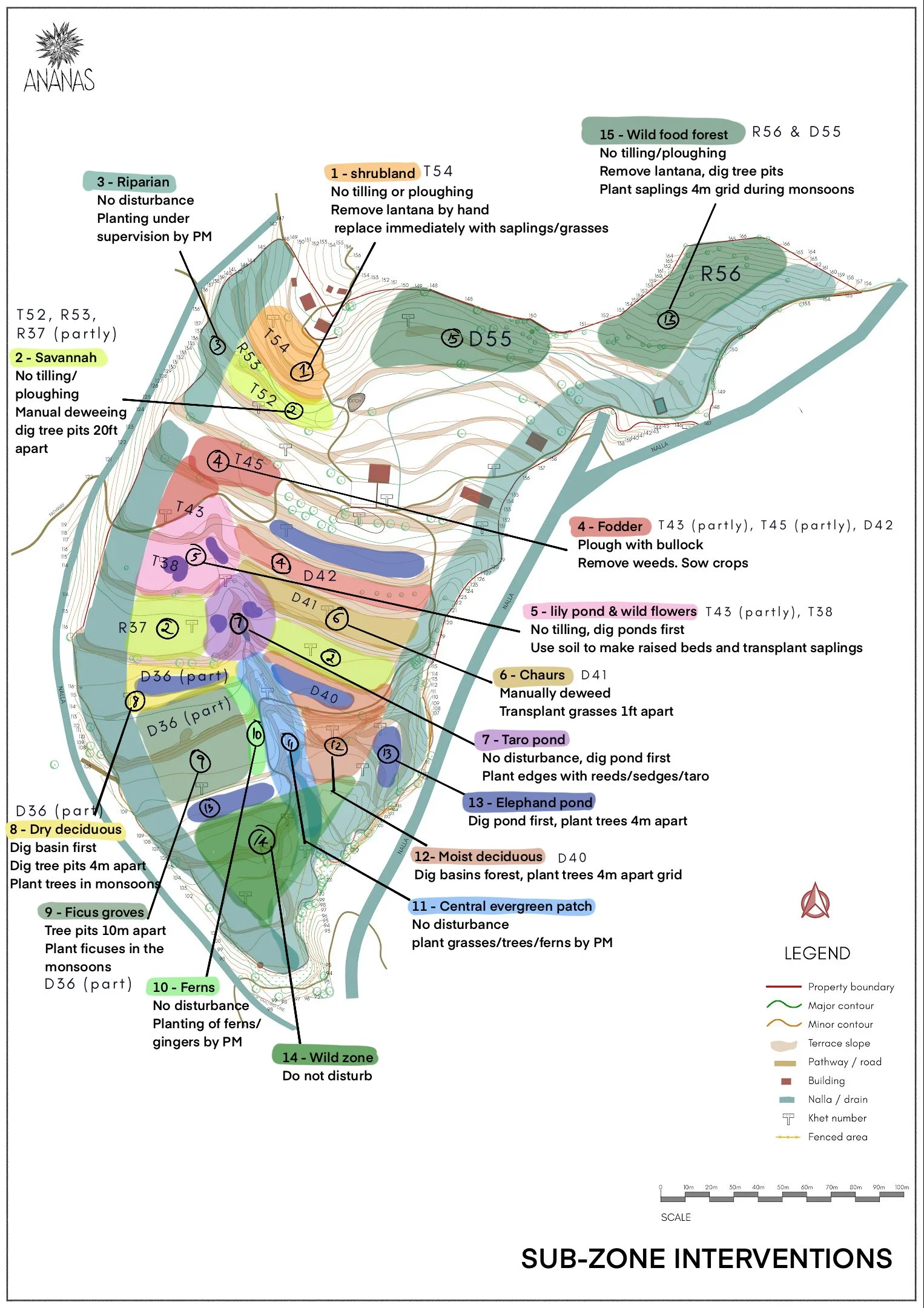
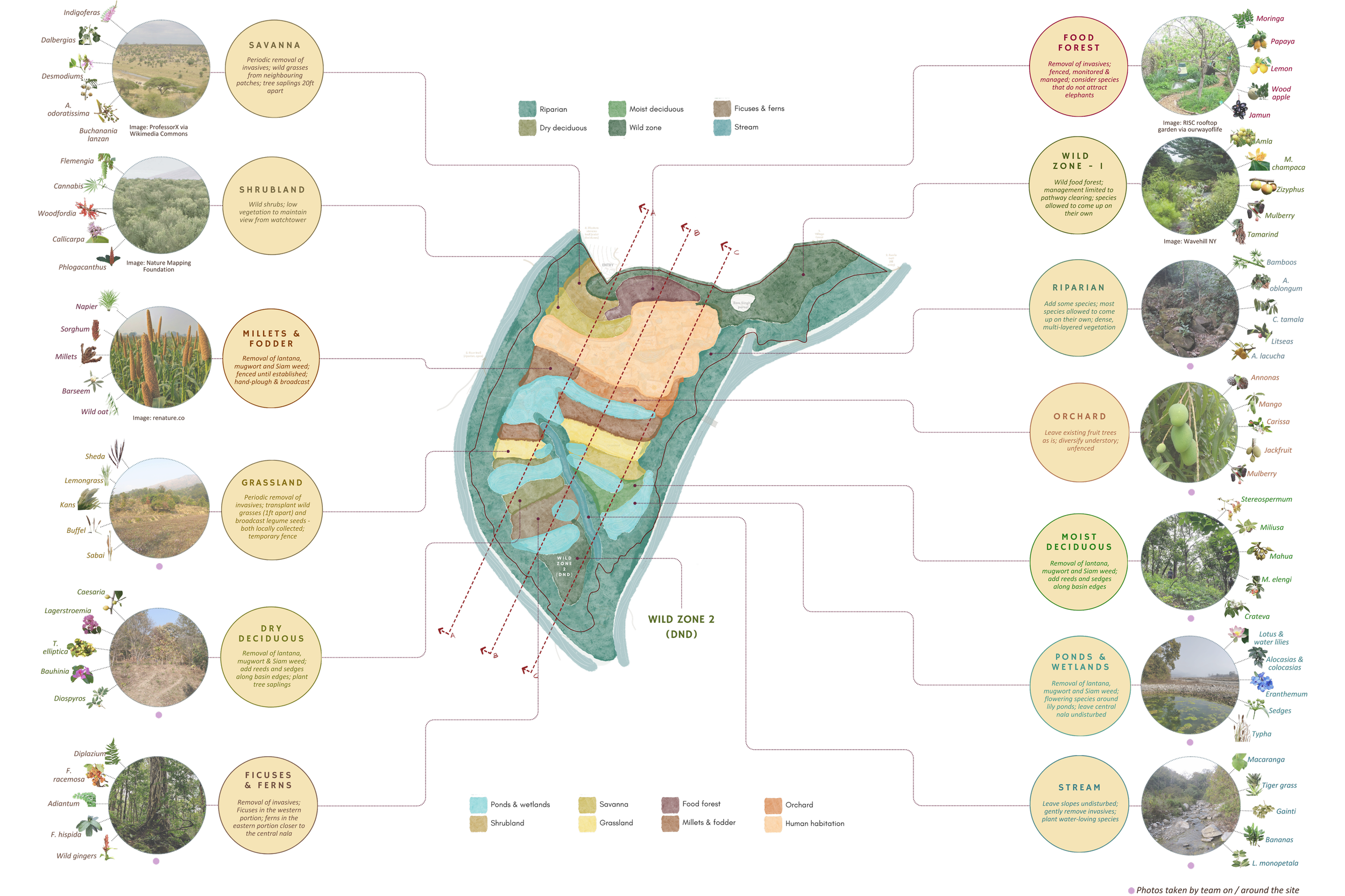
Rewilding zones
Rewilding zone map
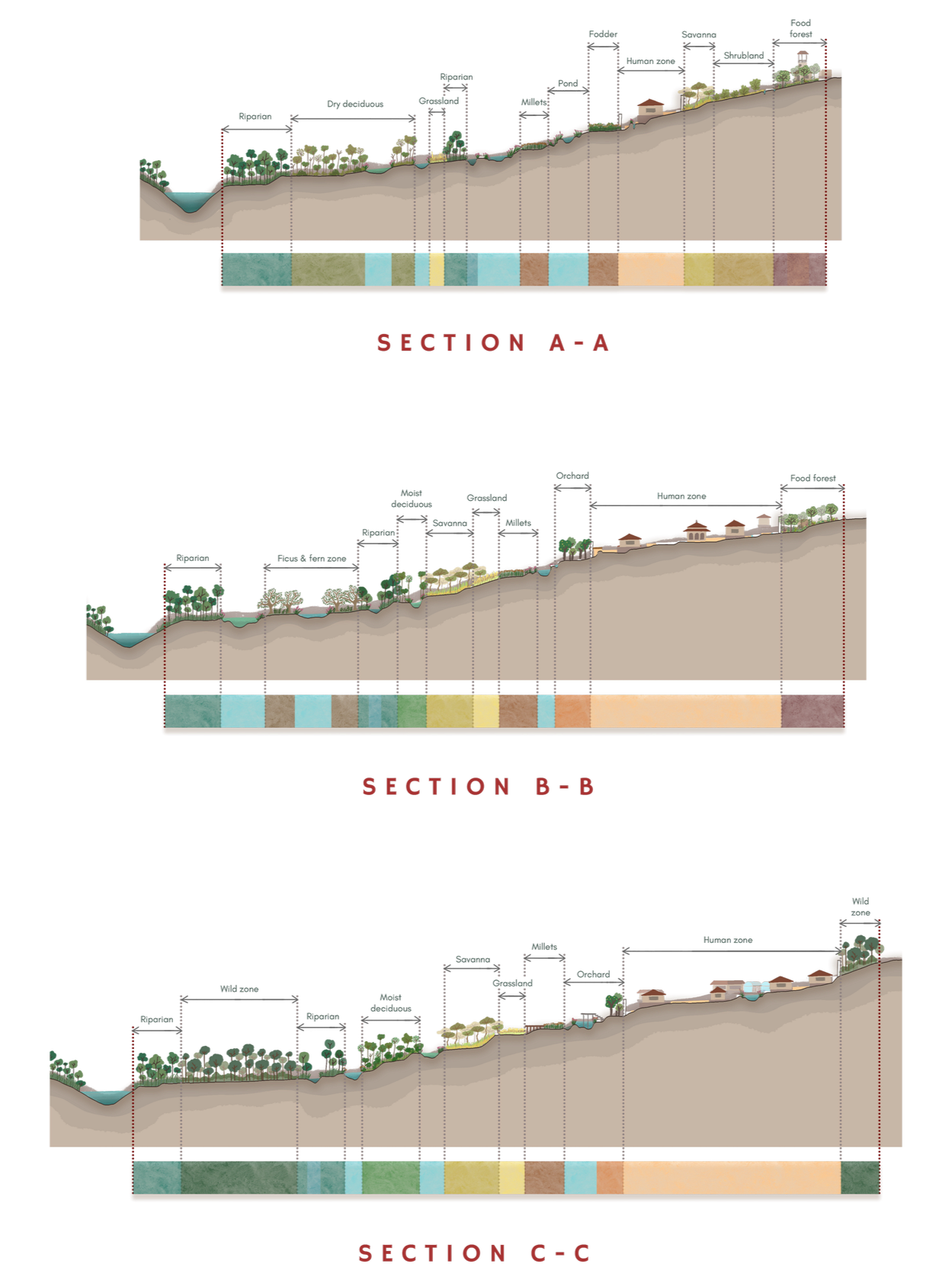
Sections through rewilding zones
The rewilding zones were designed to support distinct communities of flora and fauna. Given that the land was degraded and terraced, these existing terraces were used as natural boundaries between ecological zones.
Design cues were drawn from the surrounding forests, including dense canopy patches, grassy clearings, and seasonal as well as perennial streams.
The faunal species matrix (depicted below) evaluates which zones could support specific species and to monitor ecological progress over time.
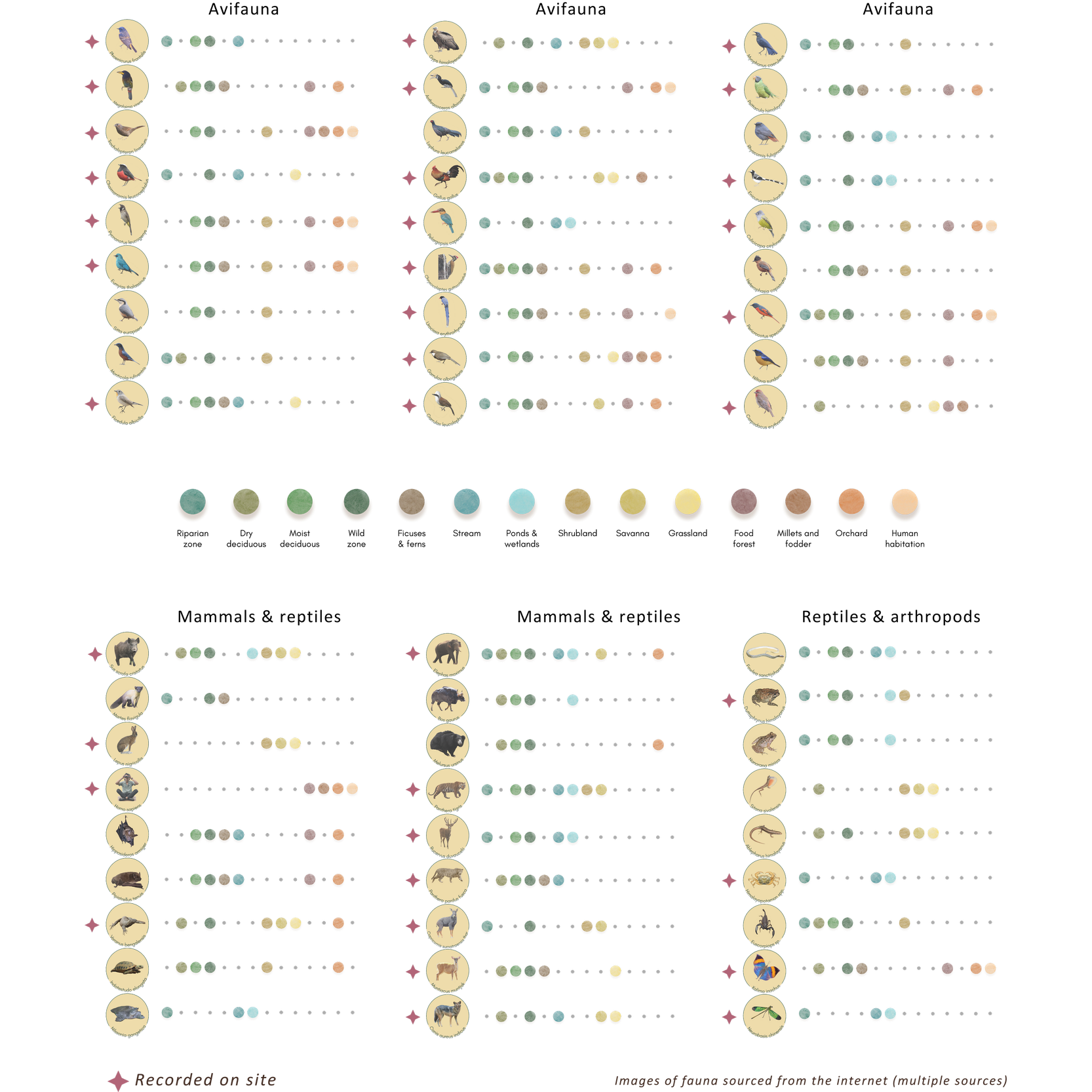
Fauna matrix
Site photos
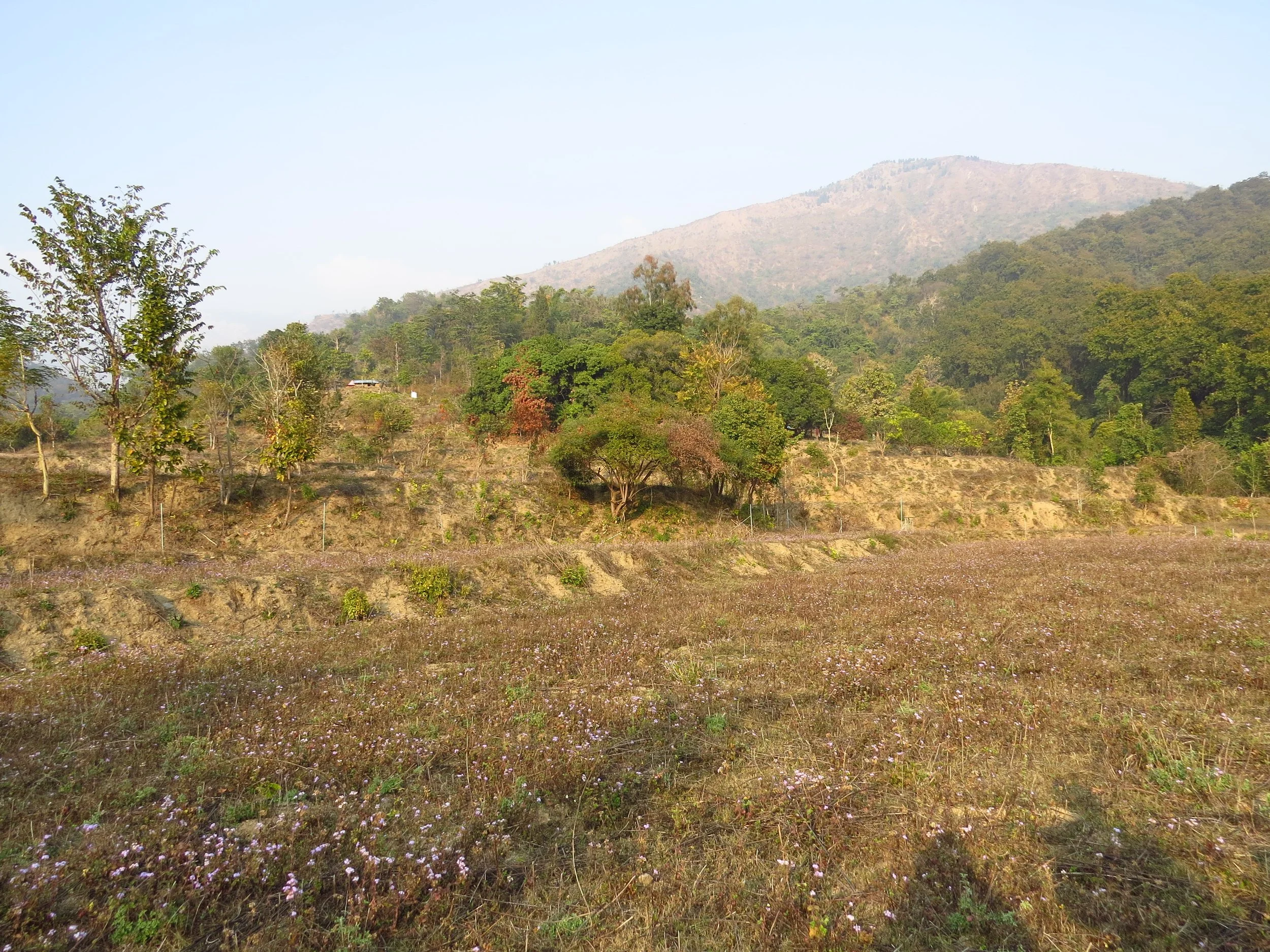
View of site - terraced, degraded land (dry season)
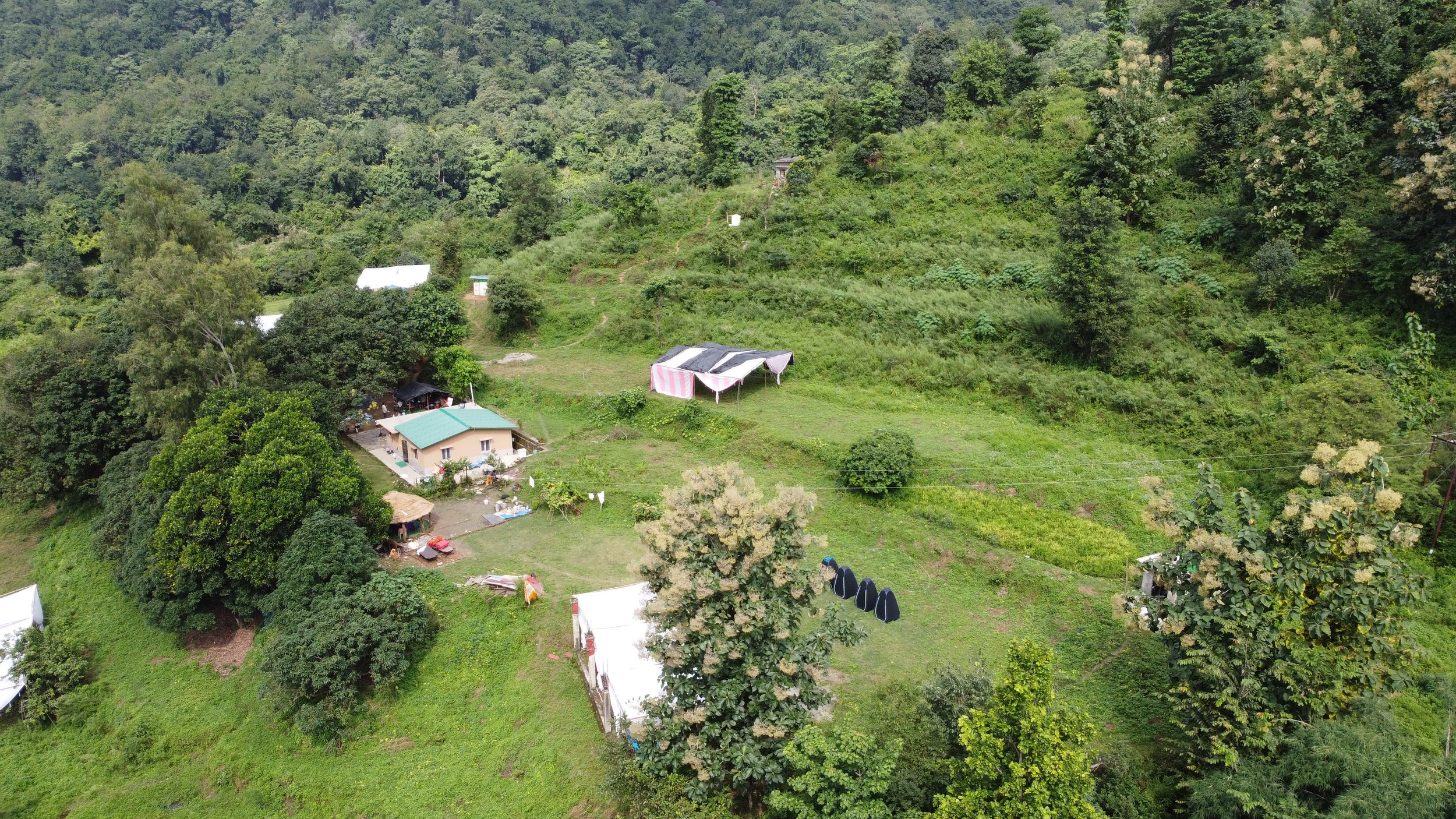
Drone view of site during the monsoons
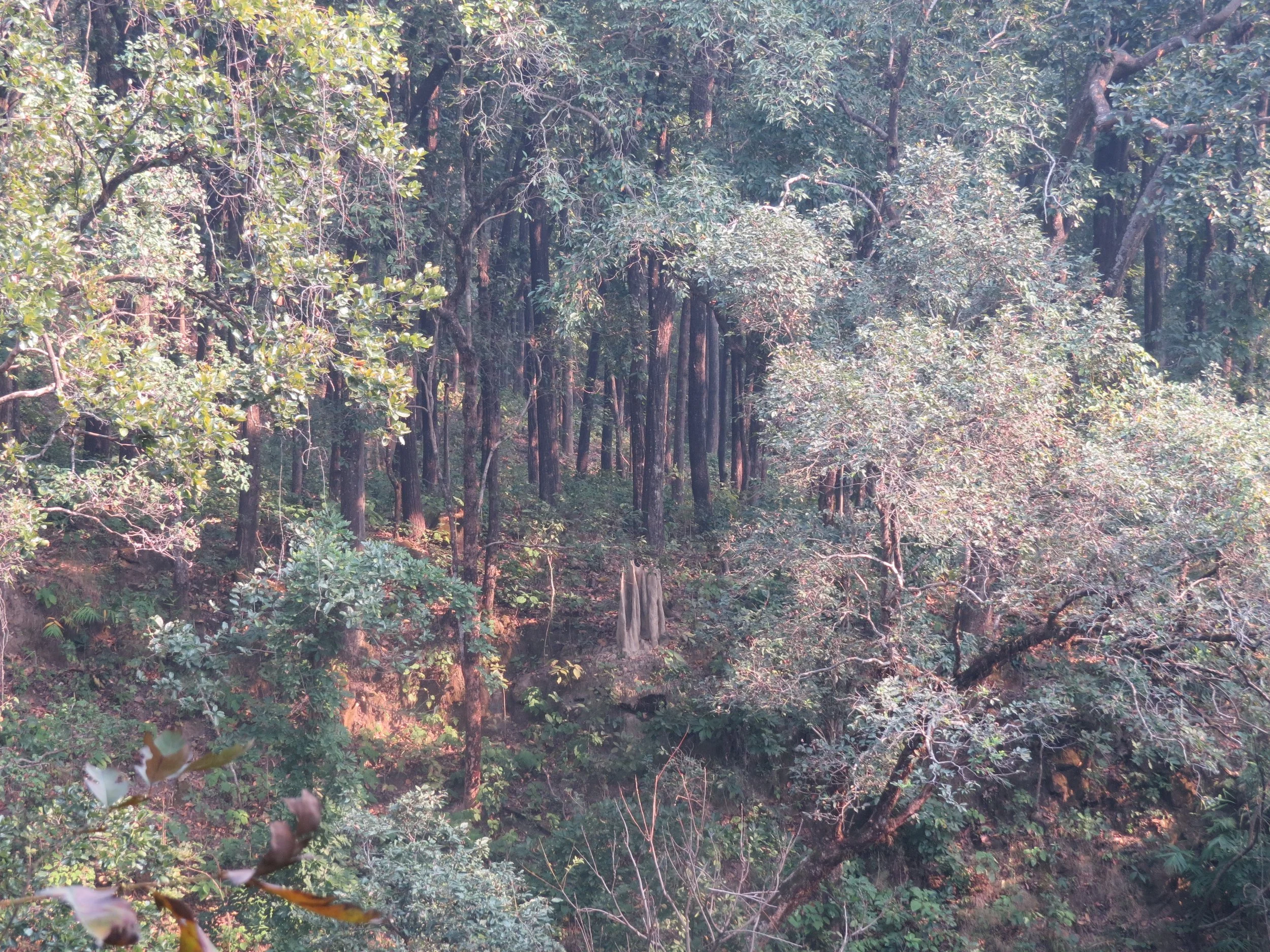
Sal forest across nala
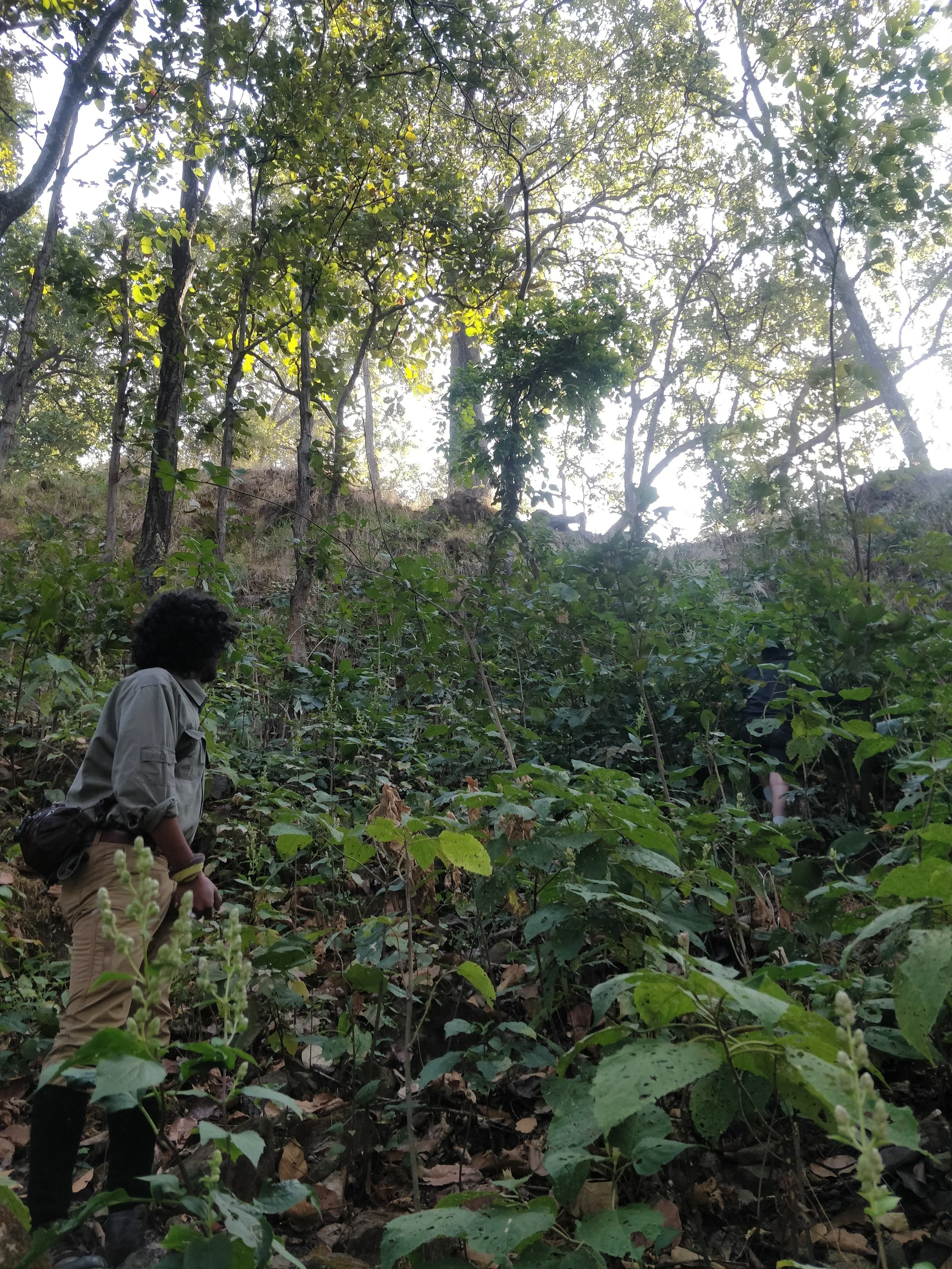
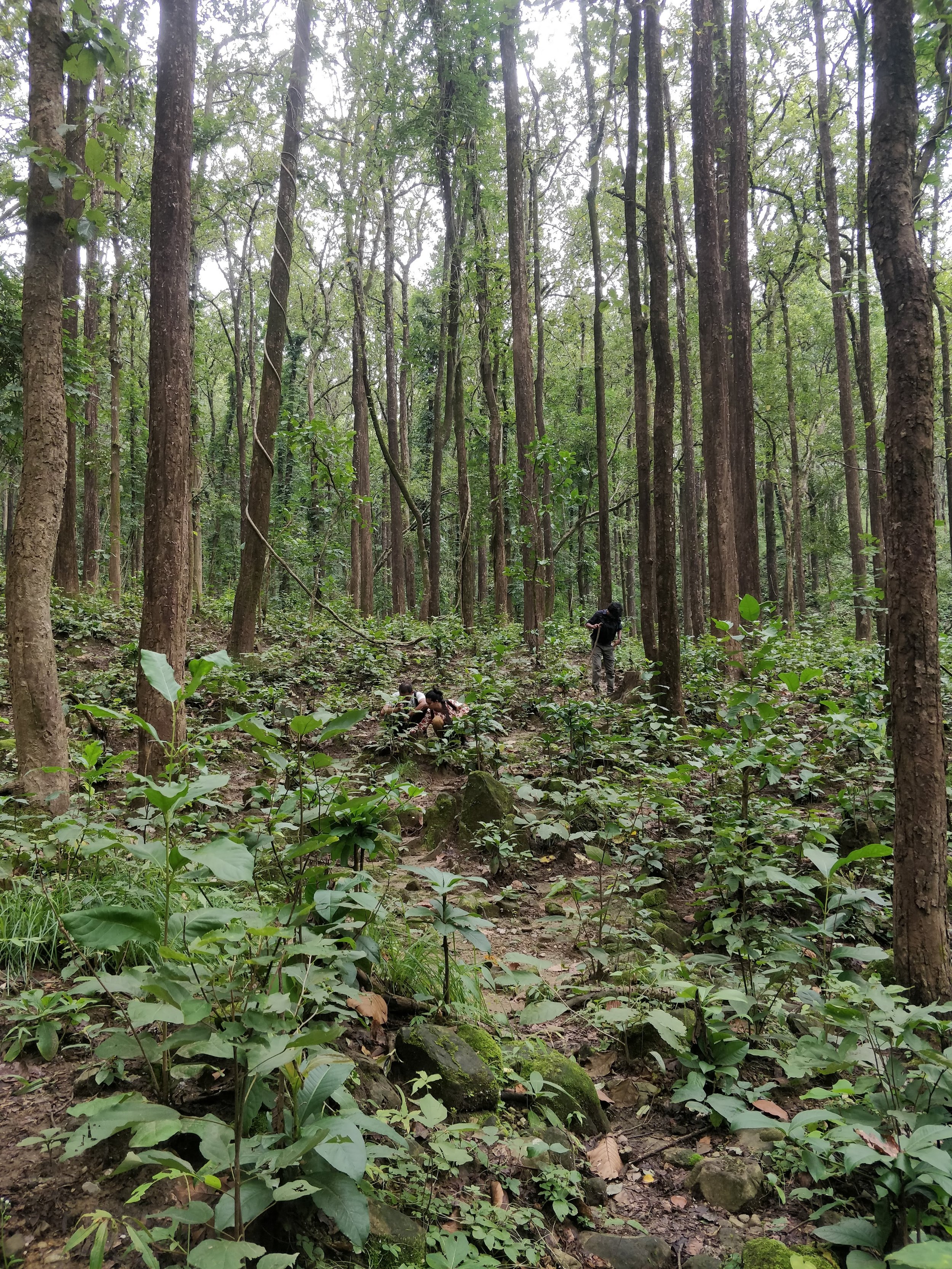
Sal forest with steep slopes - one of the reference ecosystems
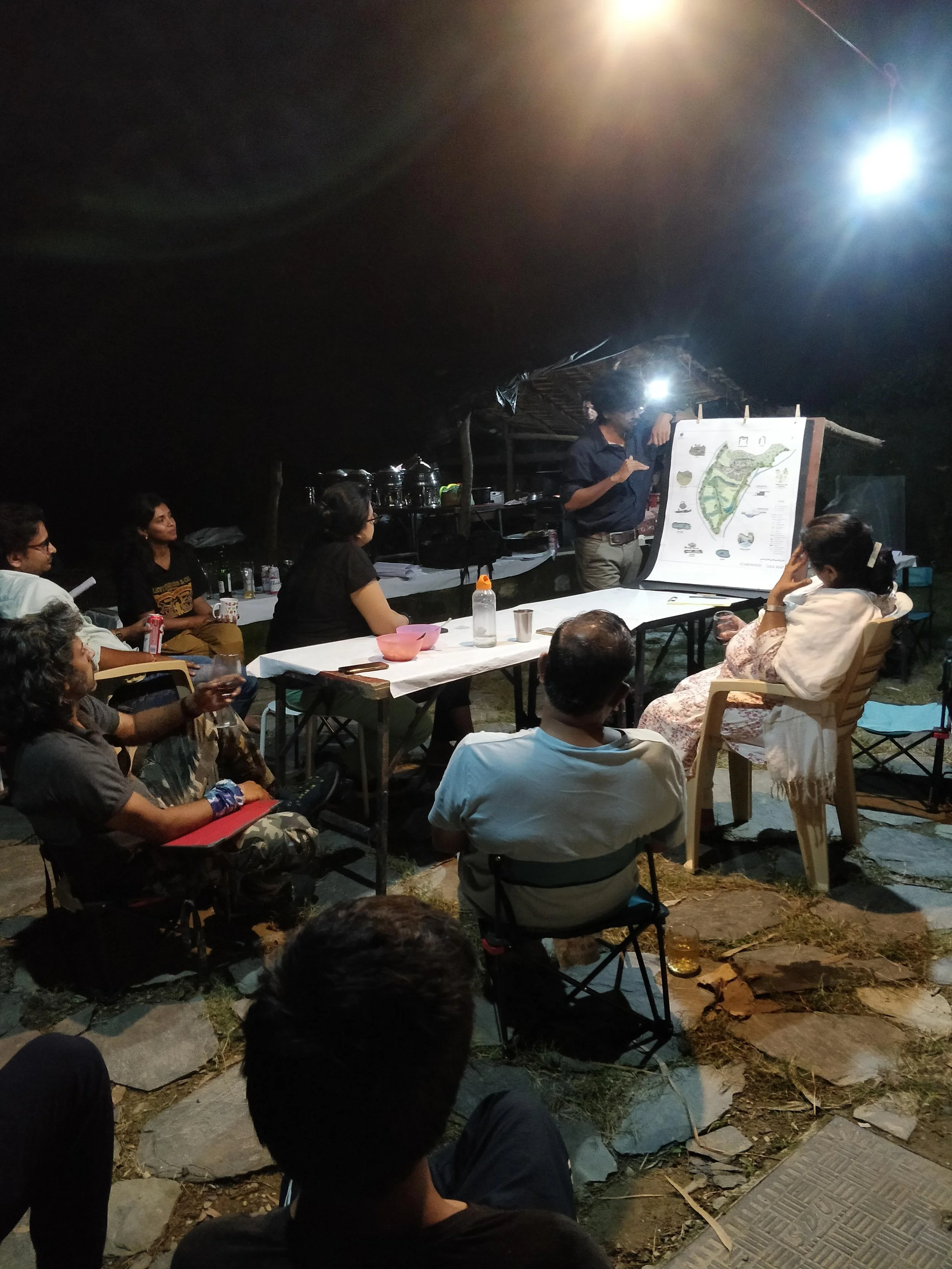
Design presentations on site
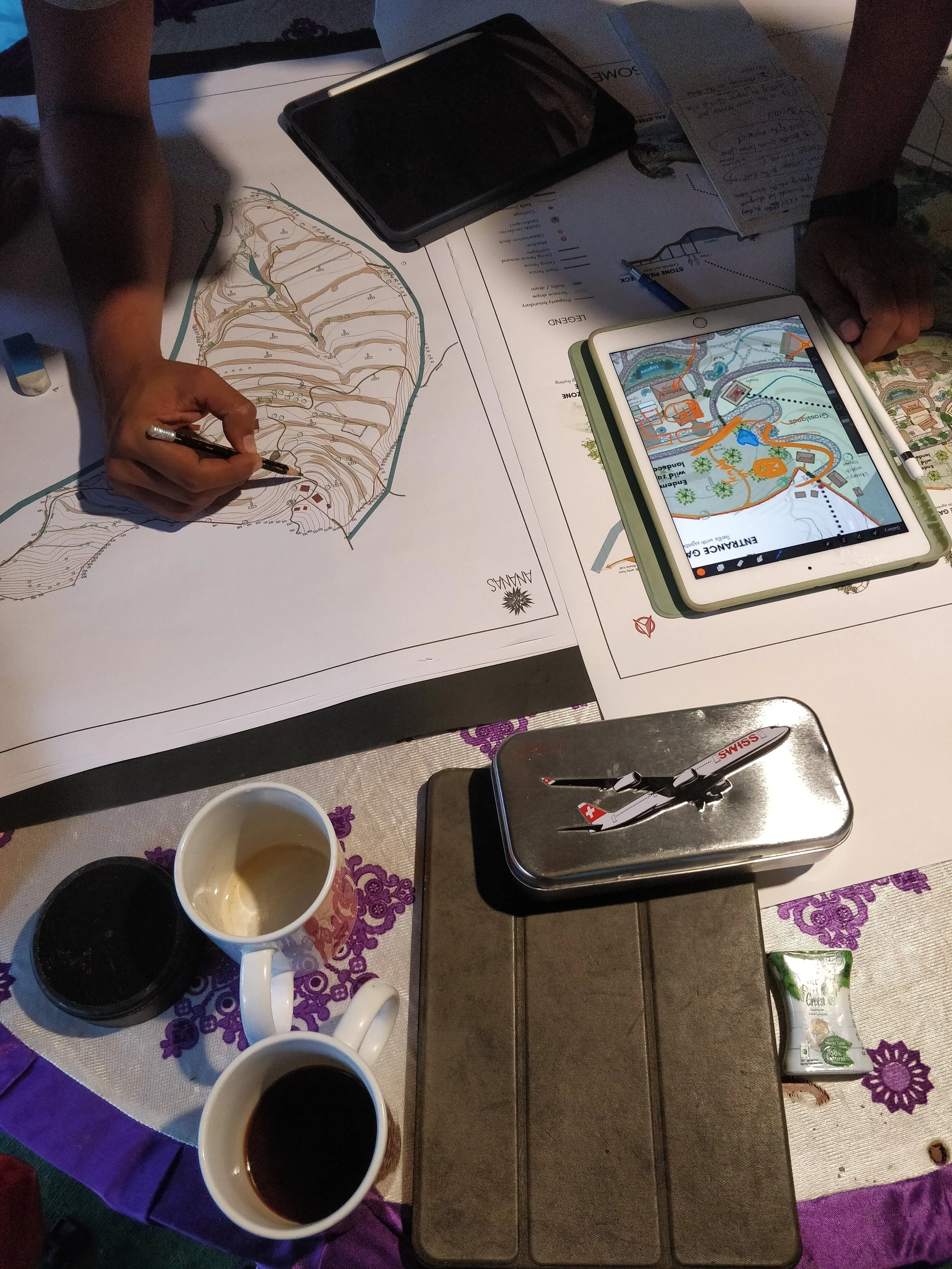
Zoning ideation
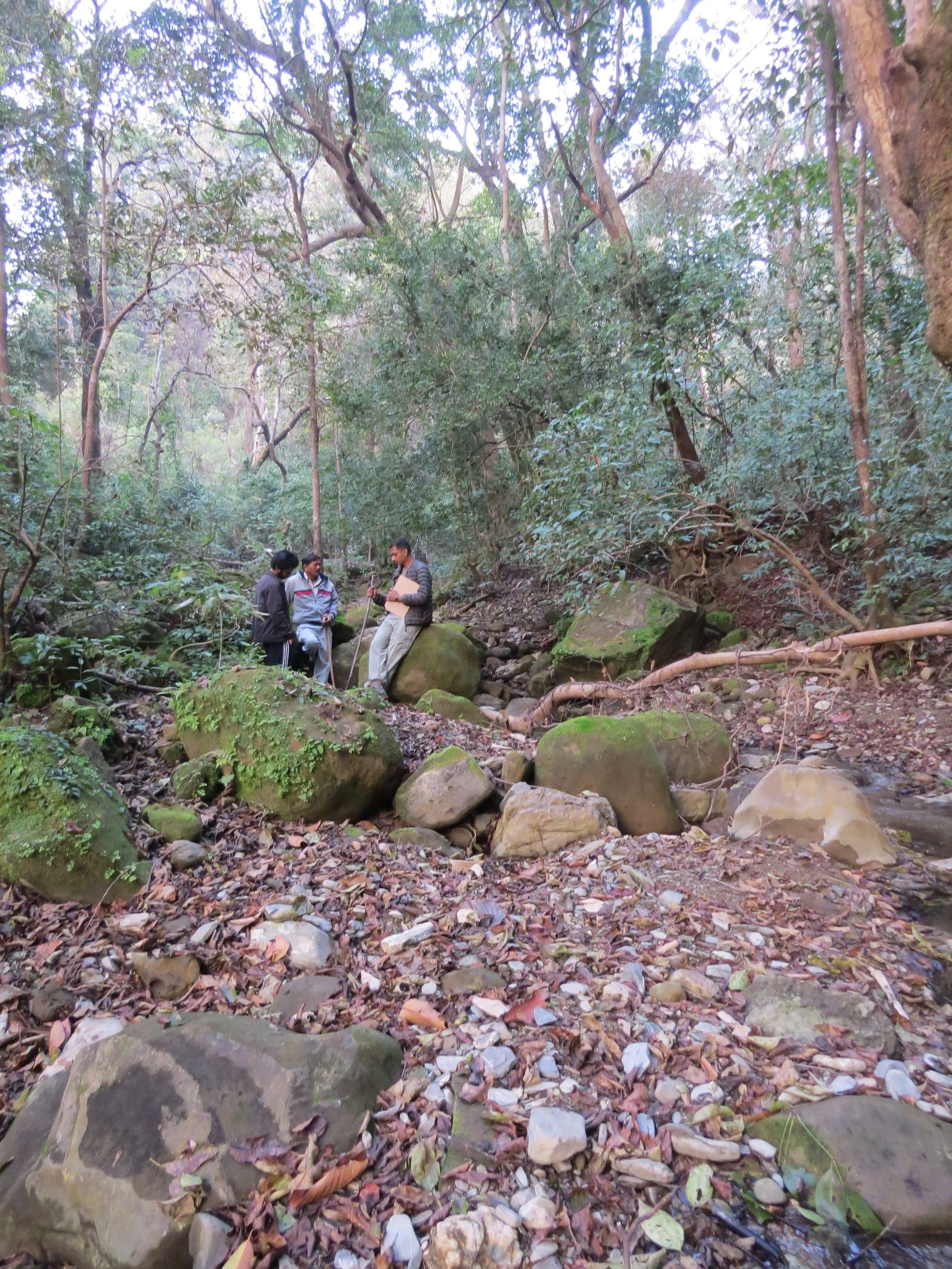
Exploring the nala
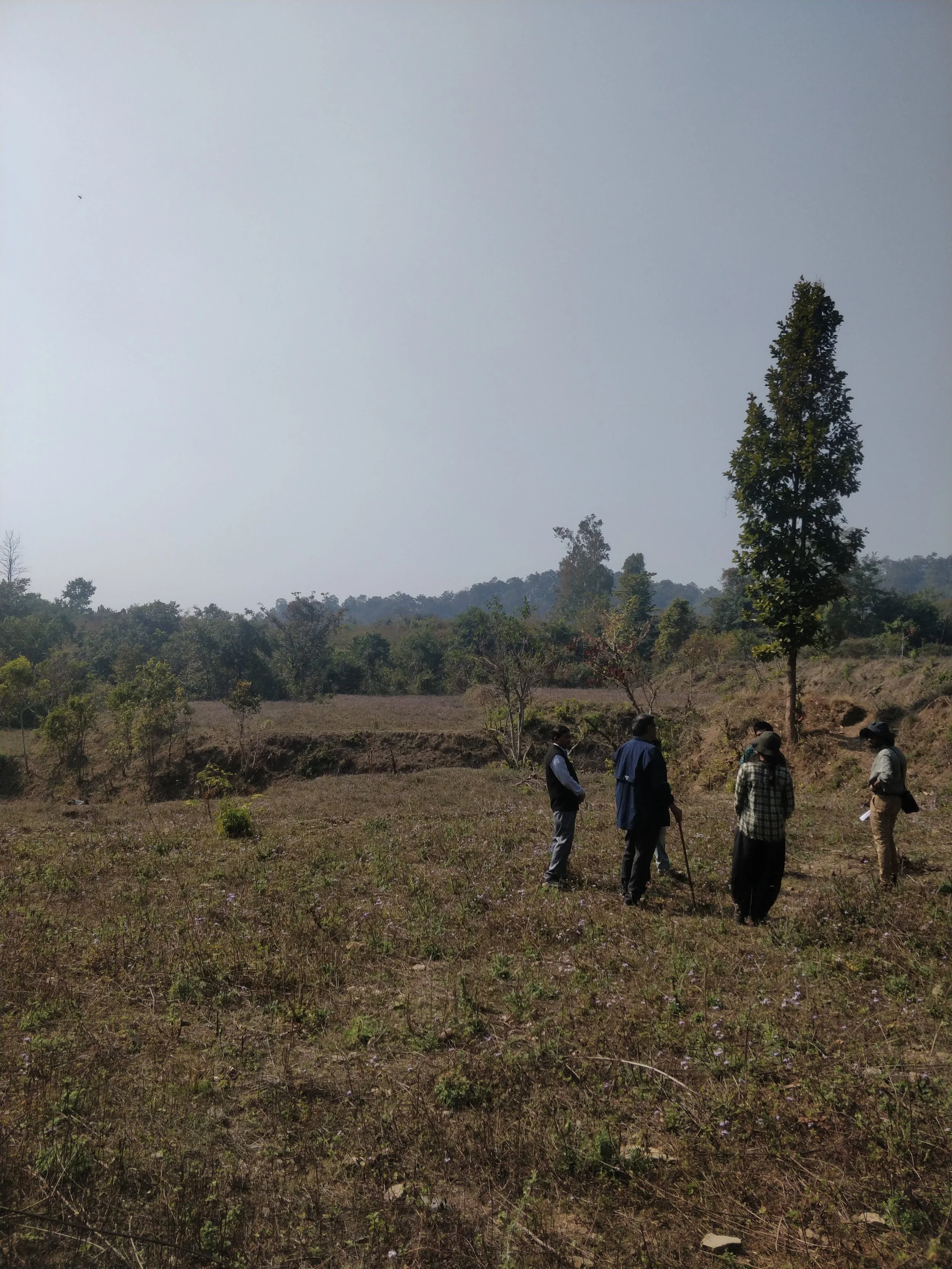
Site meetings
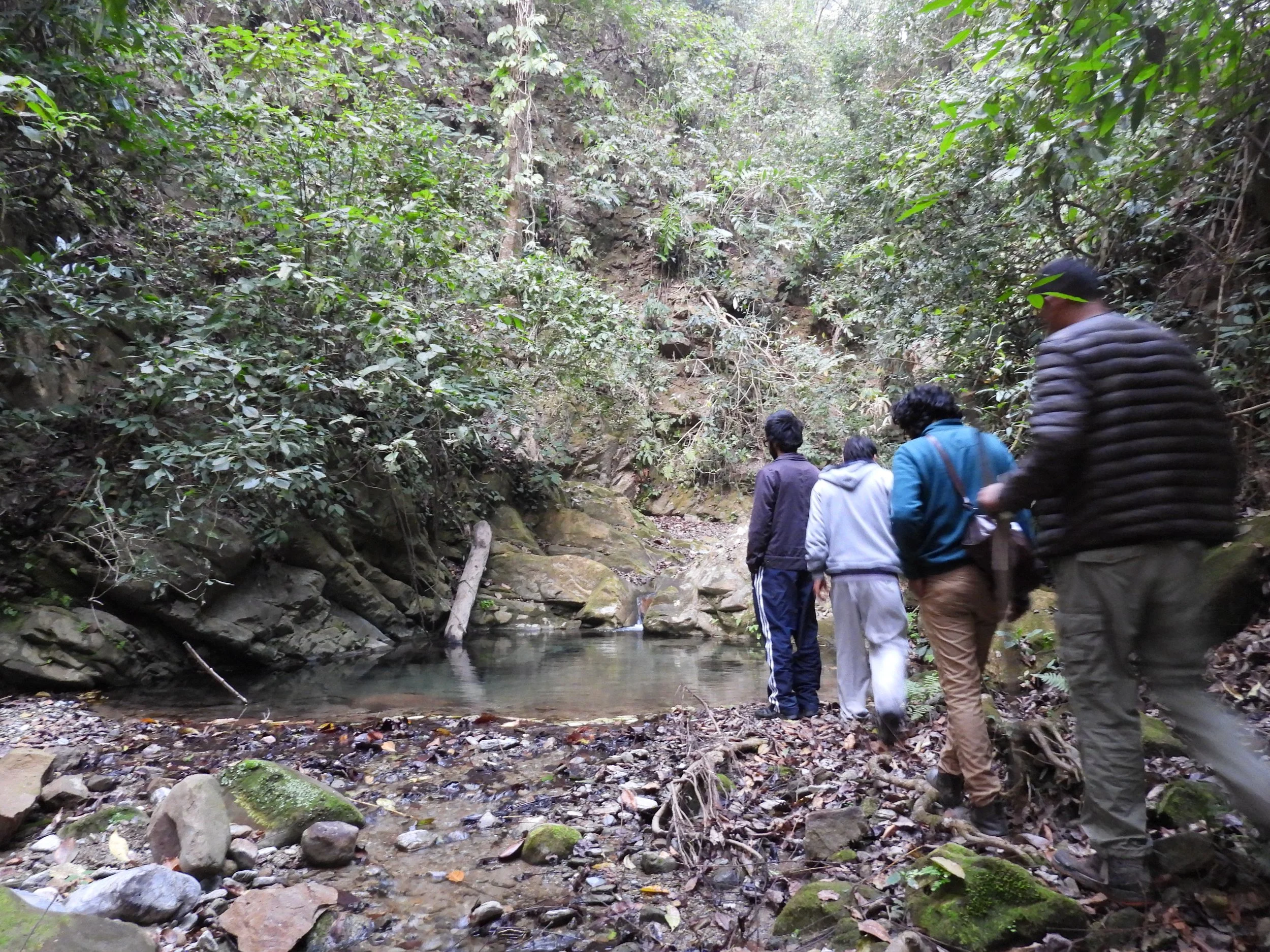
Exploring the nala - wading through a tiger pool
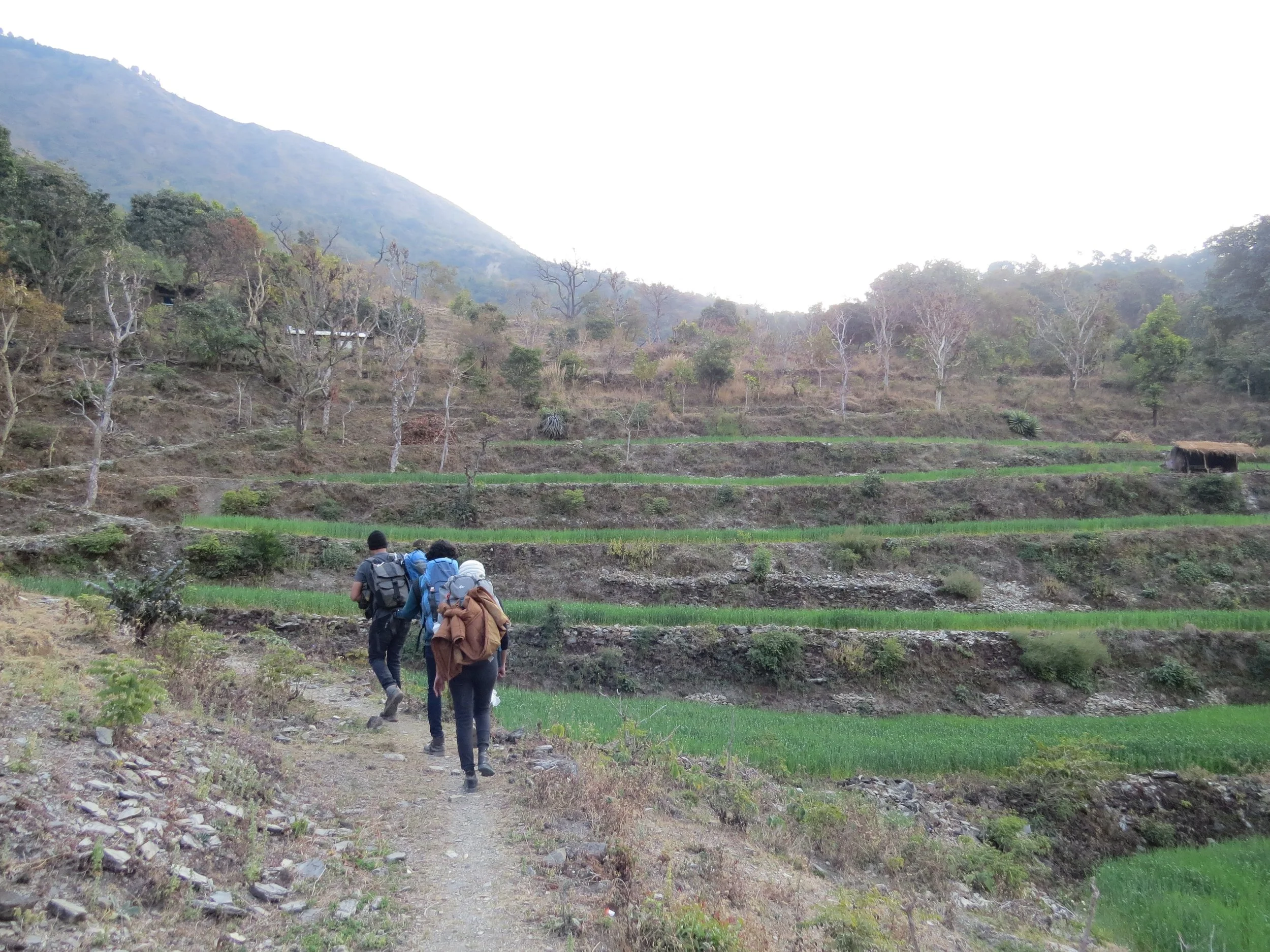
Trekking to site
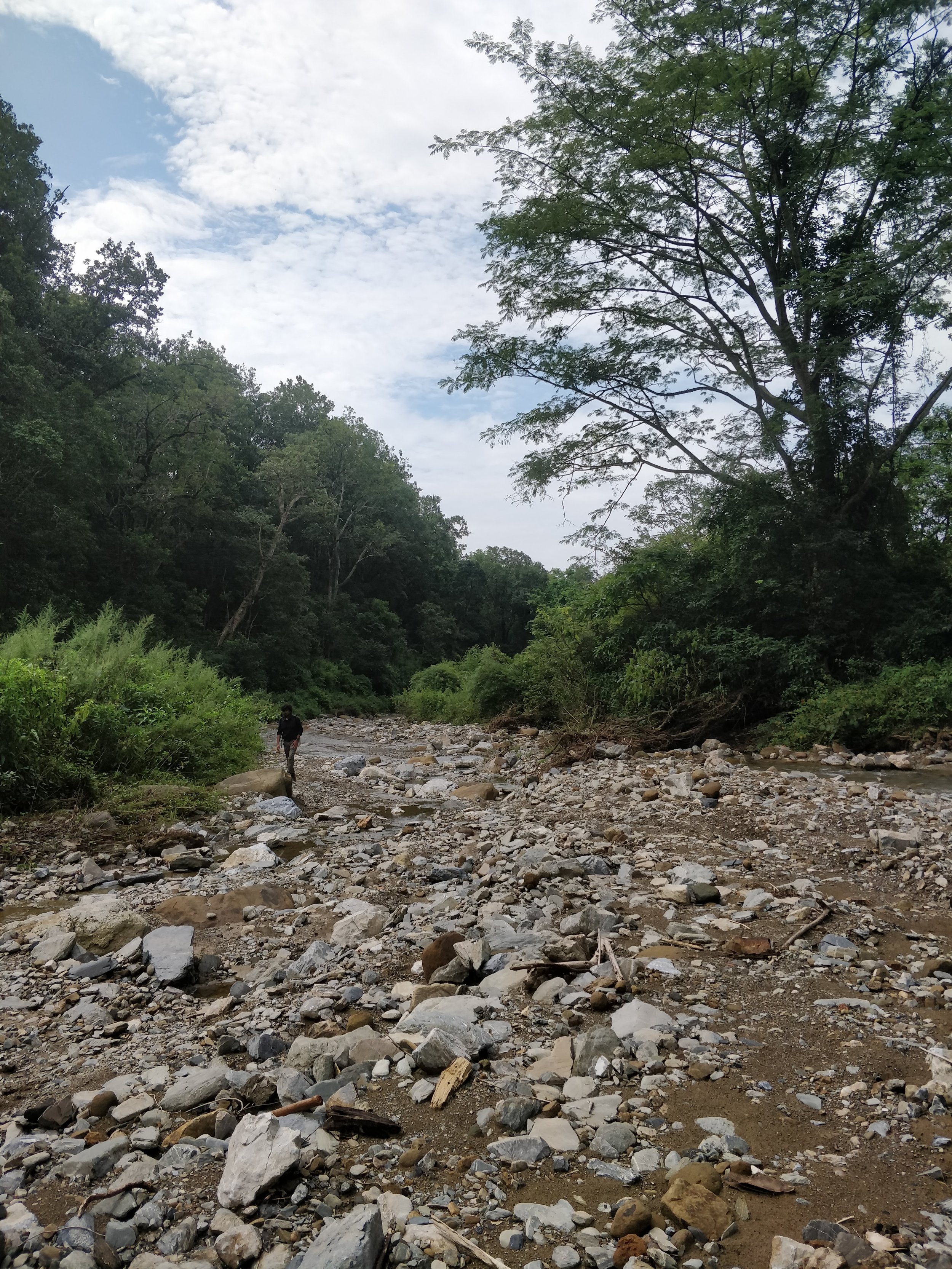
Stream bed southwest of the land
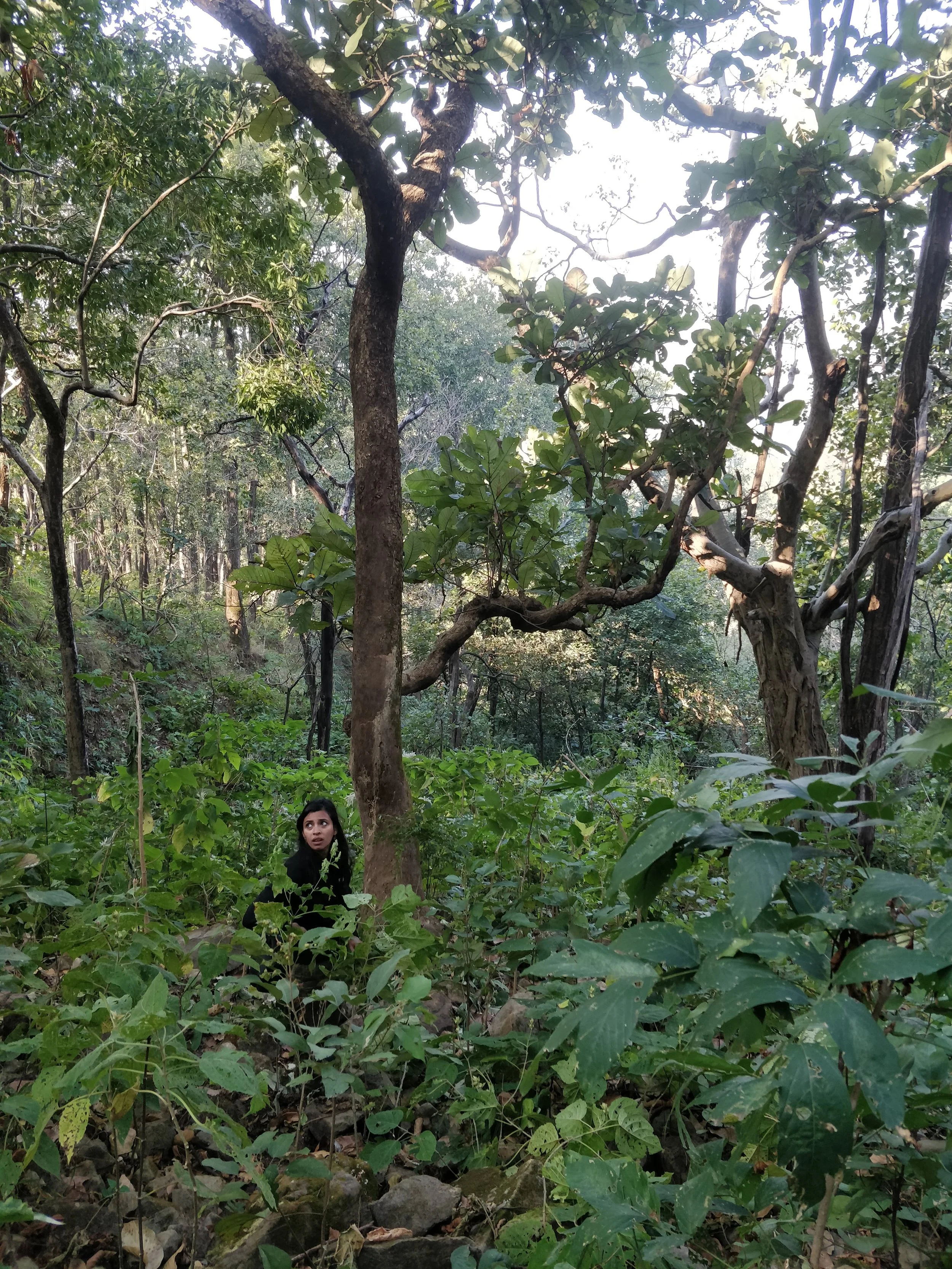
Exploring the dense Sal jungles
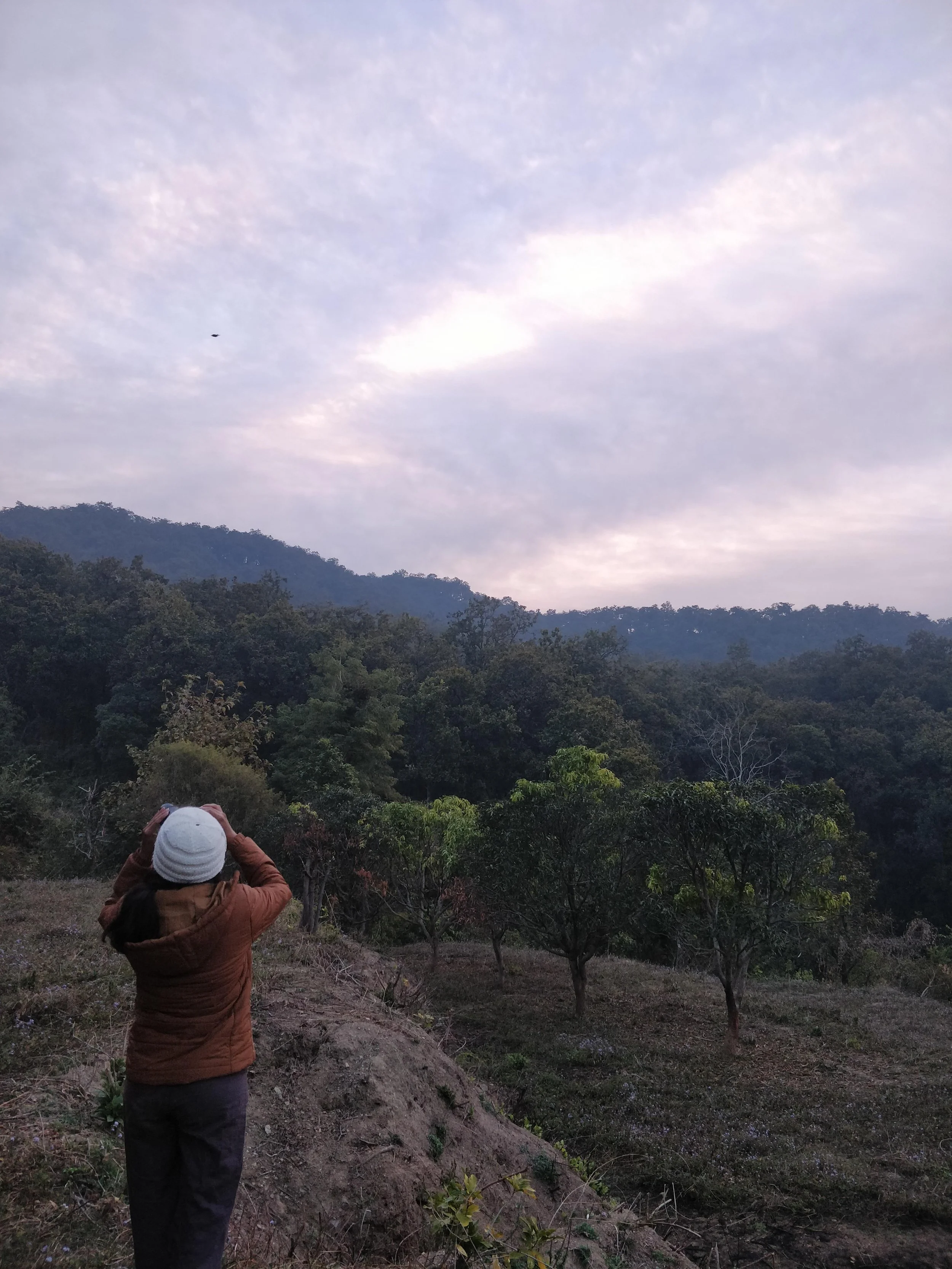
Early morning birding
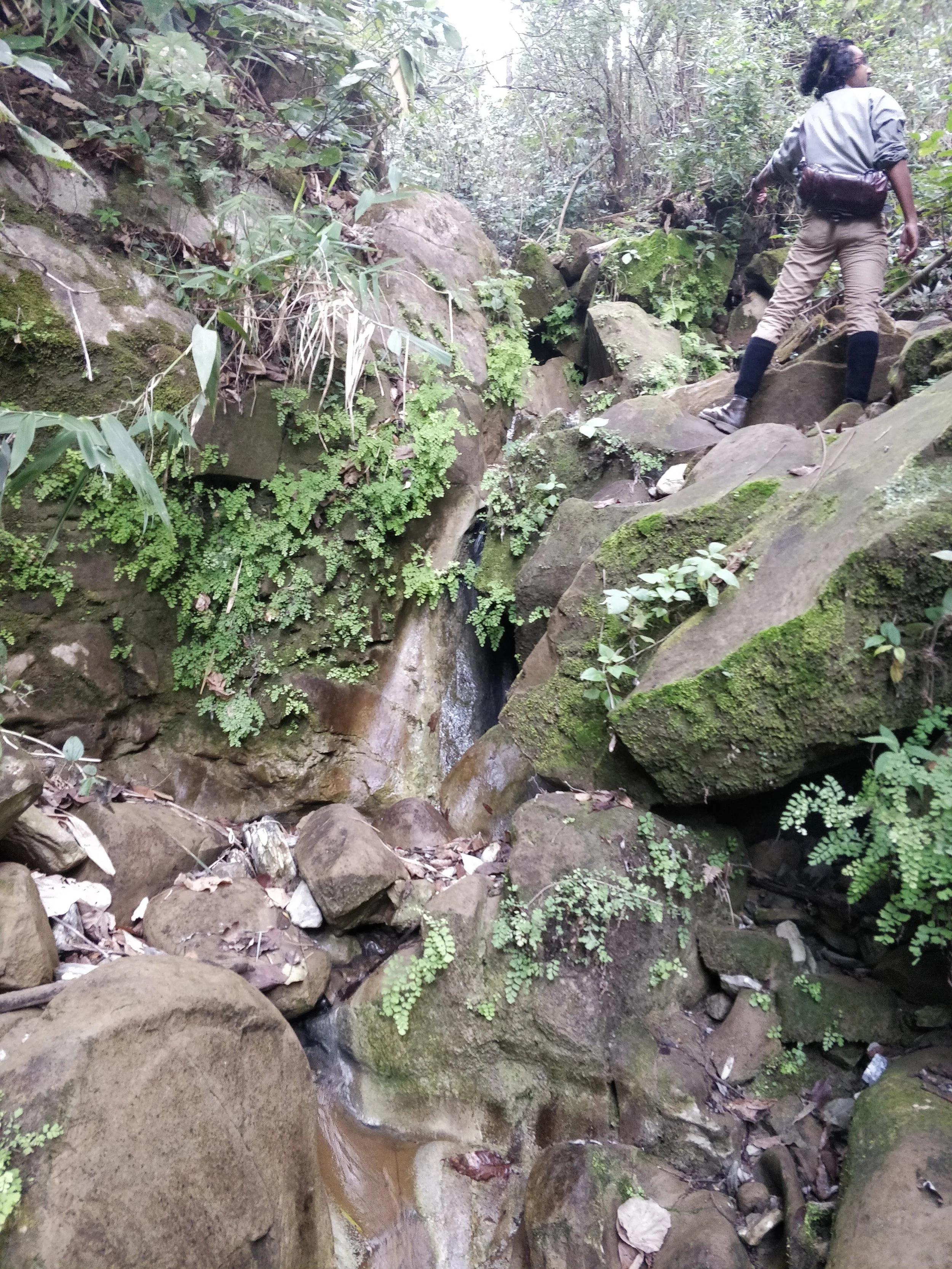
Exploring the nala - data collection on flow rates
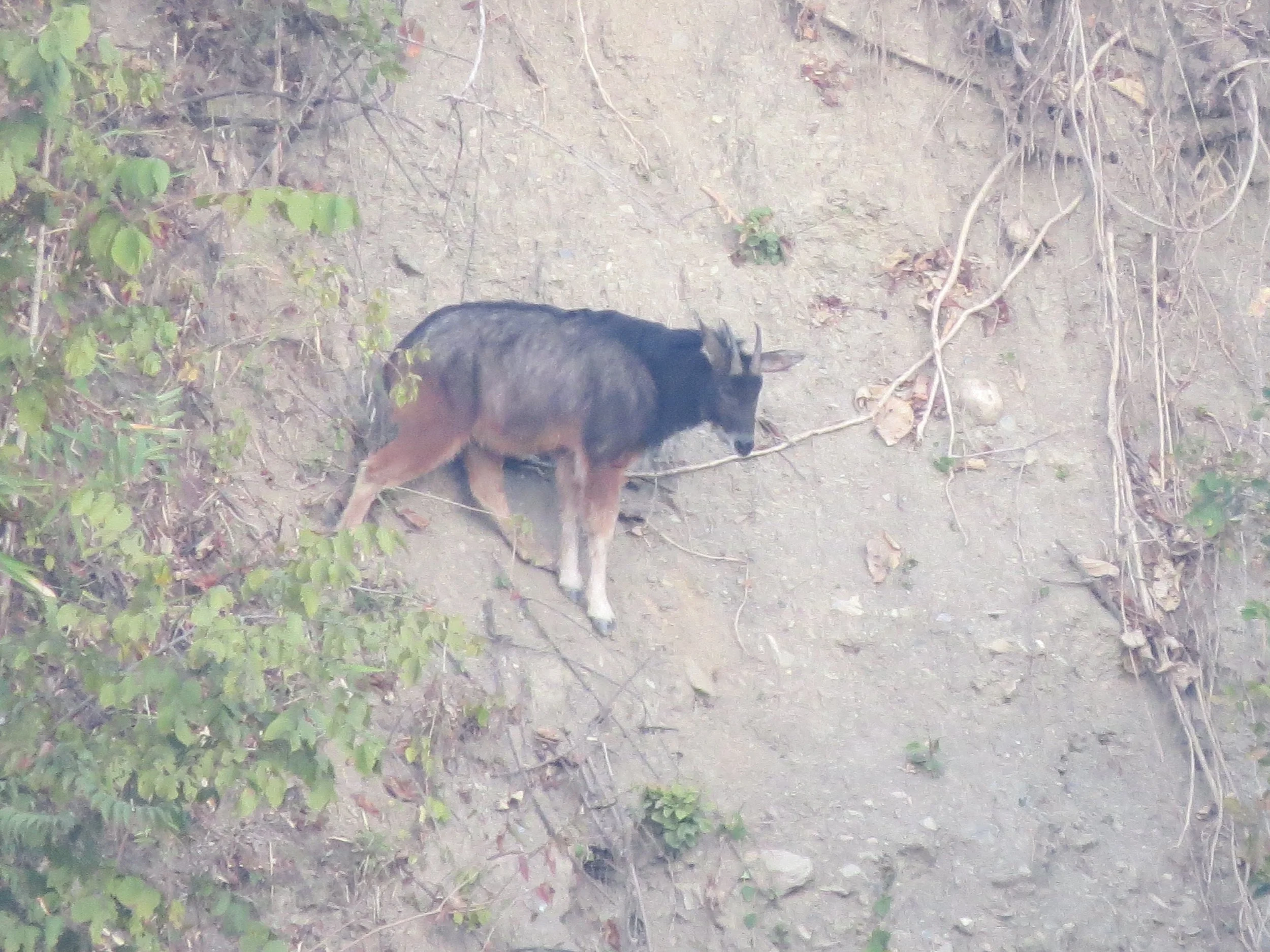
Himalayan Serow (rarely found at these elevations)
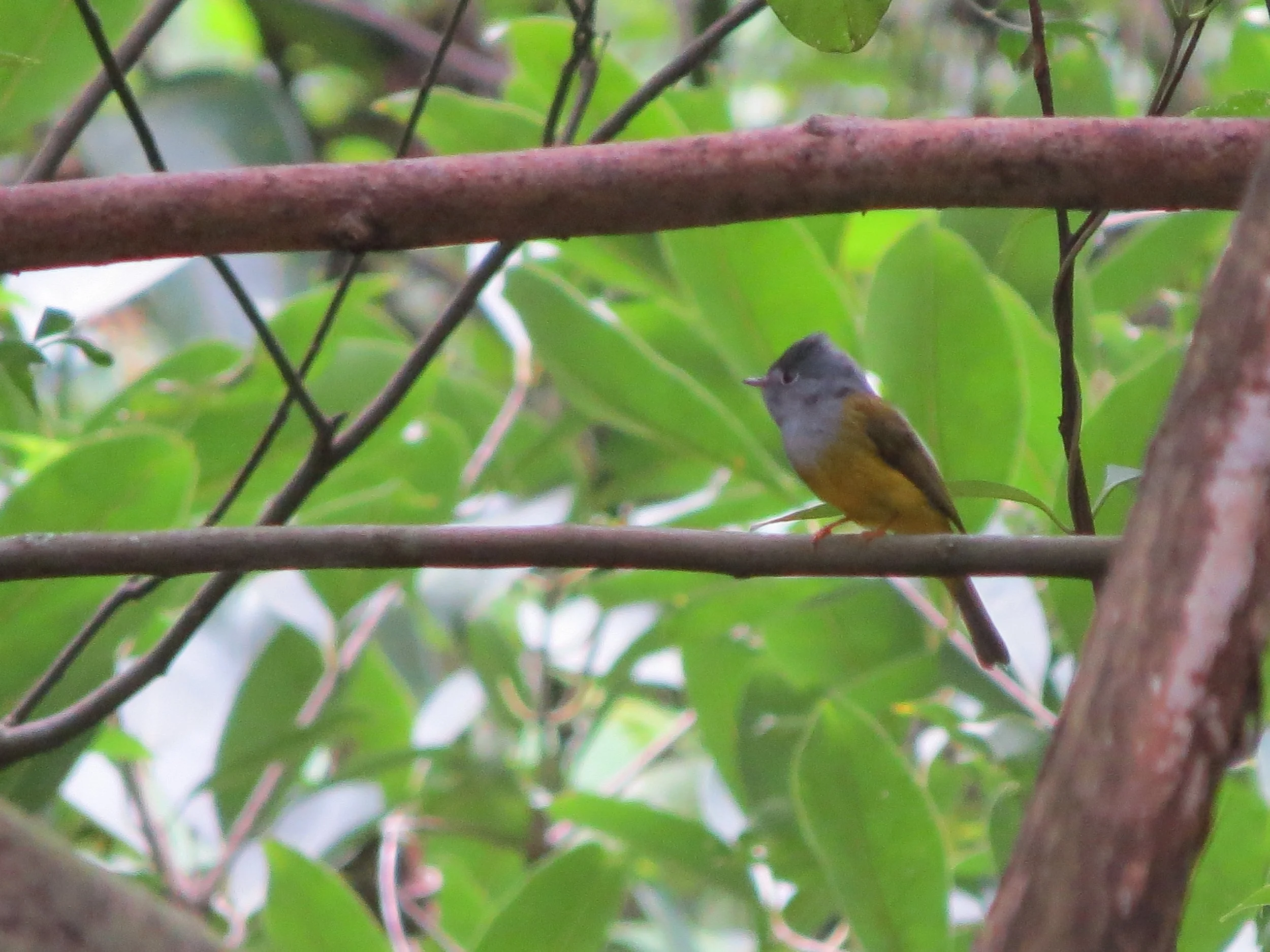
Canary-flycatcher
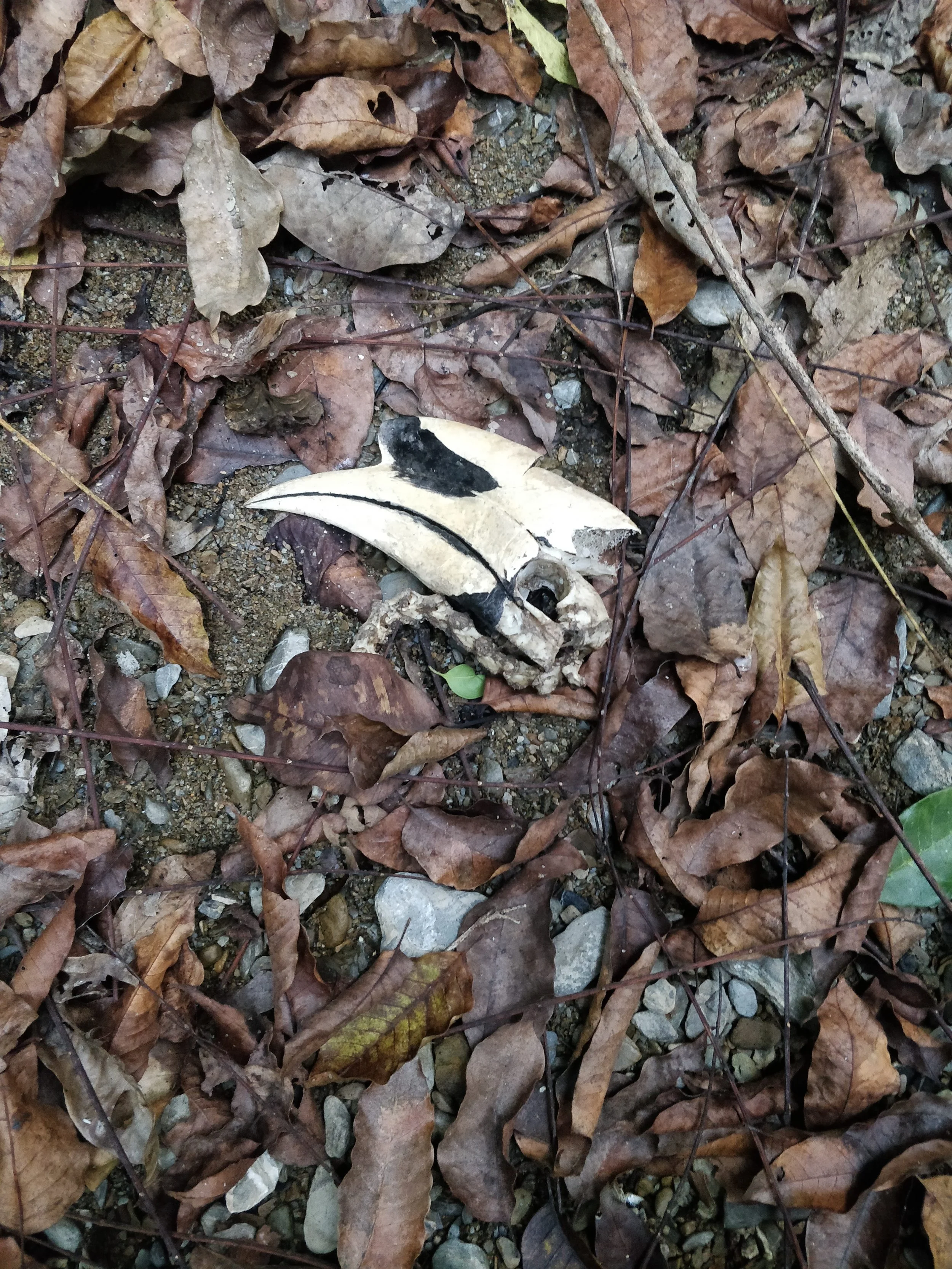
Great hornbill carcass
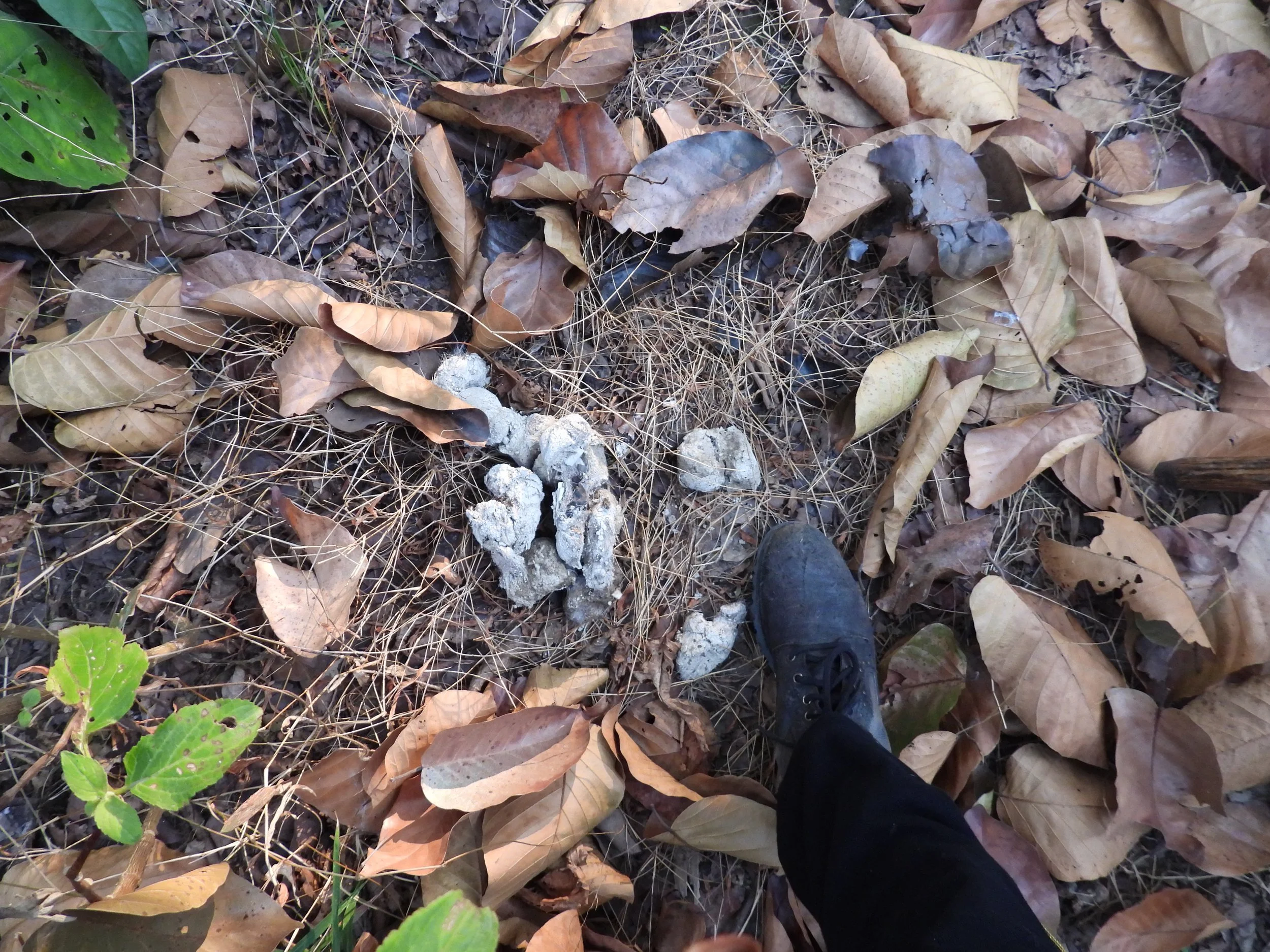
Tiger scat
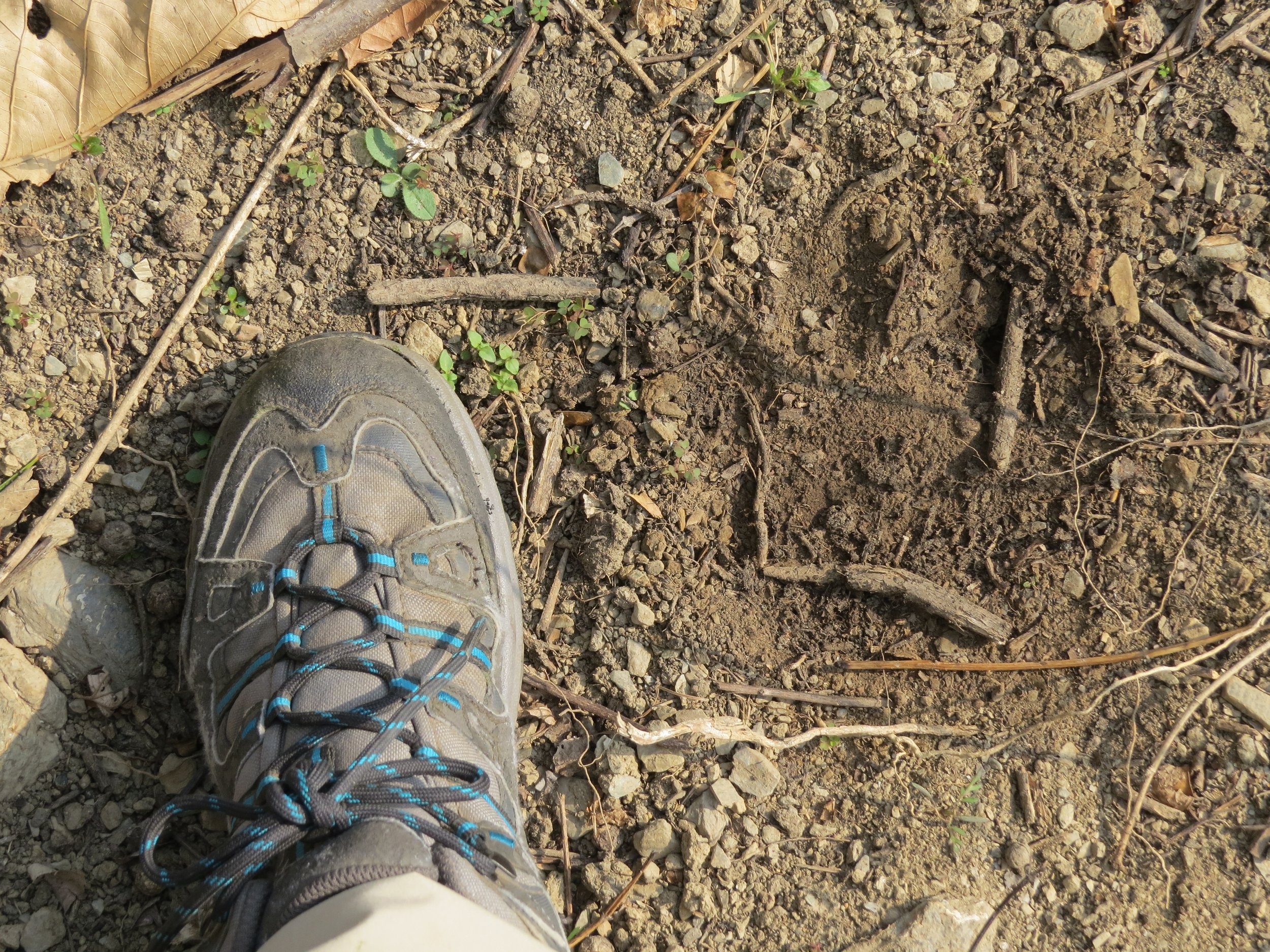
Leopard pugmark
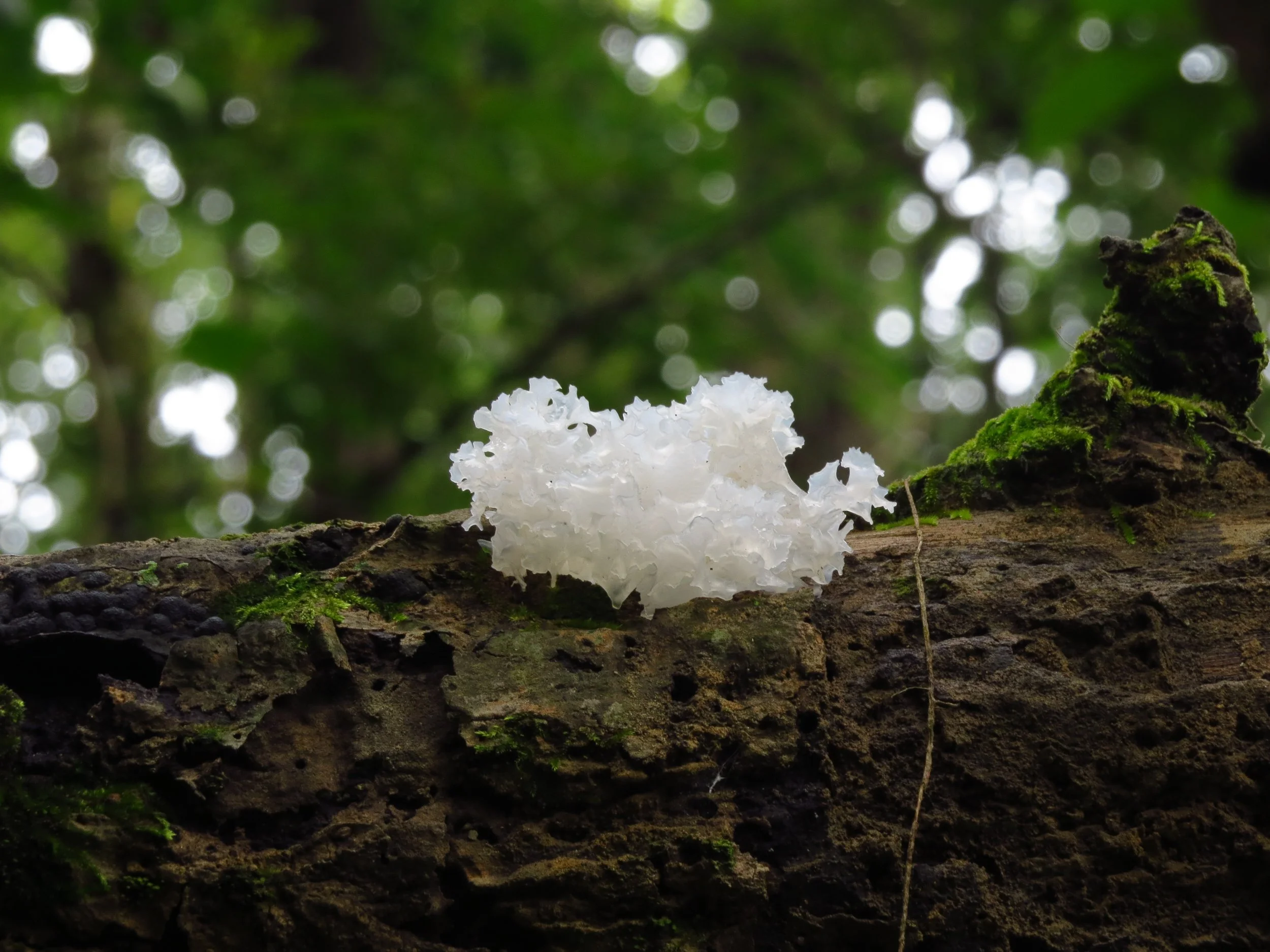
Jelly fungus
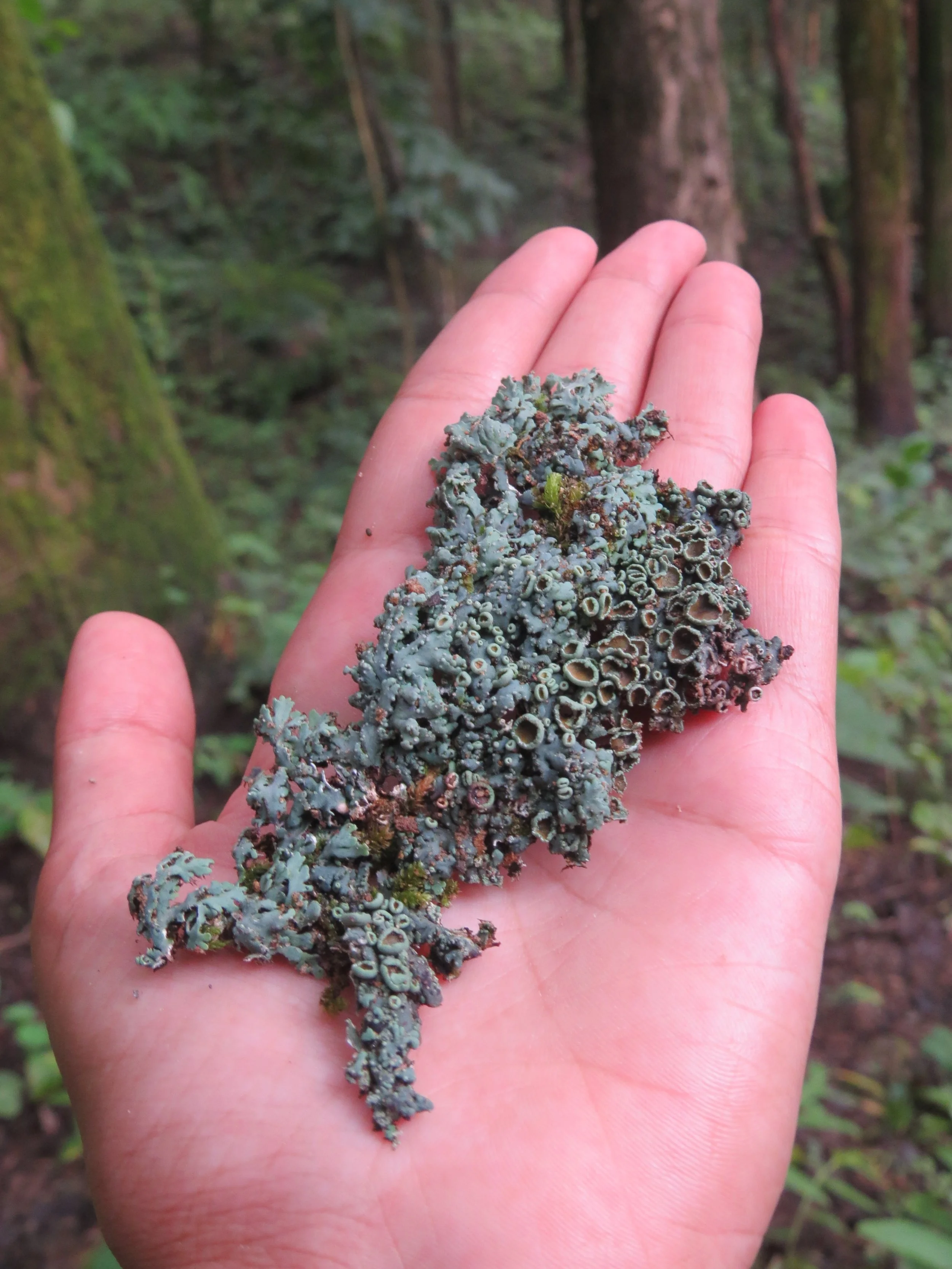
Lichens
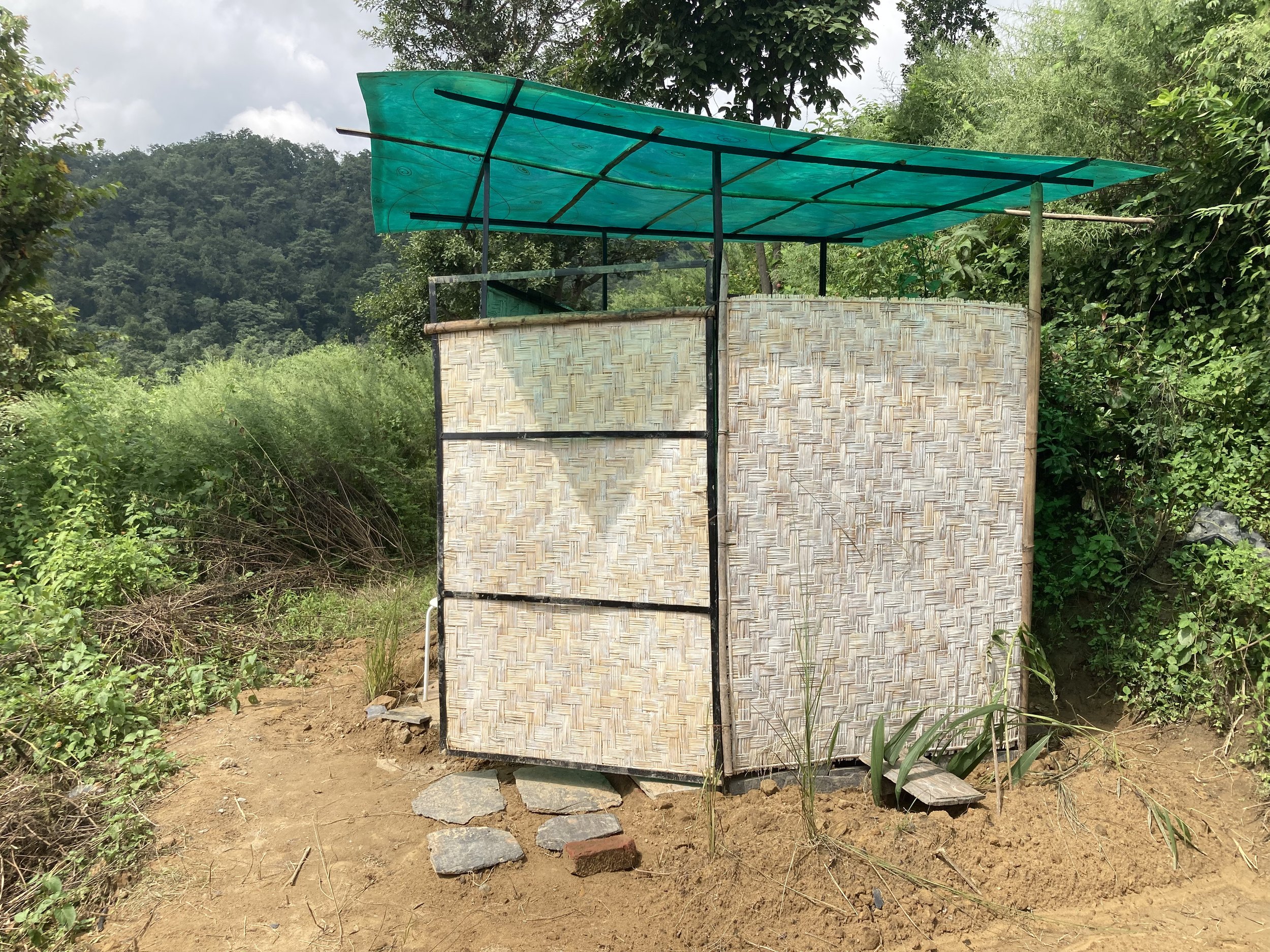
Compost toilet (design / execution by Nishanth Seth and Mandeep Singh)
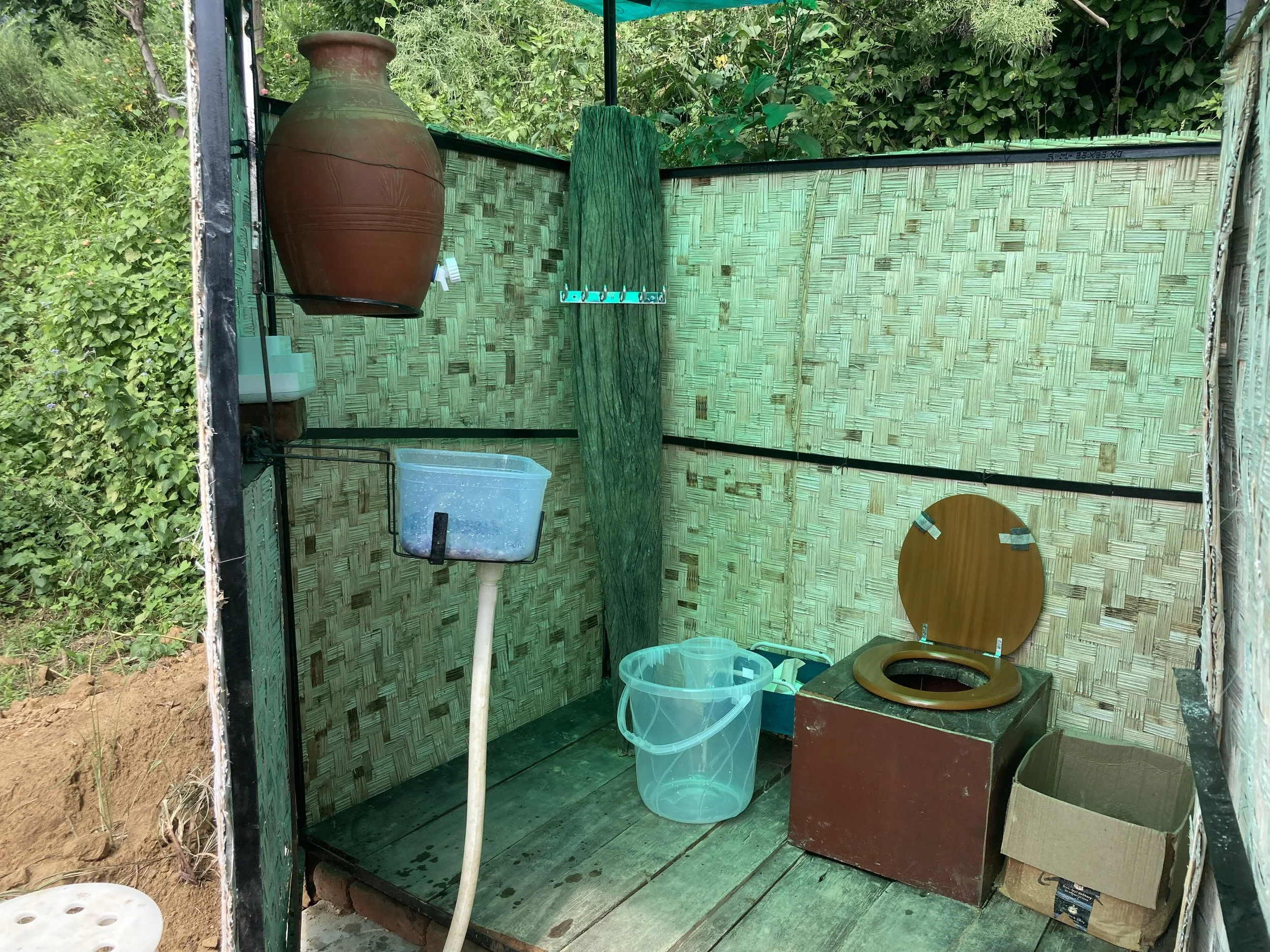
Compost toilet (design / execution by Nishanth Seth and Mandeep Singh)
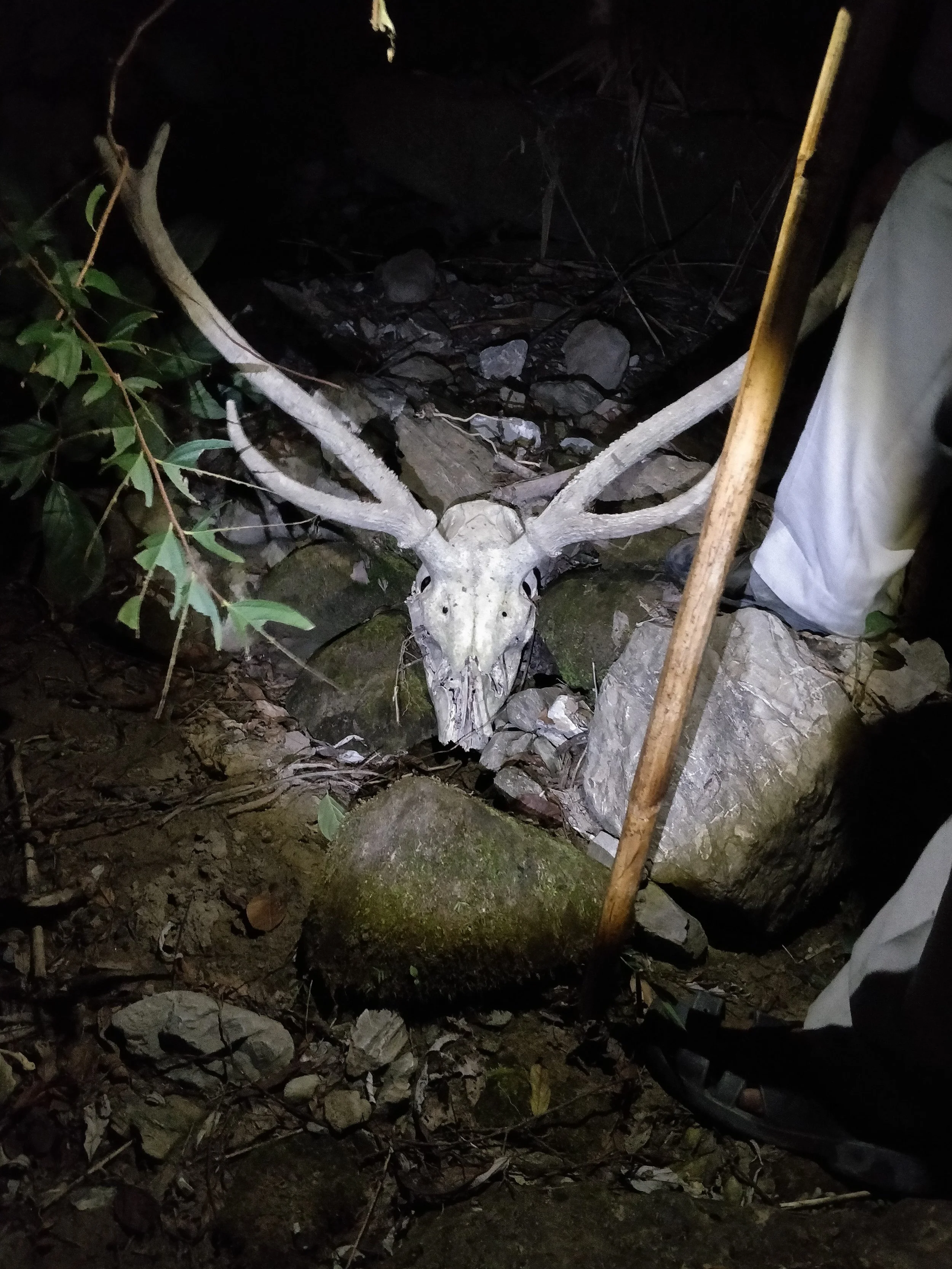
Barasingha (Tiger kill)